
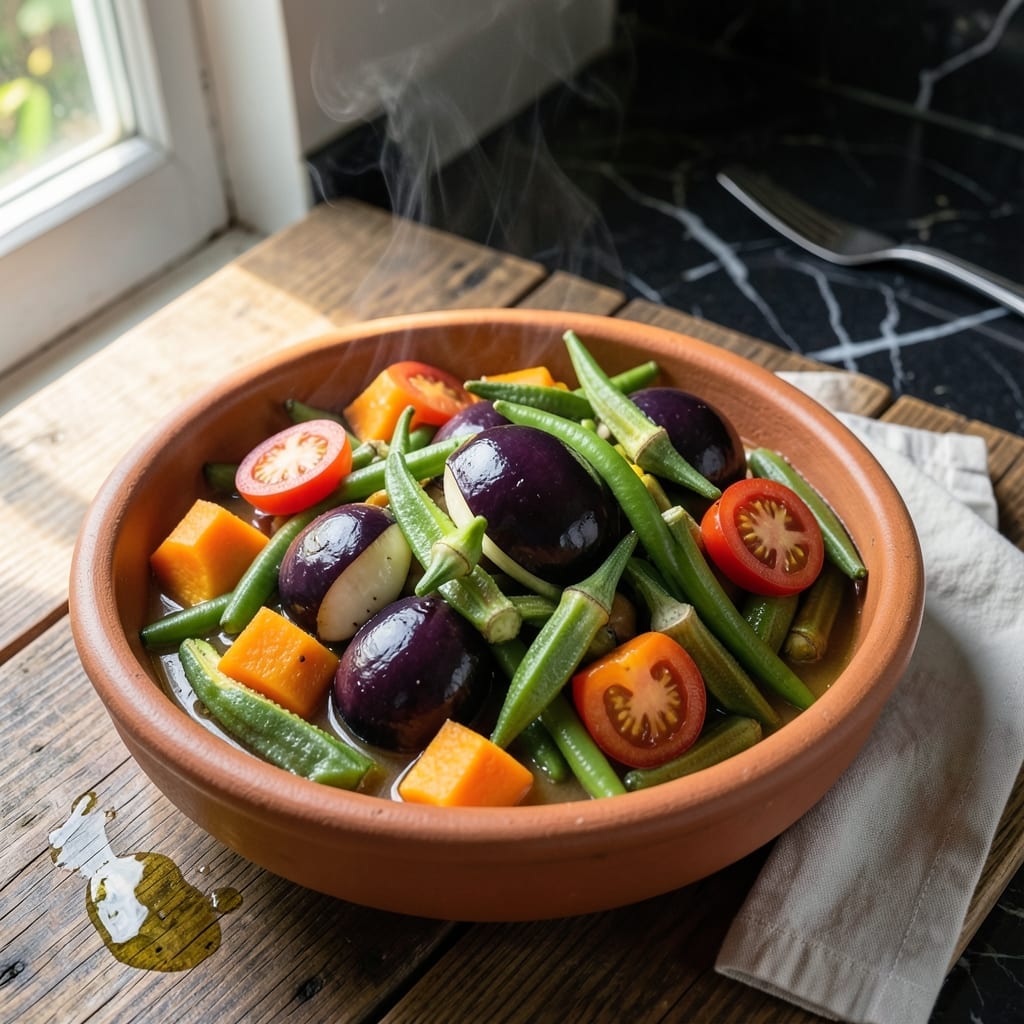
This vegetable stew brings the authentic flavors of Filipino cuisine to your table without any meat. A traditional dish that’s both nourishing and deeply flavorful.
I’ve refined this recipe to stay true to its roots while making it simple for home cooks. The key is layering vegetables and using bagoong for that signature umami depth.
You’ll end up with a hearty, vibrant stew where each bite delivers the perfect balance of textures and tastes. Eggplant, bitter melon, and squash soak up the rich, savory sauce.
Perfect for a wholesome meal that’s as comforting as it is authentic. Here’s how to make it right.
Ingredients for Pinakbet Recipe Without Meat
Authentic Filipino flavors come alive with fresh vegetables and traditional bagoong.
| Ingredient | Amount | Notes |
|---|---|---|
| Eggplant 🍆 | 1 whole | Medium, cut into rounds |
| Bitter Melon 🥒 | 1 whole | Sliced thin, seeds removed |
| Kabocha Squash 🎃 | 1 whole | Peeled, cubed into pieces |
| Long Green Beans 🌿 | 4 oz | Trimmed, cut into lengths |
| Okra 🌱 | 6 pieces | Fresh, trimmed stems |
| Tomatoes 🍅 | 2 whole | Ripe, quartered |
| Red Onion 🧅 | 1 whole | Thinly sliced |
| Garlic Cloves 🧄 | 6 cloves | Minced finely |
| Bagoong 🧂 | 2 tbsp | Vegan shrimp paste substitute |
| Vegetable Oil 🫒 | 2 tbsp | For sautéing aromatics |
| Water 💧 | 1 cup | For simmering vegetables |
| Sea Salt 🧂 | ½ tsp | Adjust to taste |
| Black Pepper 🌶️ | ¼ tsp | Freshly ground |
The bagoong is non-negotiable for that signature umami—look for vegan shrimp paste at Asian markets or online. Eggplant and bitter melon are stars here, so pick firm, vibrant specimens without blemishes. I grab mine from the local Filipino grocer when possible, but well-stocked supermarkets often carry them too. Kabocha squash adds sweetness; if unavailable, butternut works in a pinch.
No bitter melon? Zucchini or green papaya can stand in (you’ll miss the bitterness, but texture stays close). Out of bagoong? Use miso paste plus a dash of soy sauce—not identical, but decent umami. The okra can be swapped for green bell peppers if that’s what you’ve got. Fresh is best for all veggies here, but frozen works in a pinch (thaw and drain well).
This stew tastes even better the next day. Keeps 3-4 days in the fridge, though the okra may soften. Not ideal for freezing—the vegetables turn mushy. Store bagoong in a sealed jar for up to 6 months.
Why You’ll Love This Recipe
- One-Pot Simple: I just dump everything in a pot and let the eggplant and bitter melon soak up the flavors.
- Umami-Rich Bite: The shrimp paste and veggies like kabocha squash create that deep, satisfying taste without meat.
- Vegan Crowd-Pleaser: Even my meat-loving friends ask for seconds when I serve this with rice.
- Budget Stretcher: Five cheap, in-season veggies feed my whole family for less than a takeout meal.
Step-by-Step Instructions for Pinakbet Without Meat
Follow these authentic steps to create a rich, flavorful vegetable stew that stays true to tradition.
Step 1: Sauté Aromatics for a Flavor Foundation
Heat the 2 tbsp vegetable oil in a large pot over medium heat. Add the red onion and cook for 3-4 minutes until it becomes translucent and begins to soften at the edges. This builds the aromatic base that defines the dish.
Add the 6 cloves garlic cloves and sauté for 30 seconds until fragrant. Be careful not to let it brown—just soften. Stir in the 2 tbsp bagoong and cook for another 1 minute, allowing its umami depth to meld with the onions and garlic.
This step is crucial—it transforms the raw, sharp flavors into a mellow, savory foundation that will infuse every vegetable.
Step 2: Layer and Sauté the Heartier Vegetables
Add the eggplant (cut into rounds) and kabocha squash (peeled and cubed) to the pot. Stir to coat the pieces in the aromatic mixture. Cook for 5 minutes, stirring occasionally, until the eggplant starts to soften slightly and the kabocha squash edges begin to turn golden.
Next, add the long green beans and okra. Stir gently to combine. The okra will release some of its natural viscosity, which helps thicken the stew. Cook for another 3 minutes to allow the flavors to start blending.
Step 3: Incorporate Remaining Vegetables and Season
Add the bitter melon (sliced thin, seeds removed) and tomatoes (quartered). Stir to mix all the vegetables with the aromatics. The bitter melon will mellow as it cooks, balancing the stew’s sweet and savory notes.
Pour in the 1 cup water and season with the 0.5 tsp sea salt and 0.25 tsp black pepper. Stir well to distribute the seasoning evenly. The liquid should just cover the bottom of the pot, creating steam to cook the vegetables through.
Step 4: Simmer to Perfection
Bring the mixture to a gentle boil, then reduce the heat to low. Cover the pot and let it simmer for 15-20 minutes, stirring occasionally. The vegetables should be tender but still hold their shape—check that the kabocha squash and eggplant are soft when pierced with a fork.
If the stew becomes too thick, add a splash of water to reach your desired consistency. The okra and bagoong will naturally thicken the stew, so keep an eye on the texture. Taste and adjust the sea salt if needed, though the bagoong is already salty.
Step 5: Rest and Serve
Remove the pot from heat and let the pinakbet rest for 5 minutes before serving. This allows the flavors to meld together fully, with the bitter melon, eggplant, and kabocha squash absorbing the rich, savory broth.
Serve warm, ensuring each portion has a mix of all the vegetables. The stew should have a vibrant, slightly thick sauce with tender, flavorful vegetables that highlight the authentic taste of this beloved dish.
Pro Tips For Making Pinakbet Recipe Without Meat
- Salt the Bitter Melon: I learned this the hard way—soak sliced bitter melon in salted water for 10 minutes before cooking to mellow its harshness without losing that signature bite.
- Cut Evenly: Slice eggplant, squash, and okra into uniform 1-inch pieces so they cook at the same rate—no one wants mushy beans and undercooked squash.
- Skip Overcrowding: After burning a few batches, I finally figured out to sauté the vegetables in batches if needed; steaming them in a packed pan turns everything soggy.
- Use Shrimp Paste: Sounds weird, but it works: a spoonful of bagoong (shrimp paste) adds that umami depth even without meat—just dissolve it in the oil first.
Serving Suggestions for This Dish
Family-Style Feast
I love serving this in a large bowl at the center of the table. The vibrant colors and rich aromas make it a natural gathering point. Let everyone serve themselves with steamed jasmine rice to soak up the flavorful sauce. 💛
Rice Pairings
For the most authentic experience, use Filipino sinangag (garlic fried rice). The crispy bits add texture contrast. If short on time, basmati or jasmine rice works beautifully too. The key is having enough rice to balance the stew’s bold flavors.
Side Dish Ideas
A simple green mango salad with lime dressing cuts through the richness. Or try pickled vegetables like atchara (pickled green papaya) for a tangy crunch. Both add freshness that complements the hearty stew.
Beverage Pairings
I always serve this with calamansi juice or iced tea. The citrus notes refresh your palate between bites. For something different, a cold San Miguel beer enhances the savory, umami flavors. 🍺
Garnishing Tips
Sprinkle with toasted garlic bits for extra aroma and crunch. Fresh cilantro or green onions add a pop of color. A few slices of calamansi on the side let guests add a citrus squeeze if desired.
Serving Temperature
This stew tastes best served warm, not piping hot. The flavors meld better after sitting for 5-10 minutes. If reheating, warm gently on the stove with a splash of water to maintain the perfect consistency.
Nutrition Facts
Frequently Asked Questions
Can I make this without bagoong?
Yes, substitute with 2 tbsp miso paste plus 1 tsp soy sauce for umami. It won’t be identical but still delicious.
How do I reduce the bitterness?
Soak sliced bitter melon in salted water for 10 minutes, then rinse. This mellows the flavor significantly.
Can I add tofu for protein?
Press and cube 14 oz firm tofu, then pan-fry until golden before adding with the squash.
How long does leftovers keep?
Store in an airtight container for 3-4 days in the fridge. Reheat gently with a splash of water.

- Potato Candy Recipe 1933: Vintage Peanut Butter Roll Delight - October 30, 2026
- Potato Chip Cookie Recipe With Pecans: Buttery Crunch Meets Nutty Richness - October 30, 2026
- Potato Patty Recipe No Egg: Crispy Edges Without the Binder - October 30, 2026