
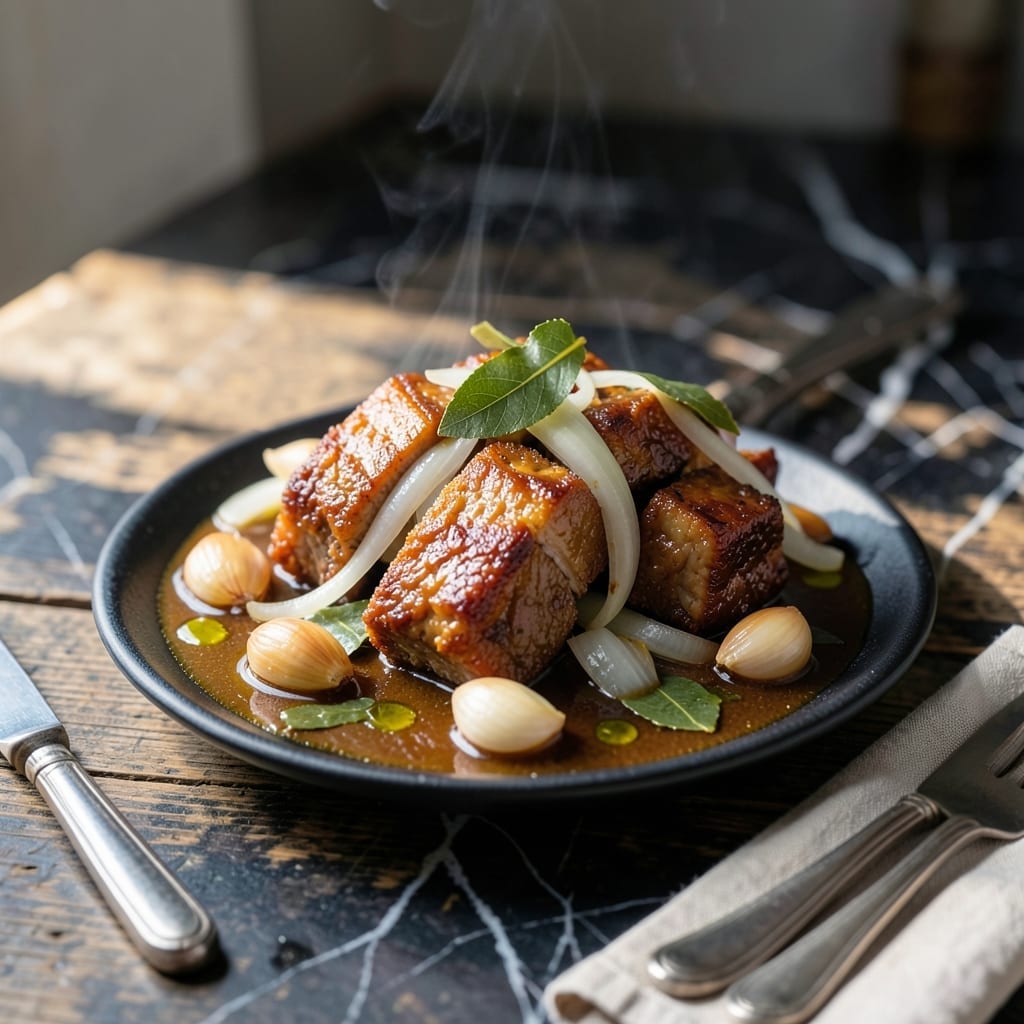
Filipino cuisine shines with its bold flavors, and this collection of traditional pork dishes brings authentic taste to your kitchen. Each recipe stays true to its roots while fitting modern cooking methods.
These dishes showcase the diversity of Pinoy cooking, from tangy adobo to rich kare-kare. Simple ingredients combine to create complex flavors that have been perfected over generations.
You’ll find techniques passed down through Filipino families, adapted for home cooks. The results are always satisfying, whether for daily meals or special gatherings.
Every recipe delivers the traditional taste you expect, with clear steps to ensure success. This is real Filipino cooking made accessible.
Ingredients for Pinoy Pork Recipe List
Authentic Filipino pork dishes demand bold, traditional ingredients for complex, satisfying flavors.
| Ingredient | Amount | Notes |
|---|---|---|
| Pork Belly 🥩 | 2 lb | Cut into 2-inch cubes, skin-on |
| White Vinegar 💧 | 1 cup | Cane vinegar preferred |
| Soy Sauce 🫒 | ¾ cup | Filipino brand like Silver Swan |
| Garlic Cloves 🧄 | 10 cloves | Peeled and crushed |
| White Onion 🧅 | 2 whole | Quartered, layers separated |
| Bay Leaves 🌿 | 5 pieces | Dried or fresh |
| Black Peppercorns 🌶️ | 1 tbsp | Lightly crushed |
| Peanut Butter 🥜 | ½ cup | Smooth, unsweetened |
| Annatto Seeds 🌿 | 1 tsp | For kare-kare color |
| Long Green Chili 🌶️ | 2 pieces | Sliced lengthwise, optional |
| Banana Blossom 🌸 | 1 whole | Sliced, for kare-kare |
| Eggplant 🍆 | 1 whole | Sliced into rounds |
| String Beans 🌱 | 8 oz | Trimmed, cut into 2-inch pieces |
| Cooking Oil 🫒 | ¼ cup | For sautéing and frying |
| Brown Sugar 🧈 | 2 tbsp | For balancing acidity |
Sourcing the right pork is critical for authenticity. Pork belly with skin-on (available at most Asian markets or butcher shops) delivers the rich texture essential for adobo and lechon kawali. Silver Swan soy sauce and cane vinegar are non-negotiable for genuine Pinoy flavor. Annatto seeds, though sometimes labeled as achuete, can be found at Filipino grocery stores like Seafood City or online.
Substitutions can work in a pinch but expect flavor shifts. Chicken thighs replace pork in adobo if necessary, though the taste differs. For kare-kare, tofu or oxtail (if available) can stand in for pork. Coconut vinegar works as a vinegar substitute, but cane vinegar remains ideal. Peanut butter alternatives like tahini won’t deliver the same richness.
Store pork belly in the freezer for up to 6 months or use within 3 days if refrigerated. Soy sauce and vinegar keep indefinitely unopened. Annatto seeds stay fresh in a sealed container for about 1 year. Prepared dishes taste even better the next day as flavors meld.
Why You’ll Love This Recipe
- One Pan Magic: I toss the pork belly, vinegar, soy sauce, and garlic together in one pan and let it do its thing.
- That Garlic Punch: The garlic and soy sauce caramelize into this sticky, savory glaze that coats every bite.
- Feeds My Crowd: I make a big batch on Sunday and we’re set for lunches and dinners all week.
- Budget Stretch: Pork belly is cheap here, and with vinegar and soy sauce doing the heavy lifting, it feels like a steal.
Instructions
Master these traditional techniques to create authentic Filipino flavors with every dish.
Step 1: Prepare the Pork Belly and Marinade Base
Begin by cutting the 2 lb Pork Belly into 2-inch cubes, keeping the skin on for texture. In a large pot, combine the 1 cup White Vinegar, 0.75 cup Soy Sauce, 10 cloves Garlic Cloves (peeled and crushed), 2 whole White Onion (quartered), 5 pieces Bay Leaves, and 1 tbsp Black Peppercorns (lightly crushed).
This base forms the foundation for multiple dishes, balancing acidity and umami. The vinegar tenderizes the meat while the soy sauce adds depth. Let the pork belly marinate in this mixture for at least 30 minutes to absorb the flavors fully.
Step 2: Cook the Pork Belly for Adobo
Heat 0.25 cup Cooking Oil in a pot over medium heat. Add the marinated pork belly and sear until the edges turn lightly browned. Pour in the marinade and add 2 tbsp Brown Sugar to balance the acidity.
Simmer uncovered for 45-60 minutes until the pork is fork-tender and the sauce reduces to a glossy consistency. Stir occasionally to prevent sticking. The sauce should coat the back of a spoon, and the pork should easily pull apart with a fork.
Step 3: Prepare Vegetables for Kare-Kare
Slice the 1 whole Banana Blossom and 1 whole Eggplant into rounds. Trim the 8 oz String Beans into 2-inch pieces. Soak the banana blossom slices in salted water for 10 minutes to remove any bitterness, then drain.
In a separate pot, heat 2 tbsp Cooking Oil and sauté 2 pieces Long Green Chili (sliced lengthwise) until fragrant. Add the eggplant and string beans, cooking until slightly softened but still vibrant in color. This prepares them for the peanut sauce in the next step.
Step 4: Create the Kare-Kare Peanut Sauce
In a saucepan, heat 2 tbsp Cooking Oil and toast the 1 tsp Annatto Seeds for 1-2 minutes until the oil turns a deep orange. Remove the seeds. Add the 0.5 cup Peanut Butter (smooth, unsweetened) and stir until it melts into the oil, creating a smooth, thick sauce.
Gradually add 2 cups of the reserved pork adobo broth (from Step 2) while stirring constantly to prevent lumps. Simmer for 5-7 minutes until the sauce thickens and develops a rich, nutty aroma. Adjust seasoning with a pinch of brown sugar if needed.
Step 5: Assemble and Serve
For the adobo, transfer the pork belly to a serving dish, ensuring each piece is coated in the reduced sauce. For the kare-kare, arrange the prepared vegetables on a platter and pour the warm peanut sauce over them, ensuring even coverage.
Serve both dishes immediately with steamed rice. The adobo should have a tangy, savory sauce clinging to the tender pork, while the kare-kare vegetables should be crisp-tender, smothered in a velvety peanut sauce with a vibrant orange hue from the annatto.
Pro Tips For Making Pinoy Pork Recipe List
- Boil Pork First: I learned this the hard way—parboiling the pork belly for 5-10 minutes removes impurities and keeps the sauce clean. Sounds tedious, but it’s worth it when you see that crystal-clear adobo simmering.
- Balance Vinegar and Soy: Use a 1:1 ratio of white vinegar to soy sauce for that perfect tangy-salty Pinoy adobo flavor. My grandmother swore by this, and she was right: too much vinegar makes it harsh, too little and it’s bland.
- Don’t Skip the Simmer: After browning the pork, let it simmer in the sauce for at least 30 minutes on low heat. I used to rush this part and wondered why my pork was tough—patience actually changes the outcome.
- Crush the Garlic: Smash the garlic cloves lightly before adding them to the pan. This releases more flavor without burning the bits, and it’s a shortcut that makes a real difference in the final taste.
Essential Equipment for Great pinoy pork recipe list
Essential Cookware
I always start with a heavy-bottomed stainless steel pot (I use All-Clad) for the adobo—it distributes heat evenly and prevents hot spots. The 5-quart size is perfect for 2 lb of pork belly with room for the marinade. 🔥
Perfect Searing Pan
A cast iron skillet is my secret weapon for getting that perfect sear on pork belly cubes before simmering. I inherited mine from my dad—it’s been seasoned for decades. Lodge makes great affordable options if you’re starting fresh.
For even browning, heat the pan to medium-high before adding the pork. Don’t overcrowd—work in batches if needed.
Specialty Tools
For kare-kare, a fine-mesh strainer is essential for removing annatto seeds from the oil. I also keep a mortar and pestle handy for crushing peppercorns—freshly ground makes all the difference in the marinade. 💡
Serving Essentials
A large wooden serving platter showcases these dishes beautifully. I found mine at a Portland farmers market—it’s both functional and a great conversation starter. Pair with a rice cooker (I swear by my Zojirushi) for perfect steamed rice every time.
Nutrition Facts
Frequently Asked Questions
What’s the best cut for authentic flavor?
Pork belly with skin-on delivers the richest taste and texture. Look for 2 lb pieces at Asian markets or butcher shops for the most authentic results.
Can I use substitutions in a pinch?
Chicken thighs work for adobo, but expect a different taste. For kare-kare, tofu or oxtail can replace pork. Coconut vinegar is a decent vinegar alternative.
How long can I store leftovers?
Prepared dishes taste even better the next day. Store in the fridge for up to 3 days or freeze for 1 month. Reheat gently to preserve texture.

- Potato Candy Recipe 1933: Vintage Peanut Butter Roll Delight - October 30, 2026
- Potato Chip Cookie Recipe With Pecans: Buttery Crunch Meets Nutty Richness - October 30, 2026
- Potato Patty Recipe No Egg: Crispy Edges Without the Binder - October 30, 2026