
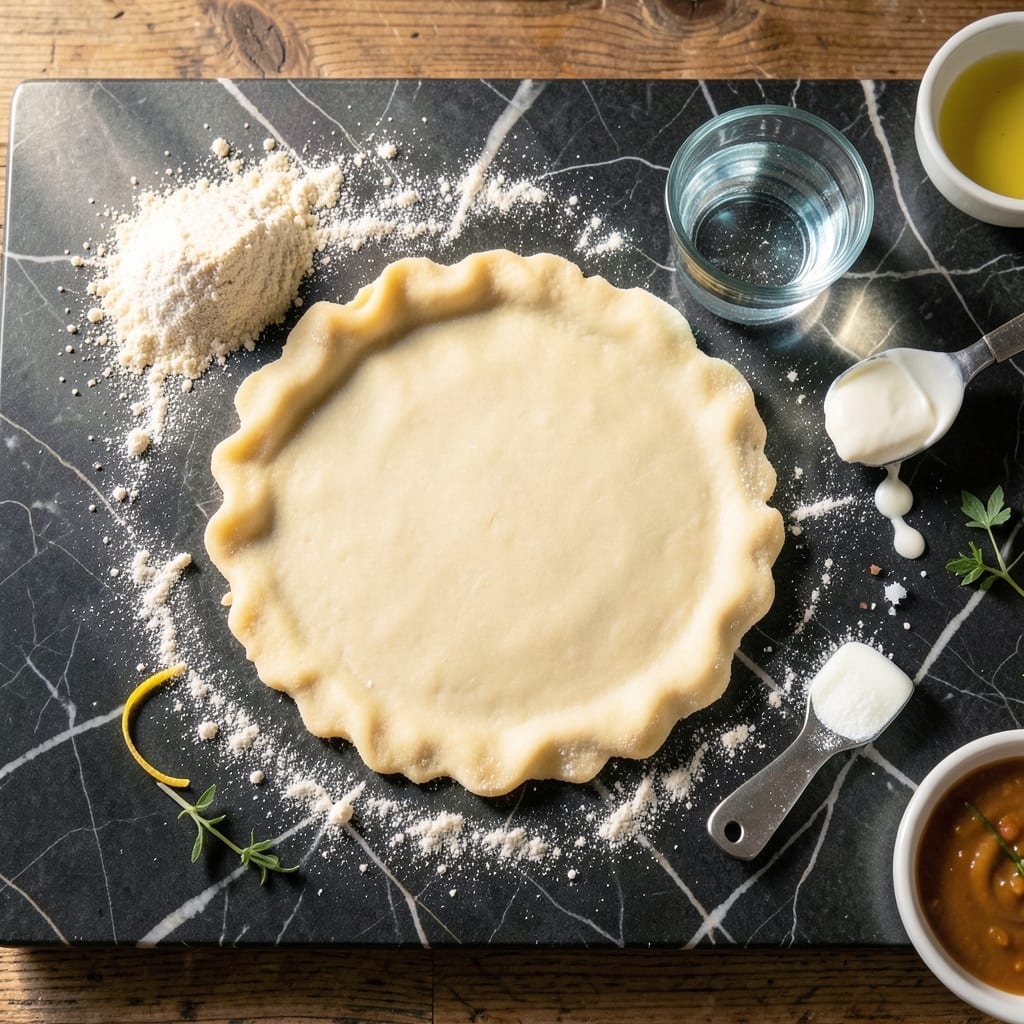
Achieving flaky pie crust without butter is simpler than you think. This method using shortening delivers consistent results that rival traditional recipes. The key lies in keeping ingredients cold and handling the dough minimally.
Shortening creates a tender, layered texture that holds up well to baking. Unlike butter, it has a higher melting point, which means fewer leaks and a more reliable crust. The process requires just a few basic ingredients and straightforward techniques.
You’ll end up with a golden, crisp base perfect for any filling. The dough comes together quickly and can be made ahead, making it ideal for busy bakers. No special equipment is needed.
This approach proves that great pie crust doesn’t require butter—just the right method and a little patience.
Ingredients for Pie Crust Recipe Using Crisco
Six ingredients create a golden, flaky base perfect for any pie filling.
| Ingredient | Amount | Notes |
|---|---|---|
| All-Purpose Flour 🌾 | 2 ½ cups | Spoon and level for accuracy |
| Crisco All-Vegetable Shortening 🧈 | ¾ cup | Chilled before use |
| Salt 🧂 | 1 tsp | Fine table salt preferred |
| Ice Water 💧 | ⅓ cup | Plus 1 tbsp as needed |
| Granulated Sugar 🍚 | 1 tbsp | Optional for sweet crusts |
| White Vinegar 🍶 | 1 tsp | Helps tenderize dough |
The shortening is non-negotiable here—Crisco All-Vegetable Shortening is the gold standard for this method. Its higher melting point prevents leaks and delivers those coveted flaky layers. Find it in the baking aisle at any major supermarket. For the flour, all-purpose works best—skip the bread flour or cake flour, as their protein content throws off the texture.
No Crisco? Lard can substitute at a 1:1 ratio (though not vegetarian). For a slight flavor boost, swap 1 tbsp of the water for vodka—it evaporates during baking, leaving extra flakiness. The vinegar can be apple cider or lemon juice if that’s what you have. Sugar is optional but recommended for sweet pies.
The dough keeps beautifully. Wrap it tightly in plastic and refrigerate for up to 3 days, or freeze for 3 months. Bring it to room temperature before rolling for best results. Always keep ingredients ice-cold until ready to use.
Why You’ll Love This Recipe
- No-Fuss Mixing: I just cut the Crisco into the flour with a fork—no pastry cutter, no stress.
- Buttery Crisp Layers: The shortening makes it flakier than my grandma’s, honest.
- Sweet or Savory: I’ve used this crust for apple pie one day and quiche the next.
- Penny-Pincher’s Dream: Crisco and basic pantry staples mean I spend under $3 for two crusts.
Step-by-Step Instructions for Pie Crust Using Crisco
Here’s the method for achieving perfectly flaky layers with vegetable shortening instead of butter.
Step 1: Combine Dry Ingredients
In a large mixing bowl, whisk together the 2.5 cups All-Purpose Flour, 1 tsp Salt, and 1 tbsp Granulated Sugar until fully combined. The sugar adds a subtle sweetness that complements fruit pies beautifully, though you can omit it for savory applications.
Make sure your flour is spooned and leveled for accuracy—this prevents dense, tough crust. The salt enhances flavor while the sugar helps with browning. This dry mixture creates the structure for your flaky layers.
Step 2: Cut in the Shortening
Add the 0.75 cup Crisco All-Vegetable Shortening (chilled) to the flour mixture. Using a pastry cutter or two forks, work the shortening into the flour until the mixture resembles coarse crumbs with some pea-sized pieces visible. This uneven distribution creates the flaky texture.
Don’t overwork the mixture—you want visible pieces of shortening remaining. These pieces will create steam pockets during baking, which separate the dough into distinct, crispy layers. The chilled shortening ensures it doesn’t melt prematurely.
Step 3: Add Liquid Ingredients
Create a well in the center of the flour mixture. Pour in the 0.33 cup Ice Water and 1 tsp White Vinegar. The vinegar tenderizes the gluten, preventing toughness while the cold water keeps the shortening solid.
Using a fork, gently mix the liquid into the flour until just combined. The dough should hold together when pressed but still appear shaggy. Avoid overmixing—this develops gluten, which makes the crust tough rather than flaky.
Step 4: Chill and Rest the Dough
Turn the dough onto a lightly floured surface and gently shape it into a disk about 1 inch thick. Wrap tightly in plastic wrap and refrigerate for at least 1 hour (or up to 2 days). This resting period allows the flour to fully hydrate and the gluten to relax.
The chilled dough will be easier to roll out and less likely to shrink during baking. If the dough feels too dry after mixing, you can add up to 1 tbsp of additional ice water, but use sparingly—the moisture in vegetable shortening is different from butter.
Step 5: Roll and Fit the Crust
On a floured surface, roll the chilled dough into a 12-inch circle about 1/8 inch thick. For a perfect fit, roll from the center outward, rotating the dough occasionally to maintain an even shape. The edges may crack slightly—this is normal with shortening-based dough.
Transfer to a pie dish by loosely rolling the dough around your rolling pin, then unrolling it over the dish. Press gently into the bottom and up the sides without stretching. Trim excess dough, leaving a ½-inch overhang, then crimp the edges. For pre-baking, dock the bottom with a fork to prevent bubbles.
Pro Tips For Making Pie Crust Recipe Using Crisco
- Chill the Shortening: Pop your Crisco in the freezer for 15 minutes before mixing—I learned this the hard way after my first three crusts turned out greasy instead of flaky.
- Use Ice-Cold Water: Fill a glass with water and ice cubes, then measure from that. Sounds weird, but it works: warm water makes the dough tough, and nobody wants a chewy crust.
- Don’t Overwork It: Mix just until the dough comes together—after burning three batches, I finally figured out that too much handling develops the gluten, and that’s the enemy of a tender crust.
- Add Sugar Last: Sprinkle in the granulated sugar at the very end, right before the water. My grandmother swore by this, and she was right: it keeps the sugar from dissolving and helps create those little pockets of sweetness in the finished crust.
Dietary Considerations for This Dish
Vegetarian Friendly
This crust is naturally vegetarian since it uses Crisco All-Vegetable Shortening instead of lard or animal fat. The plant-based ingredients make it suitable for most vegetarian diets without any substitutions needed. 💛
Vegan Adaptation
For a fully vegan pie crust, simply swap the 1 tbsp Granulated Sugar for an organic or raw sugar that’s processed without bone char. The rest of the ingredients are already plant-based, so no other changes are required.
Gluten-Free Option
Replace the 2.5 cups All-Purpose Flour with a 1:1 gluten-free baking blend like King Arthur Measure for Measure. Add ½ tsp xanthan gum if your blend doesn’t include it. The texture will be slightly different but still flaky.
Nut Allergy Safe
This recipe is inherently nut-free, making it safe for those with nut allergies. Just ensure your Crisco is manufactured in a nut-free facility—check the label for any cross-contamination warnings.
Lower Sodium
To reduce sodium, use unsalted Crisco and cut the 1 tsp Salt in half or omit it entirely. The crust will still hold its structure, though the flavor may be slightly milder. I often do this for savory pies.
Dairy-Free Naturally
Since there’s no butter or milk, this crust is dairy-free by default. It’s perfect for lactose-intolerant bakers or anyone avoiding dairy. The shortening provides all the fat needed for flakiness without any dairy products. 🌱
Nutrition Facts
Frequently Asked Questions
What’s the ideal temperature for the shortening?
Use shortening straight from the fridge or freezer for best results. Cold Crisco creates better flakiness by staying solid longer during mixing and baking.
Can I use butter instead of shortening?
Yes, but the texture will differ. Butter creates more flavor but may not be as flaky. Use the same amount, but keep it ice-cold to prevent a tough crust.
Why add vinegar to the dough?
The 1 tsp vinegar tenderizes the gluten, preventing a tough crust. It doesn’t affect flavor but helps create a more delicate, flaky texture.
How long can I store the dough?
Wrapped tightly, the dough keeps in the fridge for 3 days or in the freezer for 3 months. Thaw overnight in the fridge before rolling.

- Potato Candy Recipe 1933: Vintage Peanut Butter Roll Delight - October 30, 2026
- Potato Chip Cookie Recipe With Pecans: Buttery Crunch Meets Nutty Richness - October 30, 2026
- Potato Patty Recipe No Egg: Crispy Edges Without the Binder - October 30, 2026