
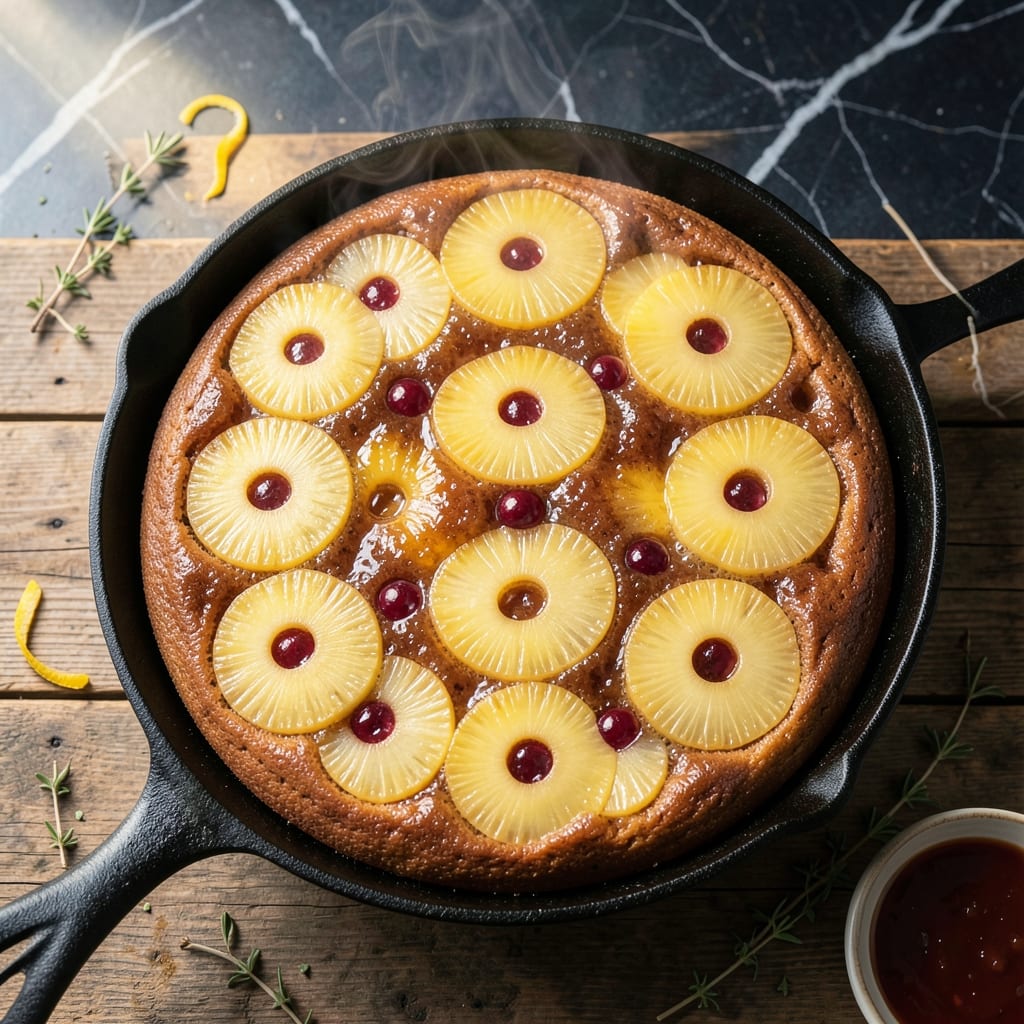
There’s something timeless about a cast iron skillet pineapple upside down cake with its caramelized topping and buttery crust. This classic dessert brings retro charm to any table.
I perfected this recipe by embracing the skillet’s ability to create even caramelization while developing a golden brown crust. The technique ensures the pineapple and brown sugar topping transforms into a glossy, sticky masterpiece.
The cake itself bakes up moist and tender, with a fine crumb that complements the sweet, tangy pineapple perfectly. Every bite delivers that signature contrast of warm, gooey topping and soft, buttery cake.
Whether for a special occasion or a simple weekend treat, this method consistently delivers professional results with minimal effort.
Ingredients for Pineapple Upside Down Cake Recipe Cast Iron Skillet
Classic cast iron skillet dessert with caramelized pineapple and buttery cake beneath.
| Ingredient | Amount | Notes |
|---|---|---|
| Canned Pineapple Rings 🍍 | 8 slices | Reserve juice for batter |
| Unsalted Butter 🧈 | ¾ cup | Melted, divided for topping and batter |
| Light Brown Sugar 🫙 | ¾ cup | Packed firmly for topping |
| All-Purpose Flour 🌾 | 1 ½ cups | Sifted for even texture |
| Granulated Sugar 🥄 | ¾ cup | Fine grain for batter |
| Large Eggs 🥚 | 2 whole | Room temperature for even mixing |
| Baking Powder 🧂 | 1 ½ tsp | Double-acting for reliable rise |
| Vanilla Extract 🌿 | 2 tsp | Pure extract for best flavor |
| Whole Milk 🥛 | ½ cup | Full-fat for richness |
| Ground Cinnamon 🌶️ | ½ tsp | Freshly ground preferred |
| Salt 🧂 | ½ tsp | Fine sea salt for balance |
| Maraschino Cherries 🍒 | 8 whole | Drained, for garnish |
The skillet is non-negotiable here. Lodge cast iron provides superior heat retention for even caramelization. Use firmly packed brown sugar—loose measurements yield a thin, watery topping. For the pineapple, Dole rings in juice work perfectly (avoid heavy syrup). The butter should be European-style for its higher fat content, which creates a richer caramel.
Out of pineapple rings? Fresh pineapple slices work but require pre-cooking to soften. No brown sugar? Dark brown plus a touch of molasses substitutes well. For a dairy-free version, coconut oil replaces butter with minimal difference. The milk can be swapped for buttermilk for extra tenderness. Always use room-temperature eggs—they emulsify better into the batter.
The assembled cake keeps 2 days at room temperature, covered. Refrigerate for up to 5 days—reheat slices briefly to restore gooey topping. Freeze unfrosted cake for 3 months. Pro tip: run a knife around edges immediately after baking to prevent sticking during inversion.
Why You’ll Love This Recipe
- One Pan Magic: I melt the butter and brown sugar right in the cast iron, then layer the pineapple rings—no extra bowls, no fuss.
- Sticky Sweet Perfection: That caramelized brown sugar and pineapple combo with the buttery cake? Ridiculously good, every single time.
- Crowd Pleaser: From Sunday dessert to potluck star, it’s my go-to for impressing without stressing. Even picky eaters ask for seconds.
- Budget Friendly: Canned pineapple and pantry staples mean I can whip this up for under $5. Honestly, it feels like cheating.
Step-by-Step Instructions for Pineapple Upside Down Cake
Master the technique for a perfectly caramelized topping and tender crumb in this classic dessert.
Step 1: Prepare the Cast Iron Skillet and Pineapple Topping
Preheat your oven to 350°F and place a 10-inch cast iron skillet in the oven to warm. While it heats, melt 0.75 cup Unsalted Butter in a small saucepan over medium-low heat.
Pour 0.75 cup Light Brown Sugar (packed firmly) into the warm skillet and spread it evenly. Arrange the 8 slices Canned Pineapple Rings in a single layer over the sugar, placing one in the center and the rest around it. Add a Maraschino Cherry in the center of each ring and in the gaps between them.
Step 2: Create the Cake Batter
In a large bowl, whisk together the 1.5 cups All-Purpose Flour, 1.5 tsp Baking Powder, 0.5 tsp Ground Cinnamon, and 0.5 tsp Salt. This ensures even distribution of leavening and seasoning throughout the batter.
In a separate bowl, beat the 0.75 cup Granulated Sugar with the remaining melted Unsalted Butter until smooth. Add the 2 whole Large Eggs one at a time, mixing well after each addition. Stir in the 2 tsp Vanilla Extract and 0.5 cup Whole Milk reserved from the pineapple.
Step 3: Combine Wet and Dry Ingredients
Gradually add the dry ingredients to the wet mixture, stirring just until combined. Be careful not to overmix—the batter should be smooth but may have a few small lumps. Overworking the batter develops gluten, which can make the cake dense rather than tender.
Gently fold in any reserved juice from the Canned Pineapple Rings for added moisture and flavor. The batter will be thick but pourable, perfect for creating a dense, moist crumb that contrasts beautifully with the caramelized topping.
Step 4: Bake Until Golden and Set
Pour the batter evenly over the arranged pineapple slices in the skillet, spreading it gently with a spatula to cover completely. Bake in the preheated oven for 35-40 minutes, or until the top is golden brown and a toothpick inserted in the center comes out clean.
Resist the urge to check for doneness too early—opening the oven door can cause the cake to sink. Look for the edges pulling slightly away from the pan and a springy texture when lightly pressed in the center.
Step 5: Invert and Serve Warm
Remove the skillet from the oven and let it cool for 5-10 minutes. This brief rest allows the caramelized sugars to set slightly, making inversion easier. Place a large serving plate over the skillet and carefully invert the cake onto the plate.
Tap the bottom of the skillet gently to ensure all the topping releases. If any fruit sticks, use a spatula to carefully rearrange it on the cake. Serve warm, allowing the caramelized juices to soak into each slice for the ultimate experience.
Pro Tips For Making Pineapple Upside Down Cake Recipe Cast Iron Skillet
- Preheat the Skillet: Place your cast iron in the oven while it preheats to 350°F—this guarantees an even, hot surface for the brown sugar-butter layer to caramelize properly.
- Drain Pineapple Well: Pat the canned rings dry with paper towels after draining; excess juice makes the topping soggy instead of sticky and glossy.
- Skip Cold Butter: Use room-temperature unsalted butter for the brown sugar layer so it melts evenly and blends smoothly into the sugar without separating.
- Wait Before Flipping: Let the cake rest in the skillet for exactly 5 minutes after baking—any sooner and it’ll fall apart, any longer and the caramel will harden and stick.
Essential Equipment for Perfect Results
Cast Iron Skillet
This recipe absolutely requires a 10-inch cast iron skillet—I swear by my Lodge for its superior heat retention. The heavy base ensures even caramelization of the brown sugar and pineapple topping, which lighter pans can’t match. It also transitions seamlessly from stovetop to oven.
Mixing Bowls
Use 2 medium mixing bowls—one for dry ingredients, one for wet. I prefer stainless steel because they’re durable and won’t absorb odors. A 3-quart size gives enough room to whisk without spilling. The batter comes together quickly when you have everything prepped.
Whisk and Spatula
A sturdy balloon whisk helps incorporate air into the batter for a lighter texture. For folding, a silicone spatula scrapes every last bit from the bowl. I keep a wooden spoon handy too, for those final gentle mixes that prevent overworking the gluten.
Measuring Tools
Precision matters here—use dry measuring cups for flour and sugar, and liquid measures for milk. I love my OXO Good Grips set because the magnetic bases keep everything organized. Pack the brown sugar firmly for that perfect caramelized topping. 💡
Cooling Rack
After baking, transfer the inverted cake to a wire cooling rack to prevent sogginess. This allows air circulation underneath, keeping the crust crisp. I use a stainless steel rack that fits over my sink for easy cleanup. Let it rest 10 minutes before slicing.
Serving Plate
Choose a large, flat platter with a slight lip to catch any caramel drips. The plate needs to be bigger than your skillet—at least 12 inches in diameter. I use a stoneware platter that retains heat, keeping the cake warm during serving. 🍍
Nutrition Facts
Frequently Asked Questions
Can I use fresh pineapple instead of canned?
Yes, but slice it 1/4-inch thick and pre-cook for 5 minutes in the skillet to soften. Canned works better for consistent texture and moisture content.
Why did my topping stick to the skillet?
Likely not enough butter or sugar. Use 3/4 cup of each and let the skillet heat fully before adding the topping. Invert within 10 minutes of baking.
How do I know when it’s done baking?
A toothpick in the center should come out clean. Look for golden brown edges and a springy top. Avoid opening the oven too early to prevent sinking.
Can I make this ahead of time?
Bake and invert the cake, then store covered at room temperature for 2 days. For longer storage, refrigerate up to 5 days and reheat slices briefly.

- Potato Candy Recipe 1933: Vintage Peanut Butter Roll Delight - October 30, 2026
- Potato Chip Cookie Recipe With Pecans: Buttery Crunch Meets Nutty Richness - October 30, 2026
- Potato Patty Recipe No Egg: Crispy Edges Without the Binder - October 30, 2026