
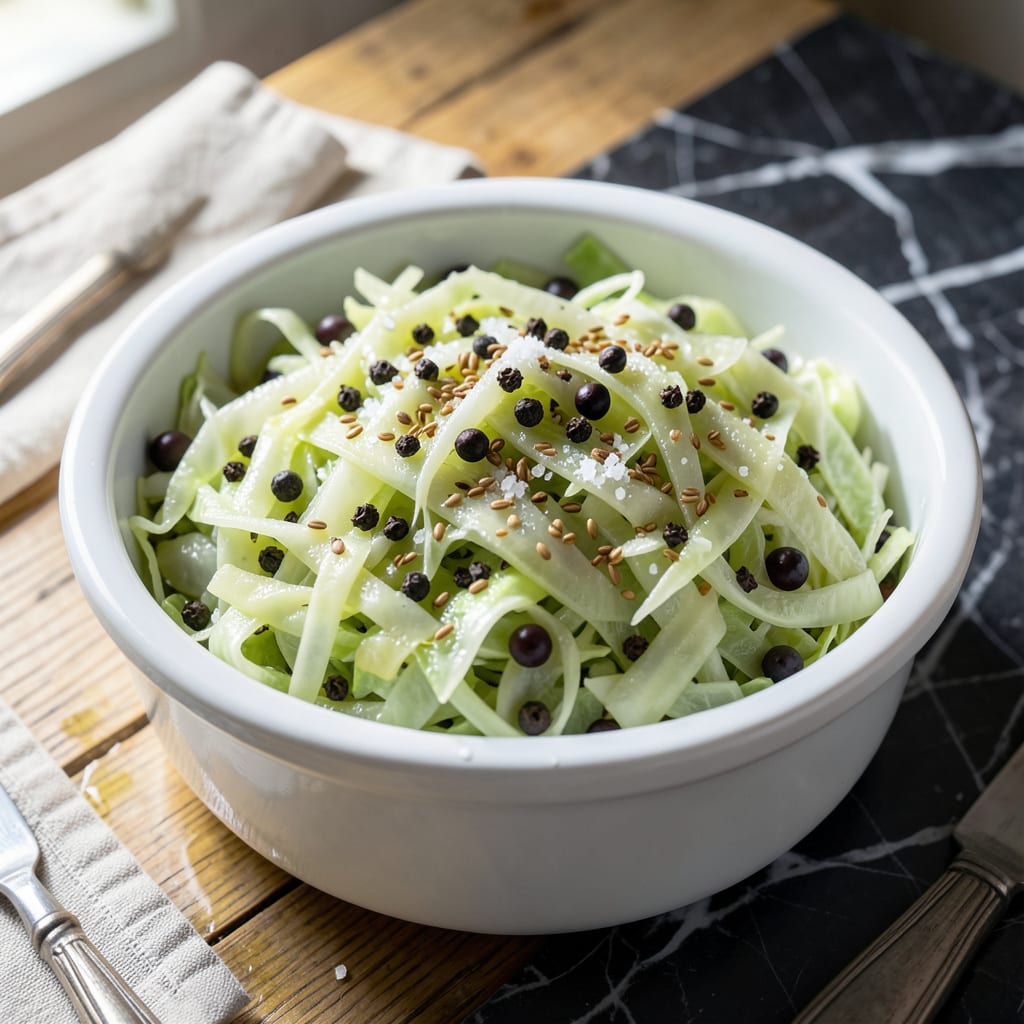
Fermenting sauerkraut at home preserves a time-honored tradition with minimal effort. This method transforms fresh cabbage into a tangy, crisp condiment through natural fermentation.
The process requires only salt, cabbage, and patience. With proper technique, you’ll achieve that signature tangy flavor and satisfying crunch that elevates any meal.
Ingredients for Pioneer Woman Sauerkraut
Minimal ingredients, maximum tradition. Just cabbage, salt, and time create this fermented classic.
| Ingredient | Amount | Notes |
|---|---|---|
| Green Cabbage 🥬 | 2 ½ lb | Fresh, outer leaves removed |
| Kosher Salt 🧂 | 1 ½ tbsp | Non-iodized, fine grain |
| Black Peppercorns 🌶️ | 1 tsp | Lightly crushed |
| Caraway Seeds 🌿 | 1 tsp | Optional for traditional flavor |
| Juniper Berries 🍇 | ½ tsp | Lightly crushed, optional |
| Filtered Water 💧 | ½ cup | If needed for moisture |
| Apple 🍎 | 1 whole | Peeled and grated for sweetness |
| Onion 🧅 | ½ whole | Thinly sliced, optional |
| Bay Leaves 🍃 | 2 whole | For aromatic depth |
The cabbage is everything here. Use green cabbage—fresh, firm heads with vibrant outer leaves. I source mine from local farmers markets when possible, but any grocery store with good turnover works. The salt must be non-iodized; kosher or pickling salt are ideal. Avoid table salt—it contains anti-caking agents that can inhibit fermentation. For the best results, weigh your cabbage for precision (this recipe assumes about 10 cups shredded).
No caraway seeds? Skip them entirely or try dill seeds at half the amount. Juniper berries can be omitted, but they add a traditional European note. If your cabbage seems dry, a splash of filtered water helps create the necessary brine. The apple and onion are optional but add pleasant sweetness and complexity. Granny Smith apples work particularly well for their tartness.
Fermentation happens at room temperature, ideally 65-75°F. Store the jar in a dark place during active fermentation. Once fermented to taste, transfer to the fridge where it keeps for 6-12 months. The flavor continues to develop over time, becoming more complex and tangy with age.
Why You’ll Love This Recipe
- Five Ingredients Only: I love that this comes together with just cabbage, salt, and a few spices—no fancy shopping required.
- Tangy Depth: The caraway and juniper berries add this warm, earthy punch that makes it way more interesting than store-bought.
- Meal Prep Hero: Honestly, it keeps getting better in the fridge, so I make a big batch and use it all week in sandwiches or with sausages.
Step-by-Step Instructions for Tangy Fermented Cabbage
Master this traditional fermentation technique for perfectly tangy, crisp results every time.
Step 1: Prepare and Shred the Cabbage
Remove any wilted outer leaves from the 2.5 lb green cabbage and quarter it through the core. Thinly slice each quarter crosswise into 1/8 to 1/4-inch ribbons, discarding the tough core. You should have about 8-10 cups of shredded cabbage.
Place the shredded cabbage in a large mixing bowl. Add the 1.5 tbsp kosher salt and massage it into the cabbage with clean hands for 5-10 minutes. The cabbage will release its natural juices, creating the brine essential for fermentation.
Step 2: Incorporate Aromatics and Spices
Lightly crush the 1 tsp black peppercorns, 0.5 tsp juniper berries, and add them to the cabbage along with the 1 tsp caraway seeds and 2 whole bay leaves. These spices will infuse the ferment with complex, traditional flavors.
Peel and grate the 1 whole apple and thinly slice the 0.5 whole onion, then add both to the cabbage mixture. The apple contributes natural sweetness that balances the tang, while the onion adds depth. Mix everything thoroughly to distribute the spices and aromatics evenly.
Step 3: Pack the Mixture into a Fermentation Vessel
Transfer the cabbage mixture to a clean, non-reactive fermentation crock, large mason jar, or food-grade plastic container. Press down firmly with your hands or a wooden tamper to eliminate air pockets and submerge the cabbage completely in its own liquid.
If the cabbage hasn’t released enough liquid to cover itself, add the 0.5 cup filtered water to ensure full submersion. This prevents mold growth and ensures even fermentation. Leave 2-3 inches of headspace at the top of the container to accommodate expansion.
Step 4: Weigh Down and Begin Fermentation
Place a fermentation weight or a smaller jar filled with water on top of the cabbage to keep it submerged beneath the brine. Cover the container loosely with a lid or clean cloth to allow gases to escape while keeping out dust and insects.
Store the container at room temperature (65-75°F) out of direct sunlight. Ferment for 7-10 days, checking daily to skim off any foam or scum that forms on the surface. You’ll know it’s ready when the cabbage tastes tangy and the texture is pleasantly crisp.
Step 5: Store for Long-Term Enjoyment
Once fermented to your taste, remove the weight and any remaining scum. Transfer the sauerkraut to clean jars, pressing down to submerge it completely in the brine. Seal the jars with airtight lids.
Store in the refrigerator for up to 6 months or in a cool, dark place for several weeks. The flavor will continue to develop and mellow over time. The sauerkraut is ready to enjoy when chilled, offering a perfect balance of tangy, sweet, and spiced flavors.
Pro Tips For Making Pioneer Woman Sauerkraut
- Massage the Cabbage: Work the salt into the shredded cabbage with your hands for at least 5 minutes—this breaks down the cell walls and releases the liquid needed for fermentation. I learned this the hard way when my first batch stayed dry and sad in the jar.
- Skip the Iodized Salt: Use kosher salt or sea salt, never iodized table salt. The additives in iodized salt can turn your sauerkraut mushy and discolored, and after ruining a batch, I finally switched.
- Keep It Submerged: Make sure all the cabbage stays under the liquid in the jar to prevent mold. I use a zip-top bag filled with water as a weight—sounds weird, but it works.
- Taste Before Fermenting: Adjust the caraway seeds or juniper berries before sealing the jar if the flavor seems off. My grandmother swore by this, and she was right: a little extra caraway can save a bland batch.
Pro Cooking Tips for This Dish
Salting Technique
Use 1.5 tbsp kosher salt per 2.5 lb cabbage for the ideal 2.25-2.5% brine concentration. I massage the salt into shredded cabbage for 5-10 minutes until it releases enough liquid to create its own brine. This hands-on approach ensures even distribution and proper fermentation. 💪
Spice Distribution
Lightly crush 1 tsp black peppercorns and 0.5 tsp juniper berries before adding to the cabbage. This releases their essential oils for maximum flavor. I toss everything with the cabbage and aromatics for 2-3 minutes to ensure every bite has balanced seasoning.
Submersion Strategy
Press the cabbage mixture firmly into your fermentation vessel to eliminate air pockets. If the natural brine doesn’t cover the cabbage completely, add 0.5 cup filtered water. I use a smaller jar filled with water as a weight to keep everything submerged during the 7-10 day fermentation.
Temperature Control
Maintain a consistent 65-75°F environment for optimal fermentation. I store my jar in a dark pantry away from temperature fluctuations. Check daily and skim off any foam that forms on the surface to prevent mold growth.
Taste Testing
Begin tasting after 5 days of fermentation. The sauerkraut is ready when it achieves a tangy flavor and crisp texture. I find the sweet spot is usually around 8 days, but trust your palate. Once satisfied, transfer to the fridge to slow fermentation. 💫
Long-Term Storage
After fermentation, pack the sauerkraut into clean jars, ensuring it stays submerged in brine. It keeps in the refrigerator for up to 6 months, with flavors becoming more complex over time. I always leave 1 inch of headspace to prevent overflow during storage.
Nutrition Facts
Frequently Asked Questions
How long does homemade sauerkraut last in the fridge?
Properly stored in airtight jars and submerged in brine, it stays fresh for up to 6 months. The flavor deepens over time, becoming more complex and tangy with each passing week.
Can I use red cabbage instead of green?
Red cabbage creates a vibrant, purple-hued sauerkraut with a slightly earthier taste. Use the same 2.5 lb quantity and follow identical steps for perfect results.
Why is my sauerkraut soft instead of crisp?
This usually happens if the cabbage wasn’t fully submerged in brine or fermented at too warm a temperature. Keep it below 75°F and ensure complete submersion for that signature crunch.
Do I need special equipment to make this?
A large mason jar and a smaller jar or weight work perfectly. For best results, use a fermentation crock, but any food-grade container with a way to keep cabbage submerged will do.

- BBQ Sausage Recipe Oven: Smoky Depth Without the Grill - September 28, 2026
- BBQ Chicken Bowl Recipe Rice: Smoky Sweetness Over Fluffy Grains - September 28, 2026
- Beef Cutlet Recipe Ideas: Crispy Breaded Patties With Bold Seasonings - September 28, 2026