
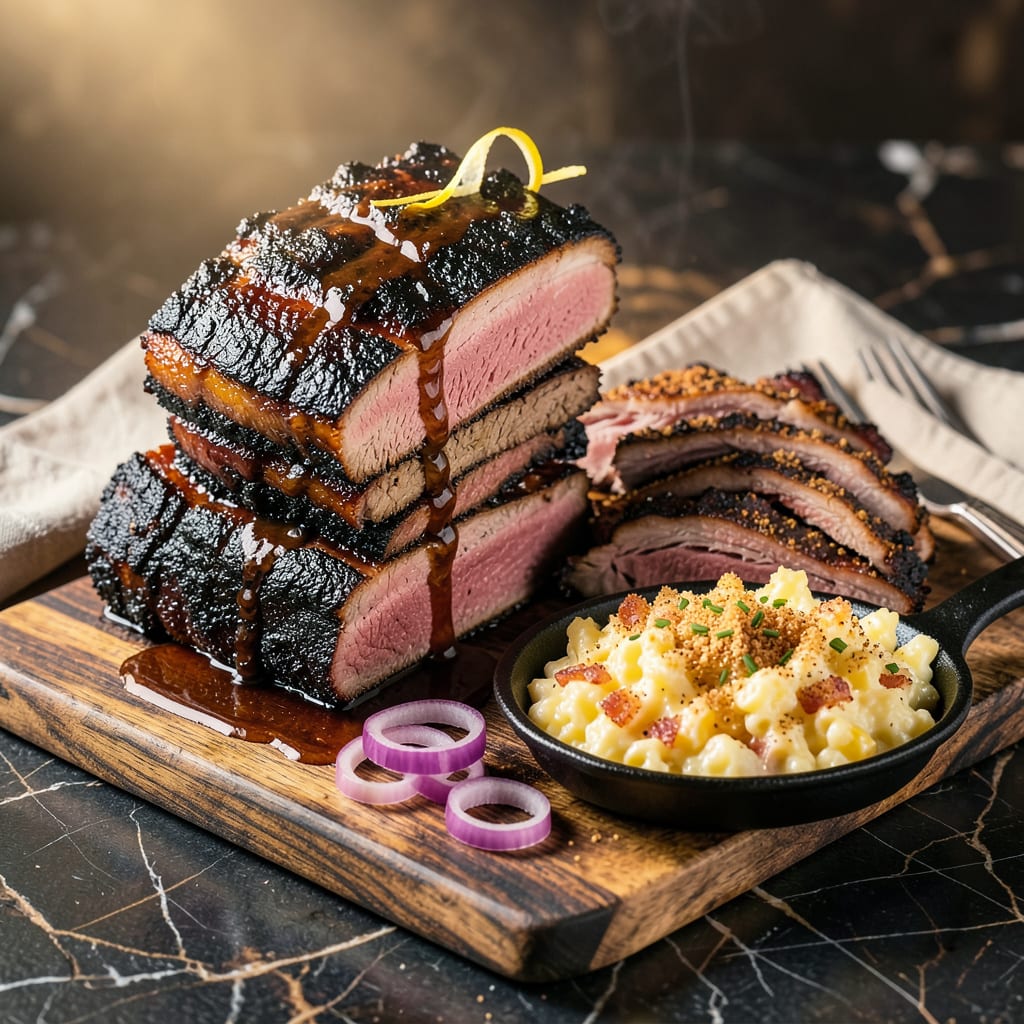
A classic Pit Boss recipe delivers tender, smoky meat with a perfect bark by combining low-and-slow cooking with bold dry rubs or marinades. Brisket, ribs, and pulled pork shine when cooked between 225°F–250°F for hours, enhanced by wood pellets like hickory or apple.
The magic happens when you let time and smoke work together to break down tough connective tissues. 🔥 This method transforms even the most affordable cuts into melt-in-your-mouth masterpieces by slowly rendering fat while infusing deep, layered flavors. I’ve found that maintaining consistent temperatures is key—fluctuations can lead to dryness or uneven cooking. The choice of wood pellets plays a surprisingly big role too; fruitwoods like cherry add sweetness, while mesquite brings a bolder, earthier punch.
What sets Pit Boss recipes apart is their ability to create that coveted smoke ring and caramelized crust. ✨ The pellet grill’s design circulates heat evenly, eliminating hot spots that plague traditional charcoal setups. For best results, I always recommend letting meat rest after cooking—this allows juices to redistribute, ensuring every bite stays succulent.
💡 In This Article
- How Pit Boss Pellet Grills Create Signature Smoky Flavor
- Essential Tools and Prep for Perfect Pit Boss Recipes
How Pit Boss Pellet Grills Create Signature Smoky Flavor
The secret starts with how pellet grills generate heat and smoke simultaneously. Unlike traditional smokers that rely on separate heat and smoke sources, Pit Boss grills use an auger system to feed compressed wood pellets into a fire pot.
When these pellets ignite at 450-550°F, they produce both clean combustion heat and flavorful smoke—creating what’s called “indirect convection cooking.” This process maintains consistent temperatures while circulating smoke throughout the cooking chamber for even flavor penetration.
What creates that beautiful pink smoke ring? It’s a chemical reaction between nitrogen dioxide in the smoke and myoglobin in the meat. The ring forms best at temperatures between 170-200°F during the first few hours of cooking.
🔥 Pellet grills excel at this because their digital controllers maintain precise temperatures, unlike charcoal grills that experience wild temperature swings. The controlled environment also prevents creosote buildup, which can make food taste bitter.
Temperature control directly impacts moisture retention through a process called “the stall.” When meat reaches about 150-170°F internally, evaporative cooling causes the temperature to plateau. Pit Boss grills handle this better than traditional smokers because their convection fans circulate moist air, reducing surface drying.
This is why brisket cooked on a pellet grill often retains 15-20% more moisture than on offset smokers.
Wood pellet choice dramatically alters flavor profiles. Hickory pellets contain 3-5% more lignin than fruitwoods, producing stronger, bacon-like smoke flavors. Mesquite burns hotter and faster, ideal for short cooks like steaks. Fruitwoods like apple or cherry contain more natural sugars that caramelize on meat surfaces.
I’ve found that blending pellets (like 70% hickory with 30% cherry) creates complex flavor layers that single-wood smokers can’t match.
The grill’s design creates what engineers call “laminar flow”—smooth, consistent air movement that prevents hot spots. Traditional offset smokers can have 50°F+ temperature variations across the cooking surface, while Pit Boss grills typically maintain within ±10°F of the set temperature. This precision allows for perfect bark formation without overcooking the interior.
Here’s what most people don’t realize: the smoke flavor develops in three distinct phases. During the first 2-3 hours, meat absorbs the most smoke. After that, the surface forms a crust that blocks further smoke penetration.
This is why I recommend starting with stronger smoke (using the “P” setting on Pit Boss grills) and reducing it later in the cook. ✨ The final flavor comes from this careful timing, not just the type of wood used.

- BBQ Sausage Recipe Oven: Smoky Depth Without the Grill - September 28, 2026
- BBQ Chicken Bowl Recipe Rice: Smoky Sweetness Over Fluffy Grains - September 28, 2026
- Beef Cutlet Recipe Ideas: Crispy Breaded Patties With Bold Seasonings - September 28, 2026