
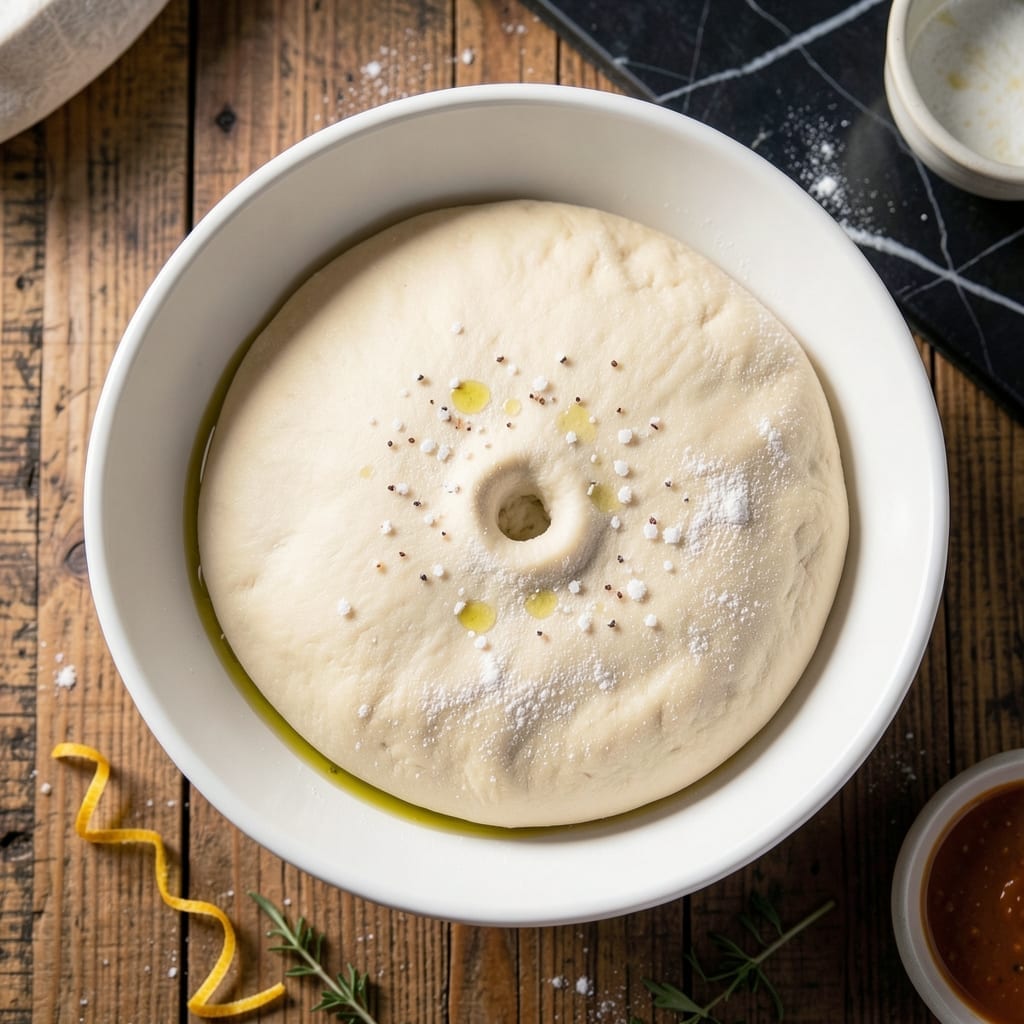
Mastering pizza dough at home changed my cooking game completely. This version delivers the chewy texture and restaurant-level rise that separates good pizza from great.
The secret lies in precise measurements and proper fermentation time. I’ve tested countless variations to perfect the balance between crisp exterior and airy interior. The dough comes together with simple ingredients but requires patience.
After mixing, the dough needs time to develop flavor and structure. A slow, overnight rise in the refrigerator creates the complex taste and perfect texture that defines professional-quality pizza crust.
What emerges is a blank canvas ready for your favorite toppings, with the strength to hold up to sauces and cheeses without becoming soggy. This foundation makes all the difference.
Ingredients for Pizza Dough Recipe Bobby Flay
Simple flour, yeast, and patience create this restaurant-quality pizza foundation.
| Ingredient | Amount | Notes |
|---|---|---|
| Bread Flour 🌾 | 3 ½ cups | High-protein for chewiness |
| Instant Yeast 🍞 | 2 ¼ tsp | Active dry works too |
| Fine Sea Salt 🧂 | 2 tsp | Diamond Crystal preferred |
| Granulated Sugar 🍚 | 2 tsp | Feeds the yeast |
| Extra-Virgin Olive Oil 🫒 | 2 tbsp | High quality for flavor |
| Warm Water 💧 | 1 ½ cups | 105-110°F for activation |
| Semolina Flour 🌾 | ¼ cup | For dusting work surface |
| All-Purpose Flour 🌾 | ½ cup | For adjusting consistency |
| Cornmeal 🌽 | ¼ cup | For pizza peel dusting |
Bread flour is non-negotiable here—the higher protein content (12-14%) develops the gluten needed for that signature chew. King Arthur and Bob’s Red Mill are my go-tos. The yeast should be fresh; if yours has been in the pantry for over a year, replace it. Instant yeast dissolves right into the dry ingredients, but active dry works if you proof it first in the warm water with sugar (it should foam within 5-10 minutes).
No bread flour? All-purpose in a pinch, but expect a slightly less chewy crust. Out of semolina? Fine cornmeal or extra all-purpose works for dusting. The olive oil adds richness—use something you’d happily drizzle on finished pizza. If your kitchen is cold, warm the mixing bowl slightly before adding ingredients to help the yeast activate faster.
The dough balls freeze beautifully for up to 3 months—just thaw overnight in the fridge. Once mixed, the dough keeps in the refrigerator for 3 days (it actually improves with time). Always bring it to room temperature before shaping, or it’ll fight you every step of the way.
Why You’ll Love This Recipe
- No-Fuss Mixing: I just dump the bread flour, yeast, salt, sugar, and olive oil in a bowl—no fancy steps, no waiting for dough to proof for hours.
- Crispy Chewy Magic: That combo of bread flour and olive oil gives it the perfect chew with a golden crust I can’t stop sneaking bites of.
- Endless Topping Canvas: Honestly, it’s my blank slate for anything from margherita to loaded veggie—even my picky nephew cleans his plate.
- Budget Dinner Hero: A bag of bread flour and a few pantry staples stretch into multiple pizzas, saving me a fortune vs takeout.
Step-by-Step Instructions for Pizza Dough
This method delivers restaurant-quality texture with minimal effort and maximum flavor.
Step 1: Activate Yeast and Create the Sponge
In a large mixing bowl, whisk together the 1.5 cups warm water, 2 tsp granulated sugar, and 2.25 tsp instant yeast. I use this order to ensure the yeast has immediate access to its food source. Let it sit for 5-7 minutes until the mixture becomes frothy and cloudy—this visual confirmation means the yeast is alive and active.
Here’s the thing—if your water is too hot (over 115°F), you’ll kill the yeast. If it’s too cold (below 105°F), it won’t activate properly. I always use an instant-read thermometer to verify the temperature. The sugar isn’t just for sweetness; it jumpstarts the yeast activity for a better rise.
Step 2: Develop the Dough Structure
Add the 3.5 cups bread flour and 2 tsp fine sea salt to the yeast mixture. I use bread flour specifically for its higher protein content, which creates that coveted chewy texture. Using a wooden spoon, stir until a shaggy dough forms—it’ll look rough, but that’s normal at this stage.
Now pour in the 2 tbsp extra-virgin olive oil and continue mixing. The oil adds richness and helps create a more extensible dough that stretches beautifully. At this point, the dough should be pulling away from the sides of the bowl. If it seems too sticky, resist the urge to add more flour yet—the hydration will balance out as you knead.
Step 3: Knead to Perfection
Turn the dough out onto a surface dusted with 0.25 cup semolina flour. Semolina’s coarse texture prevents sticking better than regular flour while adding a subtle nutty flavor. Knead for 8-10 minutes by hand, using the heel of your palm to push the dough away, then fold it back over itself.
You’ll know it’s ready when the dough is smooth, elastic, and slightly tacky but not sticky. To test, poke it with your finger—if the indentation springs back slowly, you’ve developed enough gluten. If it’s still too sticky, incorporate up to 0.5 cup all-purpose flour, 1 tablespoon at a time, until it reaches the right consistency.
Step 4: First Rise for Maximum Flavor
Lightly oil a clean bowl, place the dough inside, and turn to coat all sides. Cover with a damp towel and let rise in a warm, draft-free spot for 1.5 to 2 hours, or until doubled in size. I like to place mine near (but not on) a preheating oven for consistent warmth.
The dough should be puffy with visible air bubbles when ready. This first rise develops the flavor complexity that separates good pizza dough from great. If your kitchen is cool, the rise might take longer—that’s fine. The yeast will work at its own pace, and rushing it with too much heat can create off flavors.
Step 5: Shape and Final Preparation
Punch down the risen dough to release excess air, then turn it out onto a surface dusted with 0.25 cup cornmeal. The cornmeal adds texture and prevents sticking when you transfer the dough to your pizza peel or pan. Divide the dough into 4 equal portions for individual pizzas.
Shape each portion into a ball, then let rest covered for 15-20 minutes before stretching. This short rest relaxes the gluten, making the dough easier to stretch thin without springing back. When ready, stretch to your desired thickness—remember, the dough will continue to relax and expand slightly during its final proof while you add toppings.
Pro Tips For Making Pizza Dough Recipe Bobby Flay
- Warm Your Water: Use water around 110°F—hotter than lukewarm but not scalding—to activate the instant yeast properly without killing it. I learned this the hard way after a few doughs that refused to rise.
- Measure Flour Right: Spoon the bread flour into your cup and level it off—don’t scoop directly from the bag, or you’ll pack in too much and end up with dense dough.
- Skip the Rush: Let the dough rise until doubled, about 1-2 hours at room temp. After burning through a few under-proofed pizzas, I finally accepted that patience actually changes the outcome.
- Oil the Bowl: Coat the rising bowl with about 1 tablespoon of that extra-virgin olive oil before adding the dough—it prevents sticking and makes cleanup way easier. Sounds weird, but it works.
Flavor Customization for pizza dough recipe bobby flay
Herb-Infused Oil
Swap the 2 tbsp extra-virgin olive oil for herb-infused oil. I love rosemary-garlic oil for a bold, aromatic flavor. Simply heat 2 tbsp olive oil with 1 tbsp fresh rosemary and 2 minced garlic cloves for 5 minutes on low heat, then cool before mixing. 💡
Spicy Kick
Add 1 tsp red pepper flakes or ½ tsp cayenne pepper to the dry ingredients for a subtle heat. For serious spice lovers, mix in 1 tbsp hot honey with the wet ingredients. The heat builds gradually, so taste as you go.
Cheesy Crust
Incorporate ½ cup grated Parmesan or pecorino Romano into the dough during the final kneading stage. The cheese melts into the crust, creating a savory depth that pairs perfectly with tomato sauce. I prefer Parmigiano-Reggiano for its nutty flavor.
Whole Wheat Blend
Replace 1 cup bread flour with whole wheat flour for a nuttier, heartier crust. The higher fiber content adds texture, but the dough may need 1-2 tbsp extra warm water to maintain the right hydration. Let it rest for 10 minutes longer to fully hydrate.
Sweet Dough
Increase the sugar to 3 tbsp and add 1 tsp vanilla extract to create a sweet dough perfect for dessert pizzas. This version works beautifully with cinnamon-sugar or Nutella toppings. Reduce the salt to 1 tsp to balance the sweetness.
Gluten-Free Option
Use 3 cups gluten-free all-purpose flour blend with 1 tbsp xanthan gum instead of bread flour. The texture will be different, but still delicious. Let the dough rest for 30 minutes before shaping to improve elasticity. 🌟
Nutrition Facts
Frequently Asked Questions
Can I use all-purpose flour instead of bread flour?
Yes, but expect a slightly less chewy texture. Bread flour’s higher protein content creates the desired elasticity. If substituting, add 1-2 tbsp extra flour as needed to achieve the right consistency.
Why does the dough need to rest before shaping?
A 15-20 minute rest relaxes the gluten, making it easier to stretch without springing back. Skipping this step can result in a tougher crust that resists shaping.
What if my kitchen is too cold for rising?
Place the dough near a preheating oven or on top of the fridge where it’s slightly warmer. The rise may take longer in cool temps, but avoid rushing it with direct heat.
Can I make this dough ahead of time?
The dough keeps in the fridge for 3 days and actually improves with time. For longer storage, freeze dough balls for up to 3 months, thawing overnight before use.

- Bread Recipe For Bread Machine: Hands-Off Artisan Loaf With Perfect Rise - September 30, 2026
- BBQ Chicken Drumsticks Recipe Air Fryer: Smoky Char in Half the Time - September 30, 2026
- Korean BBQ Sauce Recipe Homemade: Sweet and Spicy Umami Glaze - September 30, 2026