
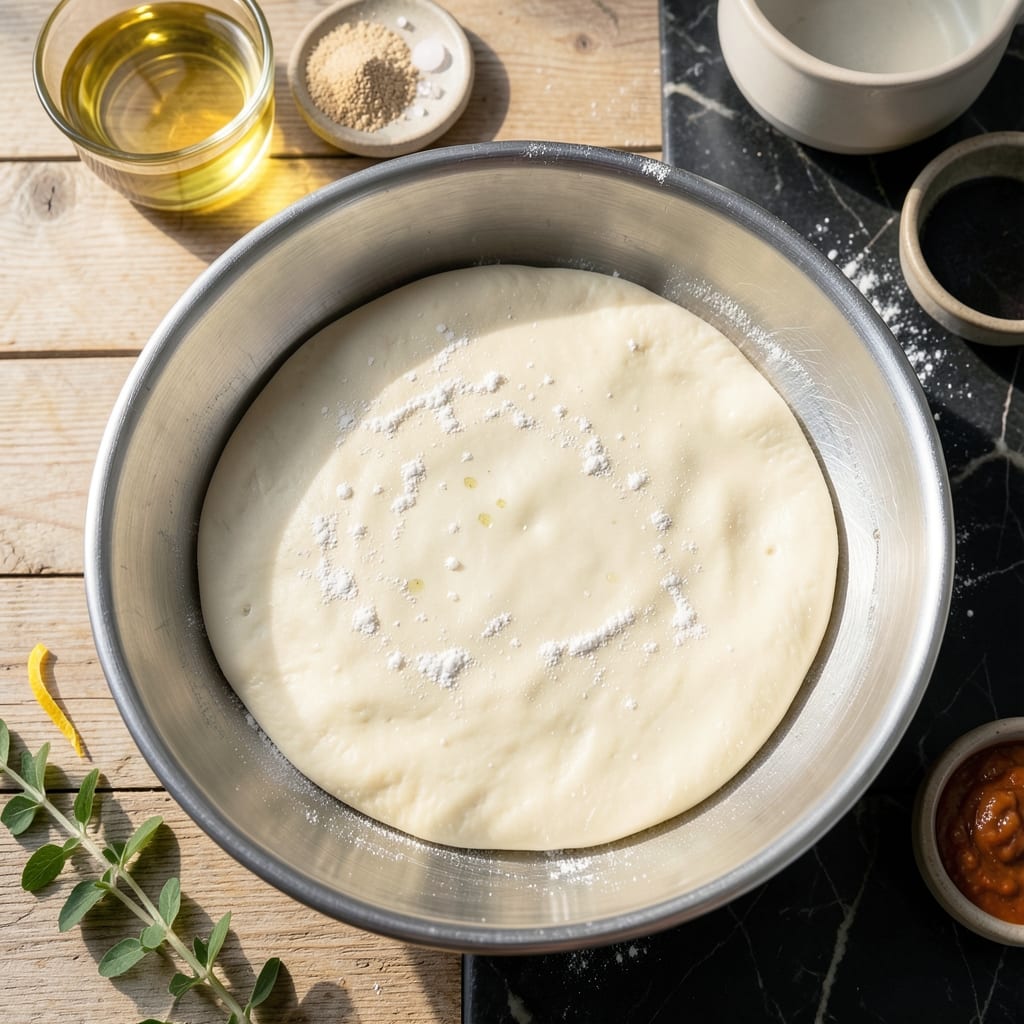
Standing in my grandmother’s Sicilian kitchen, I learned that great pizza starts with patient dough. This method proves you can achieve that same quality in under an hour with the right technique.
Fast-rise yeast eliminates the long wait without sacrificing texture. The dough comes together quickly, yet still delivers a fluffy, airy crust with just the right chew.
Kneading develops the gluten for structure, while a short rest allows the yeast to work its magic. The result is a base that bakes up golden and crisp.
Perfect for weeknight dinners when you crave homemade pizza but don’t have all day. This approach makes it possible.
Ingredients for Pizza Dough Recipe Fast Rise Yeast
Simple pantry staples transform into a golden, airy pizza base in record time.
| Ingredient | Amount | Notes |
|---|---|---|
| Bread Flour 🌾 | 3 ½ cups | Plus extra for dusting surface |
| Fast-Rise Instant Yeast 🍞 | 2 ¼ tsp | One packet, active dry works too |
| Granulated Sugar 🍚 | 1 tsp | Feeds the yeast for rise |
| Kosher Salt 🧂 | 1 ½ tsp | Diamond Crystal preferred |
| Warm Water 💧 | 1 ¼ cups | 110°F to 115°F temperature |
| Extra-Virgin Olive Oil 🫒 | 2 tbsp | Divided for dough and bowl |
| Cornmeal 🌽 | ¼ cup | For dusting baking surface |
| All-Purpose Flour 🌾 | ½ cup | Optional for softer texture |
| Honey 🍯 | 1 tbsp | Optional for slight sweetness |
| Garlic Powder 🧄 | ½ tsp | Optional for flavor boost |
Bread flour is non-negotiable for that chewy texture—King Arthur or Bob’s Red Mill are my go-tos. The yeast needs to be fresh (check the expiration date), and warm water is key—too hot kills it, too cold slows it down. I keep a thermometer in my baking drawer just for this. The olive oil adds richness, but don’t overdo it or the dough gets greasy.
No bread flour? All-purpose in a pinch (add 1 extra tablespoon per cup to compensate). Out of yeast? This won’t work—yeast is the magic here. Honey can be swapped for sugar at a 1:1 ratio. For extra flavor, a teaspoon of Italian seasoning in the dough does wonders. The cornmeal prevents sticking and adds a nice crunch.
Dough can rest in the fridge for up to 24 hours if you want to prep ahead (it’ll develop more flavor). Baked dough freezes well for 1 month—just wrap it tight. Always bring cold dough to room temp before shaping, or it’ll fight you.
Why You’ll Love This Recipe
- 20-Minute Magic: I can have fresh dough ready before the oven even preheats—fast-rise yeast cuts the wait to almost nothing.
- Chewy Perfection: Bread flour gives it that ideal stretchy bite, while a pinch of sugar balances the yeast for just the right flavor.
- Weeknight Hero: Honestly, it’s my go-to for last-minute dinners, movie nights, or even impromptu lunch with the kids.
- Penny-Wise Feast: A few cents’ worth of flour and yeast makes enough for two large pizzas—way cheaper than delivery.
Step-by-Step Instructions for Pizza Dough with Fast Rise Yeast
Here’s the method to achieve a light, airy crust in record time with minimal effort.
Step 1: Activate the Yeast and Mix Wet Ingredients
In a large mixing bowl, combine the 1.25 cups warm water, 1 tsp granulated sugar, and 2.25 tsp fast-rise instant yeast. Stir gently and let sit for 5 minutes until the mixture becomes foamy—this confirms your yeast is active. Here’s the thing—if it doesn’t bubble, your water might’ve been too hot or the yeast expired.
Once foamy, whisk in 1 tbsp honey and 1 tbsp extra-virgin olive oil. The honey adds subtle sweetness and helps feed the yeast for a quick rise, while the oil ensures a tender, elastic dough. I always use a fork for this step to break up any clumps.
Step 2: Form the Dough with Dry Ingredients
In a separate bowl, whisk together the 3.5 cups bread flour, 1.5 tsp kosher salt, and 0.5 tsp garlic powder. Bread flour’s higher protein content gives this dough its chewy texture. If you prefer a slightly softer crust, replace 0.5 cup bread flour with the 0.5 cup all-purpose flour.
Gradually add the dry ingredients to the wet mixture, stirring with a wooden spoon until a shaggy dough forms. Don’t worry about lumps at this stage—you’ll smooth them out next. The dough will feel slightly sticky, but that’s normal for fast-rise recipes.
Step 3: Knead Until Smooth and Elastic
Turn the dough onto a lightly floured surface (use extra bread flour here) and knead for 6-8 minutes by hand, or 4-5 minutes with a stand mixer fitted with a dough hook. You’re looking for a smooth, slightly tacky dough that springs back when poked.
I like to use the windowpane test—stretch a small piece of dough between your fingers. If it’s thin enough to see light through without tearing, your gluten is well-developed. If it tears, knead for another 1-2 minutes.
Step 4: First Rise in a Warm Environment
Lightly oil a clean bowl with the remaining 1 tbsp extra-virgin olive oil and place the dough inside, turning to coat. Cover with a damp towel or plastic wrap and let rise in a warm spot for 25-30 minutes, or until doubled in size.
Real talk: your oven (turned off but with the light on) or the top of your fridge works perfectly for this. The fast-rise yeast does most of the work here, but warmth speeds it up. Don’t skip this step—underproofed dough leads to dense crust.
Step 5: Shape, Second Rise, and Prepare for Baking
Punch down the risen dough to release air, then turn it onto a surface dusted with 0.25 cup cornmeal. The cornmeal adds crunch and prevents sticking. Divide into 4 equal portions for individual pizzas or leave whole for one large pie.
Shape the dough into rounds, cover, and let rest for 10-15 minutes while you preheat your oven to 475°F. This second rise relaxes the gluten, making it easier to stretch without snapping back. Now you’re ready to add toppings and bake to golden perfection.
Pro Tips For Making Pizza Dough Recipe Fast Rise Yeast
- Test Your Water: Use a thermometer to hit 105-110°F for the warm water—any hotter and you’ll kill the fast-rise yeast before it even starts working.
- Skip the Proof: Fast-rise yeast means no waiting around; mix, knead briefly, and let it rest just 10-15 minutes while your oven preheats.
- Use Bread Flour: I learned this the hard way—all-purpose works in a pinch, but bread flour’s higher protein gives that chewy, stretchy texture you actually want.
- Sugar Boosts Yeast: Don’t skip the granulated sugar—1 teaspoon feeds the yeast just enough to speed up the rise without making the dough sweet.
Pro Cooking Tips for pizza dough recipe fast rise yeast
Yeast Activation
Always check your water temperature with a thermometer—110-115°F is the sweet spot. Too hot kills the yeast, too cold slows it down. I use a Taylor digital thermometer for precision. If your yeast doesn’t foam within 5 minutes, start over with fresh yeast. 🌡️
Kneading Technique
Don’t rush the kneading process. You’re developing gluten, which gives the dough structure. I prefer hand-kneading for 6-8 minutes—it’s therapeutic and gives me better control. The dough should pass the windowpane test before moving to the next step.
Rising Environment
For the fastest rise, place your dough in a warm spot. I swear by my oven with the light on—it maintains a consistent 80-85°F. Cover the bowl tightly to prevent a skin from forming. The dough should double in 25-30 minutes. 💡
Shaping Tips
Use cornmeal on your work surface to prevent sticking and add crunch. Divide the dough into 4 equal portions for individual pizzas. Let the dough rest for 10-15 minutes after shaping—this relaxes the gluten, making it easier to stretch.
Oven Prep
Preheat your oven to 475°F with a baking stone or inverted baking sheet inside. This mimics a pizza oven’s high heat. I always let my oven preheat for at least 30 minutes to ensure even cooking.
Dough Storage
If you’re not using the dough immediately, store it in the fridge for up to 24 hours. This develops more flavor. Bring it to room temperature before shaping, or it’ll be difficult to work with.
Nutrition Facts
Frequently Asked Questions
What’s the ideal water temperature for activating the yeast?
Use 110-115°F water for best results. Any hotter kills the yeast, while colder water slows activation. A kitchen thermometer ensures precision.
Can I use all-purpose flour instead of bread flour?
Yes, but replace 0.5 cup bread flour with all-purpose for a softer texture. Bread flour’s higher protein gives better chew, though.
How do I know when the dough is properly kneaded?
Perform the windowpane test: stretch a small piece thin enough to see light through. If it doesn’t tear, your gluten is developed after 6-8 minutes.
Why didn’t my dough rise in 30 minutes?
Check your yeast freshness and water temperature first. If both are correct, ensure your rising spot is warm (80-85°F). Cold environments slow the process.

- Potato Candy Recipe 1933: Vintage Peanut Butter Roll Delight - October 30, 2026
- Potato Chip Cookie Recipe With Pecans: Buttery Crunch Meets Nutty Richness - October 30, 2026
- Potato Patty Recipe No Egg: Crispy Edges Without the Binder - October 30, 2026