
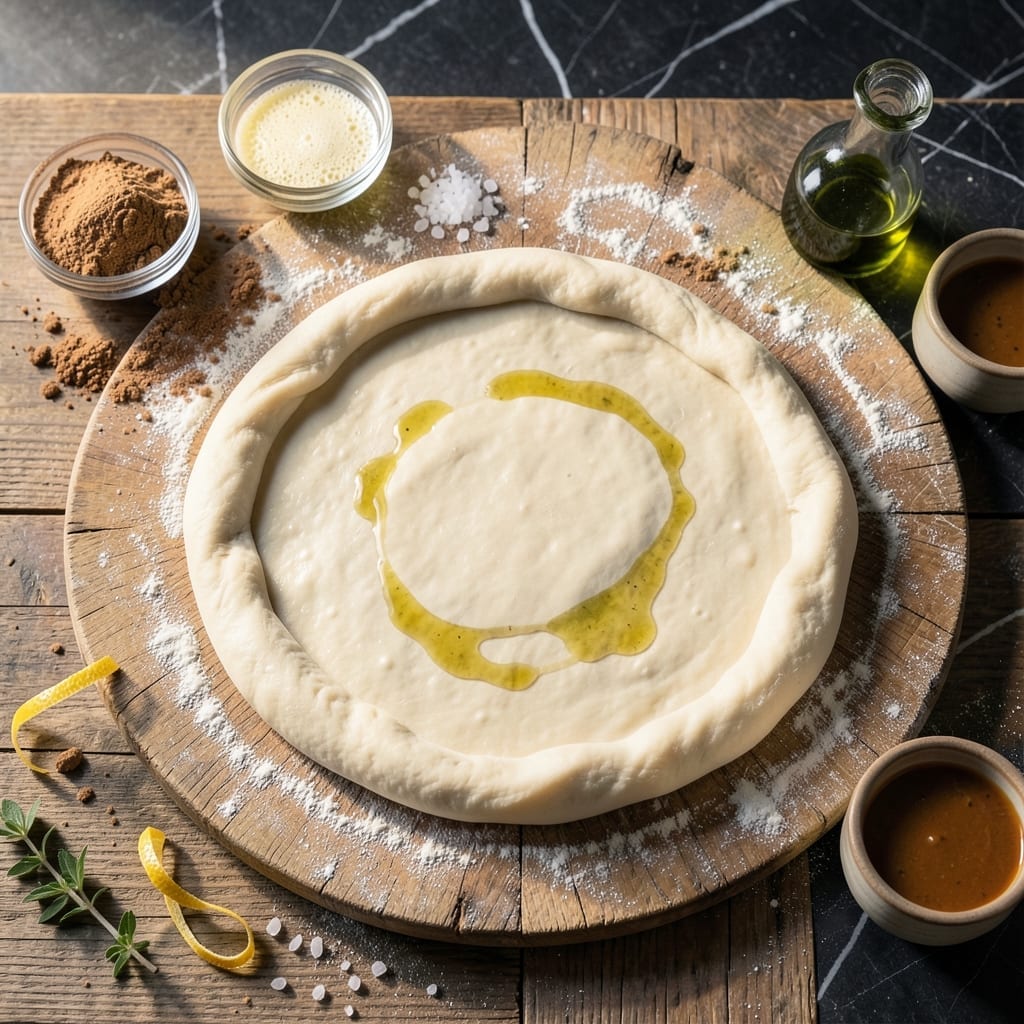
Wood-fired pizza starts with the perfect dough, and this recipe delivers restaurant-quality results in your backyard oven. I’ve tested countless variations to find the ideal balance of chewiness and crispness that holds up to high heat.
The secret is a high-hydration dough that can withstand the intense temperatures of an outdoor oven. With just 5 ingredients and 24-hour fermentation, you’ll achieve that signature leopard-spotted crust with airy bubbles.
This method ensures your crust cooks through in 90 seconds without burning, while developing complex flavors that store-bought dough can’t match. The extended rise time creates depth you can taste in every bite.
Top with your favorite sauces and toppings, then watch as the wood fire works its magic. The foundation for exceptional pizza starts right here with this foolproof dough.
Ingredients for Pizza Dough Recipe for Outdoor Pizza Oven
Five ingredients. Twenty-four hours. Restaurant-quality crust every time.
| Ingredient | Amount | Notes |
|---|---|---|
| Bread Flour 🌾 | 3 ½ cups | High-protein for chewy texture |
| Active Dry Yeast 🍞 | ¼ tsp | One packet, proofed in warm water |
| Sea Salt 🧂 | 2 tsp | Fine grain for even distribution |
| Olive Oil 🫒 | 2 tbsp | Extra-virgin for depth of flavor |
| Warm Water 💧 | 1 ½ cups | 105-110°F for yeast activation |
The flour is non-negotiable here. King Arthur Bread Flour has the protein content (12-13%) for that perfect chew—all-purpose works in a pinch but won’t hold up as well to the high heat of an outdoor oven. I always grab mine from Whole Foods bulk bins for freshness. Yeast from Fleischmann’s or Red Star is reliable, just check the expiration date—old yeast won’t rise properly.
No bread flour? Add 1 tbsp vital wheat gluten per cup of all-purpose to boost protein. Sea salt can be swapped for kosher salt at double the volume. If you’re out of olive oil, avocado oil works but lacks flavor. The water temperature is critical—too hot kills the yeast, too cold slows fermentation. I use a thermometer for precision.
The dough ferments best at room temperature (about 70°F). Cover tightly and refrigerate if it needs to rest longer than 24 hours—it’ll keep for 3 days. Bring to room temp before shaping for easier handling.
Why You’ll Love This Recipe
- 5-Minute Mix: I just dump the bread flour, yeast, salt, and olive oil in a bowl, add warm water, and it’s ready for the oven in no time.
- Crispy Outside, Chewy Inside: The high heat of the outdoor oven turns this dough into something magical—blistered edges with a soft, airy center.
- Backyard Party Hero: Honestly, it’s my go-to for summer gatherings, and everyone gets to customize their own pie.
- Budget-Friendly Batch: A few cents’ worth of ingredients makes enough dough for four pizzas, and leftovers freeze beautifully for next time.
Step-by-Step Instructions for Pizza Dough for Outdoor Pizza Oven
Here’s the method I’ve perfected for wood-fired oven success with minimal effort.
Step 1: Activate the Yeast in Warm Water
In a large bowl, combine the 0.25 tsp Active Dry Yeast with the 1.5 cups Warm Water (it should feel like warm bathwater, between 105-110°F). Let this sit undisturbed for 5-7 minutes until the mixture becomes foamy on top.
This proofing step is crucial—you should see a visible layer of bubbles forming, which confirms the yeast is active and ready to work. If you don’t see foam, your water might have been too hot or the yeast too old. Start over with fresh yeast if needed.
Step 2: Mix the Dry Ingredients and Wet Components
In a separate large bowl, whisk together the 3.5 cups Bread Flour and 2 tsp Sea Salt. The high-protein bread flour gives your crust that perfect chewy texture essential for wood-fired cooking. Make a well in the center and pour in the yeast-water mixture along with the 2 tbsp Olive Oil.
Using a wooden spoon or your hands, gradually incorporate the flour into the wet ingredients until a shaggy dough forms. You want all the flour hydrated, but don’t worry about achieving a smooth texture yet—that happens during kneading.
Step 3: Knead the Dough Until Smooth and Elastic
Turn the dough out onto a lightly floured surface and begin kneading. Press the dough away from you with the heel of your hand, then fold it back over itself. Rotate the dough a quarter turn after each fold and repeat this process for 8-10 minutes.
You’ll know it’s ready when the dough becomes smooth, elastic, and slightly tacky but not sticky. If it sticks to your hands, add a sprinkle of flour, but use restraint—too much flour makes for dense crust. The dough should spring back when gently pressed with your finger.
Step 4: Let the Dough Rise at Room Temperature
Form the dough into a ball and place it in a lightly oiled bowl. Cover with a damp kitchen towel or plastic wrap and let it rise in a warm, draft-free spot for 1.5-2 hours, or until doubled in size. In cooler kitchens, this might take up to 2.5 hours.
The dough is properly risen when it has visibly expanded and a finger pressed gently into the side leaves an indentation that slowly springs back. This slow fermentation develops flavor and creates the ideal texture for high-heat cooking.
Step 5: Divide, Shape, and Prepare for the Oven
Punch down the risen dough to release air, then turn it out onto a lightly floured surface. Divide it into 4 equal portions (about 10-12 ounces each) for personal-sized pizzas. Shape each portion into a ball, then cover and let rest for 15-20 minutes.
This rest period relaxes the gluten, making the dough easier to stretch without snapping back. When ready to cook, stretch each ball into a thin round directly on your peel or a floured surface. The dough should stretch easily to about 12 inches in diameter, perfect for that wood-fired oven.
Pro Tips For Making Pizza Dough Recipe For Outdoor Pizza Oven
- Proof Overnight: Let the dough rise in the fridge for 12-24 hours—this slow fermentation develops deeper flavor and a chewier crust that holds up to high heat.
- Use High-Protein Flour: Bread flour (12-14% protein) gives the dough the structure it needs to handle the intense heat of an outdoor oven without turning gummy.
- Skip Cold Water: Warm water (around 110°F) activates the yeast properly; I learned this the hard way after using cold water and ending up with dense, flat dough.
- Preheat the Stone: Give your pizza stone at least 45 minutes in the oven to reach full temperature—this guarantees a crisp, evenly cooked base every time.
Regional Styles of This Recipe
Neapolitan Tradition
In Naples, they use 00 flour and San Marzano tomato sauce for that authentic thin, soft crust. The dough is stretched by hand to about 10-12 inches and cooked in a wood-fired oven at 900°F for just 60-90 seconds. The result is a tender, slightly charred crust. 🗺️
New York Style
This version uses high-gluten flour and a touch of olive oil in the dough for extra chew. The crust is rolled thin but left slightly thicker at the edges. Cooked at 550-600°F, it bakes in about 5-7 minutes, creating that iconic foldable slice.
Roman Thin Crust
Roman pizza is all about the crispness. The dough is rolled paper-thin, almost like a cracker, and baked in a rectangular pan. It’s cooked at 700°F in an outdoor oven for 3-4 minutes. Toppings are minimal to let the crust shine.
Sicilian Thick Crust
Sicilian-style dough is enriched with olive oil and allowed to rise longer for a fluffy, thick crust. It’s baked in a well-oiled pan at 475°F for 20-25 minutes. The result is a hearty, square-cut pizza with a soft interior and crisp edges.
California Artisan
Inspired by West Coast creativity, this dough often includes sourdough starter for added complexity. It’s cooked at 800°F in an outdoor oven, with toppings like goat cheese and arugula added post-bake. The crust is thin but sturdy, with a rustic, airy texture. 💫
Nutrition Facts
Frequently Asked Questions
Can I use all-purpose flour instead of bread flour?
Yes, but add 1 tbsp vital wheat gluten per cup to boost protein. Bread flour’s higher protein creates the chewy texture ideal for high-heat cooking. All-purpose works in a pinch but may yield a slightly denser crust.
Why does the dough need to rest for 24 hours?
The long fermentation develops complex flavors and improves texture. It allows the gluten to relax, making the dough easier to stretch and creating those desirable air bubbles in the crust.
What’s the ideal oven temperature?
Aim for 700-900°F in your outdoor oven. At this temperature, the crust cooks through in 60-90 seconds while developing that signature wood-fired char and leopard spotting.
How thin should I stretch the dough?
For wood-fired cooking, stretch to about 10-12 inches in diameter. The dough should be thin enough to cook quickly but thick enough to hold toppings without tearing.

- Potato Candy Recipe 1933: Vintage Peanut Butter Roll Delight - October 30, 2026
- Potato Chip Cookie Recipe With Pecans: Buttery Crunch Meets Nutty Richness - October 30, 2026
- Potato Patty Recipe No Egg: Crispy Edges Without the Binder - October 30, 2026