
Creating the perfect pizza base at home starts with understanding the essential ingredients and their roles. This straightforward approach yields consistent results every time.
I developed this method after years of testing different flours, hydration levels, and rising times. The key is using simple ingredients in precise ratios to achieve professional-quality dough.
The process involves mixing, kneading, and allowing the dough to rise properly. This creates a base that’s crispy on the outside with a chewy interior.
You’ll end up with a homemade pizza dough that rivals any pizzeria, ready for your favorite toppings. The foundation for great pizza starts here.
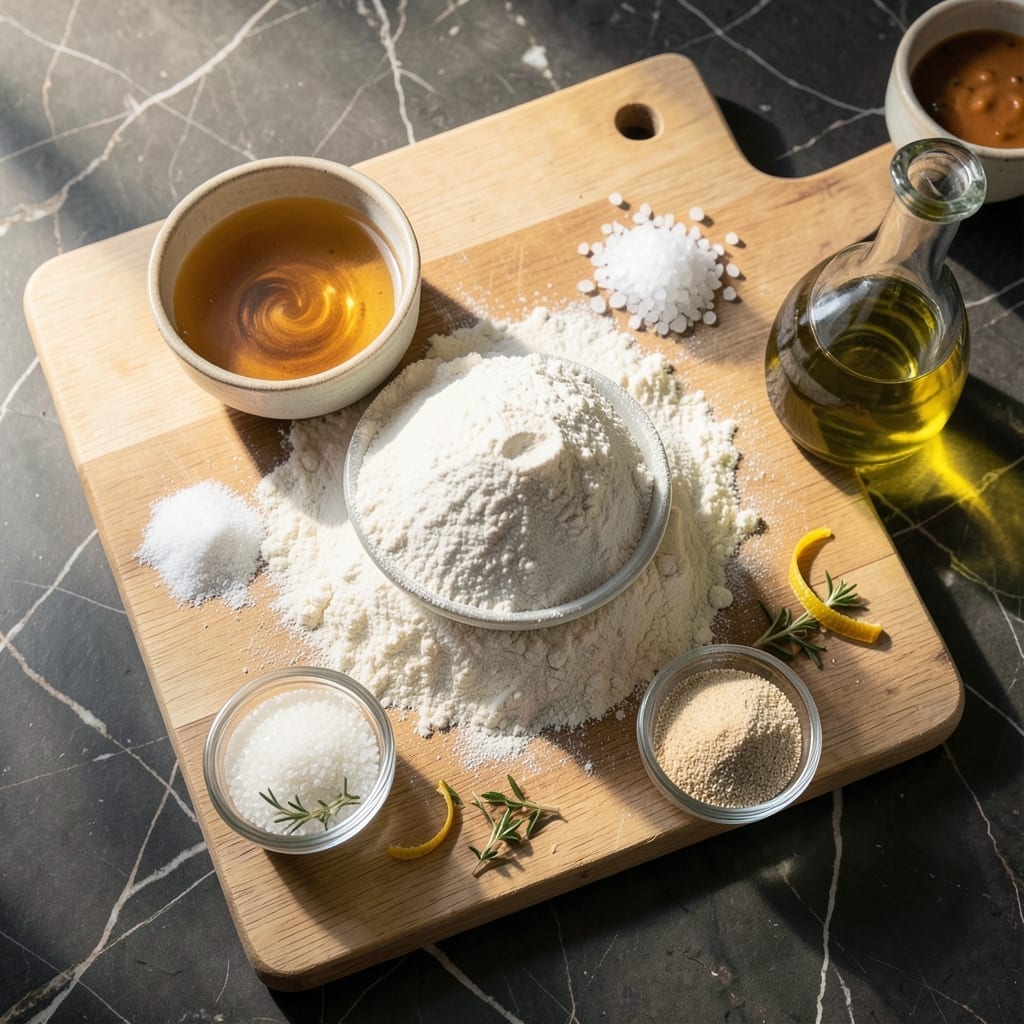
Ingredients for Pizza Dough Recipe Ingredients
Nine simple ingredients create the perfect foundation for homemade pizza dough every time.
| Ingredient | Amount | Notes |
|---|---|---|
| Bread Flour 🌾 | 3 ½ cups | High protein content preferred |
| Active Dry Yeast 🍞 | 2 ¼ tsp | Or one 0.25 oz packet |
| Fine Sea Salt 🧂 | 1 ½ tsp | Diamond Crystal recommended |
| Granulated Sugar 🍚 | 1 tsp | Helps activate yeast |
| Extra-Virgin Olive Oil 🫒 | 2 tbsp | For dough elasticity |
| Warm Water 💧 | 1 ¼ cups | 110°F to 115°F ideal |
| Semolina Flour 🌾 | ¼ cup | For dusting work surface |
| Cornmeal 🌽 | ¼ cup | For pizza peel dusting |
| All-Purpose Flour 🌾 | ½ cup | For adjusting consistency |
The flour is critical here. King Arthur Bread Flour is my go-to for its consistent protein content (12.7%). You can find it at Whole Foods or most supermarkets. The yeast must be fresh—check the expiration date. SAF Red Instant Yeast is a professional favorite. Warm water temperature is non-negotiable: use a thermometer for accuracy.
No bread flour? All-purpose flour plus 1 tbsp vital wheat gluten per cup gets you close. Out of semolina? Fine cornmeal works in a pinch for dusting. Sugar can be substituted with honey at equal amounts (vegetarian-friendly). The olive oil should be high-quality extra-virgin—California Olive Ranch is a reliable brand.
Store flour in airtight containers for up to 6 months. Yeast keeps in the fridge for 1 year unopened, 3 months once opened. The dough itself can be refrigerated for 24 hours or frozen for 1 month.
Why You’ll Love This Recipe
- No-Fuss Mixing: I just dump the bread flour, yeast, salt, sugar, and olive oil in one bowl—no fancy steps.
- That Yeast Magic: The active dry yeast gives it that airy, chewy texture I crave in every bite.
- Endless Toppings: Honestly, this dough handles anything from classic margherita to my weird leftover experiments.
- Budget Stretch: Five simple ingredients feed my family for way less than delivery.
Step-by-Step Instructions for Pizza Dough
Achieve perfect homemade results with this straightforward, professional method.
Step 1: Activate the Yeast Mixture
In a small bowl, combine the 1.25 cups Warm Water with the 1 tsp Granulated Sugar and 2.25 tsp Active Dry Yeast. Stir gently and let sit for 5-7 minutes until the mixture becomes frothy and opaque.
This frothing indicates the yeast is active and ready to leaven your dough. If it doesn’t froth, your yeast may be expired—start over with fresh yeast. The sugar feeds the yeast, accelerating activation, while the warm water temperature must be precise to avoid killing it.
Step 2: Combine Dry Ingredients and Form the Dough
In a large mixing bowl, whisk together the 3.5 cups Bread Flour, 1.5 tsp Fine Sea Salt, and 0.5 cup All-Purpose Flour. Create a well in the center and pour in the activated yeast mixture along with the 2 tbsp Extra-Virgin Olive Oil.
Use a wooden spoon or dough whisk to combine until a shaggy dough forms. The high-protein bread flour provides the gluten structure needed for chewy texture, while the olive oil adds elasticity. Switch to your hands once the mixture is too thick for the spoon.
Step 3: Knead to Develop Gluten
Turn the dough onto a surface lightly dusted with 0.25 cup Semolina Flour. Knead for 8-10 minutes by pushing the dough away with the heel of your hand, folding it back, and rotating it 90 degrees with each repetition.
You’ll know it’s ready when the dough is smooth, elastic, and springs back when poked. Semolina’s coarse texture prevents sticking while adding a subtle nutty flavor. If the dough feels too sticky, add a small amount of the reserved all-purpose flour, but avoid over-flouring.
Step 4: First Rise for Optimal Fermentation
Lightly oil a clean bowl, place the dough inside, and cover with a damp towel or plastic wrap. Let it rise in a warm, draft-free area for 1-2 hours or until doubled in volume.
This first rise develops flavor and texture. The dough should be puffy with visible air bubbles. If your kitchen is cool, extend the rise time—patience ensures a light, airy crumb. Punch down the dough gently once it’s doubled to release excess gas.
Step 5: Shape and Prepare for Final Use
Divide the dough into 4 equal portions for individual pizzas. On a surface dusted with 0.25 cup Cornmeal, roll or stretch each portion into a 12-inch round. Cornmeal adds a crisp texture to the crust and prevents sticking on the peel.
Let the shaped dough rest for 15-20 minutes before adding toppings. This brief rest relaxes the gluten, making it easier to stretch and preventing shrinkage during baking. Your base is now ready for the oven.
Pro Tips For Making Pizza Dough Recipe Ingredients
- Proof the Yeast: Always activate your dry yeast in warm water (110°F) with a pinch of sugar first—I learned this the hard way after wasting three batches on dormant yeast.
- Use High-Protein Flour: Bread flour’s extra gluten gives pizza dough that chewy, stretchy texture you want; all-purpose just doesn’t cut it for a proper crust.
- Salt Last: Mix your salt in after the yeast starts bubbling, or it can slow down activation—sounds weird, but it works.
- Oil the Bowl: Coat your rising bowl with about 1 tablespoon of olive oil before the first rise; it keeps the dough from sticking and makes cleanup a breeze.
Perfect Pairings for This Dish
Classic Toppings
For a traditional Margherita, use San Marzano tomatoes, fresh mozzarella, and basil leaves. The sweetness of the tomatoes balances the tang of the cheese perfectly. I always add a drizzle of extra-virgin olive oil before baking. 💛
Vegetable Medley
Roast bell peppers, zucchini, and red onions at 400°F for 15 minutes before adding to your pizza. This intensifies their flavors and prevents a soggy crust. Sprinkle with feta cheese for extra zing.
Meat Lovers
Brown Italian sausage and crumble it over the dough. Add pepperoni and prosciutto for a salty, savory combo. I like to finish with fresh arugula for a peppery contrast after baking.
Breakfast Pizza
Top your dough with scrambled eggs, crispy bacon, and shredded cheddar. Bake until the cheese melts, then add a dollop of sour cream. This is a hit with my daughter Lily on weekend mornings. 🍳
Dessert Option
For a sweet treat, spread Nutella over the dough, add sliced bananas and strawberries, then bake for 10 minutes. Finish with a sprinkle of powdered sugar and a scoop of vanilla ice cream.
Nutrition Facts
Frequently Asked Questions
Can I use all-purpose flour instead of bread flour?
Yes, but add 1 tbsp vital wheat gluten per cup to match bread flour’s protein content. The texture will be slightly less chewy, but still delicious.
Why does the water need to be warm?
Warm water (110°F-115°F) activates yeast without killing it. Too hot and the yeast dies; too cold and it won’t rise properly. Use a thermometer for accuracy.
What if my dough doesn’t rise?
Check your yeast’s expiration date first. If it’s fresh, ensure the water was warm enough and the dough was in a draft-free area. Try letting it rise for 30 more minutes in a slightly warmer spot.
How long can I store the dough?
Refrigerate for up to 24 hours or freeze for 1 month. Thaw overnight in the fridge before using. This actually enhances flavor!

- Potato Candy Recipe 1933: Vintage Peanut Butter Roll Delight - October 30, 2026
- Potato Chip Cookie Recipe With Pecans: Buttery Crunch Meets Nutty Richness - October 30, 2026
- Potato Patty Recipe No Egg: Crispy Edges Without the Binder - October 30, 2026