
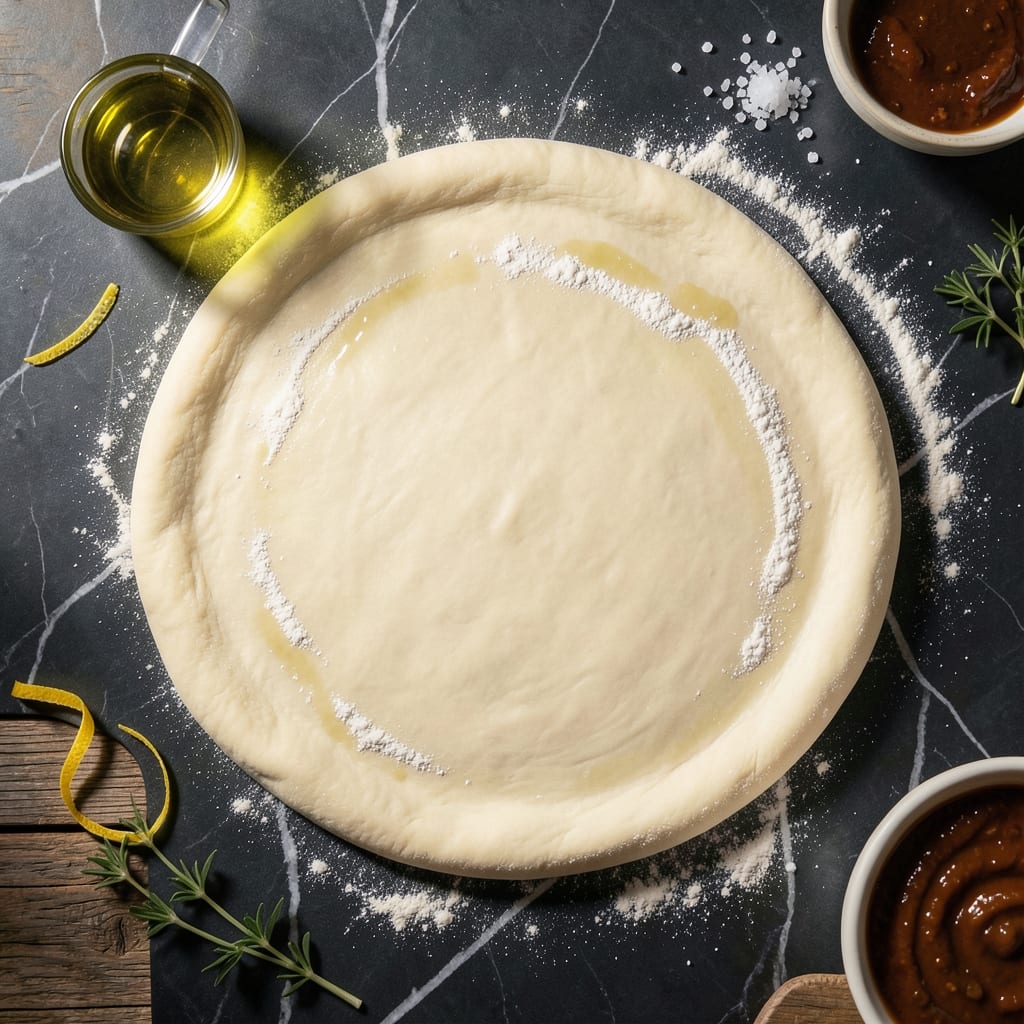
This no-yeast pizza dough delivers restaurant-quality results without the wait. Using baking powder as the leavening agent creates a light, airy texture that bakes up crispy at the edges and tender in the center.
I developed this recipe for busy weeknights when I crave homemade pizza but don’t have hours for dough to rise. The method is simple: mix, shape, and bake. No proofing required.
The baking powder reacts immediately, producing a consistent rise every time. You’ll have a sturdy yet fluffy base ready for your favorite toppings in under 30 minutes.
Perfect for thin-crust lovers or anyone who wants pizza fast. This dough holds up to sauces and toppings without becoming soggy.
Ingredients for Pizza Dough Recipe Using Baking Powder
Nine ingredients, most already in your pantry, come together for this quick dough.
| Ingredient | Amount | Notes |
|---|---|---|
| All-Purpose Flour 🌾 | 3 cups | Plus extra for dusting |
| Baking Powder 🧂 | 2 tsp | Aluminum-free preferred |
| Salt 🧂 | 1 tsp | Fine sea salt or kosher |
| Olive Oil 🫒 | ¼ cup | Extra-virgin for flavor |
| Water 💧 | 1 ¼ cups | Warm, about 110°F |
| Honey 🍯 | 1 tbsp | Helps with browning |
| Italian Seasoning 🌿 | 1 tsp | Optional, for extra flavor |
| Garlic Powder 🧄 | ½ tsp | Optional, for depth |
| Cornmeal 🌽 | ¼ cup | For dusting pan |
The flour is the backbone here. King Arthur all-purpose is my go-to for consistent results—high protein content gives that sturdy yet tender crumb. Baking powder is key (aluminum-free if you can find it at Whole Foods or Target). The honey adds subtle sweetness and helps with browning, but you can skip it if you prefer a more savory base.
No honey? Sugar or agave works at the same amount. Out of Italian seasoning? Dried oregano plus basil at one-third the amount gets you close. Cornmeal not on hand? Semolina or extra flour prevents sticking just fine. The olive oil can be any neutral oil, but extra-virgin adds that nice flavor depth.
Dough keeps in the fridge for 2 days if wrapped tightly. Or freeze the shaped rounds (before baking) for up to 3 months. Let it come to room temp before rolling out—cold dough is stubborn and won’t stretch easily.
Why You’ll Love This Recipe
- No Yeast Needed: I love that this skips the waiting around for dough to rise—baking powder does the work instantly.
- Crisp Yet Tender: The olive oil gives it that perfect flaky crust with a soft bite every time.
- Weeknight Hero: Honestly, I throw this together faster than ordering takeout.
- Pantry Staples: All-purpose flour and baking powder mean I can make this even when my fridge is bare.
Step-by-Step Instructions for Pizza Dough Using Baking Powder
This no-yeast method comes together quickly with just a bowl and your hands.
Step 1: Mix the Dry Ingredients
In a large mixing bowl, whisk together the 3 cups all-purpose flour, 2 tsp baking powder, 1 tsp salt, 1 tsp Italian seasoning, and 0.5 tsp garlic powder. I like to make sure these are evenly distributed before adding the wet ingredients—this prevents pockets of salt or baking powder in the finished dough.
Take a moment to press your fingers into the flour mixture to break up any clumps. You want a uniform base that looks like fine sand. The baking powder is what will give your crust that light, airy rise without the wait of yeast.
Step 2: Combine Wet and Dry Ingredients
Create a well in the center of your dry ingredients. Pour in the 0.25 cup olive oil, 1.25 cups warm water, and 1 tbsp honey. Using a wooden spoon or silicone spatula, stir everything together until a shaggy dough begins to form.
The warm water helps activate the baking powder, while the honey adds a touch of sweetness that balances the savory notes. You’ll notice the dough starts to pull away from the sides of the bowl as the flour hydrates. If it feels too sticky, don’t panic—it will come together in the next step.
Step 3: Knead Until Smooth
Turn the dough out onto a lightly floured surface and knead for 3-5 minutes until smooth and elastic. I dust my counter with a bit of the all-purpose flour to prevent sticking, adding more as needed, but be careful not to over-flour—this can make your crust dry.
You’ll know it’s ready when the dough springs back gently when pressed with your finger, and the surface looks smooth rather than rough. The texture should be slightly tacky but not sticky. This kneading develops the gluten, which gives your crust structure and chew.
Step 4: Rest the Dough Briefly
Shape the dough into a ball and place it in a clean bowl lightly coated with olive oil. Cover with a damp towel and let it rest for 10 minutes. Unlike yeast dough, this won’t double in size, but the rest allows the gluten to relax, making it easier to roll out.
After the rest, the dough should feel more pliable and less resistant when you press into it. This short break is key to achieving a crust that stretches easily without springing back. While you wait, preheat your oven to 425°F and dust your pizza pan or baking sheet with the 0.25 cup cornmeal to prevent sticking.
Step 5: Shape and Prepare for Toppings
Turn the rested dough out onto your prepared pan and press it into an even layer, working from the center outward. Use your fingers to create a slight ridge around the edge for the crust. If the dough resists, let it rest for another 2-3 minutes before trying again.
Once shaped, you’re ready to add your sauce and toppings. The cornmeal not only prevents sticking but also adds a subtle crunch to the bottom of your crust. Bake as directed in your pizza recipe, and enjoy a crisp, flavorful base that comes together in a fraction of the time of traditional dough.
Pro Tips For Making Pizza Dough Recipe Using Baking Powder
- Warm the Water: Use water around 105-110°F—hotter kills the baking powder’s lift, colder slows the reaction. I learned this the hard way with a dense, sad crust.
- Measure Baking Powder: Use exactly 2 teaspoons per cup of flour—too much leaves a bitter taste, too little and your crust won’t rise. Sounds fussy, but it’s non-negotiable.
- Skip Overmixing: Stir just until the dough comes together, about 30 seconds. Overworking it develops gluten, making your pizza tough instead of light and airy.
- Rest the Dough: Let it sit for 10 minutes before shaping—this relaxes the gluten and makes rolling easier. I used to skip this and wondered why my dough fought me every time.
Serving Suggestions for Leftovers
Classic Margherita Style
Keep it simple with ½ cup tomato sauce, 8 oz fresh mozzarella, and fresh basil leaves. The baking powder crust holds up beautifully to the moisture. Drizzle with extra-virgin olive oil before baking for a golden finish. 🌟
Loaded Veggie Delight
Spread a thin layer of pesto, then top with bell peppers, red onions, mushrooms, and olives. Sprinkle 1 cup shredded mozzarella and bake. The sturdy base prevents sogginess even with all those toppings.
Breakfast Pizza Twist
Swap sauce for 2 tbsp olive oil mixed with garlic. Top with scrambled eggs, crispy bacon, and ½ cup shredded cheddar. Bake until cheese melts—perfect for brunch in under 20 minutes.
Dessert Pizza Option
Brush with melted butter, sprinkle ¼ cup brown sugar, and add sliced apples or pears. Finish with cinnamon and bake until caramelized. The honey in the dough enhances the sweetness perfectly.
White Pizza Elegance
Skip the sauce and use ricotta cheese as your base. Add spinach, sun-dried tomatoes, and ¼ cup grated Parmesan. The Italian seasoning in the dough complements these flavors beautifully.
Bake at 425°F for 12-15 minutes until edges are golden. 💫
Nutrition Facts
Frequently Asked Questions
Why use baking powder instead of yeast?
Baking powder creates a quick chemical reaction for immediate rise, eliminating the 1-2 hour proofing time. It’s perfect for last-minute pizza cravings. The texture is slightly denser but still light and crispy.
Can I make this dough ahead of time?
Yes! Prepare the dough, wrap it tightly in plastic, and refrigerate for up to 2 days. Let it sit at room temperature for 30 minutes before shaping to improve elasticity.
What if my dough is too sticky?
Add 1-2 tbsp more flour while kneading, but avoid overdoing it. The dough should be slightly tacky. If it’s too dry, add 1 tsp water at a time.
How thin should I roll the dough?
Aim for ¼-inch thickness for a crispy crust. Use a rolling pin or press it out with your hands. For a thicker crust, go up to ½-inch.

- Potato Candy Recipe 1933: Vintage Peanut Butter Roll Delight - October 30, 2026
- Potato Chip Cookie Recipe With Pecans: Buttery Crunch Meets Nutty Richness - October 30, 2026
- Potato Patty Recipe No Egg: Crispy Edges Without the Binder - October 30, 2026