
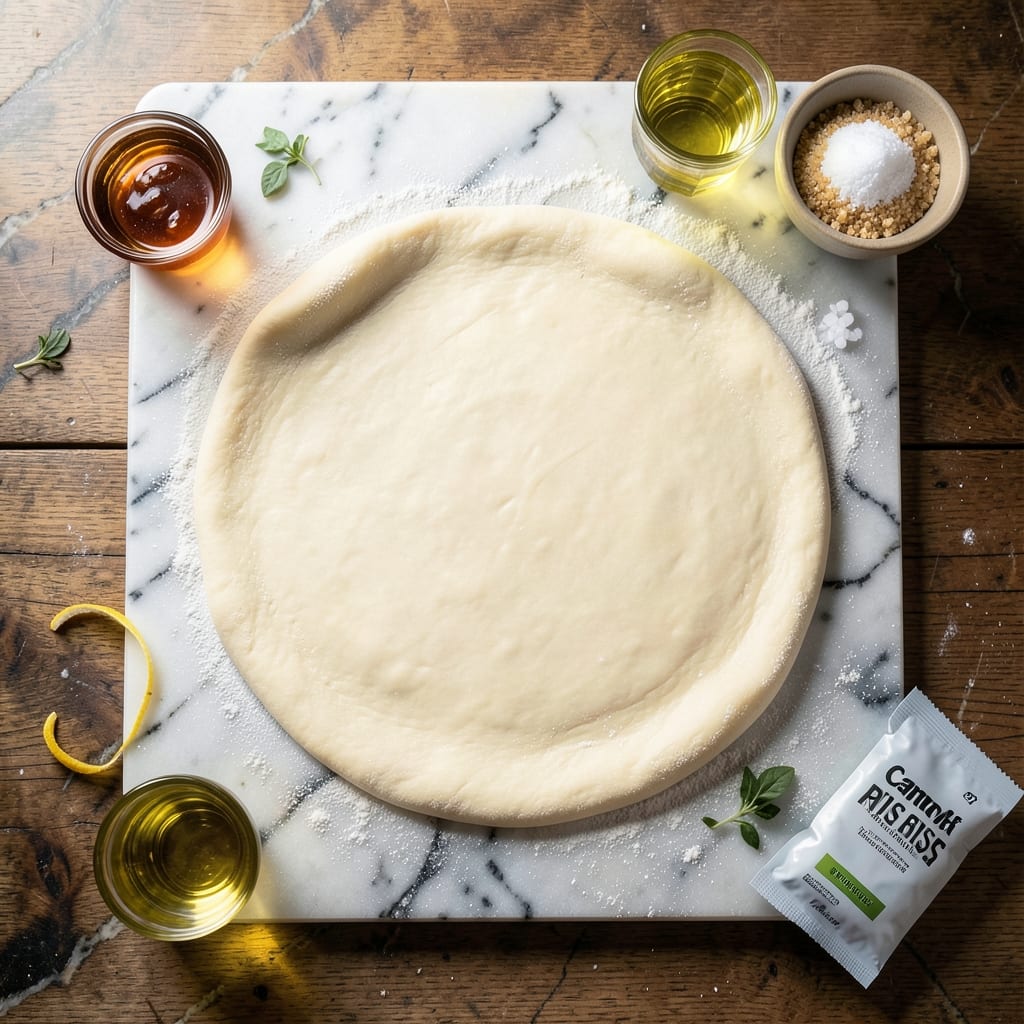
This quick-rise pizza dough recipe delivers restaurant-quality results in under an hour. I developed this method after years of testing to achieve the perfect balance of chewy and crispy textures without the long wait.
The secret is using quick-rise yeast and maintaining the right temperature for the dough to double in size rapidly. Simple ingredients and precise timing ensure a consistent, flavorful base every time.
You’ll end up with a smooth, elastic dough that bakes into a golden crust with airy pockets. It’s versatile enough for any topping combination you love.
Perfect for weeknight dinners when you crave homemade pizza without the hassle.
Ingredients for Pizza Dough Recipe Quick Rise Yeast
Ten simple ingredients transform into golden, chewy pizza crust in record time.
| Ingredient | Amount | Notes |
|---|---|---|
| Bread Flour 🌾 | 3 ½ cups | High-protein for chewy texture |
| Quick-Rise Yeast 🍞 | 2 ¼ tsp | One packet, active dry |
| Warm Water 💧 | 1 ¼ cups | 110-115°F for activation |
| Extra-Virgin Olive Oil 🫒 | 2 tbsp | For tenderizing dough |
| Granulated Sugar 🍚 | 1 tsp | Feeds the yeast |
| Kosher Salt 🧂 | 1 ½ tsp | Diamond Crystal preferred |
| Semolina Flour 🌾 | ¼ cup | For dusting work surface |
| All-Purpose Flour 🌾 | ½ cup | For adjusting consistency |
| Honey 🍯 | 1 tsp | Optional for sweetness |
| Cornmeal 🌽 | 2 tbsp | For pizza peel dusting |
The flour blend makes all the difference here. King Arthur Bread Flour is my go-to for that perfect chewy bite, but any high-protein bread flour works. Quick-rise yeast (I use Fleischmann’s) is non-negotiable for the speed. Most grocery stores carry it near the baking aisle. If your yeast is old, test it first—foamy in 5 minutes means it’s good to go.
No bread flour? All-purpose plus 1 tbsp vital wheat gluten per cup gets you close. Out of quick-rise? Regular yeast works but needs double the time. The olive oil can be any neutral oil in a pinch, but extra-virgin adds flavor. For a sweeter dough, skip the sugar and use honey or agave—just don’t exceed 1 teaspoon total sweetener.
Dough keeps in the fridge for 2-3 days (let it come to room temp before shaping) or freezes for 1 month. Portion into balls before freezing for easy weekday pizzas. The semolina and cornmeal prevent sticking—don’t skip them if you want that crispy bottom.
Why You’ll Love This Recipe
- Ready in 20: I can have dough rising while the oven preheats—quick-rise yeast does the heavy lifting.
- Chewy Perfection: Bread flour and a touch of olive oil give that bakery-style bite I crave.
- Weeknight Hero: Honestly, it’s my Friday night shortcut for homemade pizza without the 3-hour wait.
- Budget Stretch: A few cents of flour and yeast makes enough for two pies—leftovers taste even better.
Step-by-Step Instructions for Pizza Dough with Quick-Rise Yeast
Here’s the method for perfect dough in under an hour—no fancy equipment needed.
Step 1: Activate the Yeast
In a large mixing bowl, combine the 1.25 cups Warm Water, 1 tsp Granulated Sugar, and 1 tsp Honey. The water should be between 110-115°F—hot enough to activate the yeast but not so hot it kills it. Stir until the sugar and honey dissolve completely.
Sprinkle the 2.25 tsp Quick-Rise Yeast evenly over the surface of the water. Let it sit undisturbed for 5-7 minutes until it becomes foamy and bubbly. This is your visual confirmation that the yeast is active and ready to work its magic. If it doesn’t foam, your water was likely too hot or too cold—start over.
Step 2: Mix and Knead the Dough
Add the 2 tbsp Extra-Virgin Olive Oil and 1.5 tsp Kosher Salt to the yeast mixture. Then incorporate the 3.5 cups Bread Flour all at once. Use a wooden spoon to stir until a shaggy dough forms—it’ll look rough at first, but that’s normal.
Turn the dough out onto a surface dusted with 0.25 cup Semolina Flour. Knead for 8-10 minutes until smooth and elastic. The dough should spring back when pressed lightly with your finger. If it’s too sticky, add up to 0.5 cup All-Purpose Flour as needed, but don’t overdo it—you want a slightly tacky dough for the best texture.
Step 3: First Rise
Lightly oil a clean bowl and place the dough inside, turning to coat all sides. Cover with a damp towel or plastic wrap. Let it rise in a warm, draft-free place for 20-25 minutes. The dough should nearly double in size—look for it to rise about 1-1.5 inches above the bowl’s rim.
Pro tip: I like to place the bowl on top of my preheating oven (turned to its lowest setting) to create the ideal warm environment. Just make sure it’s not too hot—yeast doesn’t like temperatures above 120°F.
Step 4: Shape and Second Rise
Punch down the dough to release the air, then turn it out onto your semolina-dusted surface. Divide it into 4 equal portions for individual pizzas or leave it whole for a large pie. Shape each portion into a smooth ball by tucking the edges under and rolling gently on the counter.
Place the dough balls on a surface dusted with 2 tbsp Cornmeal to prevent sticking. Cover loosely and let them rest for 15 minutes. This second rise relaxes the gluten, making the dough easier to stretch without tearing.
Step 5: Ready for Toppings
After the second rise, your dough is ready to use. Press each ball into a flat disc, then use your hands or a rolling pin to shape it into your desired thickness. The cornmeal on the bottom will give your crust that authentic pizzeria texture and prevent sticking during baking.
Use immediately or refrigerate for up to 24 hours in an airtight container. If refrigerated, let the dough come to room temperature for 30 minutes before shaping. The cold fermentation actually enhances the flavor, making it even better the next day.
Pro Tips For Making Pizza Dough Recipe Quick Rise Yeast
- Test Your Water: Use a thermometer to check your warm water hits 110-115°F—any hotter and you’ll kill the quick-rise yeast, any cooler and it won’t activate properly. I learned this the hard way after wasting three batches.
- Use Bread Flour: Skip all-purpose flour; bread flour’s higher protein content gives that chewy, elastic texture pizza dough needs. Sounds weird, but it works.
- Don’t Rush the Rise: Even with quick-rise yeast, give it a solid 15-20 minutes covered in a warm spot—your future self will thank you when the dough doubles properly.
- Oil the Bowl: Coat your rising bowl with about 1 tablespoon of olive oil before adding the dough to prevent sticking and make punching it down easier. My grandmother swore by this, and she was right.
Storing and Reheating This pizza dough recipe quick rise yeast
Refrigerator Storage
Let your dough cool completely before storing. Place it in an airtight container or wrap tightly in plastic wrap. It will keep in the fridge for up to 3 days. This method works perfectly when you want to prep ahead for a busy week. ❄️
Freezer Storage
For longer storage, portion the dough into balls and freeze in a single layer on a baking sheet first. Once frozen solid, transfer to a freezer bag. It will stay fresh for up to 1 month. I always label my bags with the date.
When ready to use, thaw overnight in the fridge, then bring to room temperature for 30 minutes before shaping. This slow thaw prevents texture changes.
Room Temperature Use
If using the dough within 24 hours, simply leave it covered at room temperature. The quick-rise yeast means it won’t overproof. Just be sure to use it within that window for best results.
Reheating Baked Dough
For leftover baked crust, wrap in aluminum foil and warm in a 350°F oven for 5-10 minutes. This revives the crispness better than a microwave. Spritz with a little water before reheating for extra freshness. 🔥
Nutrition Facts
Frequently Asked Questions
Can I use regular yeast instead of quick-rise?
Yes, but it will take 1.5-2 hours to rise instead of 20-25 minutes. The flavor develops more with the longer rise time.
Why did my dough not rise at all?
Most likely, your water was too hot (above 120°F) and killed the yeast, or too old. Always test yeast in warm water first—it should foam within 5 minutes.
How thin should I roll the dough?
For crispy crust, aim for 1/4-inch thickness. Thicker dough (up to 1/2 inch) yields a chewier, bread-like base. Use cornmeal to prevent sticking.
Can I make this dough in a bread machine?
Use the dough setting and add ingredients in the order your manual specifies. It will handle kneading and rising automatically in about 45 minutes.

- Potato Candy Recipe 1933: Vintage Peanut Butter Roll Delight - October 30, 2026
- Potato Chip Cookie Recipe With Pecans: Buttery Crunch Meets Nutty Richness - October 30, 2026
- Potato Patty Recipe No Egg: Crispy Edges Without the Binder - October 30, 2026