
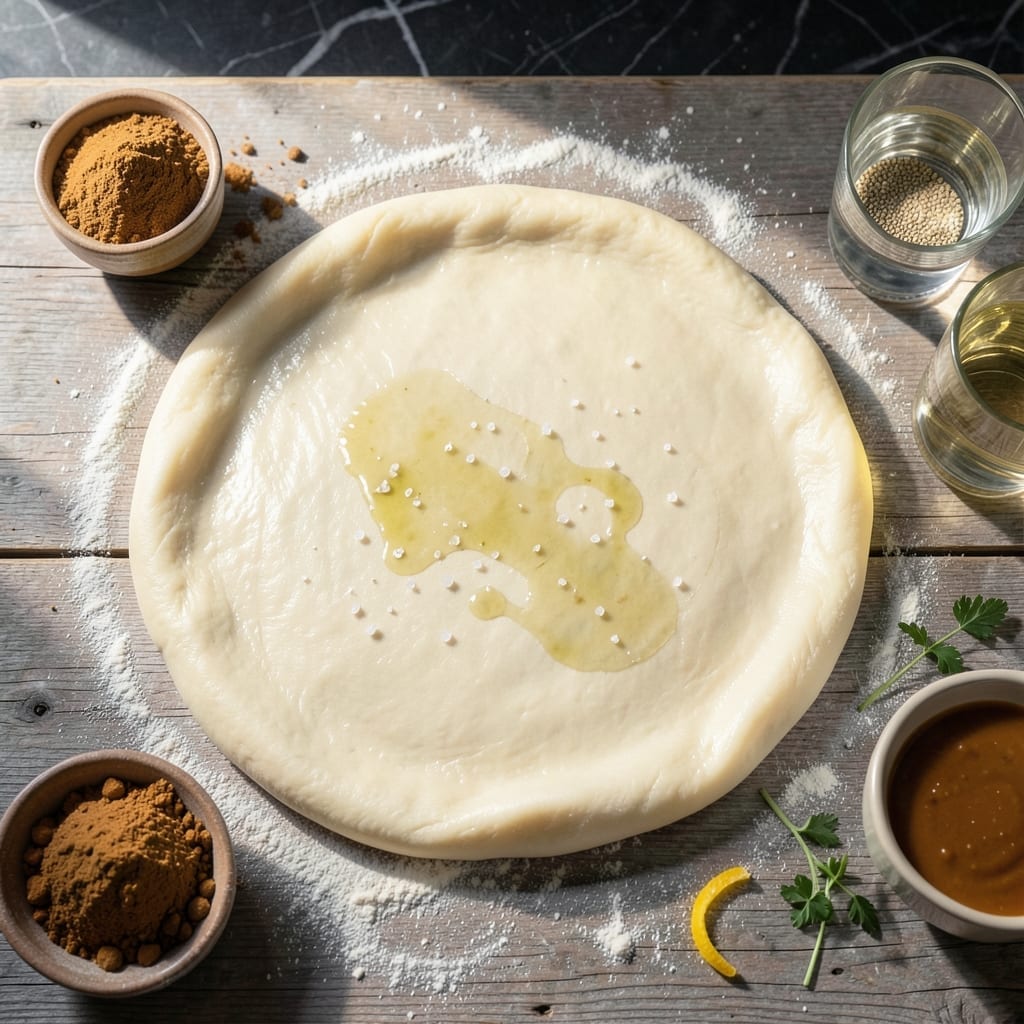
Homemade pizza dough doesn’t require professional skills or fancy equipment—just time and the right technique. This no-knead method delivers restaurant-quality results with minimal effort, letting the dough develop complex flavors naturally.
I developed this recipe after years of testing different approaches, always coming back to the simplicity of a slow, cold ferment. The extended rise transforms basic ingredients into a dough that’s airy, chewy, and packed with character.
The beauty lies in its versatility. This base works for classic Margherita, loaded veggie, or any topping combination you love. David, my official taste-tester, insists this is the only pizza dough we make at home now.
With just 5 ingredients and 24 hours of mostly hands-off time, you’ll have the foundation for the best homemade pizza you’ve ever made.
Ingredients for Pizza Dough Recipe Written
Five simple ingredients. One incredible foundation for any pizza night.
| Ingredient | Amount | Notes |
|---|---|---|
| Bread Flour 🌾 | 3 ½ cups | High-protein for chewy texture |
| Active Dry Yeast 🍞 | ¼ tsp | Instant yeast works too |
| Fine Sea Salt 🧂 | 2 tsp | Diamond Crystal preferred |
| Olive Oil 🫒 | 2 tbsp | Extra-virgin for flavor |
| Lukewarm Water 💧 | 1 ½ cups | About 105-110°F |
The flour is non-negotiable—bread flour’s higher protein gives you that chewy, stretchy crust. King Arthur or Bob’s Red Mill are my go-tos (both widely available at Whole Foods or any supermarket). Yeast freshness matters too—check the expiration date. If it’s been sitting in your cabinet for a year, grab a new packet. The salt? Diamond Crystal dissolves cleaner than Morton.
No bread flour? All-purpose in a pinch—just add 1 tbsp vital wheat gluten per cup. Out of yeast? This won’t work without it (sorry, no shortcuts here). The olive oil can be any extra-virgin—I usually grab whatever’s on sale at Trader Joe’s. Water temp matters: too hot kills the yeast, too cold slows activation (a kitchen thermometer helps).
The dough keeps 48 hours in the fridge, developing more flavor over time. Freeze in balls for up to 3 months (thaw overnight in the fridge). Always let it come to room temp before shaping—cold dough tears easily.
Why You’ll Love This Recipe
- No-Knead Magic: I just mix the bread flour, yeast, salt, olive oil, and water, then let it rise—no elbow grease required.
- Crispy Chewy Perfection: The olive oil in the dough gives it that ideal balance of crisp edges and a soft, airy center.
- Endless Topping Canvas: Honestly, I’ve used this for margherita, BBQ chicken, even dessert pizzas with Nutella and strawberries.
- Pantry Staples Only: Bread flour and yeast are my always-on-hand basics, so this saves me a last-minute grocery run.
Step-by-Step Instructions for Pizza Dough
Here’s the method. Straightforward, tested, works every time.
Step 1: Activate the Yeast in Warm Water
In a large mixing bowl, combine the 0.25 tsp Active Dry Yeast with the 1.5 cups Lukewarm Water. I always check the water temperature first—it should feel just warm to the touch, about 105-110°F. Too hot kills the yeast; too cold slows activation.
Let this sit for 5-10 minutes until the surface becomes frothy with small bubbles. This visual confirmation means your yeast is alive and active. If you see no bubbles, your water may have been too hot or the yeast might be expired—start over with fresh ingredients.
Step 2: Incorporate Dry Ingredients
Add the 3.5 cups Bread Flour and 2 tsp Fine Sea Salt to the yeast mixture. I use Diamond Crystal salt here because its larger crystals dissolve evenly. Stir with a wooden spoon until a shaggy dough forms and no dry pockets remain.
The dough will look rough at this stage—that’s normal. Bread flour’s higher protein content creates the chewy texture we want, but it also means the dough needs time to develop. Don’t be tempted to add more flour; the hydration will balance out during the rise.
Step 3: Add Olive Oil and Begin the Rise
Drizzle in the 2 tbsp Olive Oil and stir to incorporate. The oil enriches the dough and helps create a tender crumb. Transfer the dough to a clean bowl, cover with a damp towel or plastic wrap, and let rise at room temperature for 12-18 hours.
This extended, slow rise is what makes no-knead dough magical. The yeast works gradually, developing complex flavors and a light, airy structure. I usually let it rise overnight on the counter, but if your kitchen is cool, it might need the full 18 hours. You’ll know it’s ready when the dough has doubled in size and is dotted with bubbles.
Step 4: Shape and Prepare for Baking
Turn the risen dough out onto a lightly floured surface. It will be sticky—that’s the high hydration at work. Gently shape it into a ball, then divide if making multiple pizzas. Let it rest for 15-20 minutes before stretching to allow the gluten to relax.
When ready to bake, stretch the dough on a floured surface to your desired thickness. The high protein bread flour gives you that perfect chewy bite, while the olive oil ensures a crisp yet tender crust. This dough handles beautifully, so don’t be afraid to press it out to the edges of your pan.
Pro Tips For Making Pizza Dough Recipe Written
- Test Your Yeast: I learned this the hard way—always bloom your active dry yeast in the lukewarm water with a pinch of sugar first. If it doesn’t foam within 5-10 minutes, your dough won’t rise.
- Use Bread Flour: Skip the all-purpose and stick with bread flour—its higher protein content gives that chewy, elastic texture pizza dough needs.
- Don’t Rush the Rise: After burning three batches, I finally figured out that letting the dough double in size (about 1-2 hours at room temp) makes all the difference in flavor and texture.
- Oil the Bowl: Coat your rising bowl with about 1 tablespoon of olive oil before adding the dough—it prevents sticking and makes punching down way easier.
Perfect Pairings for This pizza dough recipe written
Classic Sauce Pairings
For traditional Margherita, I use San Marzano tomatoes crushed by hand with 1 tsp salt and 2 tbsp olive oil. The sweet acidity balances the dough’s richness perfectly. David always requests extra sauce on his half.
Cheese Selections
Fresh mozzarella di bufala from Central Market melts beautifully, but low-moisture mozzarella works for easier slicing. I sometimes mix in 1/4 cup grated Parmesan for extra depth. 🧀
Topping Ideas
At the Austin farmers market, I love adding roasted local peppers and fresh basil. For meat lovers, spicy Italian sausage from our butcher pairs wonderfully. Keep toppings light to showcase the crust.
Salad Companions
A simple arugula salad with lemon vinaigrette cuts through the richness. I toss 4 cups greens with 1 tbsp olive oil and 1/2 tsp salt. The peppery bite complements every bite.
Wine Choices
Italian reds like Chianti Classico or Sangiovese stand up to tomato sauce. For white pizza, try Pinot Grigio—its crispness cleanses your palate. David prefers beer with his, but I’m a wine girl. 🍷
Nutrition Facts
Frequently Asked Questions
Why does the dough need such a long rise?
The 12-18 hour cold ferment develops deep flavor and perfect texture. It allows yeast to work slowly, creating air pockets for a light, chewy crust. Rushing this step sacrifices quality.
Can I use all-purpose flour instead?
Yes, but add 1 tbsp vital wheat gluten per cup to mimic bread flour’s protein. The crust won’t be quite as chewy, but it’ll still work in a pinch.
How do I know when the dough is ready?
It should double in size with visible bubbles. Press it gently—if the indentation stays, it’s ready. If it springs back, give it more time.
What if my dough didn’t rise?
Check your yeast freshness and water temperature. Yeast needs 105-110°F water to activate. If both are good, your kitchen might be too cold—try a warmer spot.

- Potato Candy Recipe 1933: Vintage Peanut Butter Roll Delight - October 30, 2026
- Potato Chip Cookie Recipe With Pecans: Buttery Crunch Meets Nutty Richness - October 30, 2026
- Potato Patty Recipe No Egg: Crispy Edges Without the Binder - October 30, 2026