
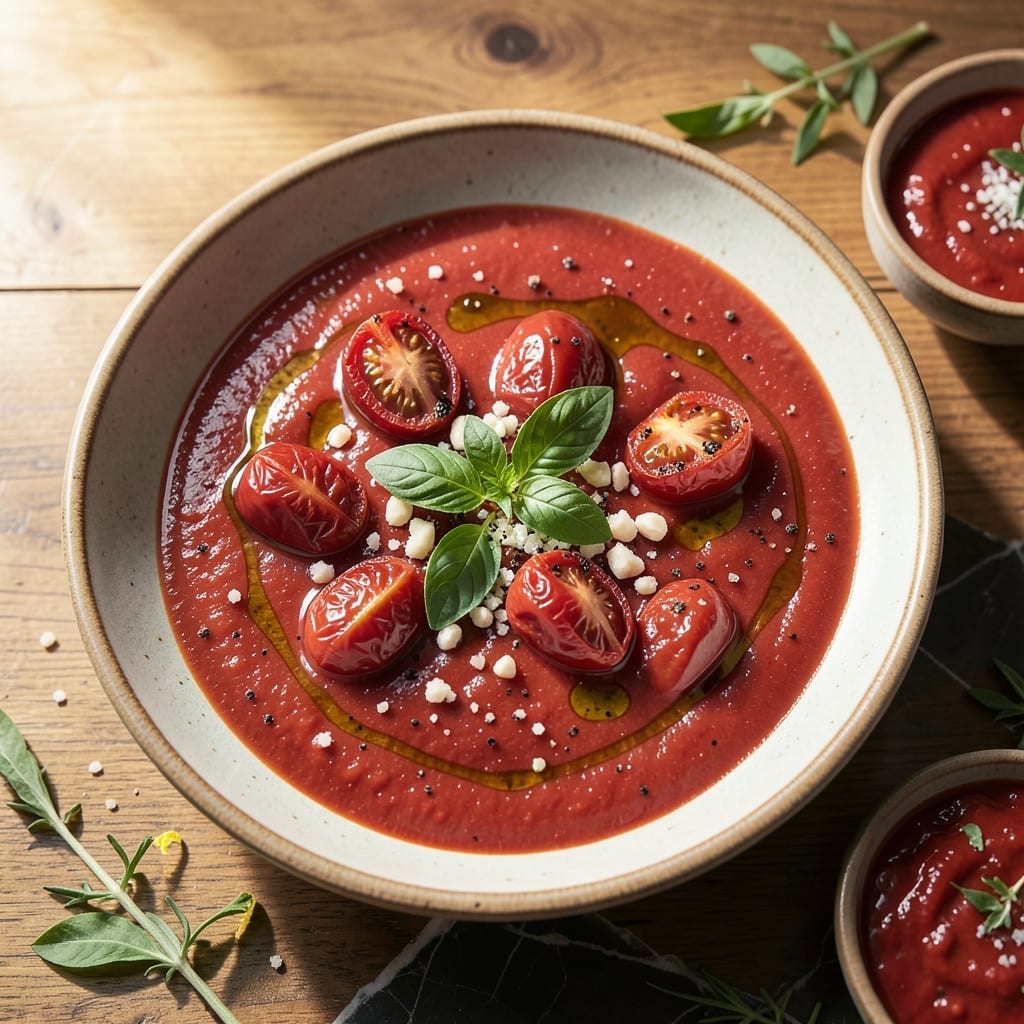
This pizza sauce transforms Roma tomatoes into a rich, flavorful base that elevates any pie. I’ve refined this method over years to deliver bold Italian taste without the long simmer time many recipes require.
The key is using ripe Roma tomatoes, which have the perfect balance of sweetness and acidity. A touch of garlic, olive oil, and fresh basil enhances their natural depth. No cooking required—just blend and season.
What you’ll get is a thick, smooth sauce that clings to dough and complements toppings beautifully. It’s versatile enough for classic Margherita or loaded meat pizzas, with a consistency that spreads effortlessly.
Make a big batch and store it in the fridge for up to a week, or freeze for future use.
Ingredients for Pizza Sauce Recipe Roma Tomatoes
Nine simple ingredients blend into bold, rich pizza sauce everyone will love.
| Ingredient | Amount | Notes |
|---|---|---|
| Roma Tomatoes 🍅 | 2 lb | Ripe, cored and quartered |
| Extra-Virgin Olive Oil 🫒 | 3 tbsp | High quality for flavor |
| Garlic Cloves 🧄 | 4 cloves | Peeled and minced |
| Fresh Basil Leaves 🌿 | ¼ cup | Packed, for blending |
| Sea Salt 🧂 | 1 ½ tsp | Fine grain preferred |
| Black Pepper 🌶️ | ½ tsp | Freshly ground |
| Dried Oregano 🍃 | 1 tsp | Crushed for full flavor |
| Red Pepper Flakes 🔥 | ½ tsp | Adjust for heat preference |
| Balsamic Vinegar 🍷 | 1 tbsp | For acidity balance |
Roma tomatoes are non-negotiable here—they’re meaty with just the right sweetness. Farmers markets are gold in summer, but grocery store ones work fine off-season (look for deep red color, no soft spots). The olive oil makes a difference—California Olive Ranch or Bertolli are my go-tos. Fresh basil from Trader Joe’s is shockingly good for the price, and it keeps surprisingly well in a glass of water on the counter.
Out of fresh basil? Dried basil at one-third the amount works, but fresh really shines. No balsamic? Red wine vinegar gets close. For extra depth, a pinch of sugar (about 1/2 tsp) balances acidity if your tomatoes are tart. The garlic can be roasted first for a sweeter note—just pop whole cloves in the oven at 400°F for 15 minutes before peeling.
Sauce stays fresh in the fridge for 5-7 days in a sealed jar. Freeze in ice cube trays for perfect portions—good for 6 months. Always let it come to room temp before spreading on dough (cold sauce makes for a sad, soggy crust).
Why You’ll Love This Recipe
- One Pot Wonder: I just dump everything in a saucepan—roma tomatoes, garlic, olive oil—and let it simmer while I prep the dough.
- Ridiculously Good: The fresh basil and slow-cooked garlic make this taste like the sauce from my favorite pizzeria.
- Freezer Friend: I double the batch and freeze half for lazy nights. Honestly, it tastes even better after thawing.
- Budget Stretch: Roma tomatoes are cheap in bulk, and this recipe uses just five ingredients I always have.
Step-by-Step Instructions for Pizza Sauce with Roma Tomatoes
This method brings out the best in your tomatoes with a few simple techniques.
Step 1: Roast the Roma Tomatoes
Preheat your oven to 400°F. Toss the 2 lb Roma Tomatoes (cored and quartered) with 3 tbsp Extra-Virgin Olive Oil, 1.5 tsp Sea Salt, and 0.5 tsp Black Pepper on a rimmed baking sheet. Spread them in a single layer, ensuring they don’t overlap.
Roast for 25-30 minutes until the tomatoes are soft and slightly caramelized with browned edges. This step intensifies the natural sweetness and removes excess moisture, which is key for a thick, rich sauce. Stir the tomatoes halfway through the roasting time to ensure even cooking.
Step 2: Blend the Roasted Tomatoes and Aromatics
Transfer the roasted tomatoes to a blender or food processor. Add the 4 cloves Garlic Cloves (peeled and minced), 0.25 cup Fresh Basil Leaves, 1 tsp Dried Oregano, and 0.5 tsp Red Pepper Flakes. Pulse until the mixture is smooth or slightly chunky, depending on your preference for texture.
The garlic and herbs will infuse the sauce with bold, authentic Italian flavors. I like to scrape down the sides of the blender once or twice to make sure everything is fully incorporated. If the mixture seems too thick, don’t worry—it will loosen up in the next step.
Step 3: Simmer and Reduce the Sauce
Pour the blended mixture into a medium saucepan and add the 1 tbsp Balsamic Vinegar. Bring to a simmer over medium heat, then reduce the heat to low and let it cook for 10-15 minutes, stirring occasionally.
Simmering helps the flavors meld together while reducing the sauce to the perfect consistency for spreading on pizza dough. You’ll notice the sauce thicken slightly and deepen in color. Taste and adjust the seasoning if needed, though the roasted tomatoes and salt should already provide a well-balanced base.
Step 4: Cool and Store the Sauce
Remove the saucepan from the heat and let the sauce cool to room temperature. As it cools, it will continue to thicken. This step is important because spreading hot sauce directly onto pizza dough can make it soggy.
Once cooled, transfer the sauce to an airtight container. It can be stored in the refrigerator for up to 5 days or frozen for up to 3 months. This sauce is versatile—use it not just for pizza but also as a base for pasta dishes or as a dipping sauce for breadsticks.
Pro Tips For Making Pizza Sauce Recipe Roma Tomatoes
- Simmer Low and Slow: Cook your sauce on medium-low heat for at least 20 minutes—this concentrates the Roma tomatoes’ natural sweetness and avoids a raw, watery texture.
- Seed the Tomatoes: I learned this the hard way—removing the seeds from Roma tomatoes cuts down on excess liquid, so your sauce thickens faster and clings better to the pizza.
- Crush by Hand: Skip the blender and crush the tomatoes with your hands or a potato masher for a chunkier, more rustic texture that actually changes the outcome.
- Add Basil Last: Toss in fresh basil leaves at the very end of cooking—adding them earlier turns them bitter, and nobody wants that on their pizza.
Make-Ahead Tips for This Dish
Batch Prep Method
I always make a double batch of this sauce—it takes the same effort and saves time later. Simply double all ingredients and use a large roasting pan. The sauce freezes beautifully, so you’ll have pizza-ready flavor whenever the craving hits. ❄️
Portioning for Later
For easy use, portion cooled sauce into 1-cup containers—that’s enough for one 12-inch pizza. I use Ball Mason jars for fridge storage or silicone muffin molds for freezer portions. Label with the date so you can track freshness.
Freezing Tips
Freeze sauce in ice cube trays first, then transfer cubes to a freezer bag. This lets you grab just the amount you need. Thaw in the fridge overnight or microwave 30-second intervals when in a hurry.
Fridge Storage
In the fridge, sauce stays fresh for 5-7 days in a sealed container. The flavors actually improve after 24 hours as the herbs meld. Always give it a stir before using, as the solids settle.
Room Temp Trick
For best results, let chilled sauce sit at room temperature for 30 minutes before spreading. Cold sauce can make your pizza dough soggy. I learned this the hard way after my first few attempts! 💡
Reheating Option
If using cold sauce, warm it in a small pan over low heat for 3-5 minutes. This revives the flavors and makes spreading easier. Avoid boiling, as it can alter the texture.
Nutrition Facts
Frequently Asked Questions
Can I use canned tomatoes instead?
Yes! Use 28 oz canned crushed tomatoes and skip roasting. Simmer with other ingredients for 15-20 minutes to concentrate flavors.
Why do we roast the tomatoes first?
Roasting at 400°F caramelizes natural sugars and removes excess water. This gives deeper flavor and thicker texture than raw tomatoes.
How can I make it smoother?
Blend longer or strain through a fine-mesh sieve after cooking. For ultra-smooth sauce, use an immersion blender right in the pot.
Can I omit the balsamic vinegar?
It balances acidity, but you can substitute 1 tbsp lemon juice or skip it entirely. Taste and adjust salt as needed.

- Potato Candy Recipe 1933: Vintage Peanut Butter Roll Delight - October 30, 2026
- Potato Chip Cookie Recipe With Pecans: Buttery Crunch Meets Nutty Richness - October 30, 2026
- Potato Patty Recipe No Egg: Crispy Edges Without the Binder - October 30, 2026