
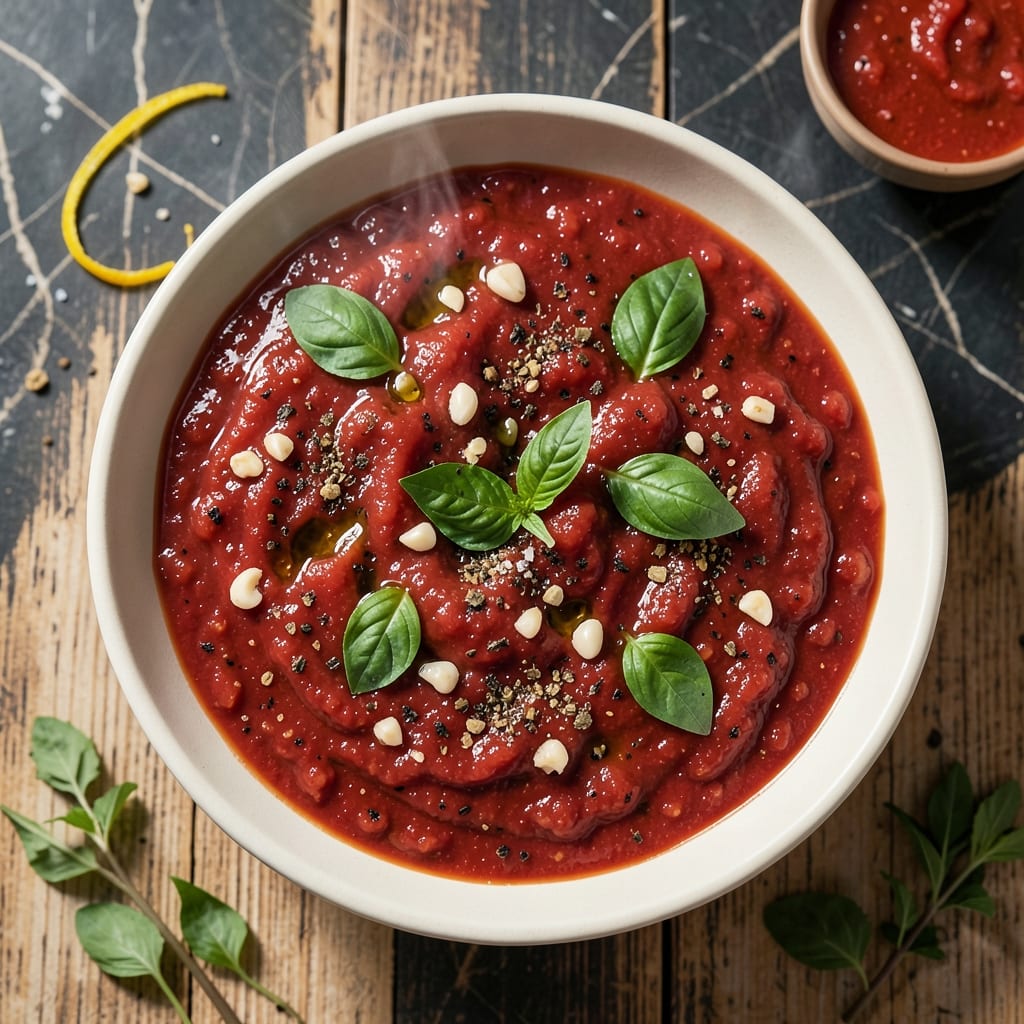
There’s nothing like the vibrant taste of fresh tomatoes in a homemade pizza sauce. This recipe captures peak garden flavor, transforming ripe produce into a rich, smooth base that elevates any pie.
Simmering fresh tomatoes with garlic and herbs creates a sauce that’s both bright and deeply savory. The process takes just 30 minutes and requires no special equipment—just a pot and a blender.
What you’ll get is a restaurant-quality sauce with the perfect balance of acidity and sweetness. It clings beautifully to dough and enhances every topping without overpowering them.
Store leftovers in the fridge for up to a week or freeze for later. This sauce works just as well on pasta, flatbreads, or as a dipping base.
Ingredients for Pizza Tomato Sauce Recipe with Fresh Tomatoes
Fresh tomatoes and simple herbs create this vibrant, restaurant-quality pizza sauce.
| Ingredient | Amount | Notes |
|---|---|---|
| Fresh Roma Tomatoes 🍅 | 3 lb | Ripe, cored and quartered |
| Extra-Virgin Olive Oil 🫒 | 2 tbsp | High quality, fruity |
| Garlic Cloves 🧄 | 6 cloves | Peeled and minced |
| Fresh Basil Leaves 🌿 | ½ cup | Packed, stems removed |
| Dried Oregano 🍃 | 1 tsp | Crushed between fingers |
| Sea Salt 🧂 | 1 ½ tsp | Adjust to taste |
| Black Pepper 🌶️ | ½ tsp | Freshly ground |
| Red Pepper Flakes 🔥 | ¼ tsp | Optional, for heat |
| Balsamic Vinegar 🍷 | 1 tbsp | For balance |
Roma tomatoes are ideal for sauce—they’re meaty with fewer seeds, so you get more flavor and less water. Farmers markets have the best selection in late summer, but grocery store Roma tomatoes work fine (just check they’re ripe and fragrant). The olive oil matters here—splurge on a good extra-virgin for a fruitier, more complex base. Fresh basil from the garden or Whole Foods adds that bright, peppery note that dried just can’t match.
No fresh basil? Dried basil at one-third the amount works, but add it earlier in the cooking process. Out of Roma tomatoes? Regular vine-ripened will do (just drain excess liquid). Want more depth? A pinch of sugar can balance acidity if your tomatoes are tart. The vinegar is optional, but it really rounds out the flavors—apple cider vinegar works too if you don’t have balsamic.
Sauce keeps in the fridge for up to 1 week in an airtight container. For longer storage, freeze in ice cube trays—pop out a cube or two whenever you need a quick pizza base. Thaw overnight in the fridge for best texture.
Why You’ll Love This Recipe
- One-Pot Wonder: I just toss the Roma tomatoes, garlic, and herbs into a pot—no fancy steps, no mess.
- Ridiculously Fresh Taste: The basil and oregano make the sauce taste like summer in a jar. Honestly, it beats store-bought every time.
- Freezer Friendly: I double the batch and freeze it in portions—ready for homemade pizza night anytime.
- Budget Winner: Roma tomatoes are cheap in season, and this sauce costs pennies compared to jarred. I’ll be real: it’s my wallet’s favorite hack.
Step-by-Step Instructions for Pizza Tomato Sauce With Fresh Tomatoes
This method transforms garden-fresh tomatoes into a vibrant, restaurant-quality sauce with minimal effort.
Step 1: Prepare and Roast the Fresh Roma Tomatoes
Preheat your oven to 400°F. While it heats, core and quarter all 3 lb Fresh Roma Tomatoes, removing any tough white membrane if present. Arrange them cut-side up on a rimmed baking sheet lined with parchment paper.
Drizzle the tomatoes with 2 tbsp Extra-Virgin Olive Oil and sprinkle evenly with 1.5 tsp Sea Salt and 0.5 tsp Black Pepper. Roast for 30-35 minutes until the tomatoes collapse and their edges begin to caramelize into a deep ruby red color. This process intensifies their natural sweetness and removes excess moisture.
Step 2: Sauté Aromatics for Depth of Flavor
In a large saucepan, heat the remaining oil from the roasting pan over medium heat. Add 6 cloves Garlic Cloves (minced) and cook for 30-45 seconds until fragrant but not browned. Browning garlic makes it bitter, so keep it moving.
Add the roasted tomatoes (with all their juices) to the saucepan, along with 1 tsp Dried Oregano and 0.25 tsp Red Pepper Flakes. Stir to combine, breaking up the tomatoes with a wooden spoon as they soften.
Step 3: Simmer and Reduce to Perfect Consistency
Bring the mixture to a gentle simmer, then reduce heat to medium-low. Partially cover the pan and let it cook for 20-25 minutes, stirring occasionally. The sauce should thicken to the consistency of a loose paste, with oil pooling slightly at the edges.
Stir in 1 tbsp Balsamic Vinegar during the last 5 minutes of cooking. This adds a subtle depth and balances the tomatoes’ natural acidity. Taste and adjust seasoning if needed, though the roasting should have concentrated the flavors beautifully.
Step 4: Finish with Fresh Basil and Cool
Remove the sauce from heat and stir in 0.5 cup Fresh Basil Leaves, torn or roughly chopped. The residual heat will wilt the basil perfectly without turning it bitter. Let the sauce cool completely at room temperature—this takes about 1 hour.
As it cools, the flavors will meld together. The finished sauce should be thick enough to spread on pizza dough without making it soggy, with visible flecks of basil throughout. Use immediately or store in an airtight container in the refrigerator for up to 5 days.
Pro Tips For Making Pizza Tomato Sauce Recipe With Fresh Tomatoes
- Simmer Uncovered: I learned this the hard way—keep the pot uncovered while simmering to let excess water evaporate, or you’ll end up with a watery sauce instead of a thick, rich base for your pizza.
- Seed the Tomatoes: After burning three batches to a pulp, I finally figured out that removing the seeds and excess gel from Roma tomatoes prevents a bitter, overly liquid sauce.
- Low and Slow: Crank the heat down to medium-low and let it cook for at least 30 minutes—rushing it with high heat gives you raw garlic and underdeveloped flavors.
- Add Basil Late: Sounds weird, but it works: stir in fresh basil in the last 5 minutes of cooking to keep its bright, aromatic flavor from turning dull and bitter.
Wine and Beer Pairings for These Flavors
Italian Classics
This bright, fresh tomato sauce pairs beautifully with Italian wines. I love a crisp Pinot Grigio from Veneto—its citrus notes complement the acidity. For red lovers, try a light Chianti with its cherry undertones. 🍷
California Favorites
A buttery California Chardonnay works surprisingly well, balancing the sauce’s acidity with its creamy texture. For beer, a Sierra Nevada Pale Ale cuts through the richness with its hoppy finish.
Difficult Pairings
Avoid heavy, tannic reds like Cabernet Sauvignon that can clash with the tomato’s acidity. Similarly, skip sweet whites like Moscato—they’ll make the sauce taste flat.
Beer Options
Crisp lagers like Peroni or Birra Moretti are classic Italian choices that won’t overpower the sauce. For craft beer, a wheat beer with citrus notes enhances the fresh tomato flavor.
Non-Alcoholic
For a refreshing pairing, try sparkling water with a squeeze of lemon. The bubbles cleanse your palate between bites. I also enjoy iced basil tea—it echoes the sauce’s herbal notes. 💫
Nutrition Facts
Frequently Asked Questions
Do I need to peel the tomatoes first?
Not necessarily. The skins soften during roasting and blend into the sauce. For an ultra-smooth texture, you can peel them by blanching in boiling water for 30 seconds before shocking in ice water.
Can I use regular tomatoes instead of Roma?
Yes, but they have more seeds and water. Strain the cooked sauce through a food mill or sieve to remove excess liquid. Roma varieties yield a thicker sauce naturally.
How do I fix sauce that’s too watery?
Simmer uncovered for an additional 10-15 minutes to evaporate excess moisture. Stir frequently to prevent scorching. A pinch of tomato paste can also help thicken it.
Why does my sauce taste bitter?
Bitterness often comes from overcooked garlic or tomato skins. Use fresh garlic, cook it gently, and remove any tough skins before roasting. A pinch of sugar can balance bitterness if needed.

- Potato Candy Recipe 1933: Vintage Peanut Butter Roll Delight - October 30, 2026
- Potato Chip Cookie Recipe With Pecans: Buttery Crunch Meets Nutty Richness - October 30, 2026
- Potato Patty Recipe No Egg: Crispy Edges Without the Binder - October 30, 2026