
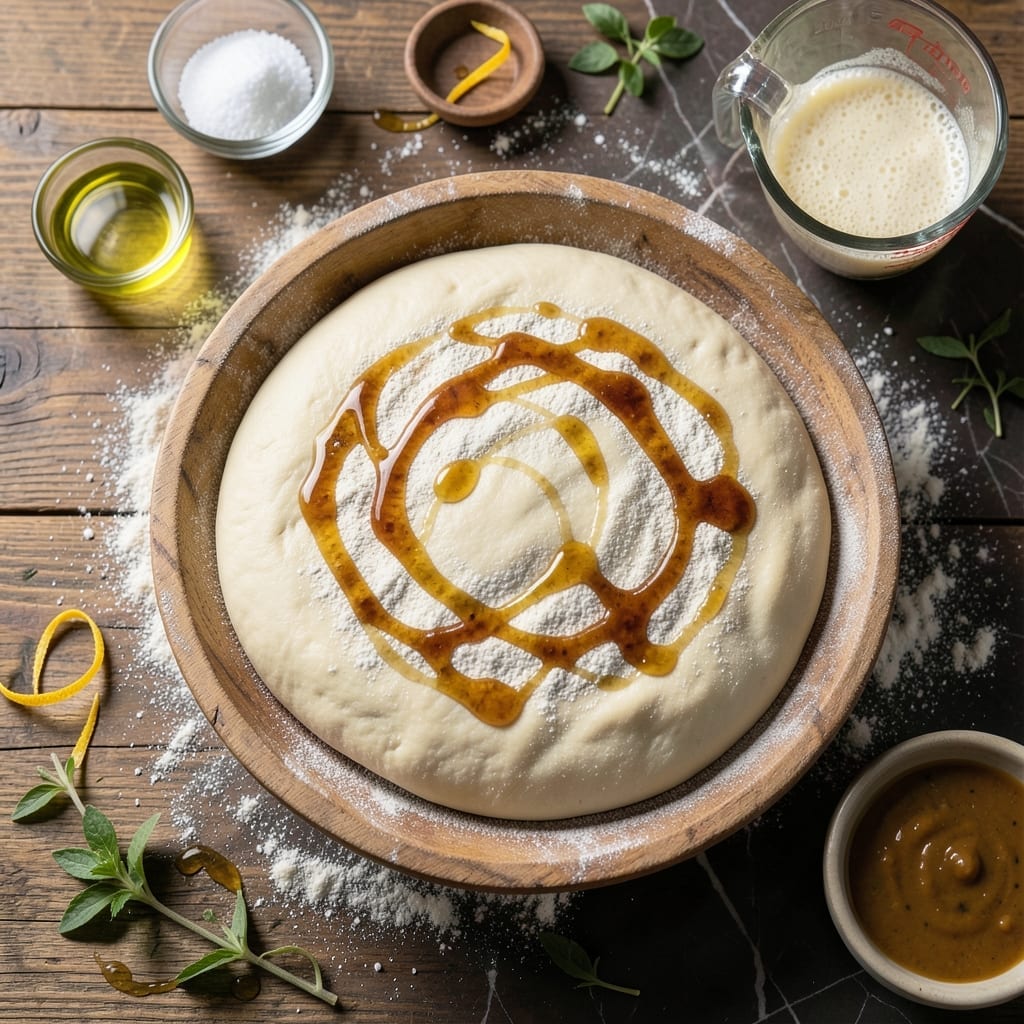
This pizza dough recipe elevates the classic with a touch of honey for natural sweetness and a perfect chewy texture. No complicated techniques required—just simple ingredients and precise timing.
The honey not only adds subtle flavor but also helps the dough brown beautifully. A slow fermentation in the refrigerator develops depth and makes the dough easier to handle.
You’ll achieve a crust with a crisp exterior and a tender, open crumb inside. The honey’s natural sugars create just the right amount of caramelization during baking.
This method delivers consistent results every time, with a dough that’s both flavorful and forgiving to work with.
Ingredients for Pizza Dough Recipe Honey
Eight simple ingredients create a naturally sweetened, chewy pizza dough with perfect crust texture.
| Ingredient | Amount | Notes |
|---|---|---|
| Bread Flour 🌾 | 3 ½ cups | High protein for chewy texture |
| Warm Water 💧 | 1 ¼ cups | 110°F to activate yeast |
| Active Dry Yeast 🍞 | 2 ¼ tsp | One packet plus extra |
| Honey 🍯 | 2 tbsp | Natural sweetener for browning |
| Extra-Virgin Olive Oil 🫒 | 2 tbsp | For soft, pliable dough |
| Kosher Salt 🧂 | 1 ½ tsp | Diamond Crystal preferred |
| All-Purpose Flour 🌾 | ½ cup | For dusting work surface |
| Cornmeal 🌽 | ¼ cup | For pizza peel dusting |
The flour choice is critical here. Bread flour provides the necessary protein for that signature chew, while all-purpose handles the dusting. King Arthur or Bob’s Red Mill are reliable brands. Yeast freshness matters—check the expiration date, as old yeast loses potency. For the honey, local raw varieties add depth, though any pure honey will work (avoid synthetic substitutes).
No honey on hand? Maple syrup at equal volume works, though it may slightly alter the flavor profile. Swapping bread flour for all-purpose? Add 1 tbsp vital wheat gluten per cup to compensate. The olive oil can be any high-quality extra-virgin, but avoid strongly flavored varieties. For a longer fermentation (24-48 hours), reduce yeast to 1.75 tsp for better flavor development.
The dough balls freeze beautifully for up to 3 months—wrap tightly in plastic then foil. Refrigerated dough keeps 2-3 days but develops more flavor. Bring to room temperature before shaping for easiest handling (this takes about 1 hour).
Why You’ll Love This Recipe
- No-Fuss Mixing: I just dump the bread flour, warm water, yeast, honey and olive oil in a bowl—no fancy steps, no fuss.
- Sweet & Savory: The honey adds this subtle sweetness that balances the yeasty, olive oil richness perfectly.
- Weeknight Hero: Between us, I’ve used this for pizza, flatbreads, and even cinnamon rolls when I’m in a pinch.
- Budget Friendly: Honestly, five simple ingredients and it costs less than store-bought dough every single time.
Step-by-Step Instructions for Pizza Dough with Honey
Follow this precise method to achieve an elastic, sweet-scented dough with ideal texture for baking.
Step 1: Activate the Yeast with Warm Water and Honey
In the bowl of a stand mixer, combine the 1.25 cups Warm Water, 2 tbsp Honey, and 2.25 tsp Active Dry Yeast. Stir gently and let sit for 5-7 minutes until the mixture becomes frothy and cloudy. This visual confirmation means the yeast is alive and actively feeding on the honey.
The 110°F water temperature is critical—too hot and you’ll kill the yeast, too cold and it won’t activate properly. The honey not only sweetens but also provides the sugar necessary for proper fermentation. You should see bubbles forming across the entire surface before proceeding.
Step 2: Combine Dry Ingredients and Form the Dough
Add the 3.5 cups Bread Flour and 1.5 tsp Kosher Salt to the yeast mixture. Using the dough hook attachment, mix on low speed until the ingredients come together into a shaggy mass, about 2 minutes. The high-protein bread flour creates the foundation for that perfect chewy texture.
Increase the speed to medium and knead for 6-8 minutes until the dough becomes smooth and elastic. During the last minute of kneading, drizzle in the 2 tbsp Extra-Virgin Olive Oil. The dough should pull away from the sides of the bowl and feel slightly tacky but not sticky. The olive oil adds richness and helps create a soft, pliable crust.
Step 3: First Rise to Double the Volume
Transfer the dough to a lightly oiled bowl, turning once to coat all sides. Cover with a clean kitchen towel or plastic wrap and let rise in a warm, draft-free place for 1 to 1.5 hours, or until doubled in size. The ideal rising temperature is 75-80°F.
You’ll know the dough is ready when it has visibly expanded and springs back slowly when pressed lightly with a finger. This first rise develops the gluten structure and allows the yeast to ferment the sugars, creating that characteristic pizza dough flavor. Don’t rush this step—proper fermentation is key to flavor development.
Step 4: Divide, Shape, and Second Rise
Turn the risen dough out onto a surface dusted with 0.5 cup All-Purpose Flour. Divide into 4 equal portions for individual pizzas. Shape each portion into a tight ball by pulling the edges toward the center and pinching to seal. This creates surface tension for easier rolling later.
Place the dough balls on a baking sheet dusted with 0.25 cup Cornmeal, cover lightly, and let rest for 30-45 minutes for the second rise. The cornmeal prevents sticking when you transfer the dough to your pizza peel or stone. After this rest, the dough should be relaxed and ready to stretch without springing back.
Step 5: Shape and Prepare for Baking
To shape, press a dough ball gently with your fingertips, working from the center outward to create an even circle. For a professional touch, stretch the dough by draping it over your knuckles and rotating. Aim for a 12-inch round about ¼-inch thick, with a slightly thicker rim for the crust.
The dough should be smooth and elastic, not tearing as you stretch. If it resists, let it rest for 5 minutes before trying again. The honey in the dough will caramelize slightly during baking, creating a beautifully browned crust with a subtle sweetness that complements both savory and sweet toppings.
Pro Tips For Making Pizza Dough Recipe Honey
- Proof the Yeast: I learned this the hard way—always activate the yeast in warm water (105-110°F) with a pinch of honey first. If it doesn’t foam in 5 minutes, your dough won’t rise.
- Use Bread Flour: Skip all-purpose flour; bread flour’s higher protein content gives the dough that chewy, elastic texture you want in pizza crust.
- Don’t Over-Knead: After burning out my mixer twice, I now stop kneading as soon as the dough pulls away from the bowl—about 5-7 minutes. Overworking it makes the crust tough.
- Brush with Olive Oil: Before letting the dough rise, lightly coat it with extra-virgin olive oil. This keeps the surface from drying out and adds a subtle richness.
Serving Suggestions for This Recipe
Classic Margherita Pairing
This naturally sweetened dough pairs beautifully with a classic Margherita topping. Use San Marzano tomatoes, fresh mozzarella, and basil. The honey’s subtle sweetness balances the acidity perfectly. 💪
Sweet and Savory Combinations
Try a fig and prosciutto pizza for a gourmet twist. Spread a thin layer of ricotta cheese, add sliced figs, prosciutto, and arugula after baking. The honey in the crust complements these flavors wonderfully.
Breakfast Pizza Idea
Use this dough for a breakfast pizza with scrambled eggs, crispy bacon, and shredded cheddar. Drizzle with maple syrup after baking to echo the honey notes. It’s a crowd-pleaser for brunch.
Dessert Pizza Option
For a sweet treat, top with Nutella, sliced strawberries, and a sprinkle of powdered sugar. The honey in the dough enhances the dessert flavors without overpowering them. 🍯
Wine Pairing
A crisp Prosecco or Pinot Grigio complements the subtle sweetness of this dough. For red wine lovers, a light Chianti works well with savory toppings. The bubbles in Prosecco cleanse your palate.
Beer Pairing
A Belgian witbier like Hoegaarden pairs excellently with this dough. The citrus notes in the beer contrast nicely with the honey’s sweetness. For darker beers, try a brown ale with caramel notes.
Nutrition Facts
Frequently Asked Questions
Why use honey instead of sugar in pizza dough?
Honey adds natural sweetness and enhances browning through caramelization. It also feeds the yeast more effectively than granulated sugar, creating a more flavorful, aromatic crust.
Can I make this dough without a stand mixer?
Knead by hand for 8-10 minutes until smooth and elastic. The process takes a bit more effort but yields the same great texture. Just keep your surface lightly floured.
What if my dough isn’t rising?
Check your yeast freshness and water temperature. Yeast needs 110°F water to activate. If it’s too cold or the yeast is old, the dough won’t rise properly.

- Potato Candy Recipe 1933: Vintage Peanut Butter Roll Delight - October 30, 2026
- Potato Chip Cookie Recipe With Pecans: Buttery Crunch Meets Nutty Richness - October 30, 2026
- Potato Patty Recipe No Egg: Crispy Edges Without the Binder - October 30, 2026