
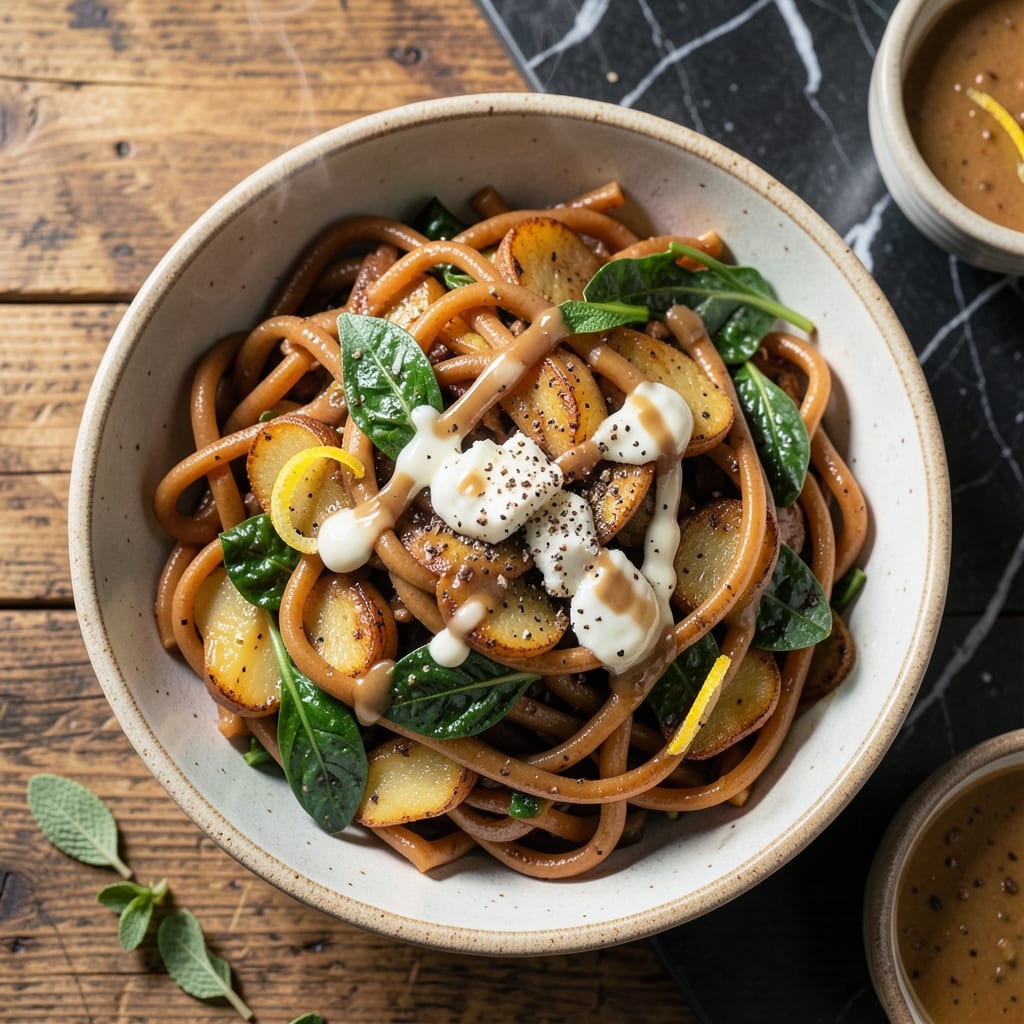
This gluten-free pizzoccheri brings the hearty comfort of Italy’s Alpine valleys to your table. The traditional buckwheat pasta delivers a nutty depth that pairs perfectly with potatoes, greens, and melted cheese.
Buckwheat flour creates a tender pasta that holds up beautifully against the creamy cheese and earthy potatoes. The dish comes together with simple ingredients but feels rich and satisfying.
You’ll love how the flavors meld into a warm, cheesy embrace, with the slightly bitter greens balancing the richness. It’s rustic elegance in every bite.
Perfect for chilly evenings, this version keeps all the soul of the original. Here’s how to make it at home.
Ingredients for Pizzoccheri Recipe Gluten Free
Buckwheat flour, potatoes, greens, and cheese create this Alpine-inspired comfort dish at home.
| Ingredient | Amount | Notes |
|---|---|---|
| Buckwheat Flour 🌾 | 2 cups | Gluten-free, stone-ground preferred |
| All-Purpose Gluten-Free Flour Blend 🌾 | ½ cup | For pasta texture balance |
| Large Eggs 🥚 | 2 whole | Room temperature for binding |
| Water 💧 | ½ cup | As needed for dough consistency |
| Salt 🧂 | 1 tsp | For pasta dough and cooking |
| Yukon Gold Potatoes 🥔 | 1 ½ lb | Peeled, cubed evenly |
| Savoy Cabbage 🥬 | 1 whole | Thinly sliced, about 4 cups |
| Fontina Cheese 🧀 | 8 oz | Shredded, authentic Alpine flavor |
| Parmesan Cheese 🧀 | ½ cup | Freshly grated for depth |
| Garlic Cloves 🧄 | 4 cloves | Minced for aromatic base |
| Unsalted Butter 🧈 | ½ cup | For sautéing and richness |
| Fresh Sage Leaves 🌿 | 8 pieces | Chopped, for earthy notes |
| Black Pepper 🌶️ | 1 tsp | Freshly ground for best flavor |
The buckwheat flour is non-negotiable for authentic flavor. Bob’s Red Mill has a great gluten-free version, or Arrowhead Mills if you prefer stone-ground. The potatoes need to hold their shape—Yukon Golds are perfect. For the cheese, Fontina from Whole Foods melts beautifully. Fresh sage is worth hunting down at a farmers market or specialty grocer.
No savoy cabbage? Kale or Swiss chard work in a pinch (remove tough stems). Out of Fontina? Gruyère or young Asiago get you close. The gluten-free flour blend can be Cup4Cup or King Arthur—both behave well. If you’re short on time, pre-shredded cheese is fine, but freshly grated melts smoother (the anti-caking agents can make it clumpy).
Pasta dough rests for 30 minutes—don’t skip it. Cooked pizzoccheri keeps 3-4 days refrigerated, but the pasta absorbs liquid over time. Best eaten fresh, though leftovers reheat decently with a splash of water. Freezing isn’t ideal for texture.
Why You’ll Love This Recipe
- One Bowl Wonder: I mix the buckwheat and gluten-free flour right in the bowl—no fancy equipment, just a fork and five minutes.
- Nutty Depth: The buckwheat gives it this earthy, toasted flavor that’s way more interesting than regular pasta.
- Meal Prep Hero: I make a double batch on Sunday and reheat portions all week—holds up beautifully.
- Pantry Friendly: Buckwheat flour and a gluten-free blend are cheap staples that last forever in my cupboard.
Step-by-Step Instructions for Pizzoccheri Gluten Free
This authentic method brings Alpine comfort to your table with perfect texture every time.
Step 1: Make the Buckwheat Pasta Dough
In a large bowl, whisk together the 2 cups Buckwheat Flour and 0.5 cup All-Purpose Gluten-Free Flour Blend. I’ve found this ratio gives the pasta that traditional nutty flavor while maintaining the right elasticity. Create a well in the center and add the 2 whole Large Eggs, 0.5 cup Water, and 1 tsp Salt.
Mix with a fork until a shaggy dough forms, then knead by hand for 8-10 minutes until smooth. The dough should be slightly tacky but not sticky. If it’s too dry, add water 1 teaspoon at a time. Wrap in plastic and let rest for 30 minutes at room temperature—this relaxes the gluten-free flours for easier rolling.
Step 2: Prepare the Vegetables and Cheese
While the dough rests, peel and cube the 1.5 lb Yukon Gold Potatoes into ½-inch pieces. Thinly slice the 1 whole Savoy Cabbage into ribbons. These will cook down beautifully with the pasta. Shred the 8 oz Fontina Cheese and grate the 0.5 cup Parmesan Cheese—freshly grated melts better than pre-shredded.
Mince the 4 cloves Garlic Cloves and chop the 8 pieces Fresh Sage Leaves. The sage adds that authentic Alpine note that makes this dish special. Keep all your prepped ingredients within arm’s reach—this recipe moves quickly once you start cooking.
Step 3: Cook the Pasta and Vegetables
Roll out the pasta dough as thin as possible (about ⅛-inch thick) and cut into ¼-inch wide strips. Bring a large pot of water to a rolling boil, salt it with the remaining salt, and add the pasta strips. Cook for 2 minutes, then add the cubed potatoes. After 3 more minutes, add the sliced cabbage.
Cook everything together for another 5-7 minutes until the pasta floats to the surface and the potatoes are fork-tender. Drain the pasta and vegetables together, reserving 1 cup of the starchy cooking water. This water will help create the creamy sauce.
Step 4: Create the Creamy Cheese Sauce
In a large skillet, melt the 0.5 cup Unsalted Butter over medium heat. Add the minced garlic and chopped sage, cooking for 1-2 minutes until fragrant but not browned. Be careful not to let the butter burn—it should foam but not turn dark.
Add the drained pasta and vegetables to the skillet, tossing to coat in the butter. Sprinkle the shredded Fontina and grated Parmesan over everything. Add ½ cup of the reserved cooking water and toss gently for 2-3 minutes until the cheese melts into a creamy sauce. If it’s too thick, add more cooking water 1 tablespoon at a time.
Step 5: Finish and Serve Immediately
Once the cheese has melted and everything is well coated, season with 1 tsp Black Pepper. Toss one more time to distribute the pepper evenly. The dish should be creamy but not soupy, with the pasta and vegetables glistening with the cheesy sauce.
Transfer to a large serving platter or individual bowls. Pizzoccheri waits for no one—serve immediately while the cheese is still gooey and the sage butter is fragrant. The contrast of the earthy buckwheat pasta, creamy potatoes, and sharp cheeses delivers that true Alpine comfort in every bite.
Pro Tips For Making Pizzoccheri Recipe Gluten Free
- Rest the Dough: After mixing, let the buckwheat and gluten-free flour dough rest for 15-20 minutes—this relaxes the starches so the pizzoccheri won’t turn gummy when boiled. I learned this the hard way after my first batch turned to mush.
- Boil in Salted Water: Use well-salted water, about 1 tablespoon per quart, to give the buckwheat pasta flavor since gluten-free dough often tastes bland. Sounds simple, but it actually changes the outcome.
- Skip Overworking: Knead the dough just until smooth, then stop—overworking gluten-free flours makes them dense and tough. My grandmother swore by this, and she was right.
- Use a Potato Ricer: Press the dough through a potato ricer for quick, uniform pizzoccheri shapes without rolling and cutting. I was skeptical until I tried it—saves 10 minutes and looks rustic.
Best Sauces and Condiments for These Flavors
Classic Sage Butter
The traditional sauce is simple: brown ½ cup butter with 8 sage leaves and 4 minced garlic cloves until nutty and aromatic. This forms the flavor base that coats every bite. I always use European-style butter for its higher fat content.
Cheese Sauce Boost
For extra richness, create a quick cheese sauce by melting 4 oz Fontina with ¼ cup heavy cream and a splash of pasta water. Drizzle this over the finished dish for an ultra-decadent experience. The cream helps the cheese melt smoothly without breaking.
Spicy Kick
Add ½ tsp red pepper flakes to the butter as it browns for a subtle heat that cuts through the richness. This is my favorite way to add depth without overpowering the Alpine flavors. 🌶️
Herb Variations
Swap sage for rosemary or thyme if you want to experiment. I’ve found 1 tbsp fresh rosemary adds a piney note that pairs beautifully with the buckwheat. Just be sure to finely chop woody herbs.
Bright Finish
A squeeze of lemon juice or a sprinkle of zest at the end brightens all the flavors. About 1 tbsp is perfect for a 4-serving batch. This little trick makes the dish taste fresher.
For a tangy contrast, serve with a side of pickled vegetables like giardiniera. 💡
Nutrition Facts
Frequently Asked Questions
Can I use only buckwheat flour for the pasta?
Buckwheat alone often crumbles when cooked. The gluten-free blend adds elasticity. Use a 4:1 ratio of buckwheat to blend for best texture.
What if my dough cracks while rolling?
Let it rest longer—up to 1 hour. If still dry, add water 1 teaspoon at a time. Roll between parchment to prevent sticking.
Can I make this ahead of time?
Best served fresh, but you can prep dough and veggies 1 day ahead. Store pasta dough wrapped in the fridge.
Why did my sauce turn grainy?
Pre-shredded cheese often contains anti-caking agents. Always grate fresh for smooth, creamy results.

- Potato Candy Recipe 1933: Vintage Peanut Butter Roll Delight - October 30, 2026
- Potato Chip Cookie Recipe With Pecans: Buttery Crunch Meets Nutty Richness - October 30, 2026
- Potato Patty Recipe No Egg: Crispy Edges Without the Binder - October 30, 2026