
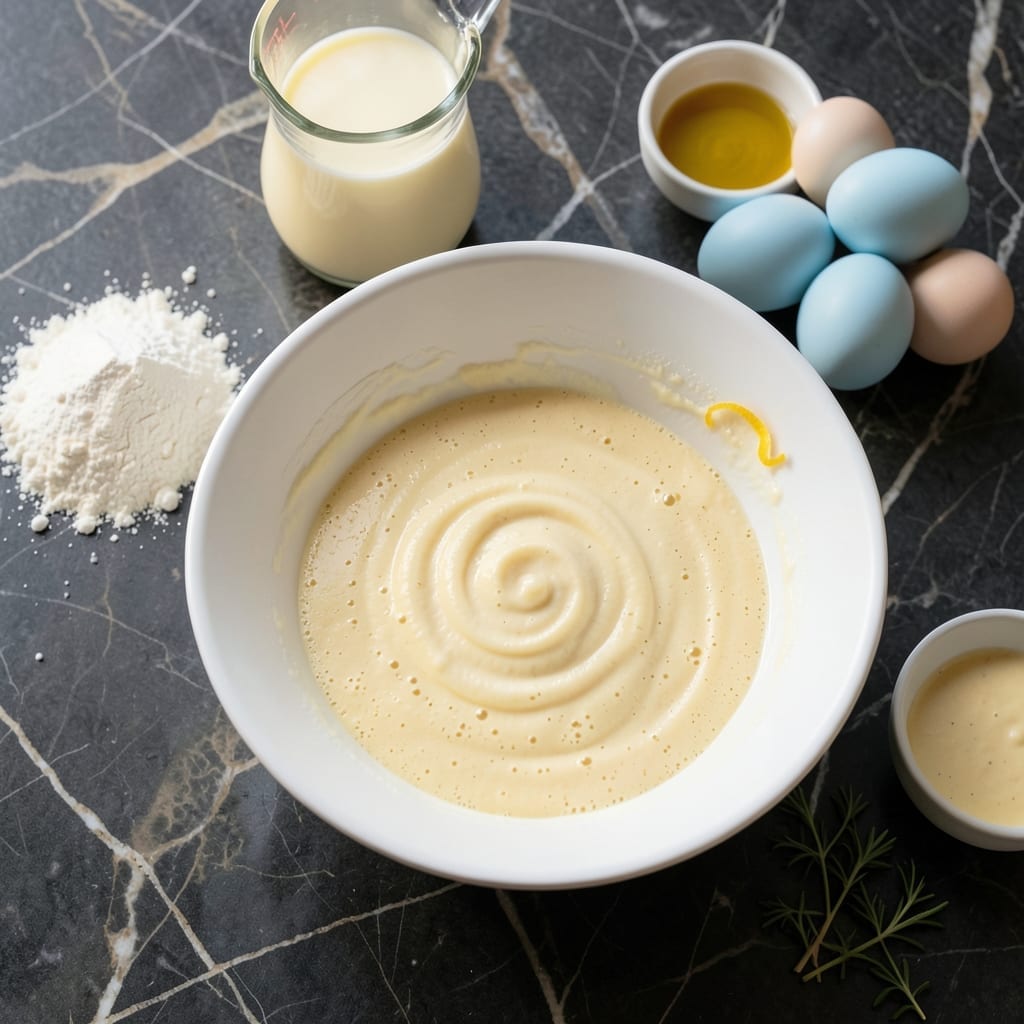
There’s something timeless about a classic white cake—its light, tender crumb and delicate vanilla flavor make it a blank canvas for any celebration.
I’ve perfected this from-scratch version to deliver light and airy layers every time, using simple ingredients and precise techniques. The key is properly creaming the butter and sugar, then folding in the dry ingredients gently to maintain that signature fluffiness.
Baked at the right temperature, this cake emerges golden with a fine texture that’s moist yet sturdy enough for layering. It’s the kind of recipe that proves homemade can outshine any boxed mix.
Serve it plain, with fresh berries, or between layers of your favorite frosting.
Ingredients for Plain White Cake Recipe from Scratch
Simple ingredients deliver that perfect light, airy texture every time for this classic treat.
| Ingredient | Amount | Notes |
|---|---|---|
| Cake Flour 🌾 | 2 ½ cups | Sifted for lighter texture |
| Granulated Sugar 🍚 | 1 ¾ cups | Fine white sugar preferred |
| Unsalted Butter 🧈 | 1 cup | Room temperature, softened |
| Large Eggs 🥚 | 4 whole | Room temperature, separated |
| Whole Milk 🥛 | 1 cup | Room temperature preferred |
| Vanilla Extract 🌿 | 2 tsp | Pure vanilla for best flavor |
| Baking Powder 🧂 | 1 tbsp | Fresh for optimal rise |
| Salt 🧂 | ½ tsp | Fine table salt works |
| Egg Whites 🥚 | 2 whole | Room temperature, whipped |
The flour is critical here. Swans Down or Softasilk cake flour gives the finest crumb, but all-purpose works in a pinch (spoon and level, don’t scoop). Butter quality matters—Land O’Lakes or Plugrá for consistent fat content. Use a kitchen scale if you have one; 1 cup of flour should be about 4.25 oz. Room temperature ingredients blend better, so pull eggs and milk out 30 minutes before starting.
No cake flour? Substitute all-purpose flour minus 2 tbsp per cup, replaced with cornstarch. Out of whole milk? 2% works fine, but avoid skim—fat adds tenderness. Vanilla extract should be pure, not imitation. For extra flavor depth, add a 1/2 tsp almond extract. If you’re short on eggs, the separated whites are non-negotiable for structure.
Store flour in an airtight container to prevent clumping. This cake stays fresh 3-4 days at room temperature in a cake keeper, or freeze unfrosted layers for up to 3 months. Always let frozen layers thaw completely before frosting.
Why You’ll Love This Recipe
- One Bowl Wonder: I mix everything right in the same bowl—no fancy equipment, just cake flour, sugar, and butter creamed together in minutes.
- Melt-In-Your-Mouth Texture: The combo of whole milk and eggs gives it that tender crumb that’s light but still rich.
- Birthday or Tuesday: Honestly, it’s my go-to for celebrations or when I just need a simple, comforting slice.
- Budget Baker: Cake flour and basic pantry staples keep it cheap, and one batch makes enough for a crowd—or leftovers for days.
Step-by-Step Instructions for Plain White Cake
Follow this method precisely for a light, airy cake with a tender crumb every time.
Step 1: Cream Butter and Sugar to Aerate
In a large mixing bowl, beat the 1 cup Unsalted Butter on medium-high speed until smooth and creamy, about 1 minute. Gradually add the 1.75 cups Granulated Sugar and continue beating for 4-5 minutes until the mixture is pale and fluffy.
This creaming process incorporates air, which creates the cake’s fine texture. Stop occasionally to scrape down the sides of the bowl to ensure even mixing. The mixture should look light and voluminous when properly aerated.
Step 2: Incorporate Eggs and Vanilla
Add the 4 whole Large Eggs one at a time, beating well after each addition. This gradual incorporation prevents the mixture from curdling and ensures a smooth, emulsified base. After the last egg, beat in the 2 tsp Vanilla Extract.
The batter should appear thick and slightly glossy at this stage. If it looks separated, beat for an additional 30 seconds to bring it back together. This step builds structure and richness in the cake.
Step 3: Alternate Dry and Wet Ingredients
In a separate bowl, whisk together the 2.5 cups Cake Flour, 1 tbsp Baking Powder, and 0.5 tsp Salt. With the mixer on low speed, add about one-third of the flour mixture to the butter mixture, beating just until combined.
Pour in half of the 1 cup Whole Milk and mix until incorporated. Repeat, ending with the final third of the flour mixture. Be careful not to overmix—stop as soon as the last streaks of flour disappear.
Step 4: Fold in Whipped Egg Whites
In a clean bowl, beat the 2 whole Egg Whites until stiff peaks form. Using a silicone spatula, gently fold the whipped egg whites into the batter in two additions. This adds air and lightness without deflating the mixture.
Fold just until no white streaks remain. The batter will be thick but smooth. Overmixing at this stage will collapse the air bubbles, resulting in a denser cake.
Step 5: Bake Until Golden and Springy
Divide the batter evenly between two greased and floured 9-inch round cake pans. Bake in a preheated 350°F oven for 25-30 minutes, or until the tops are golden brown and a toothpick inserted into the center comes out clean.
Allow the cakes to cool in the pans for 10 minutes, then transfer them to a wire rack to cool completely before frosting. This prevents crumbling and ensures the layers hold their shape.
Pro Tips For Making Plain White Cake Recipe From Scratch
- Room Temp Eggs: Pull your eggs out 30 minutes before mixing—cold eggs can cause the butter to clump, and I learned this the hard way after a lumpy batter disaster.
- Cream Butter Longer: Beat the butter and sugar for a full 5 minutes until pale and fluffy; it traps air for a lighter cake, and skipping this step gives you a dense, flat result.
- Skip Overmixing: Fold the dry ingredients in just until combined—overmixing develops gluten, and nobody wants a tough white cake with a chewy crumb.
- Use Cake Flour: Swap all-purpose for actual cake flour; its lower protein content makes a real difference in tenderness, and I was skeptical until I tried it side by side.
Pro Cooking Tips for This Dish
Butter and Sugar Creaming
Beat the butter and sugar for a full 4-5 minutes until pale and fluffy. This step traps air, which expands during baking to create that signature light texture. I use a stand mixer with paddle attachment for even creaming without overworking. 💡
Room Temperature Matters
All your ingredients—butter, eggs, and milk—should be at room temp. Cold butter won’t cream properly, and cold eggs can cause the batter to curdle. I pull mine out 30 minutes before starting to ensure even mixing.
Folding Egg Whites
Whip those 2 egg whites to stiff peaks, then fold gently into the batter. Use a silicone spatula and make broad, sweeping motions to avoid deflating the air. This is what gives the cake its airy lift.
Proper Baking Temperature
Bake at 350°F for even cooking. Too hot and the outside will set before the inside finishes; too cool and the cake will be dense. I rotate my pans halfway through for uniform browning.
Don’t Overmix
Mix just until combined when adding flour. Overmixing develops gluten, which makes the crumb tough. I stop the mixer as soon as the last streaks of flour disappear to keep it tender.
Cool Completely Before Frosting
Let layers cool for 10 minutes in pans, then transfer to a rack. Frosting a warm cake causes melting and sliding. I wait at least 2 hours before assembling for clean, stable layers. ✨
Nutrition Facts
Frequently Asked Questions
Why use cake flour instead of all-purpose?
Cake flour has a finer texture and lower protein content, producing a lighter, more delicate crumb. All-purpose works in a pinch, but substitute 2 tablespoons per cup with cornstarch for similar results.
Can I make this without a stand mixer?
Yes! A hand mixer works fine for creaming butter and sugar, but beat for the full 4-5 minutes to trap enough air. Fold egg whites in gently by hand with a spatula.
How do I prevent a dense cake?
Avoid overmixing the batter and be sure to fold in egg whites gently. Also, ensure your baking powder is fresh and measure flour correctly by spooning into cups, not scooping.
Can I bake this in different pan sizes?
For cupcakes, bake at 350°F for 18-20 minutes. For a sheet cake, use a 9×13-inch pan and increase baking time to 30-35 minutes.

- Potato Candy Recipe 1933: Vintage Peanut Butter Roll Delight - October 30, 2026
- Potato Chip Cookie Recipe With Pecans: Buttery Crunch Meets Nutty Richness - October 30, 2026
- Potato Patty Recipe No Egg: Crispy Edges Without the Binder - October 30, 2026