
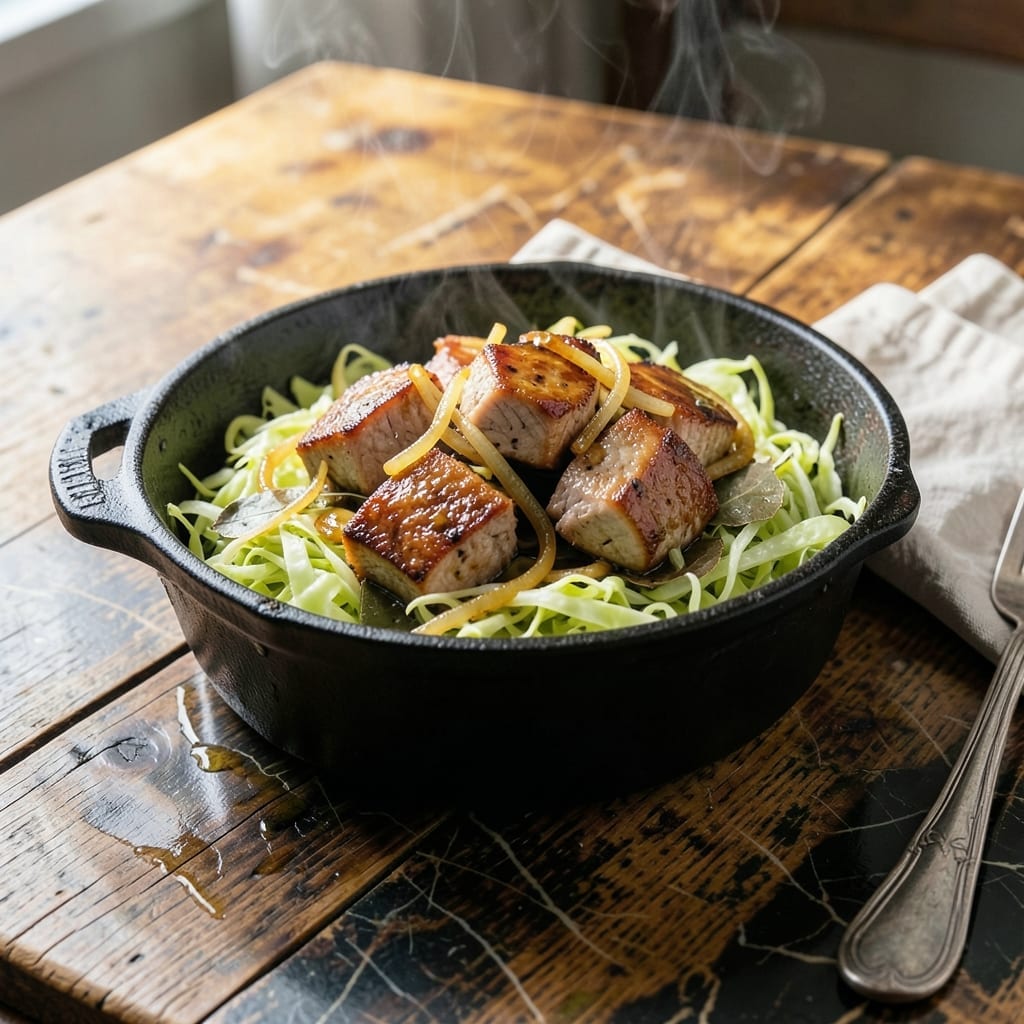
This Polish braised cabbage and pork dish delivers the ultimate comfort in every bite. Slow-cooked together, the tender meat and sweet-sour cabbage create a hearty meal that warms from the inside out.
I developed this version after years of testing different cuts and cooking methods. The pork shoulder breaks down beautifully during the long braise, while the cabbage transforms into silky, flavorful strands.
The secret is in the layering of flavors—caramelized onions, tangy vinegar, and a touch of sugar balance the richness of the meat. It’s the kind of dish that tastes even better the next day.
Serve with crusty bread to soak up every last bit of the savory juices. This is Polish home cooking at its finest.
Ingredients for Polish Kapusta Recipe with Pork
Nothing exotic here—just hearty pork, cabbage, and a few pantry staples for comfort.
| Ingredient | Amount | Notes |
|---|---|---|
| Pork Shoulder 🐖 | 2 lb | Boneless, cut into chunks |
| Green Cabbage 🥬 | 1 whole | Medium head, cored and shredded |
| Yellow Onion 🧅 | 1 whole | Large, thinly sliced |
| Apple Cider Vinegar 🍏 | ½ cup | For tangy balance |
| Granulated Sugar 🍚 | 2 tbsp | Balances acidity and sweetness |
| Bay Leaves 🌿 | 2 whole | Dried, for depth of flavor |
| Juniper Berries 🪵 | 6 whole | Lightly crushed (optional) |
| Black Peppercorns 🌶️ | 10 whole | Lightly crushed |
| Kosher Salt 🧂 | 1 ½ tsp | Adjust to taste |
| Olive Oil 🫒 | 2 tbsp | For browning pork and onions |
| Water 💧 | 1 cup | For braising liquid |
| Caraway Seeds 🌿 | 1 tsp | Traditional Polish seasoning |
The pork shoulder is the star here. Look for good marbling—it breaks down beautifully during the long braise. Most grocery stores carry it pre-cut into chunks, but ask the butcher if you need it trimmed. I grab mine from Costco when I’m making a big batch, but Whole Foods has great quality too. The cabbage should be fresh and firm, with tight leaves (skip the pre-shredded bags—they don’t hold up as well).
No pork shoulder? Pork butt works just as well. Out of apple cider vinegar? White vinegar plus a pinch of sugar gets you close. Juniper berries might be tricky to find—Trader Joe’s usually stocks them, or just skip ’em (the dish will still be delicious). Caraway seeds are traditional but can be omitted if you’re not a fan. Fresh out of bay leaves? Dried thyme at half the amount works in a pinch.
This actually tastes better the next day once all the flavors meld. Keeps in the fridge for 4-5 days, and freezes beautifully for 3 months. I always make extra—it’s perfect for lazy leftovers or quick lunches.
Why You’ll Love This Recipe
- One Pot Meal: I toss everything in my Dutch oven and let it simmer—no fancy techniques, just pork shoulder and cabbage doing their thing.
- Tangy-Sweet Balance: The apple cider vinegar and sugar hit this perfect sweet-sour note that makes me sneak bites straight from the pot.
- Feeds the Freezer: Honestly, it tastes even better the next day, and I always double the batch for easy leftovers.
- Budget Stretcher: Pork shoulder and green cabbage are cheap, but this tastes like I spent hours (and dollars) I didn’t actually spend.
Step-by-Step Instructions for Polish Kapusta With Pork
This method transforms simple ingredients into a hearty, comforting dish with deep, tangy flavors.
Step 1: Brown the Pork and Onions
Heat the 2 tbsp olive oil in a large, heavy pot over medium-high heat. Add the 2 lb Pork Shoulder chunks in a single layer, being careful not to overcrowd the pot. You want the meat to brown, not steam.
Cook undisturbed for 4-5 minutes until the pork develops a deep, golden-brown crust on the first side. Flip and repeat on the other side. Remove the pork to a plate and set aside.
In the same pot, add the thinly sliced yellow onion and cook for 3-4 minutes, stirring occasionally, until it softens and starts to turn translucent.
Step 2: Prepare the Cabbage and Spices
While the onions cook, core and shred the 1 whole Green Cabbage. I like to cut it into ¼-inch thick strips for even cooking and great texture. Add the cabbage to the pot with the onions and stir to combine.
Lightly crush the 6 whole Juniper Berries and 10 whole Black Peppercorns with the flat side of your knife. Add them to the pot along with the 2 whole Bay Leaves, 1 tsp Caraway Seeds, and 1.5 tsp Kosher Salt. Stir well to distribute the spices evenly.
Step 3: Braise with Liquid and Sugar
Return the browned pork to the pot, nestling the chunks into the cabbage mixture. Pour in the 0.5 cup Apple Cider Vinegar, 2 tbsp Granulated Sugar, and 1 cup Water. Stir gently to combine all the ingredients.
The liquid should just barely cover the cabbage and pork. If it doesn’t, add a splash more water. Bring the mixture to a gentle boil.
Step 4: Simmer Until Tender
Once boiling, reduce the heat to low, cover the pot, and let it simmer gently for 1.5 to 2 hours. Check occasionally and stir to prevent sticking. The pork is done when it shreds easily with a fork.
As it cooks, the cabbage will soften and develop a rich, tangy flavor from the vinegar and spices. The pork will become incredibly tender and absorb all the delicious flavors of the braising liquid.
Step 5: Adjust and Serve
After the pork is tender, uncover the pot and simmer for an additional 10-15 minutes to allow the liquid to reduce slightly. This concentrates the flavors and creates a light, flavorful sauce.
Taste and adjust the seasoning if needed, though the balance of sweet, tangy, and savory should be just right. Remove the bay leaves before serving. Ladle the kapusta into bowls, making sure each serving has plenty of pork and cabbage. This dish tastes even better the next day, as the flavors continue to meld.
Pro Tips For Making Polish Kapusta Recipe With Pork
- Brown the Pork First: I learned this the hard way—searing the pork shoulder in batches over medium-high heat until deeply browned adds a richness to the kapusta that simmering alone just can’t match.
- Shred Cabbage Thinly: Sounds tedious, but slicing the green cabbage into fine shreds (about 1/8-inch thick) means it softens evenly and absorbs the vinegar and sugar better—no crunchy bits left behind.
- Skip the Overcrowding: Resist the urge to dump all the cabbage in at once; cook it down in stages so it wilts properly and doesn’t steam into a soggy mess.
- Balance the Sweetness: Taste as you go and adjust the sugar and vinegar in small increments—my grandmother swore by 1 teaspoon of sugar to 1 tablespoon of vinegar per pound of pork for that perfect tangy-sweet bite.
Pro Cooking Tips for This Recipe
Perfect Browning Technique
Don’t rush the pork browning step—this builds the Maillard reaction flavors that make the dish deeply savory. I use my Lodge enameled Dutch oven for even heat distribution. Crowding the pot will steam the meat instead of searing it, so work in batches if needed. 🔥
Spice Toasting Trick
Lightly toasting the caraway seeds and juniper berries in the pot before adding liquids intensifies their aroma. Just 30 seconds over medium heat makes a noticeable difference. David can always tell when I’ve skipped this step.
Liquid Balance
The apple cider vinegar and sugar create the signature sweet-tangy balance. If your vinegar is particularly sharp, add an extra 1 tbsp sugar. I source my vinegar from Central Market—their house brand has consistent quality.
Low and Slow
Maintain a gentle simmer—barely bubbling—to prevent the cabbage from turning mushy. I check the pot every 20 minutes, stirring from the bottom to prevent sticking. The pork is done when it pulls apart with a fork.
Resting Matters
Let the dish rest 10 minutes off heat before serving. This allows the juices to redistribute. I learned this trick from Nana Mae—her diner customers always raved about her “settled” braised dishes.
Flavor Boost
If the sauce seems thin after cooking, simmer uncovered for 5-10 minutes to reduce. A splash of beef stock can deepen the flavor if you want extra richness. This dish always tastes better the next day. 💛
Nutrition Facts
Frequently Asked Questions
Can I use a different cut of pork?
Yes! Pork butt works just as well as shoulder. Both have good marbling for tender results after 2 hours of braising. Avoid lean cuts like tenderloin as they dry out.
How do I store leftovers?
Cool completely, then refrigerate in an airtight container for 4-5 days. Freezes beautifully for 3 months—just thaw overnight in the fridge before reheating.
Why does my cabbage turn mushy?
This happens from too-high heat or overcooking. Keep it at a gentle simmer and check at 1.5 hours. The cabbage should be silky, not falling apart.
Can I make this in a slow cooker?
Brown the pork first, then cook on low for 6-7 hours. Add ½ cup extra water since slow cookers lose less moisture.

- Potato Candy Recipe 1933: Vintage Peanut Butter Roll Delight - October 30, 2026
- Potato Chip Cookie Recipe With Pecans: Buttery Crunch Meets Nutty Richness - October 30, 2026
- Potato Patty Recipe No Egg: Crispy Edges Without the Binder - October 30, 2026