
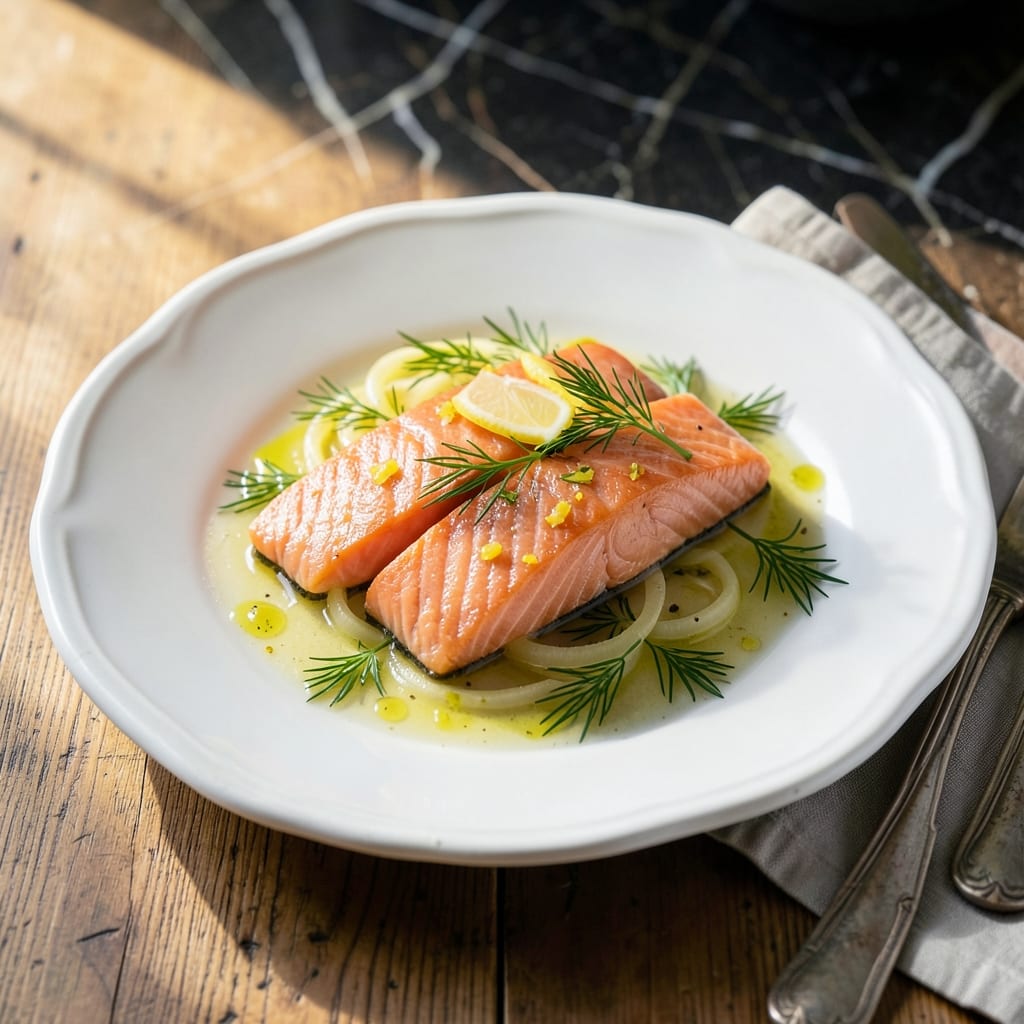
This poached salmon delivers the silky texture and delicate flavor that defines Jamie Oliver’s approach to simple, elegant cooking. The gentle cooking method preserves the fish’s natural tenderness while infusing it with bright aromatic notes.
I’ve refined this technique through years of testing, ensuring consistent results every time. The key is maintaining the poaching liquid at just the right temperature—160-180°F—to cook the salmon evenly without overcooking.
What emerges is perfectly cooked fish with a velvety texture, ready to be finished with a drizzle of lemon-dill sauce. The method works for both fillets and whole sides, making it versatile for any occasion.
Serve with steamed vegetables or a light salad for a complete meal that feels restaurant-quality at home.
Ingredients for Poached Salmon Recipe Jamie Oliver
Elegant yet simple ingredients for a restaurant-quality poached salmon with silky texture and bright aromatics.
| Ingredient | Amount | Notes |
|---|---|---|
| Salmon Fillets 🐟 | 1 ½ lb | Skin-on or skinless, center-cut |
| White Wine 🍷 | 3 cups | Dry variety like Sauvignon Blanc |
| Water 💧 | 2 cups | For poaching liquid base |
| Fresh Lemon 🍋 | 1 whole | Zested and juiced, about 3 tbsp juice |
| Fresh Dill 🌿 | ¼ cup | Chopped, stems removed |
| Yellow Onion 🧅 | 1 whole | Thinly sliced for aromatics |
| Carrot 🥕 | 1 whole | Sliced, for poaching liquid |
| Celery Stalks 🌿 | 2 pieces | Roughly chopped for flavor |
| Bay Leaves 🍃 | 2 pieces | Dried, for aromatic depth |
| Black Peppercorns 🌶️ | 1 tsp | Whole, for poaching liquid |
| Kosher Salt 🧂 | 1 tbsp | Diamond Crystal preferred |
| Extra-Virgin Olive Oil 🫒 | 2 tbsp | For finishing and lemon-dill sauce |
| Dijon Mustard 🟡 | 1 tbsp | For lemon-dill sauce base |
| Greek Yogurt 🥛 | ½ cup | Full-fat for creaminess |
The salmon quality is paramount. Wild-caught sockeye or king salmon from Whole Foods or Trader Joe’s offers superior flavor and texture. Ensure fillets are fresh with vibrant color and no fishy odor. For the poaching liquid, a dry white wine like Sauvignon Blanc or Pinot Grigio provides the necessary acidity to complement the fish without overpowering it.
No white wine? Substitute with additional water and 2 tbsp white wine vinegar. Fresh dill is ideal but dried dill at one-third the amount works in a pinch. For the sauce, sour cream or crème fraîche can replace Greek yogurt. The lemon can be Meyer lemon for a sweeter note. Avoid pre-ground black pepper—whole peppercorns toasted lightly release more aroma.
Poached salmon keeps in the fridge for 2-3 days but is best served immediately. Store leftovers in an airtight container with a splash of poaching liquid to maintain moisture. The lemon-dill sauce can be made ahead and refrigerated for up to 1 week.
Why You’ll Love This Recipe
- One Pot Wonder: I just throw the salmon, wine, water, and lemon in a pan—hardly any cleanup.
- Bright & Zesty: The fresh dill and lemon make every bite taste like a little celebration.
- Dinner in Minutes: Honestly, it’s ready before I finish setting the table.
- Leftovers? Yes Please: The poached salmon tastes even better cold in salads the next day.
Step-by-Step Instructions for Poached Salmon With Lemon and Dill
Master this gentle cooking method to achieve perfectly tender salmon with vibrant flavor.
Step 1: Prepare the Poaching Liquid
In a wide, deep skillet or Dutch oven, combine the 3 cups white wine, 2 cups water, thinly sliced yellow onion, sliced carrot, 2 pieces celery stalks, 2 pieces bay leaves, 1 tsp black peppercorns, and 1 tbsp kosher salt.
Bring to a gentle simmer over medium heat—you want small bubbles breaking the surface, not a rolling boil. This takes about 8-10 minutes. The liquid should be fragrant and steaming but not aggressively bubbling. I maintain this temperature carefully; boiling would make the salmon tough.
Step 2: Poach the Salmon Fillets
Zest the 1 whole fresh lemon directly into the poaching liquid, then add the juiced lemon halves to the pan. Gently lower the 1.5 lb salmon fillets into the liquid, ensuring they’re fully submerged. If your fillets are thick, spoon some liquid over the top.
Poach for 10-12 minutes until the salmon is just opaque and flakes easily with a fork. The internal temperature should reach 145°F. Watch for the flesh to change from translucent to opaque pink—this visual cue is more reliable than timing alone.
Step 3: Create the Lemon-Dill Sauce
While the salmon poaches, make the sauce. In a small bowl, whisk together the 2 tbsp extra-virgin olive oil, 1 tbsp Dijon mustard, and the 0.5 cup Greek yogurt until smooth. Stir in the 0.25 cup fresh dill and the zest from your lemon.
The sauce should be thick but pourable. If it’s too stiff, add a teaspoon of the warm (not hot) poaching liquid to loosen it. This emulsion of oil and yogurt creates a rich, tangy complement to the delicate salmon.
Step 4: Finish and Serve
Using a slotted spatula, carefully transfer the salmon fillets to a serving platter. Pat them dry with a paper towel to remove excess liquid—this helps the sauce cling better. Spoon the lemon-dill sauce generously over the warm salmon.
Serve immediately while the salmon is still warm. The poaching liquid can be strained and reduced for a secondary sauce, but I find the lemon-dill version provides all the brightness and richness needed. Each serving should have a glossy coating of sauce with visible flecks of fresh dill.
Pro Tips For Making Poached Salmon Recipe Jamie Oliver
- Lower the Heat: Keep the poaching liquid just below a simmer—tiny bubbles only, or the salmon will toughen. I learned this the hard way after turning my first few fillets into rubber.
- Skin Side Down: Place the salmon in the pan skin-side down to prevent curling. Sounds simple, but I was skeptical until I tried it and saw the difference.
- Use Fresh Dill: Dried dill won’t cut it—fresh sprigs in the poaching liquid add a bright, aromatic flavor that dried just can’t match. My grandmother swore by this, and she was right.
- Rest Before Serving: Let the salmon rest in the warm poaching liquid for 5 minutes off the heat. It finishes cooking gently and stays juicy—yes, even if you’re impatient like me.
Flavor Customization for This Recipe
Citrus Variations
Swap the lemon for lime zest and juice with fresh cilantro instead of dill. This creates a bright, zesty profile that pairs wonderfully with Mexican-inspired sides. I love this version with a mango-avocado salsa on top. 🌟
Herb Infusions
For a French twist, replace dill with fresh tarragon and add 5 sprigs of thyme to the poaching liquid. The anise-like flavor of tarragon complements salmon beautifully. Use 1 tbsp chopped chives in the sauce for extra freshness.
Spicy Kick
Add ½ tsp red pepper flakes to the poaching liquid and a dash of hot sauce to the lemon-dill sauce. For heat lovers, I recommend Sriracha or Tabasco. The warmth cuts through the richness without overwhelming the delicate fish.
Asian Fusion
Infuse the poaching liquid with 2-inch piece of ginger, 3 garlic cloves, and 2 tbsp soy sauce. Replace the dill with ¼ cup chopped scallions and add 1 tsp sesame oil to the sauce. This creates a subtle umami depth.
Mediterranean Style
Add 10 Kalamata olives and 1 tbsp capers to the poaching liquid. Finish the salmon with a sauce made from Greek yogurt, minced garlic, and chopped fresh oregano. Drizzle with extra-virgin olive oil before serving. 💛
Nutrition Facts
Frequently Asked Questions
What’s the ideal temperature for poaching?
Keep the liquid between 160-180°F with small bubbles. Never let it boil—this ensures tender, silky fish every time.
Can I make this without wine?
Yes! Replace wine with 2 cups water and 2 tbsp white wine vinegar. The acidity mimics wine’s brightness without the alcohol.
How do I know when it’s done?
Look for opaque flesh that flakes easily. Internal temp should hit 145°F. Overcooking makes salmon dry—remove it just as it turns pink.
Can I use frozen salmon?
Thaw completely in the fridge overnight first. Poaching frozen fish directly results in uneven cooking and a mushy texture.

- BBQ Sausage Recipe Oven: Smoky Depth Without the Grill - September 28, 2026
- BBQ Chicken Bowl Recipe Rice: Smoky Sweetness Over Fluffy Grains - September 28, 2026
- Beef Cutlet Recipe Ideas: Crispy Breaded Patties With Bold Seasonings - September 28, 2026