
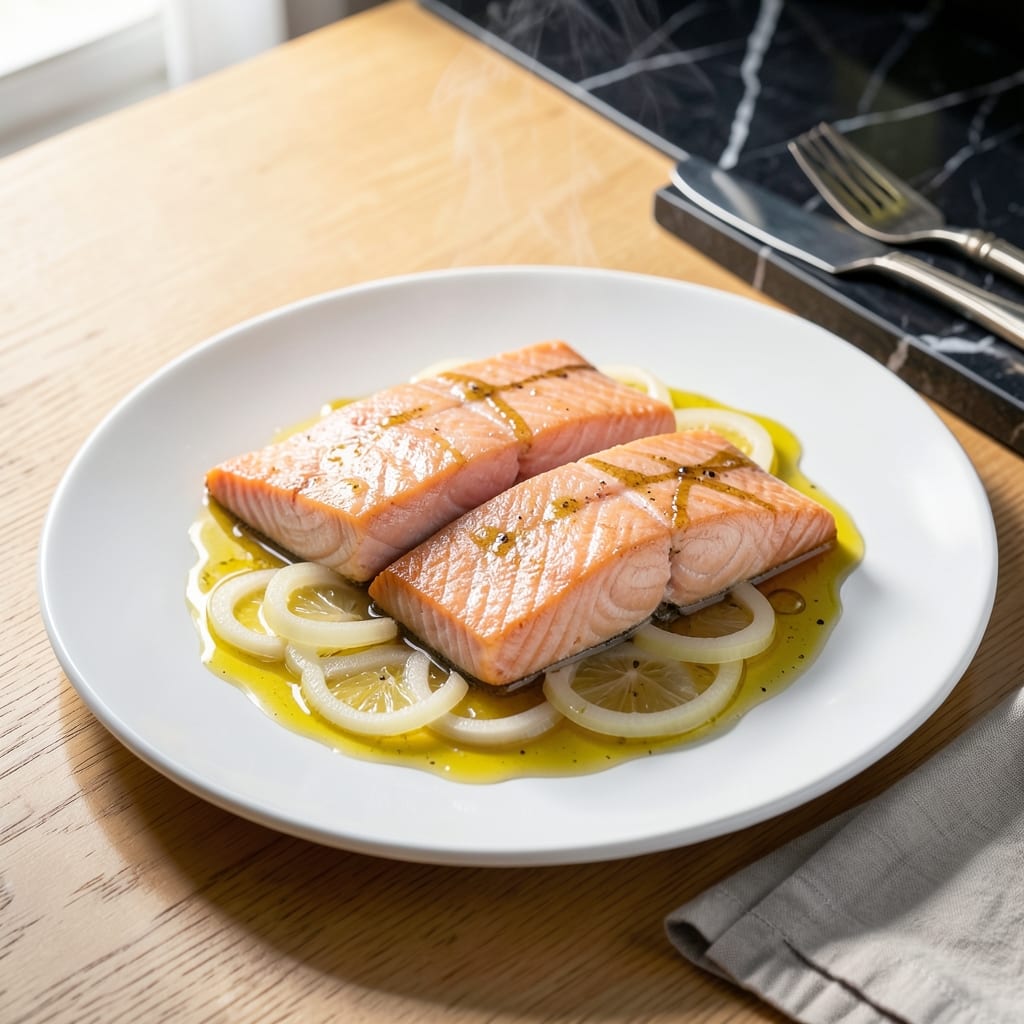
Poached salmon delivers tender, flaky results without wine by using citrus as the flavor foundation. This method produces restaurant-quality fish with minimal effort.
The key is gently simmering the salmon in a flavorful liquid that infuses every bite with bright, aromatic notes. Citrus adds the acidity that wine typically provides, keeping the fish moist and delicate.
You’ll achieve perfectly cooked salmon that breaks apart with a fork, maintaining its natural richness while absorbing subtle citrus undertones. The technique is foolproof and requires no special equipment.
This approach works for both quick weeknight dinners and elegant entertaining. The citrus-infused poaching liquid also doubles as a light, flavorful sauce.
Ingredients for Poached Salmon Recipe Without Wine
Fresh salmon, citrus, and aromatic herbs create this elegant poached preparation with no wine required.
| Ingredient | Amount | Notes |
|---|---|---|
| Salmon Fillets 🐟 | 1 ½ lb | Skin-on or skinless, fresh or thawed |
| Fresh Lemon Juice 🍋 | ½ cup | About 3-4 large lemons |
| Fresh Orange Juice 🍊 | ¼ cup | About 1 large orange |
| Water 💧 | 4 cups | For poaching liquid base |
| White Vinegar 🍶 | 2 tbsp | Or apple cider vinegar |
| Yellow Onion 🧅 | ½ whole | Thinly sliced for infusion |
| Fresh Dill 🌿 | ¼ cup | Chopped, plus extra for garnish |
| Bay Leaves 🍃 | 2 pieces | Dried, for aromatic depth |
| Black Peppercorns 🌶️ | 1 tsp | Whole, lightly crushed |
| Kosher Salt 🧂 | 1 tbsp | Diamond Crystal preferred |
| Garlic Cloves 🧄 | 4 cloves | Smashed, peeled |
| Olive Oil 🫒 | 1 tbsp | Extra-virgin for finishing |
| Lemon Slices 🍋 | 4 slices | Thin, for poaching and garnish |
The salmon quality is paramount. Wild-caught sockeye or coho from Whole Foods or Trader Joe’s offers the best flavor and texture. Look for fillets with vibrant color and a mild scent—avoid any with a fishy odor. For the citrus, organic lemons and oranges provide superior zest and juice. The poaching liquid should be just enough to cover the fish, so adjust water volume if your pan is wider or narrower.
No fresh dill? Fresh parsley or tarragon work beautifully, though dill’s delicate anise note is ideal. Short on time? Dried dill at one-third the amount, but fresh is preferred. If you lack vinegar, a splash of dry white wine (though this is a no-wine recipe) or additional lemon juice can substitute. For a richer finish, a pat of cold butter (if not strictly pescatarian) stirred into the sauce adds luxury.
The poached salmon keeps well for 2-3 days in the fridge, sealed in its liquid. Reheat gently in the poaching liquid or serve cold. The citrus-infused broth can be strained and reduced for a light sauce, storing for 1 week refrigerated. Avoid freezing the fish, as it can compromise the flaky texture.
Why You’ll Love This Recipe
- One Pot Wonder: I just simmer the salmon in water with lemon and orange juice—no extra pans, no fuss.
- Bright and Zesty: The lemon and orange juice give it a fresh, tangy kick that’s anything but boring.
- Meal Prep Magic: Poached salmon stays tender for days, so I pack it for lunches all week.
- Budget Friendly: Salmon fillets stretch further when poached, and the citrus keeps it flavorful without pricey wine.
Step-by-Step Instructions for Poached Salmon Without Wine
This method guarantees tender, flaky results with a bright citrus infusion every time.
Step 1: Prepare the Poaching Liquid Base
In a wide, shallow pan or deep skillet, combine the 4 cups water, 0.5 cup fresh lemon juice, and 0.25 cup fresh orange juice. The wide surface area ensures even cooking and prevents overcrowding the salmon fillets.
Add the 2 tbsp white vinegar, 1 tbsp kosher salt, 0.5 whole yellow onion (thinly sliced), 2 pieces bay leaves, 1 tsp black peppercorns (lightly crushed), and 4 cloves garlic cloves (smashed). This aromatic blend infuses the poaching liquid with depth and complexity.
Step 2: Simmer and Infuse the Broth
Bring the mixture to a gentle simmer over medium heat. You want small bubbles just breaking the surface—not a rolling boil, which would toughen the salmon. This temperature ensures the fillets cook gently and evenly.
Once simmering, add the 0.25 cup fresh dill and the 4 slices lemon slices. Let the broth steep for 5 minutes to allow the flavors to meld. The dill should turn bright green, and the liquid will take on a subtle citrus aroma. Reduce heat to low to maintain a gentle simmer.
Step 3: Poach the Salmon Fillets
Carefully lower the 1.5 lb salmon fillets into the simmering liquid, ensuring they are fully submerged. If your pan isn’t wide enough, cook the fillets in batches to avoid overcrowding. The liquid should just barely cover the salmon.
Poach for 8-10 minutes until the salmon is opaque and flakes easily with a fork. Avoid stirring or prodding the fillets—let them cook undisturbed. The salmon is done when it reaches an internal temperature of 145°F, but the visual cue of flaking is more reliable here.
Step 4: Finish and Serve
Using a slotted spatula, carefully transfer the salmon fillets to a serving platter. Drizzle each with 1 tbsp olive oil to add a silky finish and enhance the citrus notes. The oil also helps retain moisture in the delicate fish.
Garnish with additional fresh dill and a few reserved lemon slices for a vibrant presentation. Serve immediately—the salmon will continue to cook slightly off the heat, but it’s best enjoyed fresh from the poaching liquid. The result should be tender, moist, and infused with a bright, aromatic citrus flavor.
Pro Tips For Making Poached Salmon Recipe Without Wine
- Use Cold Water: Start the salmon in cold water with the lemon, orange juice, and vinegar, then gently bring to a simmer—this prevents the fillets from seizing up and keeps them tender.
- Skin Side Down: Place the salmon fillets skin-side down in the poaching liquid to protect the delicate flesh and keep them from curling as they cook.
- Skip the Boil: Never let the liquid reach a rolling boil; a gentle simmer (around 160-180°F) is all you need to cook the salmon evenly without drying it out.
- Rest in Liquid: Let the salmon sit in the warm poaching liquid for 2-3 minutes after turning off the heat—it finishes cooking gently and soaks up extra flavor.
Perfect Pairings for This Recipe
Side Dish Ideas
I love pairing this with roasted asparagus tossed in olive oil and lemon zest—the bright flavors complement the salmon beautifully. Toss 1 lb asparagus with 2 tbsp olive oil and roast at 400°F for 12-15 minutes. 🌟
Grain Pairings
A light lemon-herb couscous soaks up the poaching liquid perfectly. Cook 1 cup couscous in 1.5 cups vegetable broth with 1 tbsp lemon zest and 2 tbsp chopped dill. Alternatively, quinoa or brown rice add hearty texture.
Wine Pairings
Since this recipe skips wine, I recommend a crisp Sauvignon Blanc from New Zealand—its citrus notes mirror the poaching liquid. A dry Riesling also works beautifully, offering a refreshing contrast. Avoid heavy reds that overwhelm the delicate fish. 🍷
Salad Options
A simple cucumber-dill salad enhances the meal’s freshness. Combine 2 sliced cucumbers, ¼ cup chopped dill, 1 tbsp lemon juice, and 1 tsp salt. For variety, add cherry tomatoes or red onion.
Bread Suggestions
Warm crusty bread or garlic naan is ideal for soaking up the citrus-infused poaching liquid. Brush with olive oil and toast lightly. For a lighter option, try whole-grain pita or sourdough rolls. 💛
Nutrition Facts
Frequently Asked Questions
Can I use bottled lemon juice instead of fresh?
Fresh lemon juice provides the brightest flavor, but bottled works in a pinch. Use the same 0.5 cup amount. The acidity level is similar, though fresh offers more aromatic complexity.
How do I know when the salmon is done?
The fish is ready when it reaches 145°F internally and flakes easily with a fork. This usually takes 8-10 minutes in the poaching liquid. Don’t overcook—it continues cooking slightly after removal.
What can I substitute for the orange juice?
Try 1/4 cup apple cider vinegar or additional lemon juice. For a milder option, use 1/2 cup white grape juice. Each adds different acidity levels, so taste the liquid before poaching.
Can I poach frozen salmon directly?
No—thaw first in the fridge overnight. Poaching from frozen results in uneven cooking and a watery texture. Pat fillets dry before adding to the liquid for the best flaky texture.

- Potato Candy Recipe 1933: Vintage Peanut Butter Roll Delight - October 30, 2026
- Potato Chip Cookie Recipe With Pecans: Buttery Crunch Meets Nutty Richness - October 30, 2026
- Potato Patty Recipe No Egg: Crispy Edges Without the Binder - October 30, 2026