
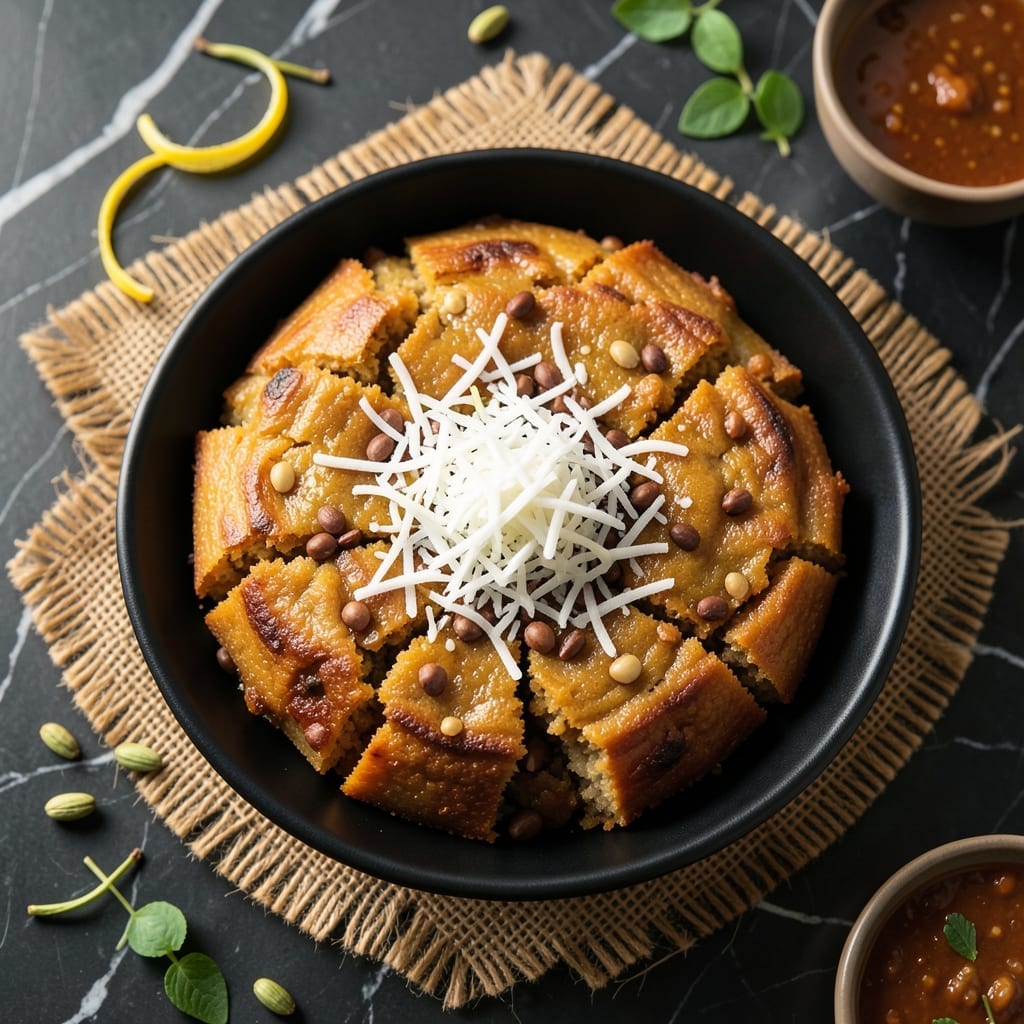
This pressure cooker method brings a beloved Odia tradition into modern kitchens with remarkable ease. Poda pitha, a fermented rice cake, typically requires hours of preparation, but my adapted technique preserves its authentic taste while cutting the time dramatically.
The process involves soaking rice and lentils, grinding them into a smooth batter, and allowing it to ferment overnight. The pressure cooker then works its magic, steaming the cake to perfectly soft and slightly spongy perfection in just 20 minutes.
What emerges is a fragrant, mildly sweet cake with a porous texture that soaks up syrups or coconut milk beautifully. The pressure cooker locks in steam, ensuring even cooking and that signature moistness traditional methods achieve.
Serve warm with a drizzle of jaggery syrup or fresh grated coconut for an authentic taste of Odisha. This method makes a traditionally labor-intensive dish accessible for any home cook.
Ingredients for Poda Pitha Recipe in Pressure Cooker
Traditional Odia ingredients transformed through modern pressure cooker efficiency with remarkable authenticity preserved.
| Ingredient | Amount | Notes |
|---|---|---|
| Parboiled Rice 🌾 | 2 cups | Soaked overnight, rinsed well |
| Split Urad Dal 🥜 | ½ cup | Black gram, soaked overnight |
| Semolina 🌾 | ¼ cup | Fine variety, for binding |
| Jaggery 🍯 | ¾ cup | Grated or finely chopped |
| Fresh Grated Coconut 🥥 | ½ cup | Unsweetened, tightly packed |
| Cardamom Pods 🌿 | 4 whole | Green, seeds removed and crushed |
| Fennel Seeds 🍃 | 1 tsp | Lightly crushed for aroma |
| Salt 🧂 | ½ tsp | Adjust to taste preference |
| Water 💧 | 1 ½ cups | For pressure cooker steaming |
| Baking Soda 🧂 | ¼ tsp | Optional, for extra fluffiness |
| Ghee 🧈 | 2 tbsp | For greasing cooker and serving |
| Cashew Nuts 🌰 | 2 tbsp | Chopped, for garnish |
| Raisins 🍈 | 2 tbsp | Optional, for sweetness |
The rice and urad dal form the foundation—use parboiled rice for the right texture, as it holds up better during fermentation. Indian grocery stores like Patel Brothers or local South Asian markets will have split urad dal (black gram without skin). Soak both for at least 6-8 hours (overnight is ideal) for proper fermentation. The semolina adds structure, so don’t skip it, and ensure it’s the fine variety.
No jaggery? Dark brown sugar works in a pinch, though the flavor will be slightly different. Out of fresh coconut? Frozen grated coconut (thawed) is a decent substitute. For a nut-free version, omit cashews and raisins—the cake will still be delicious. The cardamom and fennel are traditional, but vanilla extract or cinnamon can work if you’re in a bind.
Batter ferments best at room temperature (about 8-12 hours depending on warmth). Store leftovers in an airtight container—they’ll keep for 3-4 days at room temperature or 1 week refrigerated. Reheat by steaming for 5-10 minutes to restore that fresh, spongy texture.
Why You’ll Love This Recipe
- Pressure Cooker Magic: I can have this ready in under 40 minutes—no traditional steaming hassles, just set and forget.
- Jaggery Sweetness: The caramelized jaggery and fresh coconut create that melt-in-your-mouth richness I crave in every bite.
- Festival Favorite: Between us, this is my go-to for Prathamastami or any celebration—it feels special but never fussy.
- Feeds Many: One batch makes enough for 6-8 people, and honestly, the leftovers taste even better the next day.
Step-by-Step Instructions for Steamed Rice Cake in Pressure Cooker
This traditional method delivers perfectly fluffy texture using modern pressure cooking techniques.
Step 1: Prepare the Batter Base
Drain the soaked 2 cups Parboiled Rice and 0.5 cup Split Urad Dal thoroughly in a fine-mesh strainer. Transfer to a large mixing bowl and add the 0.25 cup Semolina, which provides essential binding for the cake structure.
Using your hands or a sturdy wooden spoon, gently crush the grains together. This releases starch that helps create the proper consistency. The mixture should resemble coarse wet sand with no large dry pockets remaining.
Step 2: Incorporate Sweetness and Flavor
Add the 0.75 cup Jaggery to the rice-dal mixture. I recommend using finely grated jaggery to ensure even distribution throughout the batter. The jaggery should dissolve slightly as you mix, creating a lightly sticky texture.
Stir in the 0.5 cup Fresh Grated Coconut, 4 whole Cardamom Pods with seeds crushed, 1 tsp Fennel Seeds, and 0.5 tsp Salt. The coconut adds moisture while the spices infuse the batter with traditional aroma. Let this mixture rest for 10 minutes to allow flavors to meld.
Step 3: Adjust Consistency and Activate Leavening
After resting, the batter should be thick but pourable. If it appears too dry, add a small amount of the 1.5 cups Water reserved for steaming, 1 tablespoon at a time, until it reaches the proper consistency.
Sprinkle the 0.25 tsp Baking Soda evenly over the surface and fold it in gently with a spatula. This creates air pockets that will expand during cooking, resulting in a lighter texture. Avoid overmixing at this stage to prevent deflating the batter.
Step 4: Steam in Pressure Cooker
Grease the inner pot of your pressure cooker with 1 tbsp Ghee, making sure to coat the sides as well. Pour the batter into the prepared pot, spreading it evenly. The batter should be about 2 inches deep for proper cooking.
Add the remaining 1.5 cups Water to the cooker according to manufacturer’s instructions for steaming. Close the lid and cook on high pressure for 25 minutes. Allow for a natural pressure release for 10 minutes before carefully opening the lid.
Step 5: Finish and Garnish
Test doneness by inserting a toothpick into the center – it should come out clean with no wet batter clinging. Drizzle the remaining 1 tbsp Ghee over the top while still hot.
Garnish with 2 tbsp Cashew Nuts and 2 tbsp Raisins that have been lightly toasted in a dry pan. Let it sit covered for 5 minutes before slicing to allow the structure to set.
Pro Tips For Making Poda Pitha Recipe In Pressure Cooker
- Soak the Rice: Soak the parboiled rice and urad dal together for at least 4-5 hours—this ensures even fermentation and a fluffy texture inside the pressure cooker.
- Check Jaggery Quality: Use dark, good-quality jaggery for deeper flavor, and grate it finely so it melts evenly into the batter without clumping.
- Avoid Overfilling: Fill the pressure cooker only halfway to prevent batter from spilling over during steaming and ruining the pitha’s shape.
- Add Semolina Last: Mix in the semolina just before cooking—it thickens the batter and gives poda pitha that perfect dense-yet-soft crumb.
Serving Suggestions for This poda pitha recipe in pressure cooker
Traditional Presentation
Serve this creation warm, cut into diamond-shaped pieces for an authentic Odia look. The porous texture soaks up syrups beautifully, so I always drizzle 2 tbsp jaggery syrup over each serving. This enhances the natural sweetness without overpowering.
Coconut Milk Bath
For a richer experience, pour ¼ cup thick coconut milk over each portion just before serving. The milk seeps into the cake, creating a luxurious mouthfeel. I warm the coconut milk slightly first to avoid cooling down the dish.
Garnish Ideas
Top with toasted cashew halves and raisins for added texture and sweetness. A sprinkle of fresh grated coconut adds visual appeal and reinforces the traditional flavors. I lightly toast the cashews in ghee for extra aroma. 💛
Accompaniment Pairings
Pair with a cup of cardamom chai to complement the spices in the cake. The warmth of the tea balances the mild sweetness perfectly. I also enjoy serving it with mango lassi for a refreshing contrast.
Festive Serving
For special occasions, arrange the pieces on a banana leaf for an authentic presentation. The leaf adds a subtle earthy aroma that enhances the overall experience. I find this particularly impressive for guests.
Storage and Reheating
Leftovers keep well at room temperature for 2 days. To serve later, steam slices for 5 minutes to restore moisture and softness. This brings back that fresh-from-the-cooker texture. ✨
Nutrition Facts
Frequently Asked Questions
Can I use regular rice instead of parboiled?
Parboiled rice is ideal for structure, but you can substitute with 1.5 cups regular rice. The texture may be slightly softer. Soak it longer to compensate.
Why does the batter need to ferment?
Fermentation develops the traditional tangy flavor and helps the cake rise. Skip it and you’ll lose that authentic taste. 8-12 hours at room temperature works best.
How do I know when it’s fully cooked?
A toothpick inserted in the center should come out clean. If wet batter clings, cook for 5 more minutes on high pressure.
Can I make this without a pressure cooker?
Yes! Use a steamer basket over boiling water. Cover tightly and steam for 45-50 minutes. Check water levels often.

- Potato Candy Recipe 1933: Vintage Peanut Butter Roll Delight - October 30, 2026
- Potato Chip Cookie Recipe With Pecans: Buttery Crunch Meets Nutty Richness - October 30, 2026
- Potato Patty Recipe No Egg: Crispy Edges Without the Binder - October 30, 2026