
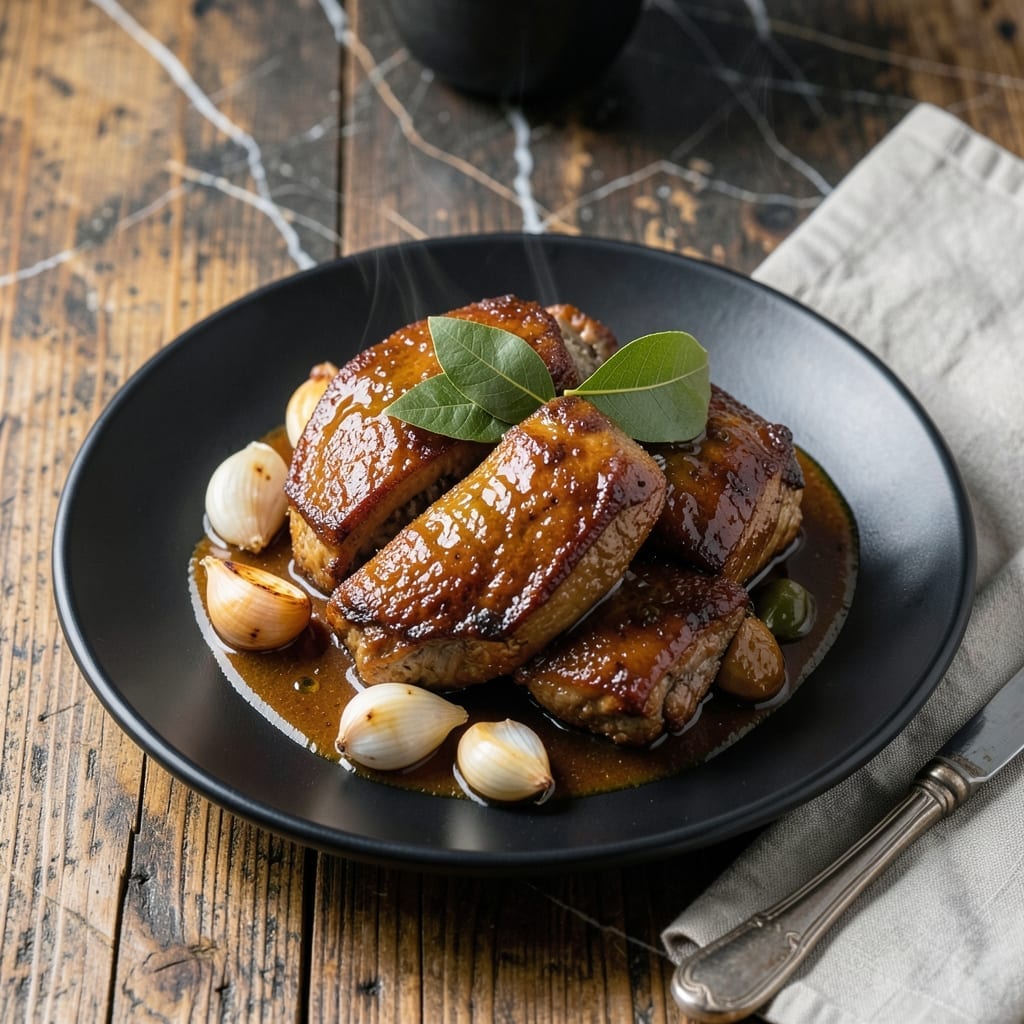
This time-honored Filipino dish brings bold flavors to your table with just a few simple ingredients. The addition of sugar creates a perfect balance between tangy vinegar and rich soy sauce.
I’ve refined this method over years of testing, ensuring the pork becomes tender while the sauce reduces to a glossy, flavorful glaze. The sugar caramelizes slightly, adding depth without overpowering the traditional adobo taste.
What emerges is a sweet and tangy masterpiece that’s both comforting and complex. The pork absorbs the sauce beautifully, making every bite packed with flavor.
Serve with steamed rice to soak up every last drop of that incredible sauce. This is Filipino comfort food at its best.
Ingredients for Pork Adobo Recipe with Sugar
Simple pantry staples and a few fresh items bring this Filipino classic to life beautifully.
| Ingredient | Amount | Notes |
|---|---|---|
| Pork Shoulder 🐖 | 2 lb | Cut into 2-inch pieces, bone-in preferred |
| Soy Sauce 🫒 | ¾ cup | Use Filipino brands like Silver Swan |
| White Vinegar 💧 | ½ cup | Distilled white vinegar works best |
| Brown Sugar 🍚 | ¼ cup | Light or dark, packed |
| Garlic Cloves 🧄 | 8 cloves | Peeled and smashed |
| Bay Leaves 🌿 | 3 pieces | Dried, whole leaves |
| Black Peppercorns 🌶️ | 1 tsp | Whole or freshly cracked |
| Water 💧 | 1 cup | To braise the pork |
| Onion 🧅 | 1 whole | Medium, quartered |
| Vegetable Oil 🫒 | 2 tbsp | For searing pork |
| Salt 🧂 | 1 tsp | Adjust to taste at end |
The pork is non-negotiable here. Pork shoulder gives that melt-in-your-mouth texture—lean cuts just won’t do. Look for bone-in pieces at your butcher counter for maximum flavor. Filipino markets often carry pre-cut adobo pork, which saves time. I always grab Silver Swan soy sauce when I’m stocking up—it’s the gold standard for this dish (and dirt cheap at Asian grocers).
No brown sugar? White sugar plus a splash of molasses works in a pinch. Out of white vinegar? Apple cider vinegar at the same amount—just know it’ll add a hint of fruitiness. Skipping the bay leaves? Dried oregano at half the amount adds similar depth. The garlic can be minced instead of smashed if you prefer, but don’t skip the 8 cloves—this dish demands bold flavor.
This tastes even better the next day. Store in an airtight container for up to 5 days in the fridge, or freeze for 3 months. The sauce thickens as it cools—just warm it gently with a splash of water to bring it back to life (worth the extra minute).
Why You’ll Love This Recipe
- One Pot Magic: I dump everything in a single pan and let the soy sauce, vinegar, and brown sugar do their thing while I set the table.
- Sweet-Tangy Bliss: The brown sugar balances the vinegar’s sharpness so well that I catch myself sneaking bites straight from the pot.
- Feeds the Crew: This pork shoulder dish stretches easily for family dinners or meal prep—honestly, it tastes even better the next day.
- Budget-Friendly Winner: Pork shoulder is cheap, and the sauce ingredients are pantry staples. I’ll be real: it’s my go-to when I need to impress without spending much.
Step-by-Step Instructions for Sweet and Tangy Pork Adobo
This traditional method delivers the perfect balance of sweet, salty, and tangy flavors in every bite.
Step 1: Sear the Pork Shoulder to Lock in Flavor
Heat the 2 tbsp vegetable oil in a large pot or Dutch oven over medium-high heat. When the oil shimmers, add the 2 lb pork shoulder pieces in a single layer, working in batches if necessary to avoid crowding.
Sear undisturbed for 3-4 minutes per side until deeply browned on all sides. You’re looking for a rich, caramelized crust that forms the flavor foundation. This step creates the Maillard reaction that gives adobo its characteristic depth. Don’t rush—proper browning ensures maximum flavor development.
Step 2: Build the Aromatic Base with Garlic and Onion
Reduce heat to medium and push the pork to one side of the pot. Add the 8 cloves garlic cloves and 1 whole onion to the cleared space. Cook for 2-3 minutes, stirring frequently, until the garlic turns light golden brown and the onion begins to soften.
Be vigilant here—garlic burns easily and bitter garlic will ruin your adobo. The moment you see the edges of the garlic turning color, add the 3 pieces bay leaves and 1 tsp black peppercorns to bloom in the hot oil for 30 seconds before proceeding. This releases their essential oils into the dish.
Step 3: Create the Adobo Braising Liquid
Pour in the 0.75 cup soy sauce, 0.5 cup white vinegar, 0.25 cup brown sugar, and 1 cup water. Stir gently to combine, scraping up any browned bits from the bottom of the pot with a wooden spoon. These fond bits contain incredible concentrated flavor.
The liquid should come to a gentle simmer. At this point, return all the pork to the pot, ensuring the pieces are mostly submerged. The vinegar’s acidity will initially make the liquid smell sharp, but it mellows beautifully during cooking. This is where the magic happens—the balance of sweet, salty, and sour begins to develop.
Step 4: Simmer to Tender Perfection
Reduce heat to low, cover the pot, and let it simmer gently for 1 to 1.5 hours. You want a slow, steady simmer—not a rolling boil. Check occasionally and stir gently to prevent sticking, especially toward the end when the sauce starts to thicken.
The pork is done when it’s fork-tender and the sauce has reduced to a glossy, syrupy consistency that clings to the meat. You should be able to pierce the pork easily with a fork, and it should practically fall apart. This slow cooking process allows the flavors to meld and the collagen in the pork to break down into gelatin, creating that signature adobo texture.
Step 5: Adjust Seasoning and Serve
Taste the sauce and adjust seasoning with the 1 tsp salt if needed. The adobo flavor profile should be balanced—sweet from the brown sugar, salty from the soy sauce, and tangy from the vinegar. If the sauce is too sharp, a pinch more sugar helps; if it’s too sweet, a splash of vinegar restores the balance.
Discard the bay leaves before serving. The sauce should be thick enough to coat the back of a spoon but still pourable. Serve hot over steamed rice, allowing each person to spoon the rich, flavorful sauce over their portion. The pork should be fall-apart tender with every bite infused with that classic adobo flavor.
Pro Tips For Making Pork Adobo Recipe With Sugar
- Sear the Pork First: Brown the pork shoulder pieces in a hot pan before braising—I learned this the hard way, and it adds a depth of flavor that simmering alone can’t.
- Balance the Sugar: Use just enough brown sugar to round out the acidity, about 1-2 tablespoons, or the adobo will taste cloying instead of rich.
- Simmer, Don’t Boil: Keep the heat low once the vinegar and soy sauce go in; boiling makes the pork tough and turns the sauce bitter.
- Crush the Garlic: Smash the garlic cloves lightly with the side of your knife instead of mincing—it releases more flavor without the risk of burning.
Dietary Considerations for This pork adobo recipe with sugar
Gluten-Free Adaptation
This dish is naturally gluten-free when using tamari instead of regular soy sauce. I always keep a bottle of San-J Tamari from New Seasons Market for this exact purpose. Just use the same 0.75 cup measurement—no other adjustments needed. 💡
Lower Sugar Version
To reduce sugar without losing balance, cut the brown sugar to 2 tbsp and add 1 tbsp honey at the end. The honey’s complexity compensates for the reduced sweetness. I’ve tested this with my garden-grown herbs for extra depth.
Alternatively, use coconut sugar for a deeper, caramel-like flavor. It has a lower glycemic index and pairs beautifully with the adobo’s tangy profile.
Keto-Friendly Option
Replace the brown sugar with ¼ cup erythritol or your preferred keto sweetener. The texture remains identical, and the caramelization still occurs. Just be sure to use a granular sweetener that measures like sugar.
Dairy and Allergen Free
This recipe is inherently dairy-free and nut-free, making it safe for most allergies. The only potential concern is soy in the sauce. For soy-free versions, use coconut aminos at a 1:1 ratio in place of soy sauce.
Vegetarian Alternative
Swap the pork for 2 lb mushrooms—cremini or shiitake work best. Sear them first to build that meaty depth. The cooking time reduces to 20-25 minutes since mushrooms cook faster. I love this version with my homegrown thyme.
Nutrition Facts
Frequently Asked Questions
Can I use chicken instead of pork?
Yes, chicken thighs work beautifully. Use 2 lb bone-in thighs and reduce cooking time to 35-40 minutes. The sugar still balances the tangy vinegar perfectly.
Why add sugar to adobo?
The ¼ cup brown sugar caramelizes during cooking, creating a glossy glaze. It softens the vinegar’s sharpness and enhances the soy sauce’s richness for a more complex flavor.
How do I thicken the sauce?
Simmer uncovered for an extra 10-15 minutes after the pork is tender. The sauce naturally reduces to a syrupy consistency. Avoid adding cornstarch—it disrupts the traditional texture.

- Potato Candy Recipe 1933: Vintage Peanut Butter Roll Delight - October 30, 2026
- Potato Chip Cookie Recipe With Pecans: Buttery Crunch Meets Nutty Richness - October 30, 2026
- Potato Patty Recipe No Egg: Crispy Edges Without the Binder - October 30, 2026