
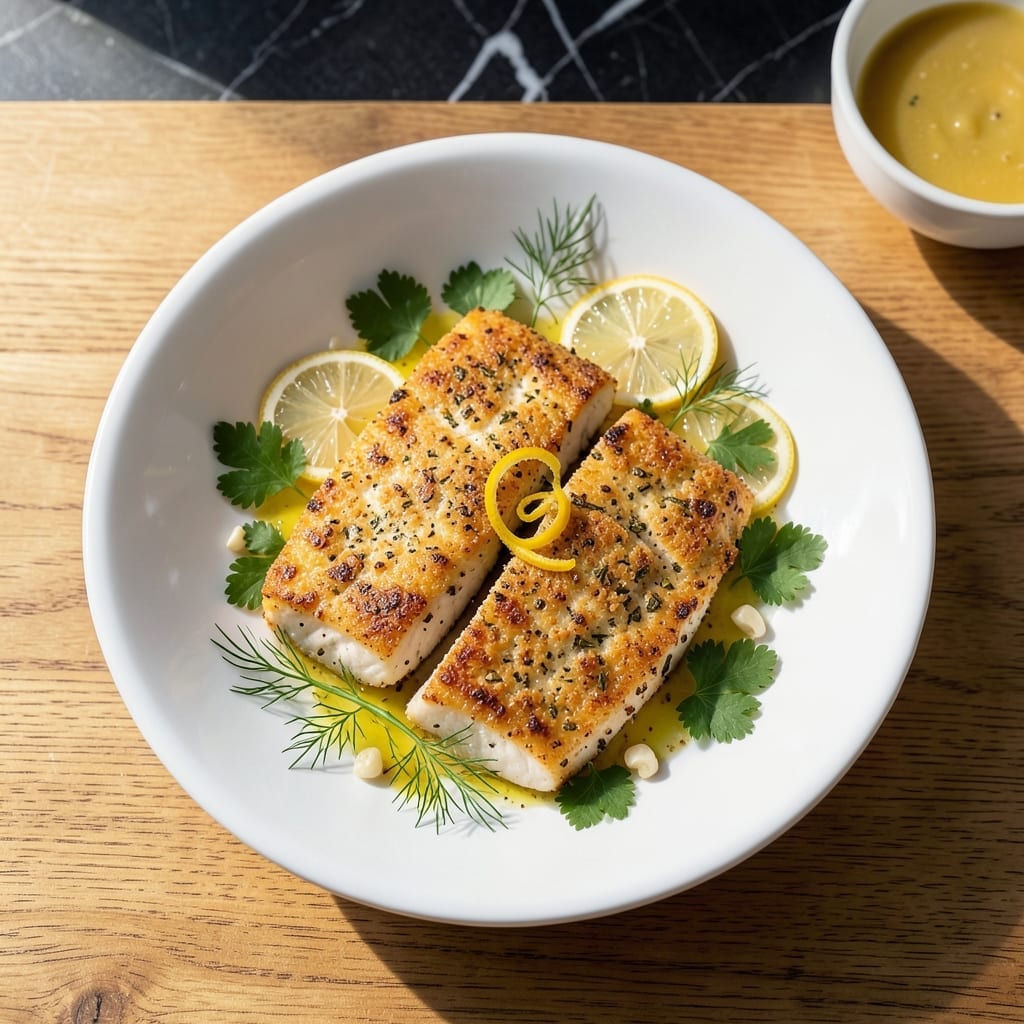
This baked pompano recipe delivers flaky, tender fish with minimal effort and maximum flavor.
The secret lies in a simple lemon-herb crust that locks in moisture while adding bright, aromatic notes. A hot oven ensures the fish cooks evenly, creating a delicate texture that falls apart with each bite.
With just a few pantry staples and fresh pompano fillets, you’ll achieve restaurant-quality results at home. The crust forms a golden, crispy layer that complements the fish’s natural sweetness.
Serve it with roasted vegetables or a light salad for a balanced, impressive meal. This method guarantees success every time.
Ingredients for Pompano Recipe Baked
Fresh pompano fillets and a handful of pantry staples create this elegant baked dish.
| Ingredient | Amount | Notes |
|---|---|---|
| Pompano Fillets 🐟 | 4 whole | Skin-on or skinless, about 6 oz each |
| All-Purpose Flour 🌾 | ½ cup | For light dredging |
| Lemon 🍋 | 1 whole | Zested and juiced |
| Fresh Parsley 🌿 | ¼ cup | Finely chopped |
| Fresh Dill 🍃 | 2 tbsp | Chopped, or 2 tsp dried |
| Garlic Cloves 🧄 | 3 cloves | Minced finely |
| Panko Breadcrumbs 🍞 | ¾ cup | For crispy crust |
| Unsalted Butter 🧈 | 4 tbsp | Melted for binding |
| Olive Oil 🫒 | 2 tbsp | For greasing and moisture |
| Salt 🧂 | 1 tsp | Kosher or sea salt preferred |
| Black Pepper 🌶️ | ½ tsp | Freshly ground |
| Dijon Mustard 🟡 | 1 tbsp | For tang in crust |
| Paprika 🌶️ | ½ tsp | Sweet or smoked variety |
The pompano is the star here. Fresh, wild-caught fillets from a trusted fishmonger (like Whole Foods or a local seafood market) ensure the best texture and flavor. Ask for skin-on if you prefer a crispier finish. The fillets should smell clean and ocean-fresh, never fishy. For the breadcrumbs, Panko gives that perfect crunch—look for it in the Asian aisle if your store doesn’t stock it with the regular breadcrumbs.
No fresh dill? Dried dill at one-third the amount works, or swap in fresh tarragon for a different herbal note. Short on lemons? Lime or orange zest can add brightness too. The butter can be replaced with olive oil for a lighter crust, though the flavor will be slightly different. Want extra crunch? Toss in 2 tbsp chopped almonds with the breadcrumbs.
Prep the crust mixture just before baking—it stays crispest that way. Leftovers keep in the fridge for 2 days (best reheated gently in the oven). The zest and herbs can be prepped ahead and stored in the fridge for 24 hours (cover tightly).
Why You’ll Love This Recipe
- One Pan Wonder: I just toss the pompano fillets in flour, pop them on a sheet, and let the oven do the work.
- Bright and Zesty: The lemon juice and fresh dill give it that fresh, coastal taste that’s hard to resist.
- Weeknight Hero: Honestly, it’s my go-to for busy evenings when I need something quick but impressive.
- Budget-Friendly Feast: Pompano is affordable, and a little goes a long way—leftovers taste even better the next day.
Step-by-Step Instructions for Baked Pompano With Lemon-Herb Crust
This method ensures perfectly flaky fish with a crisp, aromatic crust every time.
Step 1: Prepare the Lemon-Herb Crust Mixture
In a medium bowl, combine the 0.75 cup Panko breadcrumbs, 0.25 cup Fresh Parsley, 2 tbsp Fresh Dill, 1 tsp Salt, 0.5 tsp Black Pepper, 1 tbsp Dijon Mustard, 0.5 tsp Paprika, and the zest of the 1 whole Lemon. Stir until the mustard is evenly distributed and the herbs are fully incorporated.
Drizzle in the 4 tbsp Unsalted Butter (melted) and mix thoroughly. The mixture should resemble wet sand and hold together when pressed. This ensures the crust adheres to the fillets and creates a golden, crispy topping.
Step 2: Dredge and Coat the Pompano Fillets
Pat the 4 whole Pompano Fillets dry with paper towels to remove excess moisture—this helps the coating stick. Season both sides lightly with a pinch of salt and black pepper, then dredge each fillet lightly in the 0.5 cup All-Purpose Flour, shaking off any excess.
Dip each floured fillet into the lemon juice from the 1 whole Lemon, then press firmly into the Panko mixture. Coat all sides evenly, pressing gently so the crust clings to the fish. Place the coated fillets on a plate and let them rest for 5 minutes to set.
Step 3: Bake Until Flaky and Golden
Preheat the oven to 400°F. Lightly grease a baking dish with 2 tbsp Olive Oil, ensuring the bottom is fully coated. Arrange the crust-coated pompano fillets in a single layer, leaving space between each to allow even cooking.
Bake for 12-15 minutes until the crust is golden brown and the fish flakes easily with a fork. Avoid overbaking—pompano cooks quickly and can become dry if left too long. The internal temperature should reach 145°F when tested with a meat thermometer.
Step 4: Rest and Serve Immediately
Remove the dish from the oven and let the fillets rest for 2-3 minutes. This brief rest allows the juices to redistribute, keeping the fish moist. Garnish with any remaining chopped fresh parsley or fresh dill for a pop of color and freshness.
Serve the pompano warm, accompanied by lemon wedges from the 1 whole Lemon for a bright, citrus finish. The crust should be crisp and fragrant, while the fish inside remains tender and flaky. For best results, plate immediately—this dish doesn’t hold well and is best enjoyed fresh from the oven.
Pro Tips For Making Pompano Recipe Baked
- Pat Fillets Dry: I learned this the hard way—skip this and your flour coating will slide right off. Use paper towels and press firmly to remove all moisture from the pompano before dredging.
- Hot Oven, Short Time: Bake at 425°F for 10-12 minutes max. Any lower and the fish dries out; any longer and you’ll lose that tender flake.
- Zest Before Juicing: Grate the lemon zest first, then halve it for juice—it’s a pain to do after, and you’ll get more flavor from the peel in your herb mix.
- Dredge Lightly: Shake off excess flour after coating the fillets. A thick layer steams instead of crisping, and nobody wants a gummy pompano.
Storing and Reheating This pompano recipe baked
Refrigerator Storage
Let your baked pompano cool completely before storing—this takes about 30 minutes at room temperature. Transfer to an airtight container with parchment paper between layers to prevent sticking. It keeps well in the fridge for up to 2 days. ❄️
Freezer Storage
For longer storage, wrap each fillet individually in plastic wrap, then place in a freezer-safe bag. Squeeze out excess air to prevent freezer burn. Your pompano will stay fresh for up to 1 month. Label with the date for easy tracking.
Oven Reheating
Preheat your oven to 350°F and place fillets on a baking sheet. Cover loosely with aluminum foil to retain moisture. Heat for 10-12 minutes until the internal temperature reaches 145°F. This method keeps the crust crisp.
Microwave Reheating
For a quick option, place a fillet on a microwave-safe plate and cover with a damp paper towel. Heat on 50% power for 1-2 minutes, checking frequently. The crust may soften, but the fish will stay moist. 🔥
Serving Leftovers
Reheated pompano works great in fish tacos or over a bed of greens. Add a squeeze of fresh lemon juice to revive the flavors. I love flaking it into a citrusy pasta dish for a new twist.
Nutrition Facts
Frequently Asked Questions
What temperature should I bake the pompano at?
Bake at 400°F for best results. This high heat ensures a crispy crust while cooking the fish evenly in 12-15 minutes.
Can I use skin-on fillets for this recipe?
Skin-on fillets work well and can create an extra crispy texture. Just pat them very dry before coating to help the crust adhere properly.
How do I know when the pompano is done cooking?
The fish is ready when it flakes easily with a fork and reaches an internal temperature of 145°F. The crust should be golden brown.
What can I serve with baked pompano?
Pair it with roasted vegetables, a light salad, or lemon butter rice. The bright flavors complement the fish beautifully without overpowering it.

- BBQ Sausage Recipe Oven: Smoky Depth Without the Grill - September 28, 2026
- BBQ Chicken Bowl Recipe Rice: Smoky Sweetness Over Fluffy Grains - September 28, 2026
- Beef Cutlet Recipe Ideas: Crispy Breaded Patties With Bold Seasonings - September 28, 2026