
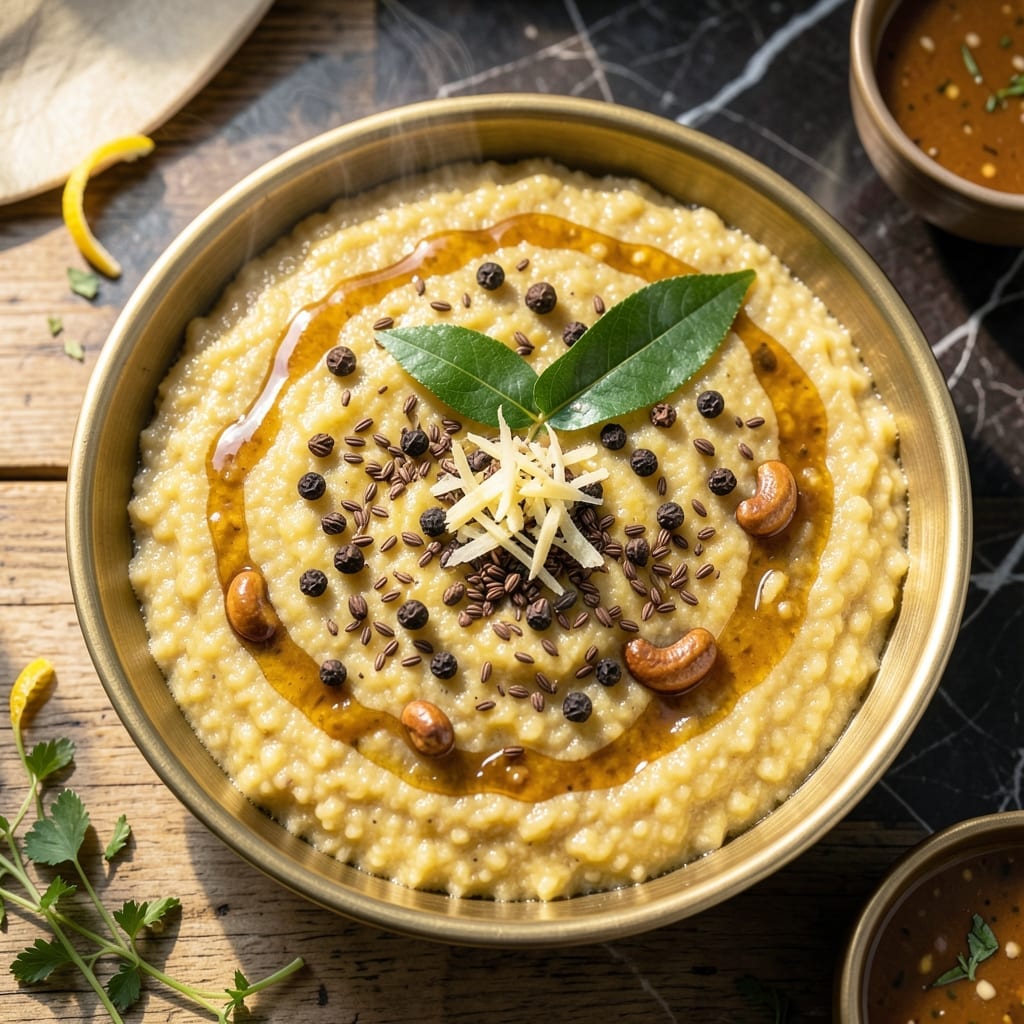
There’s something deeply comforting about a steaming pot of pongal simmering on the stove, filling your kitchen with the warm aroma of toasted rice and lentils. This South Indian classic transforms humble ingredients into a creamy, savory dish that feels like a hug in a bowl.
I’ve perfected this recipe over years of home cooking, balancing the earthy lentils with fluffy rice and fragrant spices. The tempering of cumin, black pepper, and ginger in ghee adds layers of flavor that make this dish irresistible, while keeping the process simple and approachable.
The result is a velvety texture that’s both hearty and light, perfect as a main course or comforting side. Pongal is traditionally served during festivals but deserves a place at your everyday table for its nourishing simplicity.
Serve hot with coconut chutney or sambar for the full experience.
Ingredients for Pongal Recipe Home Cooking
Simple, nourishing ingredients for a pot of velvety South Indian comfort food.
| Ingredient | Amount | Notes |
|---|---|---|
| Raw Rice 🍚 | 1 cup | Short-grain preferred for creaminess |
| Moong Dal 🟡 | ½ cup | Split yellow lentils, rinsed |
| Ghee 🧈 | ¼ cup | Clarified butter, or use vegan alternative |
| Cumin Seeds 🌿 | 1 tsp | Whole, for tempering |
| Black Peppercorns 🌶️ | 1 tsp | Whole, crushed lightly |
| Fresh Ginger 🌿 | 1 whole | 2-inch piece, grated |
| Green Chilies 🌶️ | 2 pieces | Slit lengthwise, seeds removed |
| Curry Leaves 🍃 | 10 pieces | Fresh, for aromatics |
| Cashews 🥜 | ¼ cup | Whole, roasted in ghee |
| Water 💧 | 4 cups | For cooking rice and lentils |
| Salt 🧂 | 1 ½ tsp | Adjust to taste preference |
| Asafoetida 🌿 | ¼ tsp | Optional, pinch for authenticity |
The rice and lentils are your base—short-grain rice gives that signature creaminess, and moong dal (split yellow lentils) cooks fast and soft. Find both at Indian grocery stores or well-stocked international aisles. Ghee is traditional (look for Patel Brothers or Haldiram’s brands), but a neutral oil works if you’re avoiding dairy. The cashews add a buttery crunch—roast them in the ghee until golden for maximum flavor.
No ghee? Substitute with coconut oil for a vegan twist. Missing curry leaves? A pinch of dried asafoetida (hing) adds depth, or skip them entirely—the dish will still shine. The green chilies can be dialed back if you prefer mild heat. Fresh ginger is non-negotiable, though—it brightens the whole pot. And if short-grain rice is hard to find, medium-grain works in a pinch (just add an extra splash of water).
Pongal thickens as it sits, so add water to loosen before reheating. Keeps well in the fridge for 3-4 days, and the flavors deepen overnight. Freeze portions for up to 1 month—just thaw and warm with a little water. Always serve hot, ideally with coconut chutney or sambar.
Why You’ll Love This Recipe
- One Pot Wonder: Honestly, I just dump rice, moong dal, and spices in one pot and let it simmer—minimal mess, maximum ease.
- Warm Ghee Magic: The ghee toasted with cumin and peppercorns fills my kitchen with a cozy, nutty aroma that’s pure comfort.
- Breakfast or Dinner: I’ve served this for lazy Sunday mornings and quick weeknight dinners—it’s that adaptable.
- Budget Stretcher: A handful of rice and dal feeds my family for days, and leftovers taste even better the next morning.
Step-by-Step Instructions for Pongal
This method delivers creamy, comforting results with every bite. Simple steps, big flavor.
Step 1: Rinse and Prepare the Base
Combine the 1 cup Raw Rice and 0.5 cup Moong Dal in a large bowl. Rinse under cold running water until the water runs clear. I find this removes excess starch and prevents the dish from becoming gummy.
Drain thoroughly and set aside. The ratio of rice to dal is crucial here—too much dal and your pongal will be mushy, too little and it’ll lack that signature creamy texture. This balance ensures the perfect consistency every time.
Step 2: Temper the Spices
Heat the 0.25 cup Ghee in a heavy-bottomed pot over medium heat. Once melted, add the 1 tsp Cumin Seeds, 1 tsp Black Peppercorns, and 0.25 tsp Asafoetida. Let them sizzle for about 30 seconds until fragrant.
Now add the grated Fresh Ginger, 2 pieces Green Chilies, and 10 pieces Curry Leaves. Stir for another 30 seconds until the curry leaves release their aroma and the chilies blister slightly. This tempering step builds the foundation of flavor, so don’t rush it.
Step 3: Toast the Cashews
Add the 0.25 cup Cashews to the pot and stir for 1-2 minutes until they turn golden brown. Keep the heat at medium to avoid burning—cashews go from golden to burnt quickly.
Once toasted, remove half the cashews and set them aside for garnishing later. The remaining cashews will cook with the rice and dal, infusing their rich, buttery flavor throughout the dish.
Step 4: Cook the Rice and Dal
Add the drained rice and dal mixture to the pot, stirring to coat everything in the spiced ghee. Pour in the 4 cups Water and add the 1.5 tsp Salt. Bring the mixture to a boil over high heat.
Once boiling, reduce the heat to low, cover the pot, and simmer for 20-25 minutes, stirring occasionally. You’ll know it’s done when the grains are soft, the dal is creamy, and the mixture thickens to a porridge-like consistency.
Step 5: Finish and Serve
Turn off the heat and let the pongal sit covered for 5 minutes. This allows the flavors to meld together. Give it a good stir and taste for seasoning—add a pinch more salt if needed.
Transfer to a serving bowl and garnish with the reserved toasted cashews. Serve hot with coconut chutney or a side of tangy sambar for the ultimate comfort meal. The texture should be creamy, with each bite bursting with the warmth of spices and the richness of ghee.
Pro Tips For Making Pongal Recipe Home Cooking
- Roast the Dal First: Dry roast the moong dal until it turns a light golden brown—about 3-4 minutes on medium heat. I learned this the hard way after my pongal turned out bland once, but this step deepens the flavor and removes any raw taste.
- Use Equal Parts: Stick to a 1:1 ratio of raw rice to moong dal. Sounds simple, but I’ve seen people eyeball it and end up with either mushy or overly firm pongal.
- Temper the Spices: Heat the ghee first, then add cumin seeds and black peppercorns, letting them sizzle for 10-15 seconds before adding anything else. This wakes up the spices and infuses the ghee with their aroma.
- Simmer, Don’t Boil: Once the rice and dal are in, keep the heat low and let it simmer gently. Boiling it vigorously turns the pongal into a sticky mess—my grandmother swore by this, and she was right.
Best Sauces and Condiments for pongal recipe home cooking
Coconut Chutney
This cooling companion is a must-have with pongal. Blend 1 cup grated coconut with ½ cup yogurt, 2 green chilies, and a pinch of salt. I love adding 1-inch ginger for extra zing. The creamy texture balances the dish perfectly. 💛
Sambar
A tangy vegetable stew that cuts through the richness. Use tamarind pulp for sourness and toor dal for body. I toss in drumsticks, carrots, and eggplant for texture. Simmer for 20 minutes for deep flavor.
Tomato Onion Chutney
For a sweet-spicy kick, caramelize 2 diced onions and 3 chopped tomatoes in oil. Add 1 tsp mustard seeds and ½ tsp turmeric while cooking. This chutney adds a vibrant contrast to the creamy pongal.
Ghee Roast
Drizzle 2 tbsp melted ghee over hot pongal just before serving. I often mix in 1 tsp roasted cumin powder for extra aroma. This simple step elevates the dish with rich, nutty notes.
Pickled Lime
A tangy crunch that brightens every bite. Use store-bought lime pickle or make your own with 4 limes, 2 tbsp salt, and 1 tsp chili powder. The acidity cuts through the creaminess beautifully. ✨
Fresh Cilantro
Sprinkle ¼ cup chopped cilantro on top for freshness. I also add a squeeze of lemon juice for brightness. This herbaceous finish adds a pop of color and clean flavor.
Nutrition Facts
Frequently Asked Questions
What’s the ideal rice to dal ratio?
Use 1 cup rice to 0.5 cup moong dal for perfect creaminess. This balance prevents mushiness while ensuring the signature smooth texture.
Can I make this without ghee?
Yes! Substitute with coconut oil or a neutral oil for a vegan version. The flavor will differ slightly but still taste delicious.
How do I fix too-thick pongal?
Stir in warm water, 1-2 tablespoons at a time, until it reaches a porridge-like consistency. It thickens as it cools, so adjust before serving.
What’s the best way to store leftovers?
Keep in an airtight container in the fridge for 3-4 days. Reheat with a splash of water to restore creaminess.

- Potato Candy Recipe 1933: Vintage Peanut Butter Roll Delight - October 30, 2026
- Potato Chip Cookie Recipe With Pecans: Buttery Crunch Meets Nutty Richness - October 30, 2026
- Potato Patty Recipe No Egg: Crispy Edges Without the Binder - October 30, 2026