
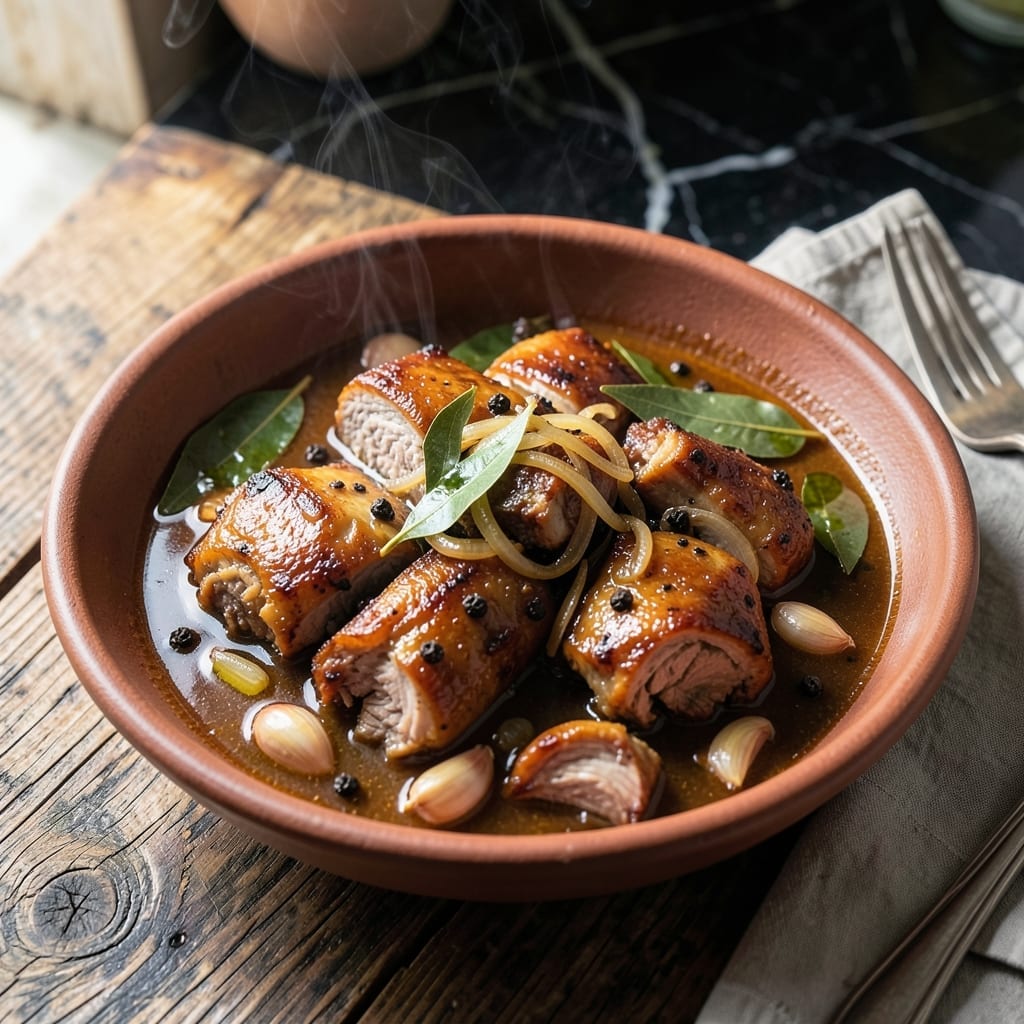
This Filipino classic transforms humble pork into something extraordinary through a perfect balance of tangy and savory. The secret lies in the slow braise that lets vinegar, soy sauce, and garlic meld into a rich, deeply flavored sauce.
I’ve tested countless variations, but the traditional method—simmering until the pork absorbs every bit of the marinade—always delivers the most authentic results. The garlic becomes sweet and mellow, while the vinegar cuts through the richness with bright acidity.
What you’ll get is fall-apart tender meat coated in a glossy, umami-packed sauce that’s impossible to resist. The aroma alone will have everyone gathering around the table before it’s even served.
Serve it over steamed rice to soak up every last drop of that incredible sauce. This is comfort food at its finest.
Ingredients for Pork Adobo Recipe Kawaling Pinoy
Simple ingredients with bold Filipino flavors. Pantry staples do the heavy lifting here.
| Ingredient | Amount | Notes |
|---|---|---|
| Pork Shoulder 🥩 | 2 lb | Cut into 2-inch pieces |
| Soy Sauce 🥄 | ¾ cup | Regular or light variety |
| White Vinegar 🍶 | ½ cup | Or cane vinegar for authenticity |
| Garlic Cloves 🧄 | 12 cloves | Peeled and crushed |
| Bay Leaves 🌿 | 3 pieces | Dried, for aroma |
| Black Peppercorns 🌶️ | 1 tbsp | Whole, for depth |
| Brown Sugar 🍚 | 1 tbsp | Optional, balances acidity |
| Water 💧 | 1 cup | To adjust sauce consistency |
| Onion 🧅 | 1 whole | Medium, sliced thinly |
| Cooking Oil 🫒 | 2 tbsp | Neutral oil for searing |
| Salt 🧂 | ½ tsp | Adjust to taste |
The pork shoulder is key—look for good marbling at your butcher or the meat section of Asian markets. It stays tender through the long braise. The soy sauce should be Filipino brands like Silver Swan or Datu Puti if you can find them (regular soy sauce works in a pinch). Garlic is non-negotiable—fresh heads, not pre-minced, for that sweet, mellow flavor as it cooks down.
No white vinegar? Cane vinegar is traditional, but apple cider vinegar works too. Bay leaves are a must—fresh or dried, just don’t skip them. Brown sugar balances the tang, but you can omit it if you prefer a sharper adobo. For extra richness, some add a splash of coconut milk. The onion can be yellow or white, whatever you’ve got on hand.
Adobo tastes even better the next day—2-3 days in the fridge lets the flavors meld. Freeze it for up to 3 months if you’re making a big batch. Leftovers reheat beautifully, just add a splash of water to loosen the sauce.
Why You’ll Love This Recipe
- One Pan Magic: I toss everything in a single pot—pork shoulder, soy sauce, vinegar—and let it simmer. No fuss, no extra dishes.
- Tangy Perfection: The soy sauce and vinegar balance is just right, with garlic and bay leaves adding depth. Honestly, it’s the kind of flavor that lingers.
- Weeknight Hero: I’ve served this for casual dinners and potlucks alike. Works every time.
- Stretches Far: Leftovers taste even better the next day, and it’s gentle on the wallet. Feeds my family twice with zero complaints.
Step-by-Step Instructions for Filipino-Style Braised Pork with Garlicky Depth
Here’s how I make this dish with rich, tangy sauce and fall-off-the-bone tender pork.
Step 1: Sear the Pork Shoulder to Lock in Flavor
Heat the 2 tbsp cooking oil in a large pot over medium-high heat. Add the 2 lb pork shoulder pieces and sear for 3-4 minutes per side until golden brown on all sides. I don’t crowd the pot—work in batches if needed to avoid steaming the meat.
This step creates a flavorful fond at the bottom of the pot that will deepen the adobo sauce later. The pork should release easily from the pot when it’s properly browned. Remove the pork and set it aside temporarily.
Step 2: Sauté Aromatics Until Fragrant
In the same pot, add the 1 whole onion, sliced thinly, and the 12 cloves garlic cloves. Sauté for 2-3 minutes until the onion softens and the garlic turns light golden brown. Be careful not to burn the garlic—it becomes bitter quickly.
Add the 3 pieces bay leaves and 1 tbsp black peppercorns, stirring for 30 seconds to toast them slightly. This releases their aromatic oils and builds the foundation of the adobo’s complex flavor profile.
Step 3: Deglaze and Create the Braising Liquid
Pour in the 0.75 cup soy sauce, 0.5 cup white vinegar, 1 cup water, and 1 tbsp brown sugar. Stir well to combine, scraping up any browned bits from the bottom of the pot. This is where the magic happens—the vinegar’s acidity balances the soy sauce’s saltiness.
Return the pork to the pot, along with any accumulated juices. Add the 0.5 tsp salt and stir to combine. Bring the mixture to a boil, then immediately reduce the heat to medium-low to maintain a gentle simmer.
Step 4: Simmer Until Fork-Tender
Cover the pot and let the pork simmer for 45-60 minutes, stirring occasionally. I check the pork at the 45-minute mark—it should be tender enough that a fork slides in easily but still holds its shape.
If the sauce seems too thin, simmer uncovered for the last 10-15 minutes to allow it to reduce slightly. The sauce should coat the back of a spoon when it’s ready. Taste and adjust seasoning if needed, though the adobo flavor intensifies as it rests.
Step 5: Rest and Serve for Maximum Flavor
Remove the pot from heat and let the pork adobo rest, covered, for 10-15 minutes. This allows the pork to reabsorb some of the delicious braising liquid and the flavors to meld together.
Serve hot over steamed rice, spooning plenty of the rich, garlicky sauce over each portion. The pork should be incredibly tender, and the sauce should have a perfect balance of salty, tangy, and slightly sweet notes that define this classic Filipino dish.
Pro Tips For Making Pork Adobo Recipe Kawaling Pinoy
- Simmer, Don’t Boil: Keep the heat at a gentle simmer—boiling makes the pork tough and the sauce too sharp. I learned this the hard way after my first batch turned chewy and the vinegar overpowered everything.
- Marinate the Pork: Let the pork shoulder sit in soy sauce, garlic, and a splash of vinegar for at least 30 minutes before cooking. Sounds like an extra step, but it makes the meat absorb way more flavor.
- Skip the Early Taste: Resist the urge to taste the sauce before it’s done—raw vinegar can be harsh, and the flavors need time to meld. My grandmother swore by this, and she was right.
- Use More Garlic: Double the garlic if you love that bold, aromatic punch. After burning a few batches by under-seasoning, I finally realized this dish thrives on it.
Pro Cooking Tips for Perfect Results
Marinating for Depth
I always let the pork marinate in the soy-vinegar mixture for at least 30 minutes before cooking. This isn’t traditional, but it boosts flavor penetration. For best results, use a zip-top bag to ensure every piece gets coated evenly.
Perfect Searing Technique
Pat the pork completely dry before searing—this ensures a proper Maillard reaction. I use tongs to flip the pieces, never a fork, to avoid piercing the meat and losing juices. The fond created here is pure flavor gold for your sauce. 🔥
Vinegar Timing Matters
Never add vinegar directly to hot oil—it can create harsh flavors. Instead, mix it with soy sauce and water before introducing it to the pot. I also avoid boiling the vinegar aggressively; a gentle simmer preserves its bright acidity.
Garlic Control
Crush the 12 garlic cloves instead of mincing for a sweeter, mellow flavor. Watch the heat closely—garlic burns easily and turns bitter. I pull the pot off the heat if I see it browning too quickly.
Sauce Reduction
If your sauce is too thin after simmering, remove the pork and reduce the liquid separately. This prevents overcooking the meat. I aim for a consistency that coats the back of a spoon but still drizzles easily.
Resting is Key
Let the adobo rest off heat for 15-20 minutes before serving. This lets the pork reabsorb the sauce and the flavors meld. I’ve found this step makes the difference between good and unforgettable adobo.
Nutrition Facts
Frequently Asked Questions
Can I use chicken instead of pork?
Yes, chicken adobo is just as delicious! Use bone-in thighs for best results and reduce simmering time to 30-35 minutes. The technique remains the same, but chicken cooks faster than pork.
Why does the sauce turn bitter sometimes?
Overcooking the vinegar causes bitterness. Always add it mixed with other liquids, never directly to hot oil. Keep the heat at a gentle simmer, not a rolling boil, to preserve the bright flavor.
How long can I store leftovers?
Store in an airtight container in the fridge for up to 4 days. For longer storage, freeze for 3 months. Reheat gently on the stove with a splash of water to restore the sauce consistency.

- Potato Chip Cookie Recipe With Pecans: Buttery Crunch Meets Nutty Richness - October 30, 2026
- Potato Patty Recipe No Egg: Crispy Edges Without the Binder - October 30, 2026
- Paula Deen’s Potato Chip Cookies Recipe: Salty-Sweet Crunch in Every Bite - October 30, 2026