
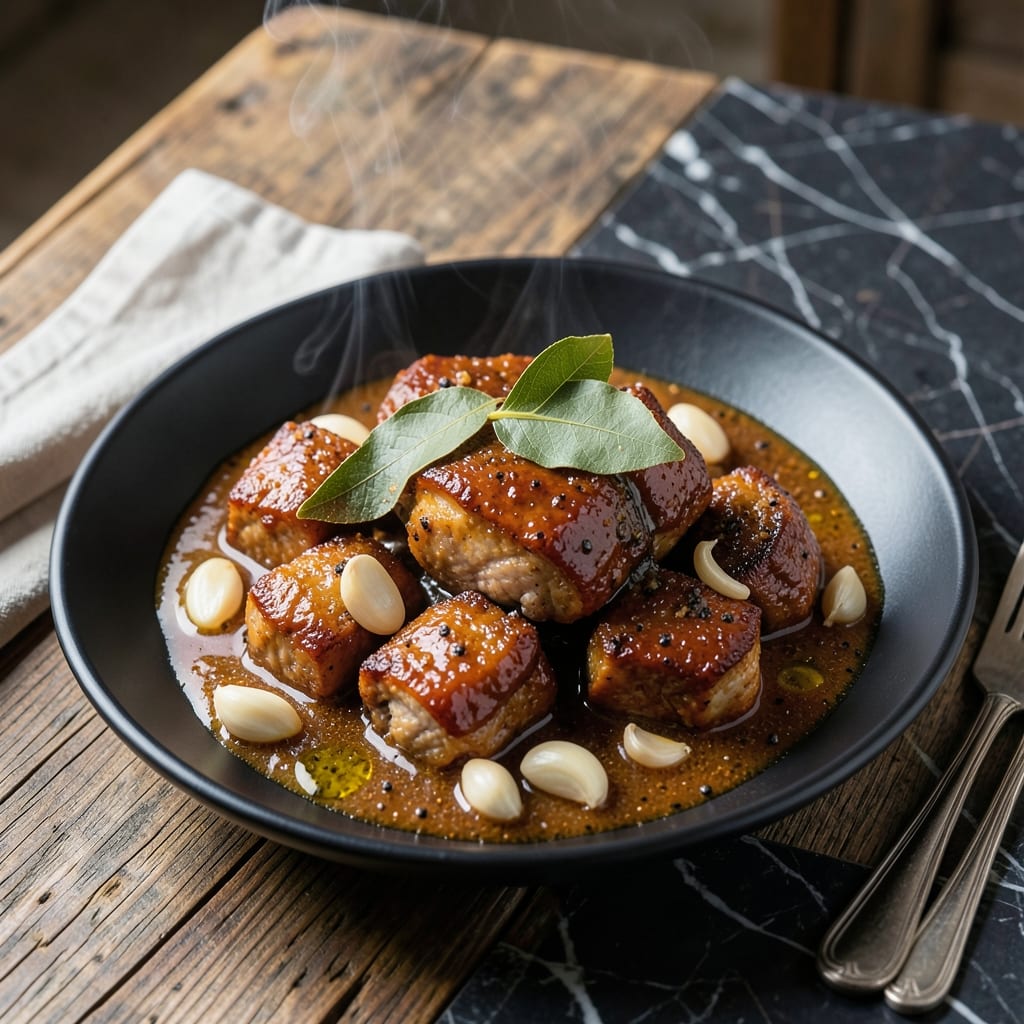
This Filipino braise delivers a perfect balance of tangy vinegar, rich soy sauce, and the deep caramel notes of brown sugar. The slow cooking process transforms tough pork cuts into melt-in-your-mouth tenderness.
I developed this version after testing multiple ratios to achieve that signature sweet-savory profile. The brown sugar doesn’t just add sweetness—it creates a glossy, caramelized sauce that clings to every piece of pork.
What makes this dish special is its simplicity. With just a handful of ingredients and about 1 hour of cooking time, you’ll have a meal that tastes like it simmered all day.
Serve it over steamed rice to soak up every drop of that incredible sauce. This is comfort food at its most satisfying.
Ingredients for Pork Adobo Recipe with Brown Sugar
A handful of pantry staples and one hour transform pork into tender, caramelized perfection.
| Ingredient | Amount | Notes |
|---|---|---|
| Pork Shoulder 🥩 | 2 lb | Cut into 2-inch chunks, bone-in or boneless |
| Soy Sauce 🫒 | ¾ cup | Regular or low-sodium preferred |
| White Vinegar 💧 | ½ cup | Or apple cider vinegar |
| Brown Sugar 🍚 | ½ cup | Light or dark variety |
| Garlic Cloves 🧄 | 8 cloves | Peeled and smashed |
| Bay Leaves 🍃 | 3 pieces | Dried or fresh |
| Black Peppercorns 🌶️ | 1 tbsp | Whole, lightly crushed |
| Water 💧 | 1 cup | To adjust sauce consistency |
| Onion 🧅 | 1 whole | Medium, sliced into rings |
| Cooking Oil 🫒 | 2 tbsp | Neutral oil like vegetable or canola |
| Salt 🧂 | ½ tsp | Adjust to taste after cooking |
The pork is non-negotiable here. Pork shoulder (sometimes called pork butt) gives that melt-in-your-mouth texture—Costco has great pre-cut chunks, but any grocery store butcher can cube it for you. Look for good marbling; it’ll render down beautifully. The soy sauce should be Filipino brands like Silver Swan or Datu Puti if you want authentic flavor, but any regular soy sauce works in a pinch.
No brown sugar? Coconut sugar or white sugar work, but you’ll lose some caramel depth. Apple cider vinegar can sub for white vinegar (adds a fruitier note). Fresh garlic is key—jarred minced garlic won’t give the same punch. Out of bay leaves? Skip it, but add a pinch of dried thyme for complexity. The sauce should coat the back of a spoon when done (thicken with a cornstarch slurry if needed).
This tastes even better the next day once the flavors meld. Keeps for 4-5 days in the fridge, freezes beautifully for 3 months. Reheat gently to keep the pork tender (microwave works, but stovetop is gentler). Always serve with steamed rice to soak up that glossy sauce.
Why You’ll Love This Recipe
- One Pan Magic: I toss everything in a single pot—pork, soy sauce, vinegar, brown sugar, garlic—and let it simmer. Minimal cleanup, maximum flavor.
- Sweet-Savory Balance: The brown sugar caramelizes just enough to soften the vinegar’s tang while the garlic deepens every bite.
- Weeknight Hero: Honestly, it’s my Tuesday dinner MVP—ready in 45 minutes and even better reheated the next day.
- Budget Stretch: Pork shoulder stays tender and affordable, and the sauce soaks into rice so well I never waste a drop.
Step-by-Step Instructions for Pork Adobo With Brown Sugar
Here’s the method that delivers that perfect sweet-tangy balance every time.
Step 1: Sear the Pork Shoulder
Heat the 2 tbsp cooking oil in a large pot or Dutch oven over medium-high heat. Add the 2 lb pork shoulder chunks in batches, being careful not to overcrowd the pan. You want each piece to sear properly, not steam.
Cook for 4-5 minutes per side until the pork develops a deep golden-brown crust. This step builds flavor and ensures the meat stays tender during the long braise. Don’t rush it—brown food tastes good, and you’ll see the difference in the final dish.
Step 2: Build the Aromatic Base
Once all the pork is seared, remove it from the pot and set aside. In the same pot, add the 1 whole onion (sliced into rings) and the 8 cloves garlic cloves. Sauté for 2-3 minutes until the onions soften and the garlic becomes fragrant.
Be careful not to burn the garlic—it can turn bitter quickly. The onions should be translucent but not browned. This aromatic base is the flavor foundation for your adobo, so take your time to develop it properly.
Step 3: Combine and Simmer
Return the pork to the pot. Add the 0.75 cup soy sauce, 0.5 cup white vinegar, 0.5 cup brown sugar, 3 pieces bay leaves, and 1 tbsp black peppercorns. Pour in the 1 cup water and stir to combine.
Bring the mixture to a boil, then reduce the heat to low. Cover and let it simmer for 1.5 to 2 hours, stirring occasionally. The pork is done when it’s fork-tender and the sauce has thickened slightly.
The brown sugar will caramelize slightly, adding depth and balancing the tanginess of the vinegar and soy sauce. If the sauce reduces too much, add a splash of water to maintain your desired consistency.
Step 4: Adjust and Serve
Once the pork is tender, taste the sauce and adjust the seasoning if needed. The dish should have a balance of sweet, salty, and tangy flavors. If you prefer a thicker sauce, let it simmer uncovered for an additional 5-10 minutes.
Discard the bay leaves before serving. Sprinkle with the 0.5 tsp salt if needed, though the soy sauce may already provide enough saltiness. Serve hot over steamed rice, allowing the sauce to soak into every bite.
Pro Tips For Making Pork Adobo Recipe With Brown Sugar
- Brown the Pork: Sear the pork shoulder pieces in batches over medium-high heat until deeply browned—I learned this the hard way, skipping it once resulted in a bland, pale adobo.
- Balance the Vinegar: Add the white vinegar at the end of the simmer, not the start, or the acidity will toughen the meat before it has a chance to tenderize.
- Use Fresh Garlic: Mince the garlic cloves just before cooking—pre-minced garlic from a jar loses its punch and turns bitter when simmered in the adobo sauce.
- Caramelize the Sugar: Sprinkle the brown sugar in the last 10 minutes of cooking and let it melt into the sauce for a glossy, slightly sticky finish that clings to the pork.
Common Mistakes When Making pork adobo recipe with brown sugar
Overcrowding the Pan
Searing all 2 lb pork shoulder at once steams instead of browns. I cook in batches with 2 tbsp cooking oil over medium-high heat, giving each piece space. This builds the golden-brown crust that deepens flavor. 🌡️
Skipping the Aromatic Base
Rushing past the onion and garlic step means missing layered flavor. I sauté the 1 whole onion and 8 cloves garlic for 2-3 minutes until fragrant but not burned. This simple step is non-negotiable for authentic adobo taste.
Boiling the Vinegar
Adding vinegar directly to hot oil or boiling liquid can create harsh flavors. I always mix the 0.5 cup white vinegar with other liquids first. This prevents the vinegar from becoming bitter during the 1.5-2 hour simmer.
Overcooking the Pork
Pork shoulder becomes dry if cooked too long. I check for doneness at 1.5 hours—the meat should be fork-tender but not falling apart. The sauce continues thickening as it rests, so remove from heat just before your ideal consistency.
Ignoring Sauce Balance
The magic is in the sweet-tangy harmony. I taste after 1 hour and adjust with more 0.5 cup brown sugar for sweetness or vinegar for tang. The soy sauce provides saltiness, so go easy on additional salt until the end.
Forgetting to Skim
Fat can separate during cooking, creating a greasy sauce. I skim excess fat with a spoon every 30 minutes. This keeps the sauce velvety and ensures every bite has that perfect caramelized finish.
Nutrition Facts
Frequently Asked Questions
Can I use chicken instead of pork?
Yes, but adjust cooking time to 30-40 minutes. Chicken cooks faster than pork shoulder and can dry out if simmered too long. Boneless thighs work best for this method.
Why does the sauce sometimes taste bitter?
This happens when vinegar boils too hard. Always add vinegar to cooled liquid first, then simmer gently. The 1.5-2 hour cook time should be at low heat.
How do I make the sauce thicker?
Simmer uncovered for 5-10 minutes after the pork is tender. For instant results, mix 1 tbsp cornstarch with water and stir in at the end.
Can I make this in a slow cooker?
Brown the pork first, then cook on low for 6-8 hours. The flavors develop beautifully, and the meat becomes fall-apart tender.

- Potato Chip Cookie Recipe With Pecans: Buttery Crunch Meets Nutty Richness - October 30, 2026
- Potato Patty Recipe No Egg: Crispy Edges Without the Binder - October 30, 2026
- Paula Deen’s Potato Chip Cookies Recipe: Salty-Sweet Crunch in Every Bite - October 30, 2026