
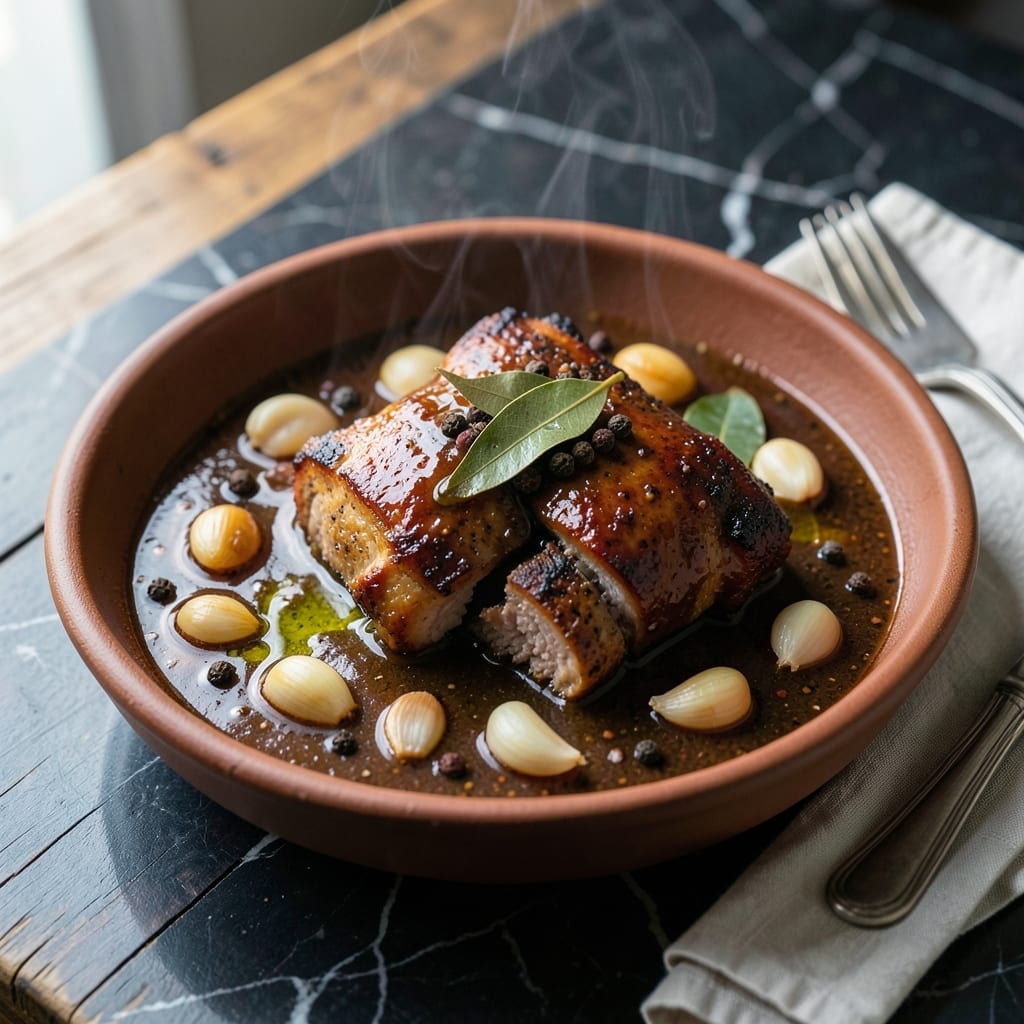
This Filipino classic delivers tender pork with a perfect balance of tangy vinegar and savory garlic. I first tasted adobo at a friend’s gathering, and its rich, complex flavors immediately transported me to the streets of Manila.
The dish relies on a simple braising method that transforms tough cuts into fall-apart meat. The vinegar tenderizes while the garlic infuses every bite with deep, aromatic flavor. It’s a testament to how a few ingredients can create something extraordinary.
What emerges is pork so tender it nearly melts in your mouth, with a sauce that’s both tangy and savory. The aroma alone will have everyone gathered around the table before it’s even served.
Serve with steamed rice to soak up every last drop of that incredible sauce. This is comfort food at its finest.
Ingredients for Pork Adobo Recipe Panlasang Pinoy
Simple ingredients, bold Filipino flavors. This is the heart of comfort food.
| Ingredient | Amount | Notes |
|---|---|---|
| Pork Shoulder 🥩 | 2 lb | Cut into 2-inch pieces, bone-in preferred |
| White Vinegar 🍶 | 1 cup | Cane vinegar for authenticity |
| Soy Sauce 🫙 | ¾ cup | Filipino brands like Silver Swan preferred |
| Garlic Cloves 🧄 | 12 cloves | Minced, about 4 tbsp total |
| Bay Leaves 🍃 | 5 pieces | Dried, whole leaves |
| Black Peppercorns 🌶️ | 1 tbsp | Whole, lightly crushed |
| Brown Sugar 🍚 | 2 tbsp | Optional for balancing acidity |
| Water 💧 | 1 cup | To adjust sauce consistency |
| Cooking Oil 🫒 | 2 tbsp | Neutral oil like vegetable or canola |
| Salt 🧂 | 1 tsp | Adjust to taste at end |
| Green Onions 🧅 | 4 whole | Thinly sliced for garnish |
| Steamed Rice 🍚 | 4 cups | Cooked, for serving |
The pork is everything here. Pork shoulder or pork belly gives you that melt-in-your-mouth texture—lean cuts just won’t do. Look for pieces with good fat marbling at Filipino grocery stores (they often sell it pre-cut for adobo). If you’re using a whole shoulder, trim off any large fat caps but leave some for flavor. The vinegar matters too—cane vinegar is traditional, but white vinegar works in a pinch.
No cane vinegar? Apple cider vinegar adds a nice depth (use the same amount). Short on soy sauce? Tamari or coconut aminos work, but the flavor profile will shift slightly. If you’re out of bay leaves, skip them entirely—don’t substitute with dried thyme or oregano. The black peppercorns can be pre-ground (use half the amount), but whole adds a nice subtle crunch.
This tastes even better the next day as the flavors meld. Keeps in the fridge for 4-5 days or freeze for up to 3 months. I always make extra—it reheats beautifully (the sauce thickens up nicely). Serve with extra rice to soak up every last drop.
Why You’ll Love This Recipe
- One Pot Wonder: I just dump pork shoulder, vinegar, soy sauce, garlic, and bay leaves in a pot and let it simmer—no fancy techniques needed.
- Tangy Garlic Bomb: The mix of white vinegar and soy sauce with all that garlic gives it that bold, tangy-savory punch I crave.
- Feeds My Crowd: Between us, I make a big batch for Sunday lunch and it’s always the first dish to disappear.
- Leftovers for Days: Honestly, it tastes even better the next day, so I always double the recipe for easy meals later.
Step-by-Step Instructions for Pork Adobo Panlasang Pinoy
This method guarantees tender pork with a rich, tangy sauce that soaks into the rice perfectly.
Step 1: Sear the Pork for Deep Flavor
Heat the 2 tbsp cooking oil in a large pot over medium-high heat. Add the 2 lb pork shoulder pieces and sear undisturbed for 3-4 minutes per side until deep golden brown. The browning creates a flavor foundation that defines this dish.
Don’t crowd the pot—work in batches if needed. You’ll know it’s ready to flip when the pieces release easily from the bottom. Transfer the seared pork to a plate and set aside.
Step 2: Build the Braising Liquid with Aromatics
In the same pot, add the 12 cloves garlic cloves and sauté for 30 seconds until fragrant. Pour in the 1 cup white vinegar, 0.75 cup soy sauce, 1 cup water, 5 pieces bay leaves, and 1 tbsp black peppercorns. Let this simmer for 2 minutes.
The vinegar smell will be strong at first but mellows beautifully during cooking. I crush the peppercorns lightly with the flat side of my knife to release their aroma without overpowering the dish.
Step 3: Braise Until Fork-Tender
Return the pork to the pot along with any accumulated juices. Add the 2 tbsp brown sugar and 1 tsp salt. Bring to a boil, then reduce heat to low, cover, and simmer for 1 hour to 1 hour 15 minutes.
Check occasionally and stir gently to prevent sticking. The pork is done when it’s fork-tender and the sauce has thickened slightly. If the sauce reduces too much, add a splash of water.
Step 4: Finish and Serve with Rice
Uncover and simmer for an additional 5-10 minutes to let the sauce reduce to your preferred consistency. Taste and adjust seasoning—you might want a pinch more salt or sugar depending on your preference.
Discard the bay leaves. Transfer to a serving dish, garnish with the 4 whole green onions, and serve hot over 4 cups steamed rice. The sauce should be rich enough to soak into the rice beautifully with every bite.
Pro Tips For Making Pork Adobo Recipe Panlasang Pinoy
- Simmer Low and Slow: I learned this the hard way—boiling the vinegar too hard makes the pork tough. Keep it at a gentle simmer for 40-45 minutes until the meat is fork-tender.
- Marinate the Pork: After burning a few batches by skipping this, I now let the pork shoulder sit in soy sauce, garlic, and bay leaves for at least 30 minutes before cooking. The flavors actually sink in.
- Balance the Vinegar: My grandmother swore by this, and she was right: use equal parts white vinegar and soy sauce. Too much vinegar makes it overly sour, and the dish loses its depth.
- Reduce the Sauce: Sounds weird, but it works: after the pork is cooked, crank up the heat to reduce the sauce by half. It thickens into that rich, glossy adobo glaze everyone loves.
Dietary Considerations for This Recipe
Gluten-Free Adaptations
For a gluten-free version, swap the regular soy sauce with tamari or coconut aminos. Both maintain the umami depth while keeping the dish safe for gluten-sensitive diners. I always keep a bottle of San-J tamari in my pantry for this purpose. 💡
Lower Sodium Option
Reduce the soy sauce by half and replace it with low-sodium soy sauce. You can also add 1 tbsp fish sauce to compensate for flavor without the salt overload. David prefers this version when he’s watching his sodium intake.
Keto-Friendly Tweaks
Skip the 2 tbsp brown sugar entirely or replace it with a keto-friendly sweetener like erythritol. The dish remains rich and flavorful without the carbs, and you can still enjoy it with cauliflower rice instead of steamed rice.
Slow Cooker Method
After searing the pork, transfer everything to a slow cooker and cook on low for 6-7 hours or high for 3-4 hours. This hands-off approach works perfectly for busy weeknights, and the flavors develop beautifully over time.
Vegetarian Alternative
Replace the pork with mushrooms or eggplant for a plant-based version. Use 8 oz cremini mushrooms or 1 large eggplant cut into chunks. The braising liquid infuses them with the same bold flavors.
Allergen Notes
This dish contains soy, so it’s not suitable for those with soy allergies. If you’re avoiding garlic, you can reduce the amount or omit it, but the flavor profile will change significantly. Always check labels on soy sauce and vinegar for potential allergens. 🌱
Nutrition Facts
Frequently Asked Questions
Can I use chicken instead of pork?
Use 2 lb bone-in chicken thighs and reduce braising time to 35-40 minutes. The sauce works beautifully with poultry, though the flavor will be milder.
Why is my adobo sauce too watery?
Uncover and simmer for an extra 5-10 minutes to thicken. If it’s still thin, mix 1 tsp cornstarch with water and stir in. The sauce should coat the back of a spoon.
How do I store leftovers safely?
Cool completely, then refrigerate in an airtight container for up to 5 days. For longer storage, freeze for 3 months. Reheat gently to preserve texture.

- Potato Chip Cookie Recipe With Pecans: Buttery Crunch Meets Nutty Richness - October 30, 2026
- Potato Patty Recipe No Egg: Crispy Edges Without the Binder - October 30, 2026
- Paula Deen’s Potato Chip Cookies Recipe: Salty-Sweet Crunch in Every Bite - October 30, 2026