
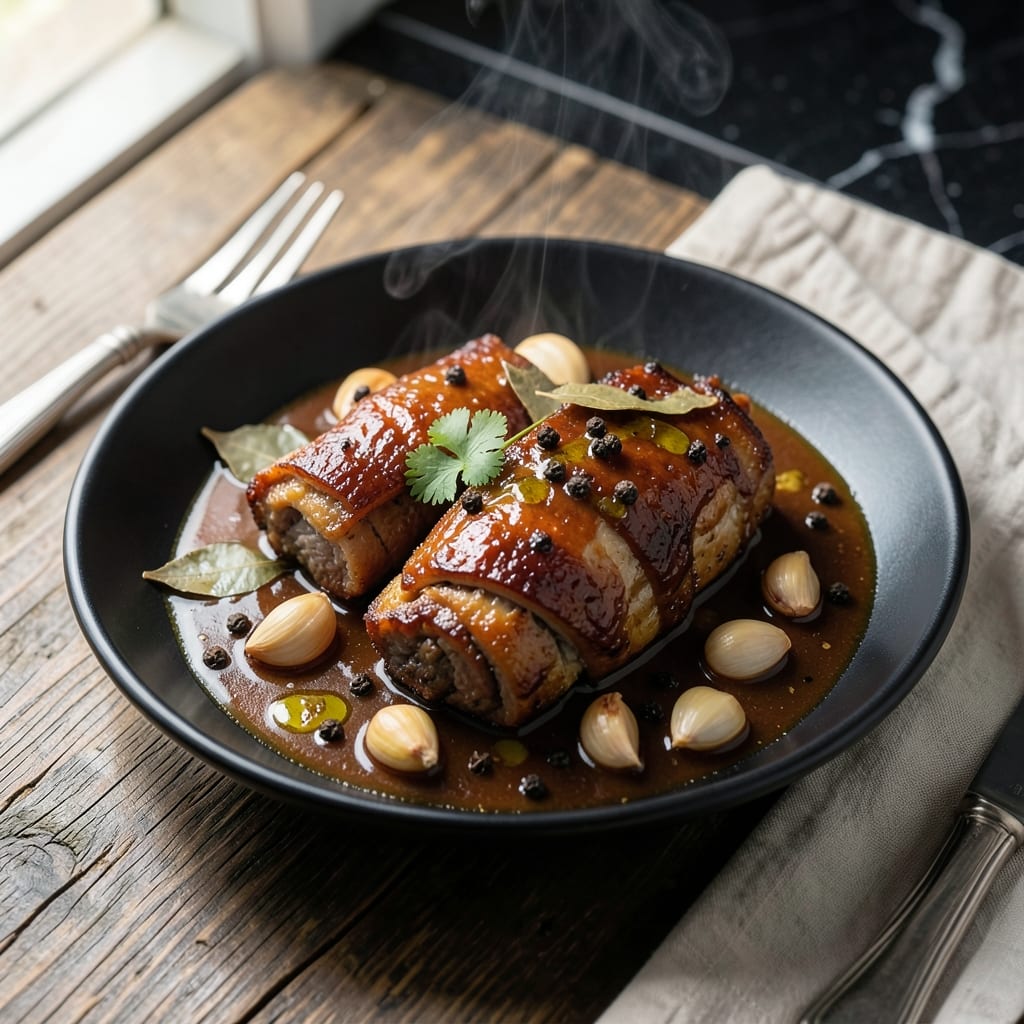
This Filipino classic transforms humble ingredients into a dish with bold, tangy depth that keeps people coming back for seconds. The secret lies in the balance of soy sauce, vinegar, and garlic, creating a sauce that’s both rich and bright.
I’ve refined this method over years of testing to ensure the pork becomes fall-apart tender while the sauce reduces to a glossy, flavor-packed glaze. It’s a one-pot meal that simmers low and slow, letting the flavors meld together perfectly.
What you get is juicy pork pieces coated in a garlicky, tangy sauce that’s perfect over steamed rice. The aroma alone will have everyone gathering around the table before it’s even ready.
Serve it hot, with extra sauce for drizzling. This is comfort food at its most satisfying.
Ingredients for Pork Adobo Recipe Tin Eats
Simple pantry staples create a rich, tangy Filipino braise with deep flavor.
| Ingredient | Amount | Notes |
|---|---|---|
| Pork Shoulder 🐖 | 2 lb | Cut into 2-inch pieces, bone-in preferred |
| Soy Sauce 🫒 | ¾ cup | Regular or all-purpose variety |
| White Vinegar 🍶 | ½ cup | Cane or distilled white |
| Garlic Cloves 🧄 | 10 cloves | Peeled and smashed |
| Bay Leaves 🍃 | 3 whole | Dried, whole leaves |
| Black Peppercorns 🌶️ | 1 tbsp | Whole or coarsely crushed |
| Brown Sugar 🍚 | 2 tbsp | Light or dark variety |
| Water 💧 | 1 cup | For braising liquid |
| Onion 🧅 | 1 whole | Yellow or white, quartered |
| Vegetable Oil 🛢️ | 2 tbsp | For searing pork |
| Green Onions 🌱 | 4 whole | Thinly sliced for garnish |
| Steamed Rice 🍚 | 4 cups | Cooked, for serving |
The pork is key—pork shoulder or butt gives you that fall-apart texture. Bone-in adds extra richness, but boneless works too. Look for pieces with good marbling at Whole Foods or your local butcher. The soy sauce should be regular, not low-sodium (you need the salt for flavor balance). Silver Swan or Datu Puti are authentic Filipino brands if you have an Asian market nearby.
No white vinegar? Apple cider vinegar works in a pinch (slightly fruitier taste). Out of bay leaves? Skip them—they’re nice but not essential. If you’re short on garlic, use one-third the amount of garlic powder, but fresh is better. The brown sugar can be swapped for coconut sugar (same quantity), or omit entirely for a less sweet version.
The pork braises beautifully and tastes even better the next day. Store leftovers in the fridge for up to 4 days or freeze for 3 months. Reheat gently with a splash of water to thin the sauce.
Why You’ll Love This Recipe
- One Pot Wonder: I brown the pork shoulder, then simmer everything together—soy sauce, vinegar, garlic—minimal cleanup.
- Garlic Bomb: The cloves melt into the sauce, and that tangy-sweet balance with the bay leaves? Ridiculously good.
- Meal Prep Hero: Makes enough for three nights of leftovers, and honestly, it tastes even better the next day.
- Budget Stretcher: Pork shoulder is cheap, and this feeds my whole family with seconds. No fancy ingredients needed.
Step-by-Step Instructions for Filipino-Style Braised Pork with Garlicky Tang
Here is the method. Straightforward, tested, works every time.
Step 1: Sear the Pork Shoulder for Deep Flavor
Heat the 2 tbsp vegetable oil in a large, heavy pot over medium-high heat until shimmering. Add the 2 lb pork shoulder pieces in a single layer, working in batches if necessary to avoid crowding. Sear undisturbed for 4-5 minutes until the undersides develop a deep golden-brown crust.
Flip the pork and sear the other side for another 4-5 minutes. This step builds a rich fond at the bottom of the pot, which will deepen the flavor of your braising liquid. Transfer the seared pork to a plate and set aside.
Step 2: Sauté Aromatics Until Fragrant
In the same pot, reduce the heat to medium. Add the 1 whole onion, quartered, and the 10 cloves garlic cloves. Sauté for 2-3 minutes, stirring frequently, until the onion softens slightly and the garlic turns light golden brown.
Be careful not to let the garlic burn—it can turn bitter quickly. Add the 3 whole bay leaves and 1 tbsp black peppercorns and stir for 30 seconds to toast the spices lightly, releasing their aromatic oils.
Step 3: Deglaze and Build the Braising Liquid
Pour in the 0.75 cup soy sauce, 0.5 cup white vinegar, 2 tbsp brown sugar, and 1 cup water. Use a wooden spoon to scrape up all the browned bits from the bottom of the pot. This step ensures none of the flavorful fond goes to waste.
Bring the mixture to a gentle boil over medium-high heat, stirring occasionally to dissolve the sugar. Once boiling, reduce the heat to low and return the seared pork to the pot along with any accumulated juices.
Step 4: Braise to Tender Perfection
Cover the pot and let the pork braise for 1.5 to 2 hours. Check occasionally and stir gently to prevent sticking. The pork is done when it is fork-tender and easily pulls apart with a gentle tug.
If the liquid reduces too quickly, add a splash of water to maintain the level. The sauce should thicken slightly as it cooks, coating the pork in a glossy, tangy glaze. Taste and adjust the seasoning if needed.
Step 5: Garnish and Serve with Steamed Rice
Once the pork is tender, remove the pot from the heat. Discard the bay leaves. Thinly slice the 4 whole green onions and sprinkle them over the top of the dish for a fresh, vibrant finish.
Serve the pork adobo hot over 4 cups steamed rice, ensuring each serving is generously coated with the rich, garlicky sauce. The contrast of tender pork, tangy sauce, and fluffy rice is what makes this dish truly special.
Pro Tips For Making Pork Adobo Recipe Tin Eats
- Sear the Pork First: Brown the pork shoulder chunks in batches before braising—I learned this the hard way after my first few adobos tasted flat. That caramelized crust adds depth the sauce just can’t.
- Balance the Vinegar: Taste before adding all the white vinegar; I once ruined a batch by dumping it all in at once. Start with 3/4 of the amount, adjust to taste, and always add it last.
- Don’t Skip the Simmer: After the initial boil, drop to a low simmer and let it go for at least 45 minutes. Rushing this step leaves the pork tough and the flavors underdeveloped.
- Crush the Garlic: Smash the garlic cloves with the flat of your knife before adding them—sounds weird, but it works. The exposed surface infuses the oil and sauce way more than whole cloves.
Troubleshooting Great pork adobo recipe tin eats
Sauce Too Sour
If your adobo tastes too sharp, the vinegar needs balancing. Stir in 1-2 tsp brown sugar and simmer for 5 minutes to mellow the acidity. Taste again before adding more—this dish should be tangy, not mouth-puckering. 💡
Pork Still Tough
Braising too fast? Lower the heat to low and add ½ cup water. Cover and cook another 30-45 minutes until fork-tender. I’ve found pork shoulder needs at least 1.5 hours to break down properly.
Sauce Too Thin
Uncover and simmer on medium heat for 10-15 minutes to reduce. Stir occasionally to prevent sticking. If too thick, add ¼ cup water at a time until it reaches your preferred consistency.
Sauce Too Salty
Add ½ cup water and a sliced potato to absorb excess salt. Simmer for 15 minutes, then remove the potato. This trick works without diluting the rich flavor too much.
Garlic Burning
If your garlic turns bitter, start fresh with new oil. Next time, sauté on medium-low heat for just 1-2 minutes. I learned this the hard way—golden garlic is perfect, brown is too far.
Bay Leaves Overpowering
Remove them after 1 hour of braising. Their flavor infuses quickly, and leaving them too long can make the dish taste soapy. Three leaves are plenty for 2 lb pork.
Nutrition Facts
Frequently Asked Questions
Can I use a different cut of pork?
Yes, but pork shoulder or butt is ideal for its fat content. Pork belly works too for extra richness. Lean cuts like tenderloin will dry out during the 1.5-2 hour braise.
Why does my sauce taste too sour?
Stir in 1-2 tsp sugar and simmer for 5 minutes. The vinegar mellows as it cooks, but some brands are sharper than others. Balance is key!
Can I make this ahead of time?
The flavors deepen after 1-2 days in the fridge. Reheat gently with a splash of water. It freezes well for up to 3 months.
What if my sauce is too thin?
Uncover and simmer on medium heat for 10-15 minutes to reduce. Stir occasionally to prevent sticking. The sauce should coat the back of a spoon.

- Potato Chip Cookie Recipe With Pecans: Buttery Crunch Meets Nutty Richness - October 30, 2026
- Potato Patty Recipe No Egg: Crispy Edges Without the Binder - October 30, 2026
- Paula Deen’s Potato Chip Cookies Recipe: Salty-Sweet Crunch in Every Bite - October 30, 2026