
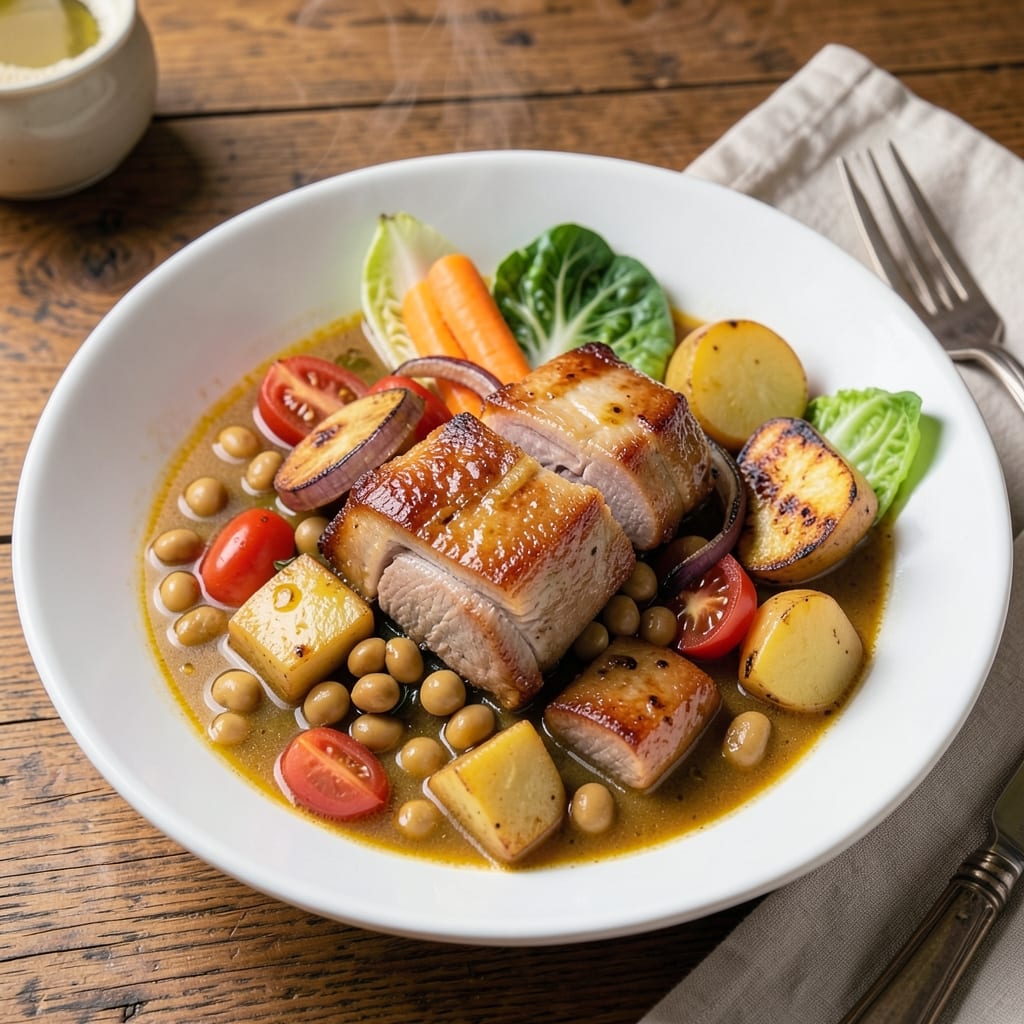
Few dishes deliver the hearty satisfaction of a well-made pochero, and this version brings Filipino comfort to your table in a single pot. The combination of tender pork, soft beans, and rich vegetables creates a meal that’s both nourishing and deeply flavorful.
This one-pot method simplifies the process without sacrificing authenticity. The pork slow-cooks to perfection, while the beans soak up the savory broth, infusing every bite with warm, aromatic spices. It’s a dish designed for sharing and savoring.
What makes it special is the balance—savory, slightly sweet, and undeniably comforting. The vegetables add freshness, while the pork and beans provide heartiness that lingers long after the last spoonful.
Serve it steaming hot, and let the flavors transport you. This is comfort food at its finest.
Ingredients for Pochero Recipe Using Pork and Beans
Pork, beans, and veggies—this is Filipino comfort food at its heartiest.
| Ingredient | Amount | Notes |
|---|---|---|
| Pork Belly 🥩 | 1 ½ lb | Cut into large cubes, skin-on |
| Garbanzo Beans 🌱 | 2 cups | Dried, soaked overnight |
| Plantains 🍌 | 2 whole | Saba or ripe, sliced |
| Cabbage 🥬 | ½ whole | Green or Napa, cut into wedges |
| Potatoes 🥔 | 2 whole | Yukon Gold or Russet, peeled and quartered |
| Carrots 🥕 | 2 whole | Peeled, cut into chunks |
| Tomatoes 🍅 | 2 whole | Ripe, quartered |
| Onion 🧅 | 1 whole | Yellow or white, quartered |
| Garlic Cloves 🧄 | 6 cloves | Peeled, smashed |
| Bay Leaves 🍃 | 2 whole | Dried or fresh |
| Soy Sauce 🫒 | ¼ cup | Filipino brand preferred |
| Salt 🧂 | 1 tsp | Adjust to taste |
| Black Peppercorns 🌶️ | 1 tsp | Whole or cracked |
| Water 💧 | 8 cups | For broth |
The pork belly is non-negotiable here. Look for skin-on cuts at an Asian market—they render that perfect fat cap into the broth. Filipino brands like Silver Swan for soy sauce add that authentic depth. For the garbanzo beans, dried are traditional (soak them overnight), but canned works in a pinch—just adjust the cooking time. Plantains should be ripe but firm, not mushy.
No pork belly? Pork shoulder or ribs work too, but you’ll miss some of that melt-in-your-mouth texture. Short on time? Canned garbanzo beans cut the cook time in half—drain and rinse first. The cabbage can be swapped for bok choy or green beans. For extra richness, some cooks add a splash of calamansi juice at the end (find it at Seafood City).
This tastes even better the next day. Keeps in the fridge for 4-5 days, freezes for 3 months. Reheat gently to avoid breaking up the pork or veggies. Leftovers? Pack into containers for easy lunches—it’s even more flavorful after a night’s rest.
Why You’ll Love This Recipe
- One Pot Wonder: I just toss the pork belly, chickpeas, and veggies in a single pot and let it simmer—minimal cleanup, maximum flavor.
- Deep, Rich Broth: The pork belly renders into the liquid, creating a savory base that soaks into the plantains and potatoes. Honestly, it’s the kind of taste that lingers.
- Feeds a Crowd: Between us, this is my go-to for family gatherings—everyone gets their fill, and the mix of textures keeps it interesting.
- Budget Stretcher: A pound of pork belly and a few pantry staples go a long way. I’ll be real: it’s one of the most satisfying, cost-effective meals I make.
Step-by-Step Instructions for Pork and Beans Pochero
Here’s how to build layers of flavor in one pot without the fuss.
Step 1: Sear the Pork Belly for Depth
Heat a large pot over medium-high heat and add the 1.5 lb Pork Belly cubes, skin-side down. Let them render fat for 5-7 minutes until the skin turns golden brown and crispy at the edges.
I don’t add oil initially—the pork belly has enough fat to start the process. Flip the pieces once they release easily from the pot. This searing step locks in juices and creates a flavor foundation that defines the dish.
Remove the pork and set aside, but leave that rendered fat in the pot. It’s liquid gold for the next steps.
Step 2: Build the Aromatic Base
In the same pot with the pork fat, add the 1 whole Onion, 6 cloves Garlic Cloves, 2 whole Tomatoes, 2 whole Carrots, and 1 tsp Black Peppercorns. Sauté for 3-4 minutes until the onions soften and the tomatoes start to break down.
This is where the magic happens. The pork fat carries the aromatics’ flavors throughout the dish. I like to smash the garlic cloves slightly to release more of their essence without burning them.
Add the 2 whole Bay Leaves and 0.25 cup Soy Sauce, stirring to deglaze the pot and lift all those browned bits from the bottom.
Step 3: Simmer the Broth with Pork and Beans
Return the pork to the pot and add the 2 cups Garbanzo Beans and 8 cups Water. Bring to a boil, then reduce heat to medium-low for a gentle simmer. Partially cover and cook for 45 minutes.
The garbanzo beans will start to soften and absorb the rich pork and soy flavors. I check occasionally to skim off any foam that rises to the surface—this keeps the broth clean and clear.
After 45 minutes, the pork should be tender but not falling apart. This is when you’ll add the remaining vegetables.
Step 4: Add Vegetables and Finish Cooking
Add the 2 whole Potatoes, 0.5 whole Cabbage (cut into wedges), and 2 whole Plantains to the pot. Simmer uncovered for another 15-20 minutes until the potatoes are fork-tender and the cabbage is soft.
I arrange the plantain slices on top so they steam rather than submerged. This prevents them from becoming mushy while still absorbing the flavors of the broth.
Season with 1 tsp Salt, adjusting to taste. The salt enhances all the layers you’ve built, but remember the soy sauce already contributes saltiness.
Serve hot in bowls, making sure each serving gets a good mix of pork, beans, and vegetables. The broth should be rich and deeply flavorful, with each ingredient maintaining its distinct character while contributing to the whole.
Pro Tips For Making Pochero Recipe Using Pork And Beans
- Parboil the Pork: Boil pork belly slices for 5-7 minutes first to remove excess fat and impurities—this keeps your pochero broth clean and flavorful. I learned this the hard way after skimming scum off my first few batches.
- Soak the Garbanzos: If using dried chickpeas, soak them overnight in plenty of water with a pinch of baking soda. Sounds weird, but it cuts cooking time in half and prevents those dreaded undercooked centers.
- Add Plantains Late: Toss in plantain slices only during the last 15 minutes of cooking. My grandmother swore by this, and she was right: they stay firm and sweet instead of turning mushy.
- Layer the Cabbage: Place cabbage wedges on top of the broth rather than submerging them. This steams them perfectly without overcooking—after burning a few batches, I finally figured out this simple fix.
Creative Variations of These Flavors
Seafood Swap
For a lighter version, I replace the pork belly with 1.5 lb firm white fish like cod or halibut. Add the fish in the final 10 minutes of cooking to prevent it from breaking apart. The garbanzo beans still soak up the flavors beautifully. 🌊
Chicken Variation
Use 1.5 lb chicken thighs (bone-in, skin-on) instead of pork for a quicker cook. Brown the thighs first, then proceed with the same method. The chicken stays juicy and pairs wonderfully with the plantains.
Vegetarian Twist
Skip the meat entirely and double the garbanzo beans to 4 cups. Add 1 lb tofu cubes for protein, browning them first in the pot. The soy sauce and vegetables create a rich, satisfying dish without meat.
Spicy Kick
Add 2 sliced siling labuyo (Filipino bird’s eye chili) or 1 tbsp chili flakes when building the aromatic base. This gives the broth a warm, spicy depth that complements the savory pork. 🔥
Coconut Milk Enrichment
For a creamier broth, stir in 1 can coconut milk after the pork and beans have simmered for 45 minutes. This adds a subtle sweetness and richness that balances the savory flavors.
Quick Canned Beans
Short on time? Use 4 cans garbanzo beans (drained and rinsed) instead of dried. Add them with the vegetables in the final 20 minutes of cooking to prevent over-softening.
Nutrition Facts
Frequently Asked Questions
Can I use canned garbanzo beans instead of dried?
Yes! Use 4 cans (drained and rinsed) and add them with the vegetables in the final 20 minutes of cooking. This prevents them from turning mushy while still absorbing the flavors.
What if I don’t have pork belly?
Pork shoulder or ribs work well as substitutes. For a leaner option, try chicken thighs—brown them first for the best flavor. The dish will still be hearty and delicious.
How do I know when the pork is done?
The pork is ready when it’s fork-tender and easily pulls apart, usually after 45 minutes of simmering. Avoid overcooking to keep it moist and flavorful.
Can I make this dish ahead of time?
The flavors deepen overnight. Store in an airtight container in the fridge for up to 4-5 days or freeze for 3 months.

- Potato Chip Cookie Recipe With Pecans: Buttery Crunch Meets Nutty Richness - October 30, 2026
- Potato Patty Recipe No Egg: Crispy Edges Without the Binder - October 30, 2026
- Paula Deen’s Potato Chip Cookies Recipe: Salty-Sweet Crunch in Every Bite - October 30, 2026