
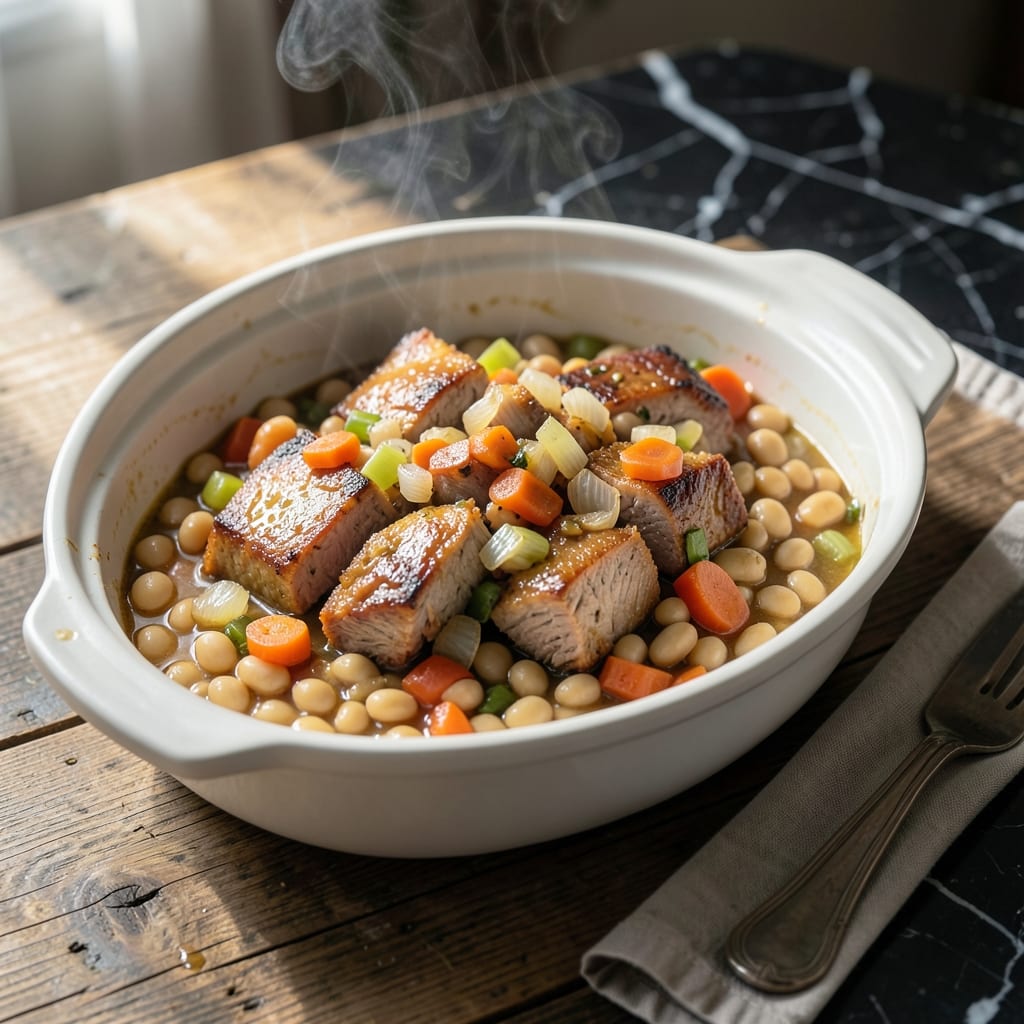
There’s something deeply satisfying about the slow transformation of simple ingredients into a hearty, aromatic dish. This method brings the rustic charm of French cassoulet to your kitchen without the fuss.
By using a slow cooker, the pork becomes fall-apart tender while the beans absorb rich, savory flavors. The herbs and garlic infuse every bite with depth, proving that authentic taste doesn’t require hours of stovetop attention.
What emerges is a dish with layers of texture and flavor—creamy beans, succulent pork, and a broth that’s thick with character. It’s a meal that feels special yet effortless.
Perfect for feeding a crowd or savoring leftovers for days. Here’s how to make it.
Ingredients for Pork Cassoulet Recipe Slow Cooker
Hearty pork, creamy beans, and aromatic herbs slow-cook into something deeply satisfying.
| Ingredient | Amount | Notes |
|---|---|---|
| Pork Shoulder 🥩 | 2 lb | Boneless, cut into chunks |
| Great Northern Beans 🫘 | 1 lb | Dried, soaked overnight |
| Onions 🧅 | 2 whole | Medium, diced |
| Carrots 🥕 | 3 whole | Peeled, sliced into rounds |
| Celery Stalks 🌿 | 3 whole | Diced for base flavor |
| Garlic Cloves 🧄 | 6 cloves | Minced for depth |
| Tomato Paste 🍅 | 3 tbsp | For richness and color |
| Chicken Stock 🥣 | 4 cups | Low-sodium preferred |
| Dry White Wine 🍷 | ½ cup | Optional for deglazing |
| Fresh Thyme Sprigs 🌿 | 4 whole | Plus extra for garnish |
| Bay Leaves 🍃 | 2 whole | For aromatic infusion |
| Smoked Paprika 🌶️ | 1 tsp | For smoky depth |
| Salt 🧂 | 1 ½ tsp | Adjust to taste |
| Black Pepper 🌶️ | 1 tsp | Freshly ground preferred |
| Olive Oil 🫒 | 2 tbsp | For sautéing vegetables |
The pork shoulder is non-negotiable here. Bone-in or boneless both work, but boneless is easier to cube. Look for good marbling—this is what melts into the beans. Costco often has pre-cut pork for stews, saving prep time. The beans should be dried Great Northern or cannellini—canned won’t hold up to the long cook time. Soak them overnight for best texture, though the slow cooker will soften unsoaked beans too (just add an extra hour).
No pork shoulder? Pork butt is identical—just a different name for the same cut. For a quicker version, bone-in country-style ribs work well. White wine not on hand? Substitute extra stock with a tbsp of vinegar. Fresh thyme is ideal, but dried thyme at half the amount works. The smoked paprika adds authentic cassoulet flavor—don’t skip it unless you’re out of options.
This tastes even better the next day once flavors meld. Stores in the fridge for 4-5 days or freezes for 3 months. Leftovers reheat beautifully—just add a splash of water if it’s too thick. Perfect for making ahead for a crowd.
Why You’ll Love This Recipe
- Set and Forget: I toss everything in the slow cooker before work and come home to a house that smells like a French countryside kitchen.
- Melts in Your Mouth: The pork shoulder gets so tender it falls apart, and those Great Northern beans soak up all the savory juices from the onions and carrots.
- Feeds a Hungry Crowd: Between us, this is my go-to for Sunday suppers—it stretches to feed six easily, with leftovers for lunch the next day.
- Wallet-Friendly Comfort: Pork shoulder and beans are budget-friendly, and honestly, it tastes like it cost way more than it did.
Step-by-Step Instructions for Pork Cassoulet
This hands-off method delivers rich, rustic French flavors with minimal effort.
Step 1: Brown the Pork Shoulder
Heat the 2 tbsp olive oil in a large skillet over medium-high heat. Pat the 2 lb pork shoulder chunks dry with paper towels to ensure a good sear. Working in batches if needed, add the pork and cook for 4-5 minutes per side until deep golden brown on all sides.
Don’t overcrowd the pan—this causes steaming instead of browning. The pork should release easily from the pan when properly browned. Transfer the seared pork to your slow cooker, leaving the flavorful browned bits in the skillet.
Step 2: Sauté the Aromatic Base
In the same skillet, add the diced 2 whole onions, sliced 3 whole carrots, and diced 3 whole celery stalks. Cook over medium heat for 6-8 minutes, stirring occasionally, until the vegetables soften and begin to caramelize around the edges.
Add the minced 6 cloves garlic cloves and cook for 1 minute until fragrant. Stir in the 3 tbsp tomato paste, 1 tsp smoked paprika, 1.5 tsp salt, and 1 tsp black pepper, cooking for another 1-2 minutes to deepen the flavors.
Step 3: Deglaze and Combine in Slow Cooker
Pour in the 0.5 cup dry white wine to deglaze the pan, scraping up all the browned bits with a wooden spoon. Let it simmer for 2-3 minutes until the liquid reduces by half. This step captures all the concentrated flavors from the bottom of the pan.
Transfer the vegetable mixture to the slow cooker with the pork. Add the drained 1 lb Great Northern Beans, 4 cups chicken stock, 4 whole fresh thyme sprigs, and 2 whole bay leaves. Stir gently to combine all the ingredients evenly.
Step 4: Slow Cook to Tender Perfection
Cover and cook on low heat for 7-8 hours or on high heat for 4-5 hours. The dish is done when the pork shreds easily with a fork and the beans are creamy and tender.
Resist the urge to lift the lid during cooking—this releases heat and extends the cooking time. The cassoulet should have a rich, thick broth with the beans partially breaking down to create a rustic texture.
Discard the thyme sprigs and bay leaves before serving. Adjust the seasoning with additional salt and pepper if needed, and garnish with extra thyme if desired.
Pro Tips For Making Pork Cassoulet Recipe Slow Cooker
- Brown the Pork: Sear the pork shoulder chunks in batches until deeply browned—about 3-4 minutes per side. I learned this the hard way: skipping this step leaves the cassoulet tasting flat, no matter how long it cooks.
- Soak the Beans: Cover the Great Northern beans in water by 2 inches and soak overnight, or use the quick-soak method (boil 2 minutes, then let sit for 1 hour). This cuts cooking time in the slow cooker and prevents that dreaded dry, mealy texture.
- Skip the Pre-Cooking: Resist the urge to pre-cook the onions, carrots, and celery. Toss them in raw with the pork and beans—they’ll soften perfectly over 6-8 hours and absorb all the rich flavors.
- Deglaze the Pan: After browning the pork, pour a splash of broth or white wine into the hot pan and scrape up those browned bits. Add this liquid to the slow cooker—it’s packed with flavor and makes a real difference in the final dish.
Health Benefits of This Dish
Protein Powerhouse
Pork shoulder is packed with high-quality protein—about 20 grams per 3-ounce serving. This helps build and repair muscle tissue, making this dish great for active lifestyles. I love how it keeps me full and energized throughout my long days at the farm. 💪
Iron-Rich Fuel
This cut provides a solid dose of iron, with one serving offering about 10% of your daily needs. Iron is crucial for transporting oxygen in your blood and preventing fatigue. The slow cooking process makes the iron in pork more easily absorbed by your body.
B Vitamin Boost
Pork is naturally rich in B vitamins, especially B1, B6, and B12. These support energy metabolism and nervous system health. The Great Northern beans add folate and fiber, which complement the pork’s nutrients beautifully.
Fiber from Beans
The beans in this dish bring 15 grams of fiber per cup when cooked, promoting digestive health and helping you feel satisfied. This fiber also supports steady blood sugar levels, preventing energy crashes. I always feel my best when I include fiber-rich meals like this in my diet.
Slow-Release Energy
The combination of complex carbs from beans and protein from pork creates a meal that digests slowly. This provides sustained energy, perfect for powering through busy days. It’s why this dish has been a staple in my kitchen for years. ✨
Heart-Healthy Fats
While pork shoulder contains some fat, it also includes monounsaturated fats similar to those in olive oil. These support heart health when enjoyed as part of a balanced diet. The slow cooking process renders much of the fat, making the dish lighter than you might expect.
Nutrition Facts
Frequently Asked Questions
Can I use canned beans instead of dried?
Yes, but reduce the cooking time. Add canned beans (drained) during the last 2-3 hours to prevent them from turning mushy. Dried beans are preferred for texture and flavor absorption.
Why do I need to brown the pork first?
Browning creates a flavorful crust through the Maillard reaction, adding depth to the dish. It also renders some fat, which enhances the overall richness of the cassoulet. Skipping this step means missing out on key flavors.
Can I make this ahead and reheat?
This dish improves overnight as flavors meld. Store in the fridge for up to 5 days or freeze for 3 months. Reheat gently on the stove with a splash of water if needed.
What if my cassoulet is too thin?
Remove the lid and cook on high heat for an additional 30-60 minutes to thicken. Alternatively, mash some beans against the pot’s side to release their starches and naturally thicken the broth.

- Potato Chip Cookie Recipe With Pecans: Buttery Crunch Meets Nutty Richness - October 30, 2026
- Potato Patty Recipe No Egg: Crispy Edges Without the Binder - October 30, 2026
- Paula Deen’s Potato Chip Cookies Recipe: Salty-Sweet Crunch in Every Bite - October 30, 2026