
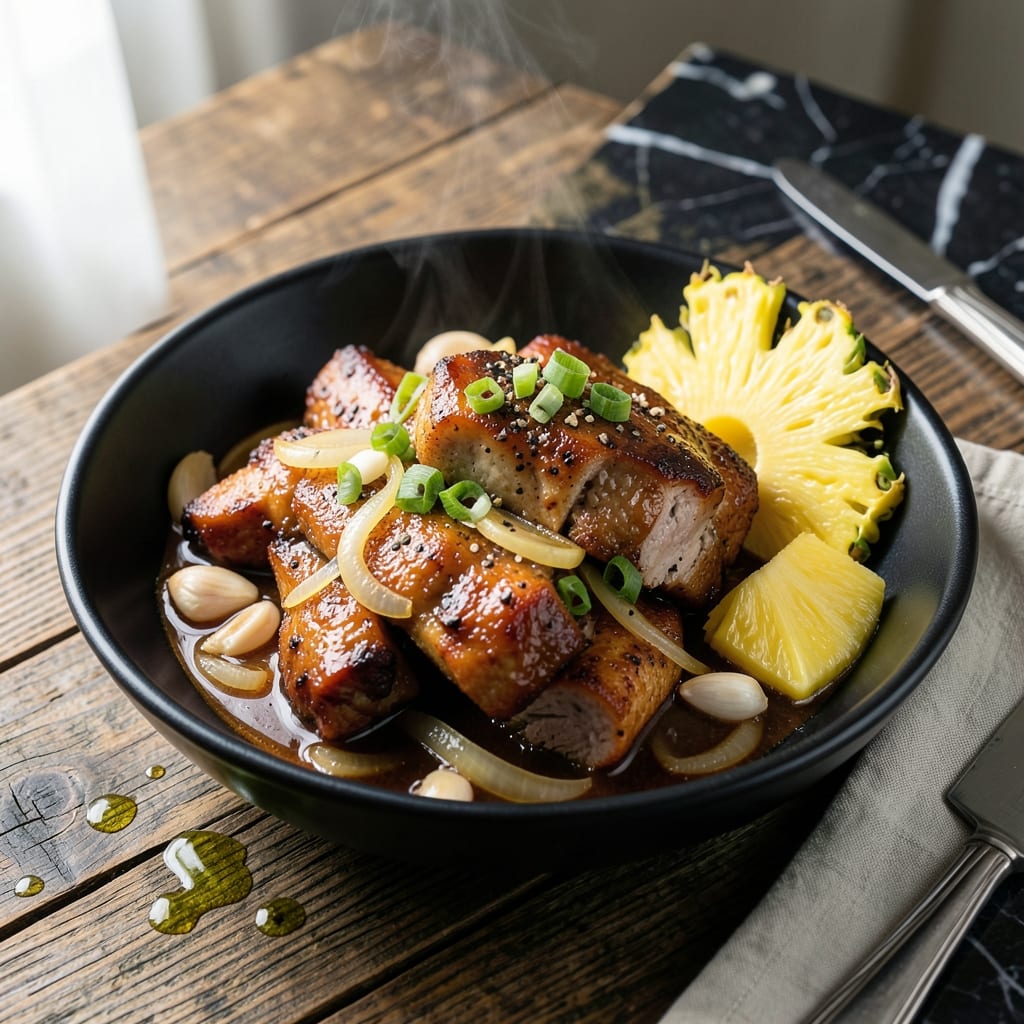
This Filipino braised pork delivers a perfect balance of savory, tangy, and slightly sweet flavors that define authentic adobo. The addition of pineapple juice transforms the traditional dish with a tropical twist.
I developed this version after testing multiple acid sources, and the pineapple juice proved to be the ideal complement to the soy-vinegar base. The natural sweetness rounds out the sharpness while tenderizing the meat.
The cooking process is straightforward: brown the pork, then simmer in the marinade until fall-apart tender. The pineapple juice caramelizes slightly, creating a glossy, flavorful sauce.
Serve this over steamed rice to soak up every drop of the rich, tangy sauce. The result is a dish that’s both comforting and complex.
Ingredients for Pork Adobo Recipe with Pineapple Juice
A handful of pantry staples plus fresh garlic and onions bring this dish to life.
| Ingredient | Amount | Notes |
|---|---|---|
| Pork Shoulder 🍖 | 2 lb | Cut into 2-inch pieces, bone-in preferred |
| Soy Sauce 🫒 | ¾ cup | Low-sodium recommended |
| White Vinegar 💧 | ½ cup | Cane or distilled white |
| Pineapple Juice 🍍 | 1 cup | 100% juice, no added sugar |
| Garlic Cloves 🧄 | 8 cloves | Peeled and smashed |
| Yellow Onion 🧅 | 1 whole | Large, thinly sliced |
| Bay Leaves 🍃 | 3 pieces | Dried, whole |
| Black Peppercorns 🌶️ | 1 tbsp | Whole, lightly crushed |
| Brown Sugar 🥣 | 2 tbsp | Light or dark, packed |
| Vegetable Oil 🫒 | 2 tbsp | Neutral flavor, for browning |
| Water 💧 | ½ cup | To adjust sauce consistency |
| Green Onions 🧅 | 3 whole | Thinly sliced for garnish |
The pork shoulder is non-negotiable here. Bone-in pieces from the butcher counter have more flavor than pre-cut cubes (and cost less). Whole Foods or Asian markets usually have good options—look for marbling. The soy sauce matters too: Silver Swan or Datu Puti if you can find them, but any low-sodium works. The vinegar should be sharp, so avoid apple cider—white or cane only.
No pineapple juice? Crushed pineapple blended smooth works in a pinch (strain out pulp). Out of bay leaves? One teaspoon dried thyme gets you close. The brown sugar can be swapped for coconut sugar (same amount). If you’re missing black peppercorns, freshly ground black pepper is fine—just use about one teaspoon. Don’t skip the garlic though; it’s the backbone of the flavor.
This actually gets better overnight. Store in the fridge for up to 5 days—the flavors deepen. Freezes well for 3 months in airtight containers. Reheat gently on the stove with a splash of water to revive the sauce (the pineapple can thicken up).
Why You’ll Love This Recipe
- Dump and Simmer: I just toss pork shoulder, soy sauce, vinegar, pineapple juice, and garlic in a pot and let it work its magic.
- Sweet-Tangy Balance: The pineapple juice cuts through the soy and vinegar for that perfect sticky-sweet adobo taste.
- Feeds the Crowd: Between us, this stretches easily for potlucks or Sunday family dinners.
- Tastes Better Tomorrow: Honestly, the leftovers soak up all the flavors overnight and taste even richer the next day.
Step-by-Step Instructions for Pork Adobo With Pineapple Juice
Here’s the method I use—simple, foolproof, and packed with bold Filipino flavors.
Step 1: Sear the Pork Shoulder for Depth
Heat the 2 tbsp vegetable oil in a large pot or Dutch oven over medium-high heat. When it shimmers, add the 2 lb pork shoulder pieces in a single layer, working in batches if needed. Don’t crowd the pan—this ensures a proper sear instead of steaming.
Cook undisturbed for 4-5 minutes per side until the pork develops a deep golden-brown crust. The fond (browned bits) left in the pot will dissolve into the sauce later, adding incredible depth. Transfer the seared pork to a plate and set aside.
Step 2: Sauté Aromatics and Toast Spices
In the same pot, reduce heat to medium and add the 8 cloves garlic cloves and 1 whole yellow onion. Sauté for 2-3 minutes until the onions soften and the garlic turns light golden at the edges. Watch closely—garlic burns easily.
Stir in the 1 tbsp black peppercorns and 3 pieces bay leaves, toasting for 30 seconds until fragrant. This step wakes up the spices, ensuring they infuse the dish with their full aroma. The kitchen should smell incredible right about now.
Step 3: Deglaze and Build the Braising Liquid
Pour in the 0.75 cup soy sauce, 0.5 cup white vinegar, 1 cup pineapple juice, and 2 tbsp brown sugar. Scrape the bottom of the pot with a wooden spoon to lift all those flavorful browned bits into the liquid.
Return the pork and any accumulated juices to the pot. Add the 0.5 cup water and stir to combine. The liquid should just cover the pork—if it’s short, add a splash more water. Bring to a boil, then reduce heat to low to maintain a gentle simmer.
Step 4: Braise Until Fork-Tender
Cover the pot and let the pork braise undisturbed for 1.5 to 2 hours. Check occasionally and stir gently to prevent sticking. You’ll know it’s done when the pork is fork-tender—a knife should slide in with no resistance, and the meat should pull apart easily.
Real talk: the pineapple juice adds a subtle sweetness and tang that balances the saltiness of the soy sauce. As the liquid reduces, the flavors concentrate, so don’t be tempted to rush this step. Patience is key for melt-in-your-mouth results.
Once the pork is tender, uncover and simmer for an additional 10-15 minutes to thicken the sauce slightly. Skim off any excess fat from the surface if desired.
Step 5: Garnish and Serve
Discard the bay leaves and, if you prefer, the peppercorns. Thinly slice the 3 whole green onions and sprinkle them over the top just before serving. The heat from the dish will soften them slightly while keeping their fresh, oniony bite.
Serve hot with steamed rice to soak up the rich, tangy sauce. The pork should be falling apart, and the sauce should cling to every piece. This dish tastes even better the next day, as the flavors continue to meld and deepen.
Pro Tips For Making Pork Adobo Recipe With Pineapple Juice
- Simmer, Don’t Boil: Keep the heat at a gentle simmer—rolling boils make the pork tough and can split the sauce. I learned this the hard way after my first batch turned into chewy, separated mess.
- Brown the Pork: Sear the pork shoulder pieces in the pot before adding liquids. About 2-3 minutes per side gives depth and prevents the meat from stewing in its own fat.
- Balance the Pineapple: Use unsweetened pineapple juice, and taste before adding extra sugar. The natural sweetness should complement the soy and vinegar, not overpower them.
- Rest Before Serving: Let the adobo sit off the heat for 10 minutes after cooking. The flavors meld, and the pork reabsorbs some of that tangy-sweet sauce.
Make-Ahead Tips for This Recipe
Marinade Prep Ahead
Combine the soy sauce, pineapple juice, vinegar, and brown sugar up to 24 hours before cooking. Store in an airtight container in the fridge. This gives the flavors a head start on melding together. 💡
Pork Prep
Trim and cube the 2 lb pork shoulder the night before. Store it in the fridge in the marinade to infuse with flavor overnight. This also saves 15-20 minutes of active prep time the next day.
Slow Cooker Adaptation
After searing, transfer everything to a slow cooker. Cook on low for 6-8 hours or high for 4-5 hours. I use a Crock-Pot 6-Quart for even cooking.
Freezer Meal
Freeze raw pork with marinade in a sealed bag for up to 3 months. Thaw overnight in the fridge before cooking. The pineapple juice prevents freezer burn and keeps the meat tender.
Sauce Thickening
If making ahead, the sauce may thicken in storage. Thin with ¼ cup water or additional pineapple juice when reheating over medium-low heat for 5-10 minutes.
Reheating Tip
Gently reheat on the stove to preserve the pork’s texture. Microwaving can make the meat dry, so I avoid it. The flavors deepen after 1-2 days in the fridge. ✨
Nutrition Facts
Frequently Asked Questions
Can I use canned pineapple instead of juice?
Yes! Blend 1 cup canned pineapple chunks until smooth and strain. This works as a substitute, though it may add slight texture. The natural sweetness will still balance the dish perfectly.
Why does the sauce turn pink?
Pineapple juice contains natural enzymes that react with soy sauce, creating a light pink hue. This is normal and doesn’t affect flavor or safety. The color deepens as it reduces during cooking.
How do I prevent the pork from drying out?
Avoid boiling vigorously—maintain a gentle simmer at low heat. Also, don’t skip searing; it locks in juices. The 1.5-2 hour braise time ensures tender results.
Is this dish gluten-free?
Traditional soy sauce contains wheat, but you can use tamari or coconut aminos as a 1:1 substitute. Verify all other ingredients are certified gluten-free to be safe.

- Potato Chip Cookie Recipe With Pecans: Buttery Crunch Meets Nutty Richness - October 30, 2026
- Potato Patty Recipe No Egg: Crispy Edges Without the Binder - October 30, 2026
- Paula Deen’s Potato Chip Cookies Recipe: Salty-Sweet Crunch in Every Bite - October 30, 2026