
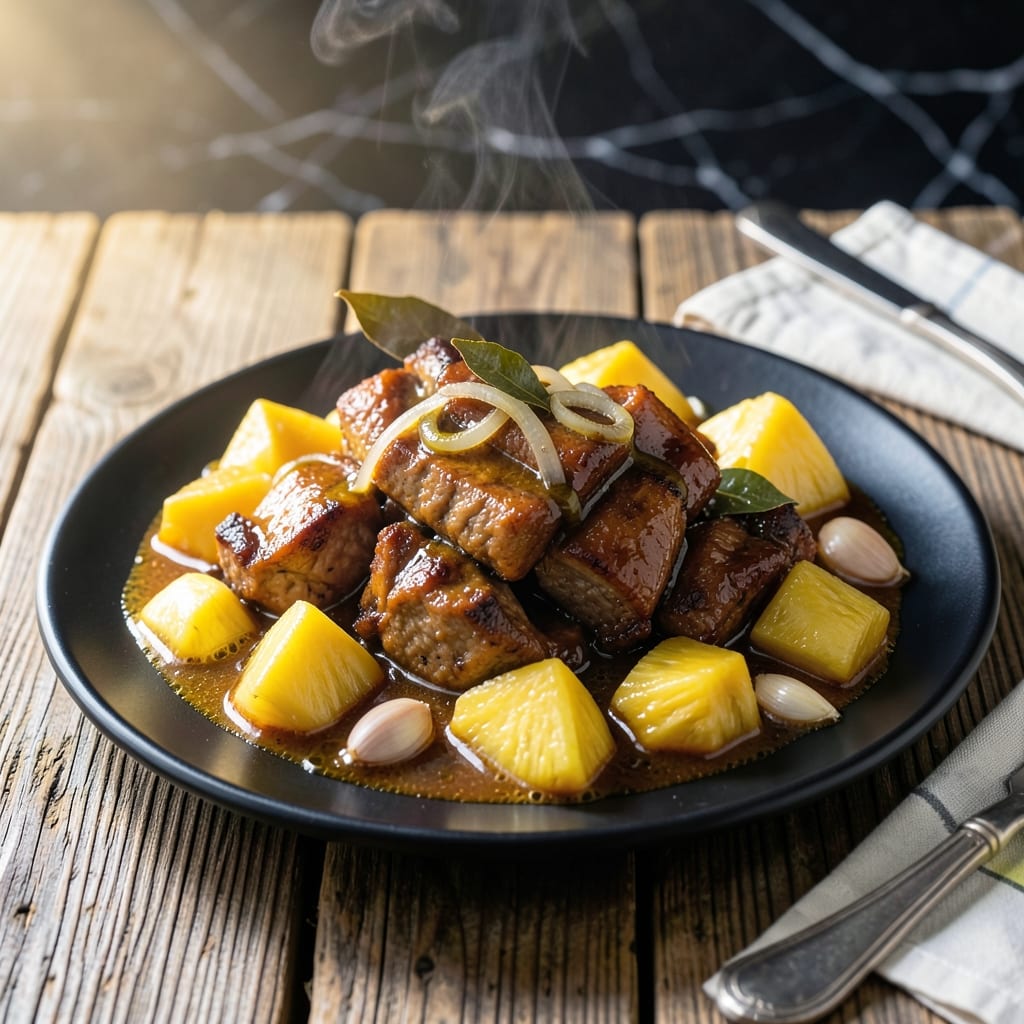
This Filipino braise combines tender pork with tangy vinegar, rich soy sauce, and sweet pineapple for a perfect balance of flavors. The slow cooking process allows the meat to absorb the marinade, creating a dish that’s both deeply savory and subtly sweet.
Traditional adobo gets a modern twist with the addition of pineapple, which adds natural sweetness and a touch of acidity. The result is a sweet-savory sauce that clings beautifully to each piece of pork, making every bite irresistible.
I’ve tested this method repeatedly to ensure the pork emerges fall-apart tender while the sauce reduces to a glossy, flavorful finish. It’s a dish that feels authentic yet approachable for home cooks.
Serve it over steamed rice to soak up every last drop of the sauce. The aroma alone will draw everyone to the table.
Ingredients for Pork Adobo with Pineapple Recipe Panlasang Pinoy
Pantry staples meet fresh pineapple for a Filipino braise that’s all about balance.
| Ingredient | Amount | Notes |
|---|---|---|
| Pork Shoulder 🥩 | 2 lb | Cut into 2-inch chunks |
| Pineapple Chunks 🍍 | 2 cups | Fresh or canned in juice |
| Soy Sauce 🫙 | ¾ cup | Use regular or reduced-sodium |
| White Vinegar 🍶 | ½ cup | Cane or white wine works too |
| Garlic Cloves 🧄 | 8 cloves | Minced or crushed |
| Bay Leaves 🍃 | 3 whole | Dried, for aroma |
| Black Peppercorns 🌶️ | 1 tsp | Whole or ground |
| Brown Sugar 🧈 | 2 tbsp | Light or dark variety |
| Onion 🧅 | 1 whole | Large, sliced thin |
| Pineapple Juice 🍹 | ½ cup | From canned pineapple or fresh |
| Cornstarch 🌾 | 1 tbsp | For thickening sauce |
| Water 💧 | ½ cup | To adjust sauce consistency |
| Vegetable Oil 🫒 | 2 tbsp | For browning pork |
The pork is key here—pork shoulder or butt gives you that fall-apart texture. Costco or Sam’s Club have great pre-cut chunks, but ask your butcher for a well-marbled piece if you’re buying whole. Fresh pineapple is ideal (look for vibrant green crowns), but canned in juice works just fine for weeknight cooking. I always grab an extra can for the juice—saves hunting down fresh.
No pineapple juice? Orange juice with a splash of vinegar gets you close. Out of soy sauce? Coconut aminos work as a 1:1 swap (tastes slightly sweeter). Black peppercorns can be pre-ground, but whole ones toasted briefly add depth. The vinegar can be white or cane—apple cider vinegar works too, just expect a milder tang. Bay leaves are non-negotiable though—skip them and the sauce loses its soul.
This tastes even better the next day—3-4 days in the fridge, 3 months in the freezer. Pork freezes like a dream. The sauce thickens as it cools, so thin with a splash of water when reheating. Always serve over rice (the sauce soaks in beautifully).
Why You’ll Love This Recipe
- One Pot Wonder: I just toss pork shoulder, pineapple chunks, and the sauce in a pan—no fancy techniques, no stress.
- Sweet-Tangy Magic: The pineapple cuts through the soy-vinegar adobo, making every bite ridiculously good. Honestly, the garlic cloves take it over the top.
- Feeds a Crowd: I make a big batch on Sunday and it’s my lunch hero all week. (Yes, even on a Tuesday night)
- Budget Friendly: Pork shoulder is cheap, and the pineapple stretches it further. I’ll be real: it’s one of my most reliable weeknight dishes.
Step-by-Step Instructions for Pork Adobo With Pineapple
Here’s the method. Straightforward, tested, works every time.
Step 1: Sear and Brown the Pork Shoulder
Heat the 2 tbsp vegetable oil in a large pot or Dutch oven over medium-high heat. Add the 2 lb pork shoulder chunks in a single layer without crowding. Work in batches if needed to avoid steaming the meat.
Sear the pork for 3-4 minutes per side until deep golden brown on all surfaces. You’ll know it’s ready to turn when the pieces release easily from the pot. This browning step develops rich flavor and prevents the meat from looking pale in the finished dish.
Remove the pork to a plate and set aside. Don’t discard the browned bits in the pot—they’re packed with flavor.
Step 2: Sauté Aromatics and Build the Base
In the same pot, add the sliced 1 whole onion and cook for 2-3 minutes until softened and translucent. Add the 8 cloves garlic cloves and cook for 30 seconds until fragrant but not browned.
Pour in the 0.75 cup soy sauce, 0.5 cup white vinegar, 0.5 cup pineapple juice, 2 tbsp brown sugar, 3 whole bay leaves, and 1 tsp black peppercorns. Stir to combine and bring to a simmer.
This liquid mixture forms the signature adobo braising liquid. The vinegar will mellow as it cooks, balancing the sweetness of the pineapple and sugar.
Step 3: Braise the Pork Until Tender
Return the seared pork to the pot along with any accumulated juices. Add the 2 cups pineapple chunks. The liquid should cover about three-quarters of the pork—add a splash of water if needed.
Bring to a boil, then reduce heat to low. Cover and simmer for 1 hour to 1 hour 15 minutes, stirring occasionally, until the pork is fork-tender and the sauce has deepened in color.
You’ll notice the pork changes from pink to opaque and begins to pull apart slightly when prodded with a fork. This slow cooking process allows the flavors to meld beautifully.
Step 4: Thicken the Sauce and Finish
Remove the pork and pineapple chunks to a serving dish. Skim any excess fat from the sauce surface if desired. In a small bowl, whisk together the 1 tbsp cornstarch and 0.5 cup water until smooth.
Stir the cornstarch slurry into the simmering sauce. Cook for 2-3 minutes, stirring constantly, until the sauce thickens enough to coat the back of a spoon. Taste and adjust seasoning if needed.
Return the pork and pineapple to the pot and stir to coat in the glossy, thickened sauce. Let it sit for 5 minutes off heat to allow the flavors to marry before serving.
Pro Tips For Making Pork Adobo With Pineapple Recipe Panlasang Pinoy
- Sear the Pork First: I learned this the hard way—browning the pork shoulder in a hot pan before simmering adds depth to the adobo sauce that boiling alone can’t achieve. About 3-4 minutes per side in a little oil does the trick.
- Use Fresh Pineapple: Canned pineapple works in a pinch, but fresh chunks hold their texture better and add a brighter, more natural sweetness to balance the soy-vinegar tang.
- Don’t Rush the Simmer: After burning a batch by cranking up the heat, I now let it gently simmer for at least 40 minutes—this gives the pork time to absorb the flavors and the vinegar to mellow out.
- Add Vinegar Late: Sounds weird, but it works: add the white vinegar during the last 10 minutes of cooking instead of at the start. This prevents the pork from toughening up while still getting that classic adobo tang.
Troubleshooting Perfect Results
Sauce Too Thin
If your adobo sauce isn’t thickening after 2-3 minutes of simmering with cornstarch, create another slurry with 1 tsp cornstarch and 2 tbsp water. Stir this into the simmering sauce and cook for another 2 minutes. I’ve found that fresh pineapple releases more liquid than canned, requiring extra thickening. 💡
Pork Too Tough
When pork isn’t tender after 1 hour 15 minutes, it often needs more time. Continue simmering covered for another 30-45 minutes. Check liquid levels and add ½ cup water if needed. The pork should pull apart easily with a fork when done.
Sauce Too Salty
Balance an overly salty sauce by adding ½ cup pineapple juice or ¼ cup brown sugar. Simmer for 5 minutes to incorporate. The natural sweetness of pineapple helps counteract the saltiness. I learned this trick from my Portland farmers market friends.
Sauce Too Sweet
If the pineapple makes your sauce cloying, add 2 tbsp white vinegar or 1 tbsp soy sauce. Stir well and taste. The vinegar’s acidity will balance the sweetness beautifully. Remember, the flavors deepen as it cooks, so adjust gradually.
Burnt Garlic Bits
If your garlic browns too quickly when sautéing, lower the heat to medium and cook for just 20-30 seconds until fragrant. Burnt garlic adds bitterness. I always pull the pan off heat if I see the garlic starting to color too much. ⚡
Pineapple Overpowering
When pineapple flavor dominates, add 1 tbsp soy sauce and 1 tsp vinegar. Simmer for 10 minutes to let the flavors meld. The key is balance—neither the sweet nor savory should overpower the other in this dish.
Nutrition Facts
Frequently Asked Questions
Can I use chicken instead of pork?
Yes! Swap pork for 2 lb chicken thighs and reduce braising time to 30-40 minutes. Chicken cooks faster but absorbs the adobo flavors just as well.
What if I don’t have pineapple juice?
Substitute with ½ cup orange juice plus 1 tbsp vinegar for similar sweetness and acidity. The flavor will be slightly different but still delicious.
How do I know when the pork is done?
It should be fork-tender and pull apart easily after 1 hour 15 minutes. If still tough, simmer covered for another 30 minutes with a splash of water.
Can I make this in a slow cooker?
Brown pork first, then cook on low for 6-7 hours or high for 3-4 hours. Add pineapple in the last 30 minutes to prevent overcooking.

- Potato Chip Cookie Recipe With Pecans: Buttery Crunch Meets Nutty Richness - October 30, 2026
- Potato Patty Recipe No Egg: Crispy Edges Without the Binder - October 30, 2026
- Paula Deen’s Potato Chip Cookies Recipe: Salty-Sweet Crunch in Every Bite - October 30, 2026