
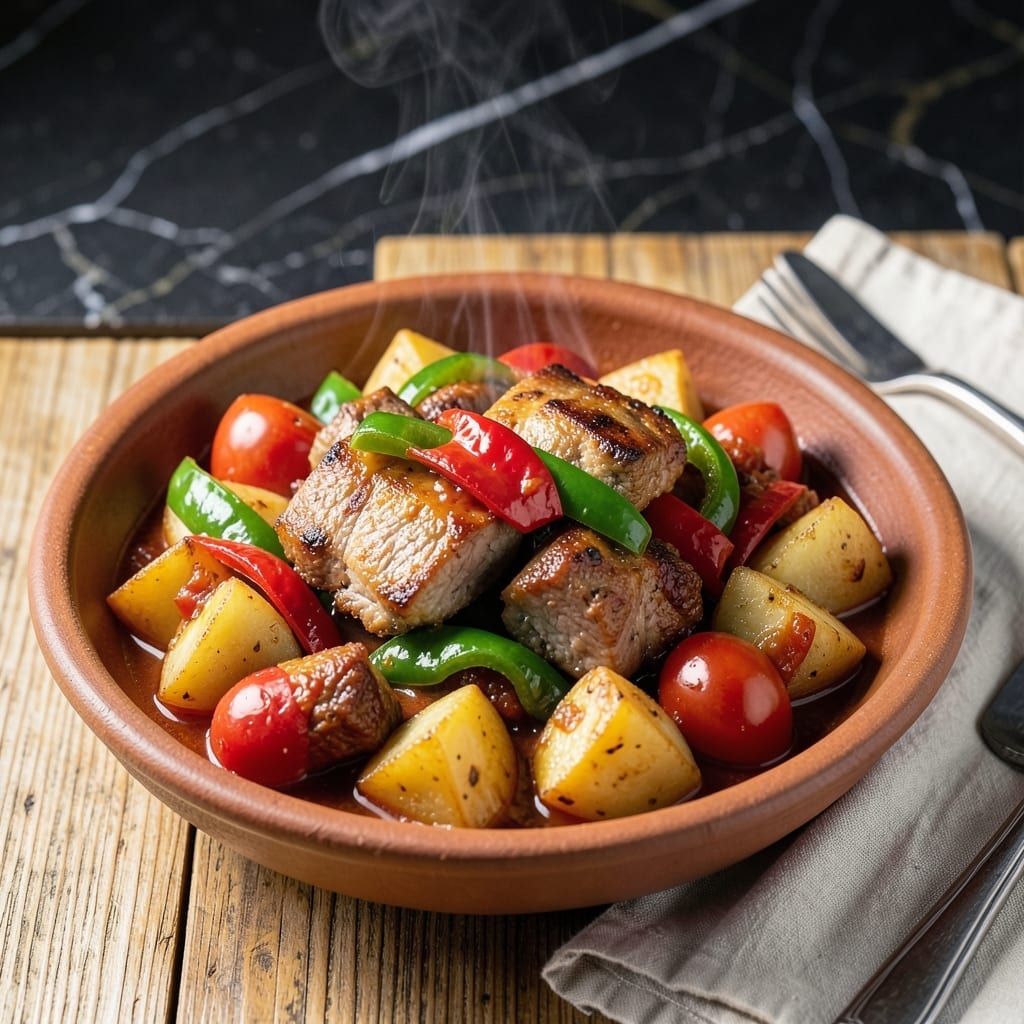
This Batangas-style pork afritada brings the tomato-rich flavors of my grandmother’s kitchen to life. Her handwritten notes guided me through the traditional method of slow-simmering pork with potatoes and bell peppers.
The dish shines through its simple yet precise technique—browning the pork first, then building layers of flavor with tomatoes and aromatics. It’s a one-pot meal that transforms humble ingredients into something deeply satisfying.
What emerges is tender pork in a thick, savory sauce, with potatoes that soak up every bit of flavor. The bell peppers add a subtle sweetness that balances the tangy tomato base perfectly.
This version stays true to Batangas roots while being approachable for any home cook. The process is straightforward, but the results taste like tradition on a plate.
Ingredients for Pork Afritada Recipe Batangas Style
Humble cuts and pantry staples transform into a rich, tomato-forward Batangas classic with layers of flavor.
| Ingredient | Amount | Notes |
|---|---|---|
| Pork Shoulder 🥩 | 1 ½ lb | Cut into 1.5-inch cubes, bone-in preferred |
| Russet Potatoes 🥔 | 1 lb | Peeled and cut into chunks |
| Red Bell Pepper 🌶️ | 1 whole | Seeds removed, sliced into strips |
| Green Bell Pepper 🌶️ | 1 whole | Seeds removed, sliced into strips |
| Roma Tomatoes 🍅 | 4 whole | Diced, seeds removed for thicker sauce |
| Tomato Sauce 🍅 | 2 cups | Use San Marzano for authenticity |
| Yellow Onion 🧅 | 1 whole | Finely chopped for base flavor |
| Garlic Cloves 🧄 | 6 cloves | Minced for aromatic depth |
| Fresh Ginger Root 🌿 | 1 tbsp | Peeled and minced |
| Fish Sauce 🐟 | 2 tbsp | Patis or Thai fish sauce preferred |
| Soy Sauce 🫒 | 2 tbsp | Use low-sodium for control |
| Bay Leaf 🍃 | 2 pieces | Dried, whole for simmering |
| Ground Black Pepper 🌶️ | 1 tsp | Freshly ground preferred |
| Diamond Crystal Kosher Salt 🧂 | 1 ½ tsp | Adjust to taste during cooking |
| Neutral Cooking Oil 🫒 | 3 tbsp | For browning pork and sautéing aromatics |
The pork shoulder is non-negotiable for authentic Batangas-style texture—bone-in pieces add depth to the sauce. Source from a trusted butcher or Asian markets for proper marbling. Roma tomatoes break down beautifully; San Marzano canned tomatoes work in winter. Fish sauce is critical—Red Boat or Thai Tiparos brands are widely available and balanced. Ginger should be fresh, never powdered, for its bright, sharp notes.
No pork shoulder? Pork belly at half the quantity yields a richer stew. Swap bell peppers for poblano peppers for a milder, earthier profile. Fish sauce can be replaced with vegetarian oyster sauce in a pinch (though authenticity suffers). For a deeper tomato flavor, add 1 tbsp tomato paste with the aromatics. Always use low-sodium soy sauce to control seasoning precisely.
This stew improves overnight as flavors meld. Refrigerate in an airtight container for up to 4 days or freeze for 3 months. Reheat gently to preserve texture—microwaving can make potatoes mushy. Leftovers make excellent filling for pandesal rolls the next day.
Why You’ll Love This Recipe
- One Pot Wonder: I love tossing the pork shoulder, potatoes, and bell peppers together—minimal dishes, maximum flavor.
- Rich and Tangy: The Roma tomatoes give it that perfect Batangas-style sweet-tart kick I crave.
- Feeds the Whole Crew: Honestly, this stretches perfectly for family dinners or meal prep with leftovers that taste even better the next day.
Step-by-Step Instructions for Pork Afritada Batangas Style
Master this traditional technique for a rich, tomato-based stew with tender pork and vegetables.
Step 1: Brown the Pork Shoulder
Heat 3 tbsp neutral cooking oil in a heavy pot over medium-high heat until shimmering. Add the 1.5 lb pork shoulder cubes in a single layer, working in batches if needed to avoid crowding. Sear undisturbed for 3-4 minutes until the undersides develop a deep golden-brown crust.
Flip and brown the remaining sides for another 3-4 minutes. This step builds the flavor foundation for your stew. Remove the pork and set aside—the meat will finish cooking later. Leave the rendered fat in the pot; it carries the pork’s rich flavor.
Step 2: Build the Aromatic Base
In the same pot, add the 1 whole yellow onion and sauté for 2-3 minutes until translucent and just beginning to caramelize at the edges. Add the 6 cloves garlic and 1 tbsp fresh ginger root, stirring constantly for 30 seconds until fragrant. Be careful not to let the garlic burn.
Stir in the 4 whole Roma tomatoes and cook for 4-5 minutes until they break down and release their juices. This creates the base for your sauce. The mixture should be thick and glossy, with the tomatoes nearly dissolved into the onions and aromatics.
Step 3: Simmer with Sauce and Seasonings
Return the browned pork to the pot. Add the 2 cups tomato sauce, 2 tbsp fish sauce, 2 tbsp soy sauce, 2 pieces bay leaf, 1 tsp ground black pepper, and 1.5 tsp Diamond Crystal kosher salt. Stir to combine, scraping up any browned bits from the bottom of the pot.
Bring to a boil, then reduce heat to maintain a gentle simmer. Partially cover and cook for 40 minutes, stirring occasionally. The pork should be tender and the sauce should deepen in color and thicken slightly as the flavors meld together.
Step 4: Add Vegetables and Finish
Add the 1 lb russet potatoes, 1 whole red bell pepper, and 1 whole green bell pepper to the pot. Stir to coat the vegetables in the sauce. Return to a simmer and cook uncovered for 20-25 minutes until the potatoes are tender when pierced with a knife and the bell peppers have softened but still retain some bite.
The stew is ready when the pork is fork-tender and the sauce has thickened enough to coat the back of a spoon. Taste and adjust the seasoning with additional salt if needed. Discard the bay leaves before serving this hearty Batangas-style afritada.
Pro Tips For Making Pork Afritada Recipe Batangas Style
- Brown the Pork Well: Sear the pork shoulder pieces in batches over medium-high heat until deeply browned—this builds the rich base flavor that defines Batangas-style afritada. I learned this the hard way when my first few attempts tasted flat.
- Parboil the Potatoes: Boil the russet potatoes for 3-4 minutes before adding to the stew, so they hold their shape and soak up the sauce without turning mushy. Sounds weird, but it works.
- Add Peppers Last: Stir in the red and green bell peppers only in the last 5 minutes of cooking to keep them crisp and vibrant. After overcooking them once, I finally figured out they turn to sad, limp strips otherwise.
- Use Ripe Tomatoes: Pick the ripest Roma tomatoes you can find and crush them by hand for the sauce—it gives a natural sweetness that canned tomatoes just can’t match. My grandmother swore by this, and she was right.
Essential Equipment for Great pork afritada recipe batangas style
Heavy Pot Essential
I always use my 5.5-quart Dutch oven for this dish—the heavy bottom prevents scorching during the long simmer. A Lodge enameled cast iron is my go-to; it’s affordable and retains heat beautifully. Avoid thin pots that can’t maintain steady temperatures for the 40-minute simmer. 🔥
Wooden Spoon for Stirring
A sturdy wooden spoon is perfect for scraping up those flavorful browned bits from the pot’s bottom. I keep a 12-inch bamboo spoon dedicated to stews—it won’t scratch your pot or melt like plastic. The long handle also keeps your hands safe from splatters.
Sharp Chef’s Knife
You’ll need a sharp 8-inch chef’s knife for prepping the pork, potatoes, and peppers. I swear by my Victorinox Fibrox—it stays sharp through 1.5 lb pork shoulder and veggies. A dull knife makes this prep dangerous and slow.
Cutting Board
A large plastic or wooden cutting board gives you space to work efficiently. I prefer bamboo for its gentle surface and sustainability. Make sure it’s big enough to handle the pork cubes and all the vegetables without crowding.
Measuring Tools
Accurate measurements matter for the sauce balance. I use stainless steel measuring spoons for the fish sauce, soy sauce, and spices. For the 3 tbsp oil, a small glass measuring cup works perfectly. Grandma measured by feel, but I’ve learned precision matters. 💡
Tongs for Meat
A good pair of locking tongs helps flip pork cubes while browning without piercing them. I use 12-inch stainless steel tongs—long enough to keep my hands away from the heat. They’re also great for retrieving bay leaves later.
Nutrition Facts
Frequently Asked Questions
Can I use pork belly instead of shoulder?
Yes, but reduce the amount by half since pork belly is richer. It will create a more decadent stew with deeper flavor. Keep the cooking time the same for tender results.
Why brown the pork first?
Browning creates a flavor foundation through the Maillard reaction. It adds depth and complexity to the final dish. Skipping this step results in a bland stew.
How do I fix a sauce that’s too thin?
Simmer uncovered for an additional 10-15 minutes to reduce and thicken. Mashing a few potato chunks against the pot’s side also helps naturally thicken the sauce.
Can I make this ahead of time?
The flavors deepen overnight. Store in an airtight container for up to 4 days in the fridge or freeze for 3 months. Reheat gently to preserve texture.

- Potato Chip Cookie Recipe With Pecans: Buttery Crunch Meets Nutty Richness - October 30, 2026
- Potato Patty Recipe No Egg: Crispy Edges Without the Binder - October 30, 2026
- Paula Deen’s Potato Chip Cookies Recipe: Salty-Sweet Crunch in Every Bite - October 30, 2026