
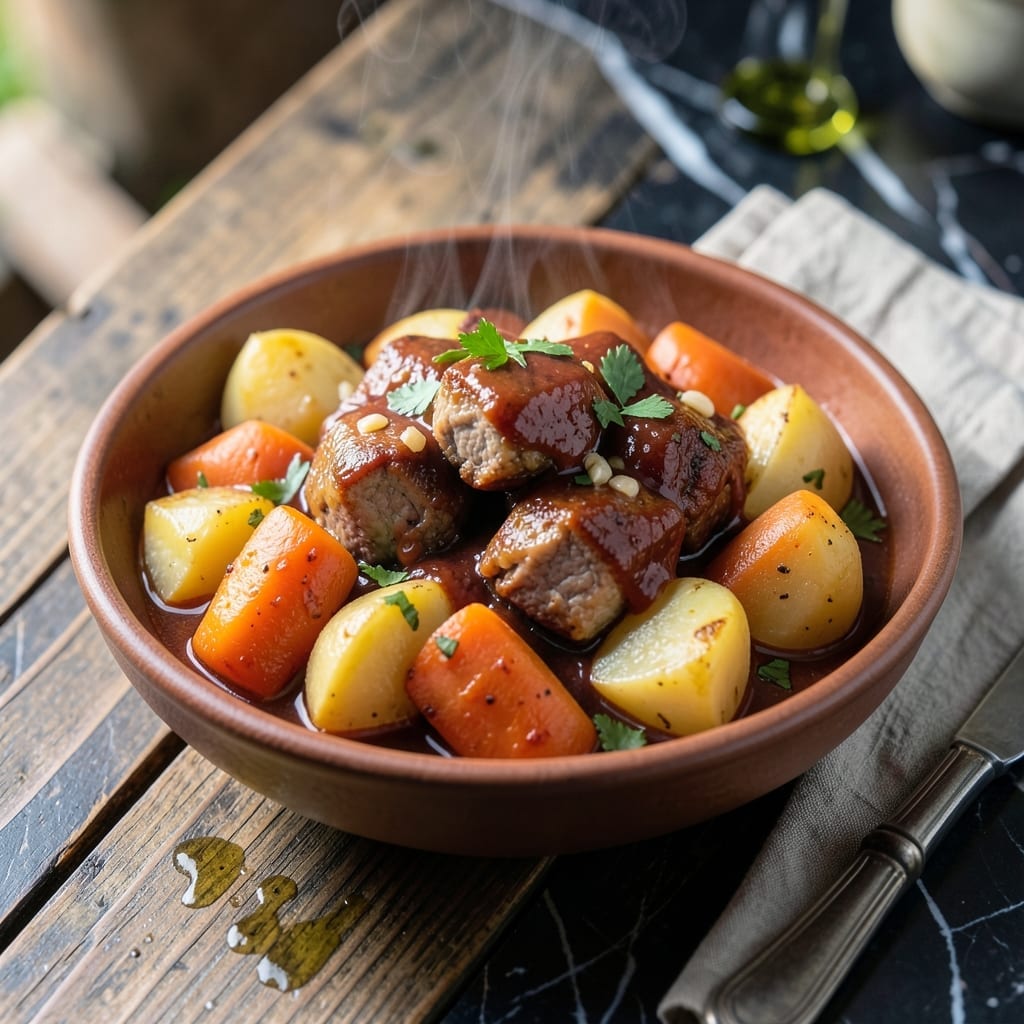
This Filipino stew brings comfort in every bite, with tender pork, soft potatoes, and sweet carrots in a rich tomato sauce. I’ve tested this method in my tiny Boston kitchen to ensure consistent results every time.
The dish starts with marinated pork, allowing the flavors to develop deeply before slow cooking. A blend of soy sauce, garlic, and bay leaves creates the authentic Tagalog taste that defines this beloved family meal.
What you’ll get is a hearty, flavorful stew where the sauce thickens naturally, coating every ingredient. The vegetables soak up the savory broth, making each mouthful satisfying and balanced.
Serve it over steamed rice for a meal that feels like home, no matter where you are. Here’s how to make it right.
Ingredients for Pork Afritada Recipe Tagalog
Tender pork, soft potatoes, and sweet carrots come together in this hearty stew.
| Ingredient | Amount | Notes |
|---|---|---|
| Pork Shoulder 🥩 | 1 ½ lb | Cut into 1-inch cubes |
| Potatoes 🥔 | 4 whole | Peeled and quartered |
| Carrots 🥕 | 3 whole | Peeled and sliced into rounds |
| Tomato Sauce 🍅 | 2 cups | Canned or fresh |
| Soy Sauce 🫙 | ¼ cup | Low-sodium preferred |
| Garlic Cloves 🧄 | 6 cloves | Minced finely |
| Onion 🧅 | 1 whole | Chopped into medium pieces |
| Bay Leaves 🌿 | 2 pieces | Dried or fresh |
| Green Bell Pepper 🌶️ | 1 whole | Sliced into strips |
| Water 💧 | 1 cup | For adjusting sauce consistency |
| Vegetable Oil 🫒 | 2 tbsp | For sautéing pork |
| Salt 🧂 | 1 tsp | Adjust to taste |
| Black Pepper 🌶️ | ½ tsp | Freshly ground preferred |
The pork shoulder is key here—look for well-marbled pieces at your butcher or Asian grocery stores (they often have it pre-cut). I’ve found Whole Foods and H Mart have great quality, but any supermarket with a decent meat section works. Peeled potatoes and carrots soak up the sauce best, and cutting them evenly means everything finishes at the same time (no one wants crunchy carrots in their stew).
No pork shoulder? Pork butt or country-style ribs work just as well. Out of tomato sauce? Crushed tomatoes blended smooth get the job done. Fresh garlic is ideal, but jarred minced garlic at half the amount saves time. Bay leaves can be skipped in a pinch, but they add that authentic depth—don’t substitute with ground bay leaf, it’s way too strong.
This stew tastes even better the next day. Keeps in the fridge for 4-5 days or freezes for 3 months. I like to make a double batch—leftovers disappear fast in my house (and the sauce thickens up nicely).
Why You’ll Love This Recipe
- One Pot Wonder: I just brown the pork shoulder, dump in the veggies and sauces, and let it simmer—no juggling multiple pans.
- Savory-Sweet Balance: The tomato sauce and soy sauce combo gives that tangy, umami-rich flavor that makes me go back for seconds.
- Feeds the Family: Honestly, it’s my go-to for Sunday lunch with rice, and there’s always enough for leftovers.
- Budget Keeper: Pork shoulder stays affordable, and stretching it with potatoes and carrots means I get a hearty meal without overspending.
Step-by-Step Instructions for Pork Afritada
Here’s how I make this comforting Filipino stew with the perfect balance of tangy and savory flavors.
Step 1: Sauté Aromatics and Brown the Pork
Heat the 2 tbsp vegetable oil in a large pot over medium heat. Add the 1 whole onion and sauté for 2-3 minutes until it softens and turns translucent. This builds the flavor base for the stew.
Push the onion to one side and add the 1.5 lb pork shoulder cubes. Brown them on all sides for 5-7 minutes until they develop a light golden crust. Stir in the 6 cloves garlic cloves and cook for 30 seconds until fragrant—be careful not to burn the garlic, as it can turn bitter quickly.
Step 2: Build the Flavorful Sauce
Pour in the 0.25 cup soy sauce and 2 cups tomato sauce, stirring to coat the pork evenly. Add the 2 pieces bay leaves, 1 tsp salt, and 0.5 tsp black pepper. Bring the mixture to a gentle simmer.
Let it cook uncovered for 10 minutes to allow the flavors to meld and the sauce to slightly thicken. You’ll notice the pork starting to release its juices, which deepens the richness of the sauce.
Step 3: Add Vegetables and Simmer
Add the 4 whole potatoes, 3 whole carrots, and 1 cup water to the pot. Stir well to combine and bring back to a simmer. Cover and cook for 20-25 minutes until the potatoes and carrots are tender when pierced with a fork.
This step transforms the dish into a hearty stew. Check occasionally and stir gently to prevent the potatoes from sticking to the bottom of the pot.
Step 4: Finish with Green Bell Pepper
Stir in the 1 whole green bell pepper strips and cook for an additional 5 minutes until they soften but still retain a slight crispness. The bell pepper adds a fresh, slightly sweet contrast to the rich sauce.
Taste and adjust the seasoning with more salt or black pepper if needed. Remove the bay leaves before serving.
Pro Tips For Making Pork Afritada Recipe Tagalog
- Brown the Pork First: Sear the pork shoulder pieces in oil until golden before adding liquids—this builds a deep, meaty flavor that tomato sauce alone can’t provide. I learned this the hard way after making bland afritada for years.
- Cut Potatoes Evenly: Slice potatoes into 1-inch chunks so they cook through at the same time as the carrots. Uneven pieces mean some turn mushy while others stay hard.
- Skip Overcrowding the Pot: Cook the pork in batches if needed—crowding the pan steams the meat instead of browning it, and your sauce will taste watery instead of rich.
- Add Soy Sauce Late: Stir in the soy sauce only after the pork has browned and the veggies have softened. Adding it too early can make the meat tough and the sauce overly salty.
Storing and Reheating pork afritada recipe tagalog
Refrigerator Storage
Let your stew cool completely at room temperature for no more than 2 hours before transferring. I use glass containers with tight lids—they’re easy to stack and let me see what’s inside. Store in the fridge for up to 4-5 days; the flavors deepen overnight. ❄️
Freezer Storage
This stew freezes beautifully for up to 3 months without losing texture. Portion into quart-sized freezer bags, lay flat to save space, and squeeze out excess air to prevent freezer burn. Label with the date so you don’t forget what’s inside.
Stovetop Reheating
My preferred method: warm over medium-low heat in a saucepan with a splash of water or broth. Stir occasionally for 10-15 minutes until bubbling. If the sauce thickens too much, add ¼ cup water to loosen it. 🔥
Microwave Reheating
For quick meals, microwave individual portions covered with a damp paper towel. Use 70% power for 2-3 minutes, stir, then heat in 30-second bursts until steaming. This prevents the potatoes from turning mushy.
Nutrition Facts
Frequently Asked Questions
Can I use chicken instead of pork?
Yes, chicken thighs work well and cook faster. Reduce simmering time to 15-20 minutes to prevent the meat from drying out. The flavor profile will be lighter but still delicious.
Why did my sauce turn out watery?
This usually happens if the lid is kept on too long. Simmer uncovered for the last 10 minutes to let excess liquid evaporate. For faster thickening, mash a few potato pieces against the pot.
How do I adjust the sourness?
Add 1 tbsp calamansi juice or vinegar at the end for tang. If it’s too sour, balance with 1 tsp sugar or more tomato sauce. Taste as you go!
Can I make this in a slow cooker?
Brown the pork first, then transfer everything to the slow cooker. Cook on low for 6-7 hours or high for 3-4 hours for tender results.

- Potato Chip Cookie Recipe With Pecans: Buttery Crunch Meets Nutty Richness - October 30, 2026
- Potato Patty Recipe No Egg: Crispy Edges Without the Binder - October 30, 2026
- Paula Deen’s Potato Chip Cookies Recipe: Salty-Sweet Crunch in Every Bite - October 30, 2026