
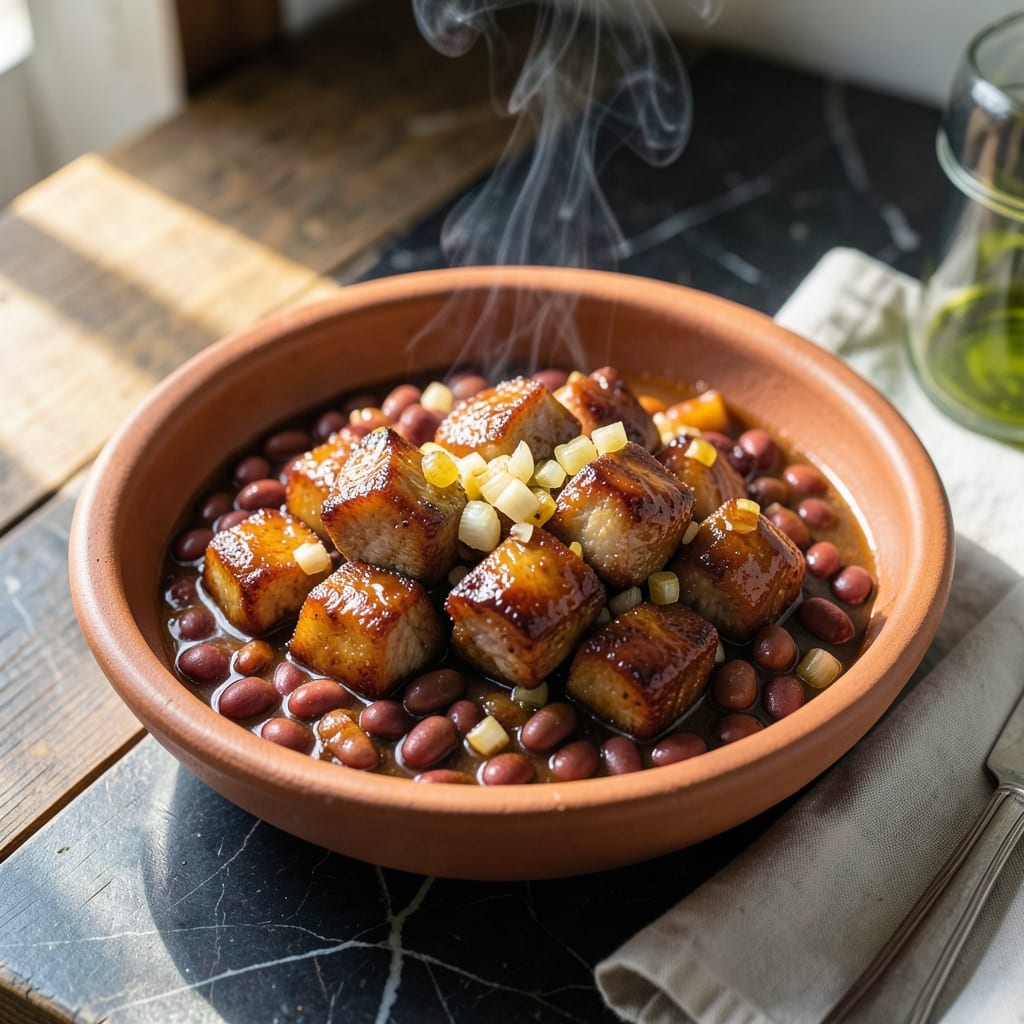
This Filipino-style pork and beans recipe transforms a humble canned staple into something extraordinary. The adobo twist brings a perfect balance of sweet, savory, and tangy flavors that define authentic Filipino cuisine.
I’ve refined this method to ensure the pork stays tender while the beans absorb all the rich, garlicky sauce. A touch of vinegar at the end brightens every bite, cutting through the richness without overpowering it.
The result is a dish that’s hearty enough to stand alone but pairs beautifully with steamed rice. It’s comfort food with depth, where every spoonful delivers layers of flavor.
Simple ingredients come together in under an hour for a dish that tastes like it simmered all day.
Ingredients for Pork and Beans Recipe Filipino Style
Transform canned beans into something extraordinary with these pantry staples and fresh aromatics.
| Ingredient | Amount | Notes |
|---|---|---|
| Pork Belly 🥓 | 1 lb | Diced into 1-inch cubes |
| Canned Pork and Beans 🫘 | 2 cans | 15 oz each, undrained |
| Soy Sauce 🫒 | ½ cup | Use low-sodium for balance |
| White Vinegar 🧃 | ¼ cup | Cane or distilled works |
| Brown Sugar 🍚 | 3 tbsp | Light or dark preferred |
| Garlic Cloves 🧄 | 6 cloves | Minced for maximum flavor |
| Yellow Onion 🧅 | 1 whole | Medium, finely chopped |
| Bay Leaves 🍃 | 2 pieces | Dried, whole leaves |
| Black Peppercorns 🌶️ | 1 tsp | Freshly cracked preferred |
| Ground Black Pepper 🧂 | ½ tsp | For additional seasoning |
| Vegetable Oil 🛢️ | 2 tbsp | For sautéing aromatics |
| Water 💧 | ½ cup | To adjust sauce consistency |
| Green Onions 🌱 | 3 pieces | Thinly sliced for garnish |
The pork belly is non-negotiable for authentic texture—look for well-marbled cuts at Asian markets or the meat counter. Van Camp’s or B&G are reliable brands for the canned beans. Don’t skip the bay leaves; they’re subtle but essential for that signature adobo depth. I always grab fresh garlic (the good stuff, not the pre-minced kind) and a sweet onion for the base.
No pork belly? Pork shoulder at half the amount works but won’t be as rich. Out of brown sugar? Coconut sugar or white sugar in a pinch. The vinegar is key—apple cider vinegar adds fruitiness if you’re out of white. For a tangier kick, double the vinegar and reduce the sugar slightly. San Marzano tomatoes can be diced and added for extra depth.
This tastes even better the next day once flavors meld. Keeps 4-5 days refrigerated or 3 months frozen. Reheat gently to preserve the pork’s tenderness (don’t boil). Garnish with green onions just before serving for freshness.
Why You’ll Love This Recipe
- One Pan Meal: I just dump everything in—pork belly, canned beans, soy sauce, vinegar, and sugar—then let it simmer. No fuss, no complicated steps.
- Sweet-Savory Balance: That mix of brown sugar’s caramel notes with tangy vinegar and salty soy? It’s the reason I make this weekly.
- Feeds a Hungry Crowd: Between us, this stretches further than you’d think—great for potlucks or when the kids bring friends over.
- Leftovers Taste Better: Honestly, the flavors deepen overnight. I’ve caught my husband sneaking cold spoonfuls straight from the fridge.
Step-by-Step Instructions for Pork and Beans Filipino Style
This method transforms simple ingredients into a rich, tangy-sweet dish with minimal effort.
Step 1: Brown the Pork Belly
Heat the 2 tablespoons vegetable oil in a large pot over medium-high heat. When the oil shimmers, add the diced 1 lb pork belly and cook undisturbed for 5 minutes to develop a golden crust on one side.
Stir occasionally and continue cooking for another 5-7 minutes until all pieces are evenly browned on all sides. This step builds the foundation of flavor for the dish, so don’t rush it. The pork should release easily from the pot when properly browned.
Step 2: Sauté Aromatics and Build the Base
Add the finely chopped 1 whole yellow onion to the pot with the browned pork. Cook for 3 minutes until the onion softens and becomes translucent, stirring frequently to prevent burning.
Stir in the minced 6 cloves garlic cloves and cook for 30 seconds until fragrant. Immediately add the 0.5 cup soy sauce, 0.25 cup white vinegar, 3 tbsp brown sugar, 2 pieces bay leaves, and 1 tsp black peppercorns. Bring to a gentle simmer.
Step 3: Simmer the Pork in the Adobo Sauce
Pour in the 0.5 cup water and add the 0.5 tsp ground black pepper. Stir to combine all ingredients. Reduce heat to medium-low, cover the pot, and let it simmer for 45-50 minutes.
The pork is ready when it becomes fork-tender and the sauce has thickened slightly. Stir occasionally during cooking to prevent sticking. The sauce should coat the back of a spoon but still have a pourable consistency.
Step 4: Incorporate the Canned Pork and Beans
Uncover the pot and add the 2 cans canned pork and beans with their liquid. Stir gently to combine with the adobo sauce and pork. Simmer uncovered for 10-12 minutes to allow the beans to absorb the flavors.
Taste and adjust the seasoning if needed, though the soy sauce and vinegar should provide the right balance. The beans should be heated through and the sauce should have a glossy, slightly thickened appearance.
Step 5: Finish and Garnish
Remove the pot from heat and discard the bay leaves. Let the dish rest for 5 minutes to allow the flavors to meld together. The pork should be tender enough to cut with a spoon, and the beans should be thoroughly coated in the rich, tangy-sweet sauce.
Transfer to a serving dish and garnish with the thinly sliced 3 pieces green onions. Serve hot with steamed rice to soak up the delicious sauce. The final dish should have a perfect balance of sweet, salty, and tangy flavors in every bite.
Pro Tips For Making Pork And Beans Recipe Filipino Style
- Parboil the Belly: I learned this the hard way—boiling the pork belly for 5-7 minutes first removes excess fat and keeps your sauce from turning greasy.
- Drain and Rinse Beans: Skip the canned juice; it’s starchy and watery. Draining and rinsing the beans gives you a cleaner, richer flavor in the final dish.
- Balance the Vinegar: After burning a batch by adding vinegar too early, I now wait until the pork is tender before pouring it in—prevents that harsh, bitter aftertaste.
- Simmer, Don’t Boil: Sounds weird, but it works: keeping the heat low after adding the beans stops them from turning mushy while the pork finishes cooking.
Perfect Pairings for This pork and beans recipe filipino style
Steamed Rice Partner
This dish absolutely shines with jasmine or long-grain white rice—the fluffy texture soaks up that rich adobo sauce perfectly. I always cook 1.5 cups rice for every 4 servings to ensure everyone gets extra sauce. The contrast between the tender pork and soft rice is what makes this meal so satisfying. 💛
Fresh Salad Contrast
A crisp green mango salad with cucumber and red onion adds a refreshing crunch that cuts through the richness. Toss 2 cups shredded mango with 1 tbsp lime juice and a pinch of salt for a bright, tangy side. Alternatively, a simple tomato and cucumber salad works beautifully.
Pickled Vegetables
Filipino atchara (pickled green papaya) is the traditional choice—the sweet-tangy flavor mirrors the adobo profile. If you can’t find it, quick-pickled radishes or carrots work great. Just slice thin and soak in ½ cup vinegar with 1 tbsp sugar for 30 minutes before serving.
Beverage Pairings
An ice-cold San Miguel beer is the classic pairing—its crispness cleanses your palate between each flavorful bite. For non-alcoholic options, calamansi juice or sago’t gulaman (a Filipino iced drink) complements the sweet-savory notes perfectly. 🍺
Nutrition Facts
Frequently Asked Questions
Can I use a different cut of pork?
Yes, but pork belly gives the best results. Pork shoulder works too but use ½ lb and extend simmering to 1 hour for tenderness. Avoid lean cuts like tenderloin as they dry out.
Why add vinegar at the end?
The vinegar brightens the rich adobo sauce. Adding it last preserves its sharp tang, balancing the sweetness without making the dish sour. It’s a signature Filipino technique.
How do I fix overly salty sauce?
Stir in 1 tbsp brown sugar or a splash of water to dilute. Simmer for 5 minutes to meld flavors. Never add more vinegar—it won’t fix saltiness.
Can I make this ahead?
The flavors deepen overnight. Store in an airtight container for up to 5 days or freeze for 3 months. Reheat gently on the stove.

- Potato Chip Cookie Recipe With Pecans: Buttery Crunch Meets Nutty Richness - October 30, 2026
- Potato Patty Recipe No Egg: Crispy Edges Without the Binder - October 30, 2026
- Paula Deen’s Potato Chip Cookies Recipe: Salty-Sweet Crunch in Every Bite - October 30, 2026