
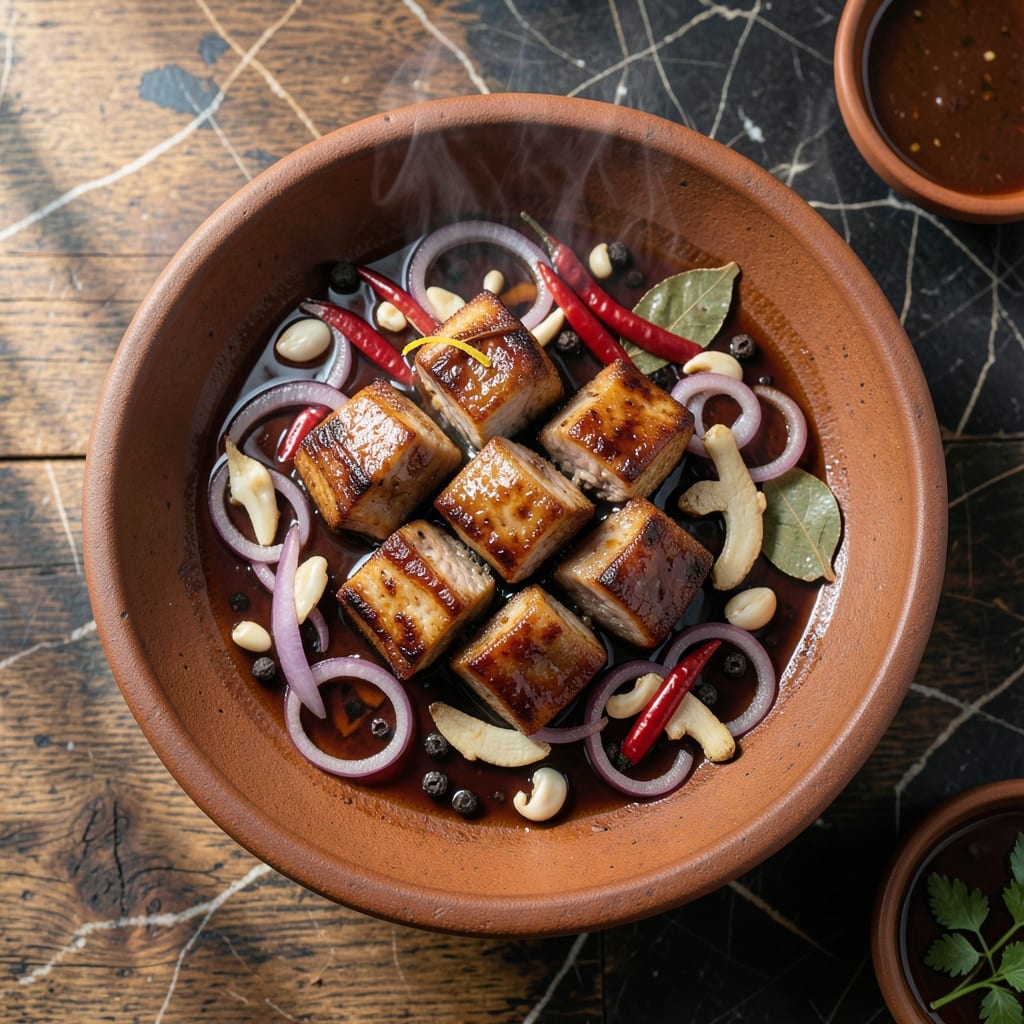
This Filipino vinegar-marinated pork delivers bold, tangy flavors with every bite. The traditional method transforms simple ingredients into a dish that’s both refreshing and deeply satisfying.
I developed this version after tasting authentic kilawin at a Portland food festival. The key is balancing sour vinegar with savory pork and fresh aromatics.
The pork becomes incredibly tender while the marinade creates a bright, zesty sauce. Each mouthful offers layers of flavor that define authentic Filipino cooking.
Serve this with steamed rice to soak up every drop of the tangy marinade. The preparation is straightforward but yields restaurant-quality results.
Ingredients for Pork Kilawin Recipe Panlasang Pinoy
Traditional Filipino ingredients come together for this tangy vinegar-marinated pork dish with bold, layered flavors.
| Ingredient | Amount | Notes |
|---|---|---|
| Pork Belly 🥓 | 1 ½ lb | Cut into 1-inch cubes, skin-on |
| White Vinegar 💧 | 1 cup | Cane vinegar preferred for authenticity |
| Soy Sauce 🫙 | ½ cup | Filipino brand like Silver Swan or Datu Puti |
| Garlic Cloves 🧄 | 8 cloves | Peeled and minced finely |
| Red Onion 🧅 | 1 whole | Thinly sliced into rings |
| Fresh Ginger 🌿 | 1 tbsp | Peeled and grated |
| Thai Chili Peppers 🌶️ | 2 pieces | Sliced, adjust for heat preference |
| Bay Leaves 🍃 | 3 pieces | Dried, for marinade |
| Black Peppercorns 🌶️ | 1 tsp | Lightly crushed for marinade |
| Brown Sugar 🫙 | 2 tbsp | Balances vinegar acidity |
| Salt 🧂 | 1 tsp | Adjust to taste before serving |
| Vegetable Oil 🫒 | 2 tbsp | For initial pork searing |
| Green Onions 🌱 | ½ cup | Chopped for garnish |
| Fresh Cilantro 🌿 | ¼ cup | Chopped, optional garnish |
The pork belly is non-negotiable for authentic texture—look for skin-on pieces with good fat marbling at Asian markets or well-stocked grocers. Cane vinegar is traditional, but white vinegar works in a pinch. For soy sauce, Filipino brands like Silver Swan or Datu Puti deliver the right balance of salt and umami. Freshness matters with the aromatics—ginger, garlic, and chilies should all be firm and fragrant.
No pork belly? Pork shoulder at 1:1 ratio is the closest substitute, though texture differs. Out of cane vinegar? Apple cider vinegar at equal amount works, but reduce sugar slightly. Dried bay leaves are fine, but fresh Thai chilies are worth seeking out at Asian markets. The brown sugar can be swapped for coconut sugar if you prefer a deeper caramel note.
The marinade develops flavor as it sits—24 hours in the fridge is ideal. Cooked dish keeps well for 3-4 days refrigerated. The vinegar preserves it naturally, but store in airtight containers. Best served at room temperature after marinating, with plenty of steamed rice to absorb the tangy sauce.
Why You’ll Love This Recipe
- One Pot Wonder: I toss everything in a single pan and let the vinegar and soy sauce work their magic.
- Tangy Garlic Punch: The sharp vinegar cuts through the rich pork belly while garlic and onion add layers of flavor.
- Feeds a Crowd: I make a big batch for family gatherings—everyone always comes back for seconds.
- Budget Stretcher: Pork belly is affordable, and the simple sauce means I’m not breaking the bank for a meal that tastes this good.
Step-by-Step Instructions for Pork Kilawin
Master the technique for perfectly balanced sweet, sour, and savory flavors in this traditional dish.
Step 1: Marinate the Pork Belly with Aromatics
In a large bowl, combine the 1.5 lb Pork Belly with 1 cup White Vinegar, 0.5 cup Soy Sauce, 8 cloves Garlic Cloves, 1 whole Red Onion, 1 tbsp Fresh Ginger, 2 pieces Thai Chili Peppers, 3 pieces Bay Leaves, 1 tsp Black Peppercorns, 2 tbsp Brown Sugar, and 1 tsp Salt.
Mix thoroughly, ensuring the pork is fully coated with the marinade. Cover and refrigerate for at least 2 hours, or overnight for deeper flavor penetration. This marinating process tenderizes the meat and allows the bold vinegar and soy flavors to meld.
Step 2: Sear the Pork for Rich Flavor
Heat 2 tbsp Vegetable Oil in a large skillet over medium-high heat. Remove the pork belly from the marinade (reserve the marinade) and pat it dry. Sear the pork in batches, turning occasionally, until all sides are golden brown—this should take about 8-10 minutes per batch.
Avoid overcrowding the pan to ensure even browning. The searing step creates a flavorful crust and enhances the overall depth of the dish. Transfer the seared pork to a plate and set aside.
Step 3: Simmer Until Tender
Pour the reserved marinade into the same skillet and bring to a boil. Reduce the heat to medium-low and return the seared pork to the pan. Cover and let it simmer for 40-45 minutes, stirring occasionally, until the pork is fork-tender and the sauce has thickened slightly.
The pork should be tender enough to pierce easily with a fork, and the sauce should cling to the meat. If the sauce reduces too quickly, add a splash of water to maintain the desired consistency.
Step 4: Garnish and Serve
Once the pork is fully cooked, transfer it to a serving dish. Sprinkle with 0.5 cup Green Onions and 0.25 cup Fresh Cilantro for a fresh, vibrant finish. The green onions add a mild crunch, while the cilantro provides a bright, citrusy note.
Serve the pork kilawin hot, with the sauce spooned over the top. This dish pairs wonderfully with steamed rice to soak up the tangy, savory marinade.
Pro Tips For Making Pork Kilawin Recipe Panlasang Pinoy
- Boil Pork First: Parboil the pork belly for 5-7 minutes to remove impurities—I learned this the hard way after my first batch had a funky aftertaste.
- Balance the Vinegar: Use equal parts white vinegar and soy sauce (about 1/4 cup each for 500g pork) to avoid that harsh, puckering sourness that can overwhelm the dish.
- Sear After Simmering: After the pork is tender, drain and sear it in the pan for 2-3 minutes to get those crispy edges that make kilawin so addictive.
- Rest Before Serving: Let the pork sit in its sauce for 10 minutes off the heat—my grandmother swore by this, and the flavors actually meld better.
Serving Suggestions for This Dish
Steamed Rice Essential
The tangy sauce demands steamed jasmine rice to soak up every drop. I use a 1:1.5 rice-to-water ratio in my rice cooker for perfect texture. The fluffy grains provide a neutral base that lets the kilawin flavors shine. 💛
Fresh Vegetable Pairings
A simple cucumber and tomato salad with 1 tbsp vinegar and 1 tsp salt cuts through the richness. Thinly slice 1 large cucumber and 2 medium tomatoes for a refreshing contrast. This is my go-to at Portland farmers markets.
Pickled Sides
Serve with atchara (Filipino pickled papaya) for crunch and tang. I buy mine jarred from New Seasons Market, but homemade is even better. The sweet-sour notes complement the pork beautifully.
Beverage Match
An ice-cold San Miguel beer or calamansi juice balances the bold flavors. The beer’s crispness cleanses your palate, while the citrus juice echoes the dish’s tang. I always keep both on hand for gatherings.
Garnish Generously
Don’t skimp on the 0.5 cup Green Onions and 0.25 cup Fresh Cilantro. These fresh herbs add color and brightness. I also add extra Thai Chili Peppers for those who love heat. 🌶️
Room Temperature Tip
Let the dish sit for 10-15 minutes after cooking. The flavors meld together, and the sauce thickens slightly. This small step makes a big difference in both taste and texture.
Nutrition Facts
Frequently Asked Questions
Can I substitute pork shoulder for pork belly?
Yes, use pork shoulder in a 1:1 ratio, but expect a leaner texture. The belly’s fat melts beautifully into the vinegar marinade, creating richness that shoulder can’t fully replicate.
Why does the pork need to marinate overnight?
The 24-hour marinade allows vinegar to fully penetrate and tenderize the meat while mellowing its harshness. Shorter marinating works but produces less complex flavor.
How do I prevent the sauce from turning bitter?
Balance is key—2 tbsp brown sugar offsets the vinegar’s acidity. Taste before serving and add a pinch more sugar if needed. Never boil the vinegar too vigorously.
Can I make this dish ahead of time?
The flavors deepen after 1-2 days refrigerated. Store in an airtight container and reheat gently to preserve the tangy sauce.

- Potato Chip Cookie Recipe With Pecans: Buttery Crunch Meets Nutty Richness - October 30, 2026
- Potato Patty Recipe No Egg: Crispy Edges Without the Binder - October 30, 2026
- Paula Deen’s Potato Chip Cookies Recipe: Salty-Sweet Crunch in Every Bite - October 30, 2026