
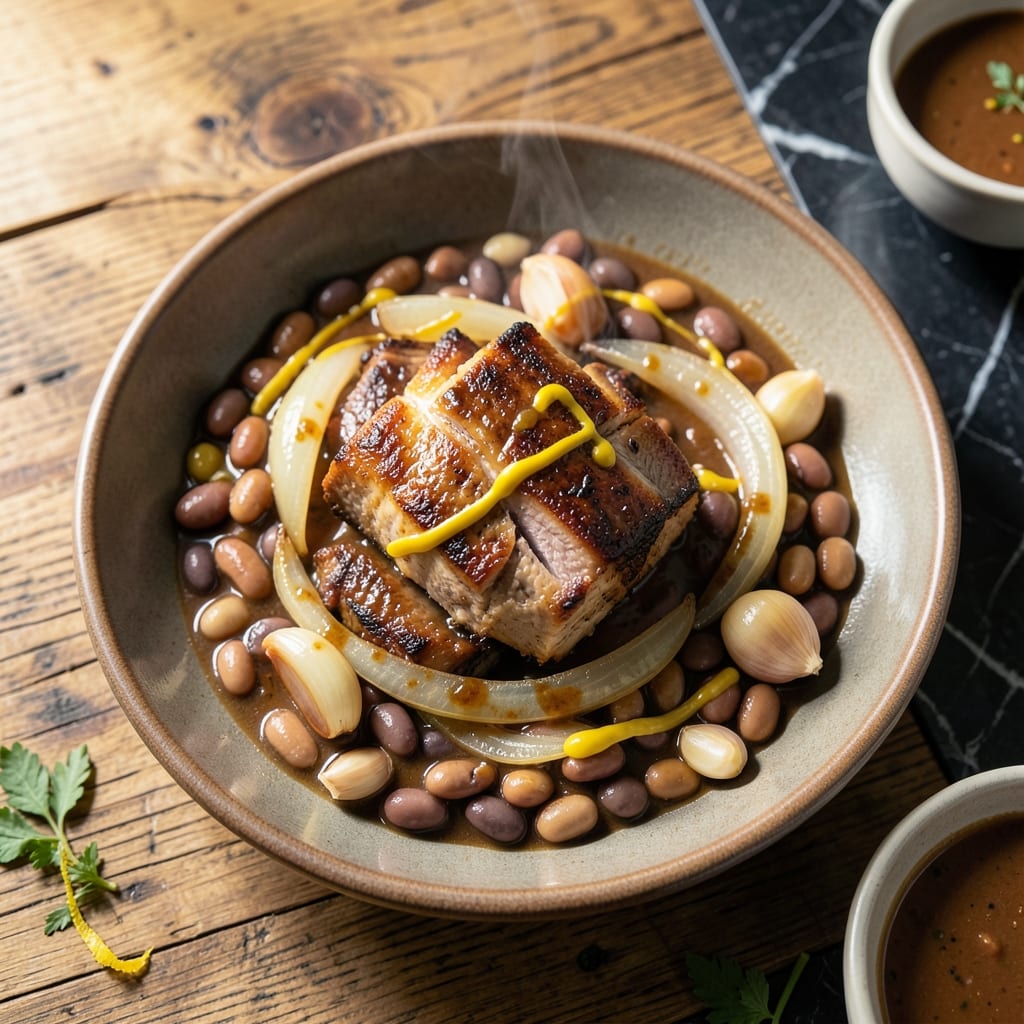
This stovetop version brings classic campfire flavor to your kitchen without the outdoor setup. I developed this method to capture that nostalgic taste using simple, pantry-friendly ingredients.
The secret lies in slowly simmering the beans with smoked pork, allowing the flavors to meld deeply. A touch of brown sugar and mustard balances the savory richness, creating a dish that’s both hearty and comforting.
What results is a one-pot meal with tender beans and fall-apart pork pieces in a thick, smoky sauce. The aroma alone will transport you to a cozy campfire evening.
Perfect for family dinners or potlucks, this recipe stays true to its traditional roots while being entirely stovetop-friendly.
Ingredients for Pork and Beans Recipe Stovetop
Pantry staples plus a few fresh items create this nostalgic one-pot meal.
| Ingredient | Amount | Notes |
|---|---|---|
| Dried Navy Beans 🌾 | 1 lb | Rinsed and picked over |
| Smoked Pork Shoulder 🥩 | 1 lb | Cut into 1-inch cubes |
| Yellow Onion 🧅 | 1 whole | Medium, diced |
| Garlic Cloves 🧄 | 4 cloves | Minced |
| Brown Sugar 🍚 | 2 tbsp | Light or dark |
| Yellow Mustard 🟡 | 2 tbsp | Classic prepared |
| Apple Cider Vinegar 🍏 | 2 tbsp | For acidity balance |
| Ketchup 🍅 | ½ cup | For sweetness and depth |
| Chicken Broth 🥘 | 2 cups | Low-sodium preferred |
| Smoked Paprika 🌶️ | 1 tsp | For authentic smoky flavor |
| Dried Thyme 🌿 | 1 tsp | Crushed for better release |
| Salt 🧂 | 1 tsp | Adjust to taste |
| Black Pepper 🌶️ | ½ tsp | Freshly ground |
| Olive Oil 🫒 | 2 tbsp | For sautéing aromatics |
The pork shoulder is non-negotiable here—look for well-marbled pieces at your butcher counter or Whole Foods meat section. Bone-in adds more flavor, but boneless works too (just trim excess fat). If you’re short on time, pre-cut pork for stew at Costco saves prep. The navy beans should be dried; canned will turn mushy. Check the package date—older beans take forever to soften.
No smoked pork? Bacon or ham hock work in a pinch (use half the amount and add extra broth). Swap navy beans for pinto or Great Northern—texture will vary slightly. Molasses instead of brown sugar deepens the flavor. For a quicker version, use canned beans (drained) but reduce simmer time to 20 minutes. The vinegar is key—don’t skip it, even if it seems odd.
Leftovers taste even better the next day. Stores in the fridge for 4-5 days or freezes for 3 months. Reheat gently on the stovetop with a splash of water (it thickens as it cools). Perfect for meal prep—portion into containers for easy lunches.
Why You’ll Love This Recipe
- One Pot Wonder: I love that this comes together in a single pot—just toss in the navy beans, pork, and aromatics, then let the stove do the work.
- Smoky Sweet Balance: That smoked pork shoulder with the brown sugar creates this deep, caramelized flavor that’s honestly addictive.
- Feeds a Crowd: Between us, this makes enough for a family dinner plus leftovers for lunch the next day.
- Budget Stretcher: Dried beans and a small piece of pork shoulder go a long way, so it’s my go-to when I need to feed everyone without breaking the bank.
Step-by-Step Instructions for Pork and Beans
This classic stovetop method delivers rich, smoky flavor with minimal effort.
Step 1: Soak and Prepare the Navy Beans
Place the 1 lb Dried Navy Beans in a large bowl and cover with water by 2 inches. Soak overnight or use the quick-soak method: Boil for 2 minutes, then remove from heat, cover, and let stand for 1 hour. Drain and rinse before using—this removes excess starch and prevents gas.
I always sort through the beans first to remove any small stones or debris. The quick-soak method works nearly as well as overnight soaking, but I find the overnight method yields slightly more tender beans. Either way, you’ll notice the beans plump up significantly during soaking.
Step 2: Sauté Aromatics and Brown the Pork
Heat the 2 tbsp Olive Oil in a large Dutch oven or heavy pot over medium heat. Add the diced Yellow Onion and cook for 5 minutes until softened and translucent. Stir in the minced 4 cloves Garlic Cloves and cook for 30 seconds until fragrant.
Add the 1 lb Smoked Pork Shoulder cubes and cook for 5-7 minutes, stirring occasionally, until the pork begins to brown on all sides. This step builds a deep flavor base—don’t rush it. The pork should develop a light crust, and the onions will start to caramelize slightly.
Step 3: Simmer the Beans with Seasonings
Add the soaked and drained Dried Navy Beans, 2 cups Chicken Broth, 2 tbsp Brown Sugar, 2 tbsp Yellow Mustard, 2 tbsp Apple Cider Vinegar, 0.5 cup Ketchup, 1 tsp Smoked Paprika, 1 tsp Dried Thyme, 1 tsp Salt, and 0.5 tsp Black Pepper to the pot. Stir well to combine.
Bring the mixture to a boil, then reduce the heat to low. Cover and let it simmer gently for 1.5 to 2 hours, stirring occasionally, until the beans are tender. Check the pot at the 1-hour mark and add a little water if the mixture seems too dry.
Step 4: Adjust and Finish the Dish
Once the beans are tender, taste and adjust the seasoning. If the sauce is too thick, stir in a splash of water or broth to reach your desired consistency. The beans should be creamy but still hold their shape, and the pork should be fork-tender.
Simmer uncovered for an additional 10-15 minutes to allow the flavors to meld together. The sauce will thicken slightly as it reduces. The final result should have a rich, slightly sweet and smoky flavor with a creamy texture that clings to the beans.
Pro Tips For Making Pork And Beans Recipe Stovetop
- Soak the Beans: I learned this the hard way—dried navy beans need an overnight soak in cold water, or they’ll stay tough no matter how long you simmer them. Drain and rinse before cooking to remove any starch.
- Brown the Pork: Sear the smoked pork shoulder in the pot first, about 3-4 minutes per side, to deepen the flavor before adding the beans and liquid.
- Skip the Salt Early: Resist the urge to salt the beans until they’re fully tender—adding salt too soon can make them stay firm, even after hours of cooking.
- Add Sugar Late: Stir in the brown sugar during the last 20 minutes of cooking so it caramelizes without burning or making the beans overly sweet.
Regional Styles of This pork and beans recipe stovetop
New England Tradition
In New England, this dish often includes salt pork instead of smoked shoulder, giving it a brinier depth. I love using 1 lb salt pork cut into small cubes, simmered first to remove excess salt before adding other ingredients. The beans become incredibly creamy with this method. 🌟
Southern Style
Southern versions typically use bacon or ham hocks for a richer, meatier flavor. I’ve had great results with ½ lb thick-cut bacon rendered first, then using the fat to sauté the onions. Add 1 tsp molasses for a deeper, old-fashioned taste.
Midwest Campfire
Midwestern campfire versions often include ground beef alongside the pork for extra heartiness. Brown ½ lb ground beef with the pork cubes, then add 1 diced green bell pepper for a pop of color and freshness. This is how my grandfather used to make it.
Texas Smokehouse
Texas-style leans into bold smoky flavors with chipotle peppers in adobo. Add 1-2 minced chipotles with the sauce ingredients for heat and complexity. I also like using smoked salt instead of regular salt to enhance the smokiness. 🔥
Appalachian Mountain
In Appalachia, they often use pinto beans instead of navy beans for a slightly meatier texture. The broth is typically thinner, almost soupy. I’ve found adding 1 diced potato during the last 30 minutes of cooking creates a heartier, more rustic dish.
Nutrition Facts
Frequently Asked Questions
Can I use canned beans to save time?
Yes, but reduce simmer time to 20 minutes as canned beans are already cooked. Drain and rinse them first to remove excess sodium. The texture will be softer than with dried beans.
What if my beans are still tough after 2 hours?
Older beans take longer to soften. Add 1 cup hot water and continue simmering for 30-45 minutes. Check water level periodically to prevent burning.
Can I make this in a slow cooker instead?
Brown pork first, then combine all ingredients in the slow cooker. Cook on low for 6-8 hours or high for 4-5 hours. The flavors develop beautifully this way.

- Potato Chip Cookie Recipe With Pecans: Buttery Crunch Meets Nutty Richness - October 30, 2026
- Potato Patty Recipe No Egg: Crispy Edges Without the Binder - October 30, 2026
- Paula Deen’s Potato Chip Cookies Recipe: Salty-Sweet Crunch in Every Bite - October 30, 2026