
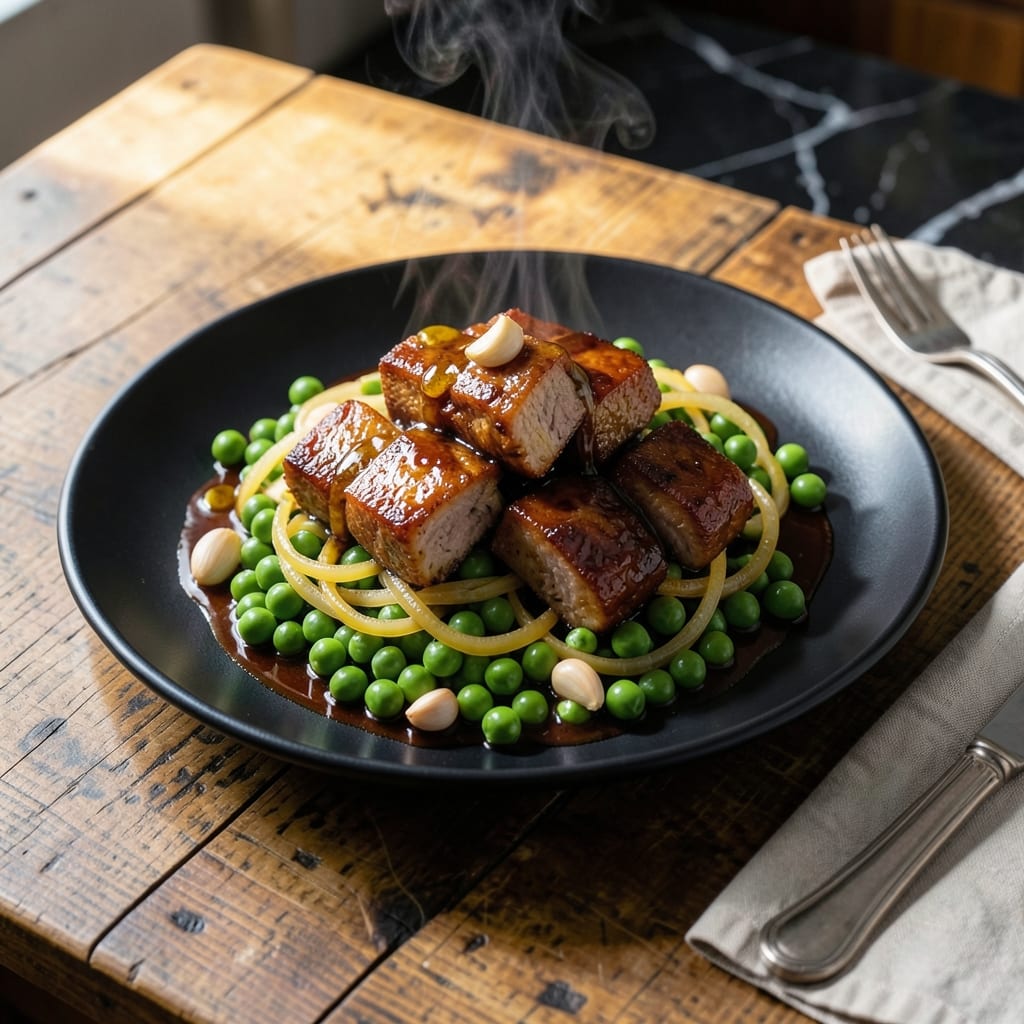
This Filipino adobo-style stew brings together tender pork and sweet peas in a perfectly balanced sauce. I developed this recipe after testing multiple variations to capture authentic flavors without complicated steps.
The dish simmers pork in a tangy-sweet sauce with peas added at the end, preserving their vibrant color and slight crunch. Traditional vinegar and soy sauce create depth, while a touch of sugar rounds out the flavors.
What emerges is a hearty, comforting stew with rich, caramelized pork pieces and bright green peas throughout. The sauce thickens naturally into a glossy consistency that coats every bite.
Serve over steamed rice to soak up every drop of the savory sauce. This version stays true to Filipino home cooking techniques.
Ingredients for Pork and Peas Recipe Filipino
Tender pork shoulder and bright peas create this authentic Filipino adobo-style dish.
| Ingredient | Amount | Notes |
|---|---|---|
| Pork Shoulder 🥩 | 1 ½ lb | Cut into 1-inch cubes, bone-in preferred |
| Cane Vinegar 💧 | ¾ cup | Filipino white vinegar preferred |
| Soy Sauce 🫒 | ½ cup | Filipino brand like Silver Swan |
| Brown Sugar 🍚 | 2 tbsp | Light or dark variety |
| Garlic Cloves 🧄 | 6 cloves | Minced finely |
| Yellow Onion 🧅 | 1 whole | Medium, thinly sliced |
| Bay Leaves 🍃 | 3 pieces | Dried, whole |
| Black Peppercorns 🌶️ | 1 tsp | Lightly crushed |
| Frozen Green Peas 🌱 | 1 ½ cups | Do not thaw before adding |
| Water 💧 | 1 cup | For adjusting sauce consistency |
| Vegetable Oil 🫒 | 2 tbsp | For searing pork |
| Salt 🧂 | 1 tsp | Adjust to taste |
The pork shoulder is non-negotiable for authentic texture—bone-in pieces yield the richest flavor and most tender results. Filipino markets or well-stocked Asian grocers carry the best cuts, often pre-cubed. For vinegar, Datu Puti or Silver Swan brands deliver the proper tang. Soy sauce should be Filipino-style (darker and slightly sweeter than Chinese varieties), available at Seafood City or online retailers.
No pork shoulder? Pork belly works but renders more fat—skim some off before serving. Out of Filipino vinegar? Apple cider vinegar at half the amount plus water gets you close. Fresh peas can substitute frozen, but add them earlier to soften. For soy sauce, low-sodium tamari works in a pinch, though the flavor profile differs slightly. The sugar can be omitted, but it balances the vinegar’s acidity beautifully.
Leftovers taste even better the next day as flavors meld. Stores 4-5 days refrigerated in an airtight container. Freezes beautifully for up to 3 months—portion into meal-sized containers for easy reheating. The sauce may thicken when chilled; thin with a splash of water when reheating.
Why You’ll Love This Recipe
- One Pot Wonder: I toss everything in a single pan—pork shoulder, garlic, and that sweet-tangy mix of cane vinegar and soy sauce. Cleanup’s a breeze.
- Sweet-Savory Magic: The brown sugar caramelizes with the vinegar, while the garlic cloves infuse every bite. Honestly, it’s the kind of flavor that lingers in the best way.
- Weeknight Hero: Between us, this dish works for lazy Tuesdays or when I’m prepping lunchboxes for the week. It reheats like a dream.
- Budget Stretcher: Pork shoulder is affordable, and a little goes a long way with the bold flavors. I’ll be real: it’s my go-to when I need to feed a crowd without breaking the bank.
Step-by-Step Instructions for Sweet and Savory Adobo-Style Stew
Master the technique for balancing tangy, sweet, and savory flavors in this classic Filipino preparation.
Step 1: Sear the Pork Shoulder for Depth of Flavor
Heat the 2 tbsp Vegetable Oil in a large, heavy-bottomed pot over medium-high heat until it shimmers. Add the 1.5 lb Pork Shoulder cubes in a single layer, working in batches if necessary to avoid crowding the pan.
Sear the pork undisturbed for 3-4 minutes per side until deep golden brown on all sides. This caramelization builds the foundation of flavor for the stew. Transfer the seared pork to a plate and set aside.
Step 2: Sauté Aromatics to Build the Base
In the same pot, reduce heat to medium and add the 1 whole Yellow Onion, thinly sliced, and the 6 cloves Garlic Cloves, minced. Sauté for 2-3 minutes until the onion softens and becomes translucent.
Add the 3 pieces Bay Leaves and 1 tsp Black Peppercorns, lightly crushed, stirring for 30 seconds until fragrant. This step ensures the aromatics release their essential oils, infusing the oil with their distinct flavors.
Step 3: Deglaze and Simmer to Tenderness
Pour in the 0.5 cup Soy Sauce and 0.75 cup Cane Vinegar, scraping the bottom of the pot to release the browned bits. Add the 2 tbsp Brown Sugar and 1 tsp Salt, stirring until the sugar dissolves.
Return the seared pork to the pot along with any accumulated juices. Pour in the 1 cup Water and bring to a boil. Reduce heat to low, cover, and simmer for 45-50 minutes until the pork is fork-tender.
Step 4: Add Peas and Finish the Sauce
Once the pork is tender, stir in the 1.5 cups Frozen Green Peas—do not thaw them first, as they’ll cook perfectly in the hot liquid. Simmer uncovered for 5-7 minutes until the peas are heated through and the sauce has thickened slightly.
Taste and adjust the seasoning if needed. The sauce should be a balance of tangy, sweet, and savory, coating the pork and peas evenly. Discard the bay leaves before serving.
Step 5: Rest and Serve for Optimal Flavor
Remove the pot from the heat and let the stew rest for 5 minutes to allow the flavors to meld. The pork will absorb some of the sauce, enhancing its richness.
Serve hot over steamed rice, ensuring each portion includes a generous amount of the sauce. The stew should have a glossy finish with tender pork and vibrant green peas throughout.
Pro Tips For Making Pork And Peas Recipe Filipino
- Sear the Pork First: Brown the pork shoulder pieces in batches over medium-high heat until deeply caramelized—this builds a rich base flavor that vinegar and soy sauce can’t replicate on their own. I learned this the hard way after my first few attempts tasted flat.
- Balance the Vinegar: Cane vinegar is strong, so start with 2 tablespoons, taste, then adjust. My grandmother swore by this, and she was right: too much early on can make the dish unpleasantly sharp.
- Don’t Rush the Simmer: Let the pork cook low and slow in the sauce for at least 45 minutes, or until it’s fork-tender. After burning three batches, I finally figured out that patience is what melts the fat into the sauce.
- Crush the Garlic: Smash the garlic cloves with the flat of your knife before mincing—it releases more oils and sweetness into the dish. Sounds weird, but it works, especially with the brown sugar in this recipe.
Essential Equipment for Perfect Results
Heavy-Duty Pot
A 5-6 quart Dutch oven or heavy-bottomed pot is essential for even heat distribution. I use my enamel-coated cast iron for this dish—it handles the long simmer beautifully without hot spots. Look for one with a tight-fitting lid to retain moisture during cooking. 🔥
Wooden Spoon
Wooden utensils won’t scratch your pot’s surface while stirring the stew. A long-handled wooden spoon lets me reach the bottom easily to deglaze those flavorful browned bits. Plus, wood doesn’t conduct heat like metal, so it’s safer for prolonged stirring.
Sharp Chef’s Knife
Cutting 1.5 lb Pork Shoulder into even 1-inch cubes requires a sharp blade. My 8-inch chef’s knife from a Boston kitchen store handles this task effortlessly. A dull knife crushes rather than cuts, which can make the meat tough.
Measuring Cups
Precise measurements matter for the sauce balance. I keep a set of nested measuring cups handy for the 0.75 cup Cane Vinegar and 0.5 cup Soy Sauce. Liquid measuring cups with spouts make pouring vinegar and soy sauce mess-free.
Cutting Board
A large, stable cutting board gives you space to prep all your ingredients. I prefer a bamboo board—it’s gentle on my knives and easy to clean. The grooves around the edges catch any juices from the Pork Shoulder as I cube it.
Tongs or Slotted Spoon
For removing the seared pork from the pot, locking tongs or a slotted spoon work perfectly. I find tongs give me better control when transferring the 1.5 lb Pork Shoulder cubes to the plate without losing any of the precious browned bits.
Nutrition Facts
Frequently Asked Questions
Can I use a different cut of pork?
Yes, pork belly works but renders more fat. Skim some off before serving for best results. Pork loin stays leaner but may need 5-10 minutes more simmering to reach tenderness.
Why add peas at the end?
Adding frozen peas last preserves their bright color and slight crunch. They cook perfectly in 5-7 minutes in the hot sauce without turning mushy.
Can I make this ahead?
Flavors deepen overnight. Store in an airtight container for 4-5 days refrigerated or freeze for up to 3 months.
What if my sauce is too thin?
Simmer uncovered for 5-10 extra minutes to reduce. If too thick, thin with 1/4 cup water. The sauce should coat the pork lightly.

- Potato Chip Cookie Recipe With Pecans: Buttery Crunch Meets Nutty Richness - October 30, 2026
- Potato Patty Recipe No Egg: Crispy Edges Without the Binder - October 30, 2026
- Paula Deen’s Potato Chip Cookies Recipe: Salty-Sweet Crunch in Every Bite - October 30, 2026