
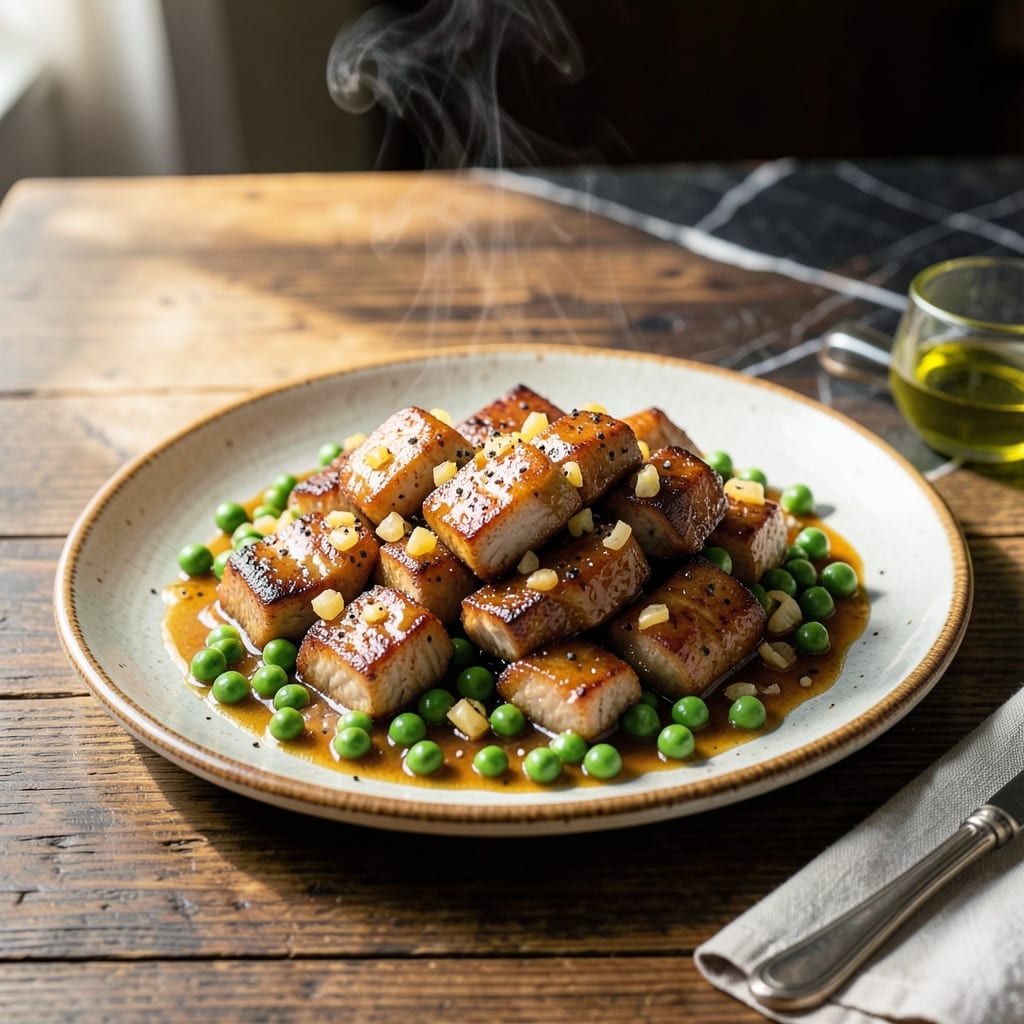
This dish brings together Filipino comfort and Hawaiian influences in one satisfying plate. I developed this version after studying my grandmother’s handwritten notes, which combined simple ingredients in surprising ways.
Tender pork simmers with sweet peas in a savory sauce, creating a balance of flavors that feels both familiar and exotic. The technique is straightforward, but the result is anything but ordinary.
What emerges is a dish that’s hearty yet light, with pork so tender it falls apart and peas that maintain their bright green color. The sauce ties everything together with a subtle sweetness that complements the savory meat.
Perfect for weeknight dinners or special occasions, this recipe proves that the best meals often come from the simplest traditions.
Ingredients for Pork and Peas Recipe Hawaii Filipino Style
Pork shoulder, peas, and pantry staples create this island-inspired comfort dish with surprising depth.
| Ingredient | Amount | Notes |
|---|---|---|
| Pork Shoulder 🥩 | 1 ½ lb | Cut into 1-inch cubes, boneless |
| Frozen Green Peas 🌱 | 2 cups | Do not thaw before cooking |
| Yellow Onion 🧅 | 1 whole | Medium-sized, finely diced |
| Garlic Cloves 🧄 | 5 cloves | Minced for depth of flavor |
| Low-Sodium Soy Sauce 🫒 | ½ cup | Filipino brand preferred for authenticity |
| Pineapple Juice 🍍 | 1 cup | Unsweetened, for natural sweetness |
| Apple Cider Vinegar 🍏 | 2 tbsp | Balances the sweet and savory |
| Brown Sugar 🍚 | 2 tbsp | Light or dark, packed |
| Tomato Paste 🍅 | 2 tbsp | For umami depth in sauce |
| Bay Leaf 🌿 | 2 whole | Dried, for aromatic infusion |
| Ground Black Pepper 🌶️ | 1 tsp | Freshly ground preferred |
| Vegetable Oil 🫒 | 2 tbsp | For searing pork cubes |
| Water 💧 | 1 ½ cups | To adjust sauce consistency |
| Kosher Salt 🧂 | 1 tsp | Adjust to taste at end |
The pork is critical here. Pork shoulder (also called pork butt) provides the right fat-to-meat ratio for fall-apart tenderness after simmering. Look for well-marbled pieces at Hawaiian or Filipino markets for authentic flavor. The frozen peas should be bright green and uniform—avoid bags with ice crystals, which indicate freezer burn. For the soy sauce, Silver Swan or Datu Puti brands offer the traditional Filipino taste profile.
Need to swap the pork? Chicken thighs work well but reduce cooking time by half. No pineapple juice? Orange juice with a teaspoon of vinegar mimics the sweet-tart balance. For a thicker sauce, mix 1 tbsp cornstarch with 1 tbsp water and stir in at the end. The bay leaf can be substituted with 1/2 tsp dried thyme, though the flavor will differ slightly.
This dish tastes even better the next day as flavors meld. Refrigerate in an airtight container for up to 4 days, or freeze for 3 months. Reheat gently on the stove with a splash of water to restore the sauce consistency. The pork will continue to absorb flavors as it rests.
Why You’ll Love This Recipe
- One Pot Wonder: I toss everything in a single pan—pork shoulder, peas, garlic, and soy sauce—and let it simmer. Honestly, cleanup is almost nonexistent.
- Umami Bomb: The soy sauce and garlic create this deep, savory richness that soaks into the pork and peas. I’ll be real: I’ve caught myself sneaking bites straight from the pan.
- Feeds a Crowd: Between us, this dish is my go-to for family gatherings. It stretches easily and tastes even better the next day.
- Budget Friendly: Pork shoulder is affordable, and frozen peas mean no waste. I save a ton compared to pricier cuts or fresh veggies that spoil fast.
Step-by-Step Instructions for Pork and Peas Hawaii Filipino Style
Master this traditional technique for a dish that balances sweet, savory, and tangy flavors perfectly.
Step 1: Sear the Pork Shoulder for Depth of Flavor
Heat the 2 tbsp vegetable oil in a large pot over medium-high heat until it shimmers. Add the 1.5 lb pork shoulder cubes in a single layer, taking care not to overcrowd the pan. I sear them in batches if needed to ensure proper browning.
Cook undisturbed for 4-5 minutes until the cubes develop a deep golden-brown crust on all sides. This caramelization creates the foundation for the rich sauce. The pork will continue cooking later, so it doesn’t need to be fully cooked through at this stage.
Using a slotted spoon, transfer the seared pork to a plate and set aside. Leave the rendered fat in the pot—this adds authentic flavor to the dish.
Step 2: Build the Aromatic Base for the Sauce
In the same pot, add the finely diced 1 whole yellow onion. Sauté over medium heat for 3-4 minutes until the pieces become translucent and lightly golden. This develops the sweetness that balances the dish’s acidity.
Add the 5 cloves garlic cloves and cook for 30 seconds until fragrant, stirring constantly to prevent burning. Then stir in the 2 tbsp tomato paste and cook for 1 minute, which deepens its umami contribution to the sauce.
This base layer is crucial—it forms the flavor foundation that makes this dish authentically Hawaiian-Filipino.
Step 3: Simmer the Pork in the Tangy-Sweet Sauce
Return the seared pork to the pot along with any accumulated juices. Add the 0.5 cup low-sodium soy sauce, 1 cup pineapple juice, 2 tbsp apple cider vinegar, 2 tbsp brown sugar, 2 whole bay leaf, and 1 tsp ground black pepper.
Pour in the 1.5 cups water and stir to combine all ingredients. Bring the mixture to a boil, then reduce the heat to low. Cover and simmer gently for 45-50 minutes until the pork becomes fork-tender.
Step 4: Finish with Peas and Adjust Seasoning
Once the pork is tender, stir in the 2 cups frozen green peas (do not thaw first—they’ll cook perfectly in the hot sauce). Simmer uncovered for 5-7 minutes until the peas are tender but still bright green.
The sauce should have thickened slightly to coat the pork and peas. Taste and adjust seasoning if needed with the 1 tsp kosher salt. The flavors should balance sweet from the pineapple, savory from the soy, and tangy from the vinegar.
Remove the bay leaves before serving. The dish is ready when the sauce has a glossy appearance and clings lightly to the pork and peas.
Pro Tips For Making Pork And Peas Recipe Hawaii Filipino Style
- Brown the Pork: Sear the pork shoulder in batches over medium-high heat until deeply browned—about 4-5 minutes per side. I learned this the hard way: skipping this step leaves the meat bland and the sauce watery.
- Thaw the Peas: Run frozen peas under cold water for 2 minutes to thaw before adding. Sounds weird, but it works: this prevents them from turning mushy and dull in the simmering sauce.
- Skip Overcrowding: Don’t dump all the pork in the pan at once. Overcrowding steams instead of sears, and you’ll end up with pale, sad-looking meat.
- Add Soy Late: Wait until the pork is nearly tender before adding low-sodium soy sauce—about 20 minutes into cooking. Adding it too early makes the meat tough and the sauce bitter.
Creative Variations of pork and peas recipe hawaii filipino style
Filipino Adobo Style
Swap the pineapple juice for ½ cup coconut vinegar and add 3 crushed black peppercorns. This transforms the dish into a traditional Filipino adobo, with the vinegar providing a sharper tang. I use Datu Puti vinegar for authenticity. 🌿
Hawaiian Luau Version
Add 1 cup diced pineapple and ½ cup coconut milk along with the peas. The pineapple chunks add texture while the coconut milk creates a creamier sauce. This variation feels like a tropical celebration in every bite.
Sweet and Sour Twist
Increase the brown sugar to ¼ cup and add ½ cup ketchup with the pineapple juice. The result is a sweeter, more vibrant dish that kids love. I sometimes add 1 sliced bell pepper for extra color and crunch.
Spicy Kick Option
Stir in 1 tbsp sriracha or 1 chopped siling labuyo (Filipino bird’s eye chili) when adding the peas. The heat cuts through the sweetness beautifully. My grandmother would add chili leaves for extra aroma. 🌶️
Vegetable-Packed
Add 1 cup diced carrots and 1 diced potato when simmering the pork. These vegetables soak up the sauce and make the dish heartier. I prefer Yukon Gold potatoes for their buttery texture.
Quick Weeknight Hack
Use 1 lb pre-cut pork stew meat to save prep time. The smaller pieces cook faster—reduce simmering time to 30 minutes. This version works perfectly for busy evenings when you need comfort food fast.
Nutrition Facts
Frequently Asked Questions
Can I use fresh peas instead of frozen?
Fresh peas work, but add them 10 minutes earlier since they need more time to soften. They may also release more starch, so adjust water as needed.
Why does the recipe call for pineapple juice?
Pineapple juice adds natural sweetness and acidity that balances the soy sauce. It’s a signature Hawaiian-Filipino flavor combo that tenderizes the pork too.
What if my sauce is too thin?
Simmer uncovered for 5-10 minutes to reduce. For quicker results, mix 1 tbsp cornstarch with 1 tbsp water and stir in.
Can I make this in a slow cooker?
Yes! Sear the pork first, then cook on low for 6-7 hours or high for 3-4 hours. Add peas in the last 30 minutes.

- Potato Candy Recipe 1933: Vintage Peanut Butter Roll Delight - October 30, 2026
- Potato Chip Cookie Recipe With Pecans: Buttery Crunch Meets Nutty Richness - October 30, 2026
- Potato Patty Recipe No Egg: Crispy Edges Without the Binder - October 30, 2026