
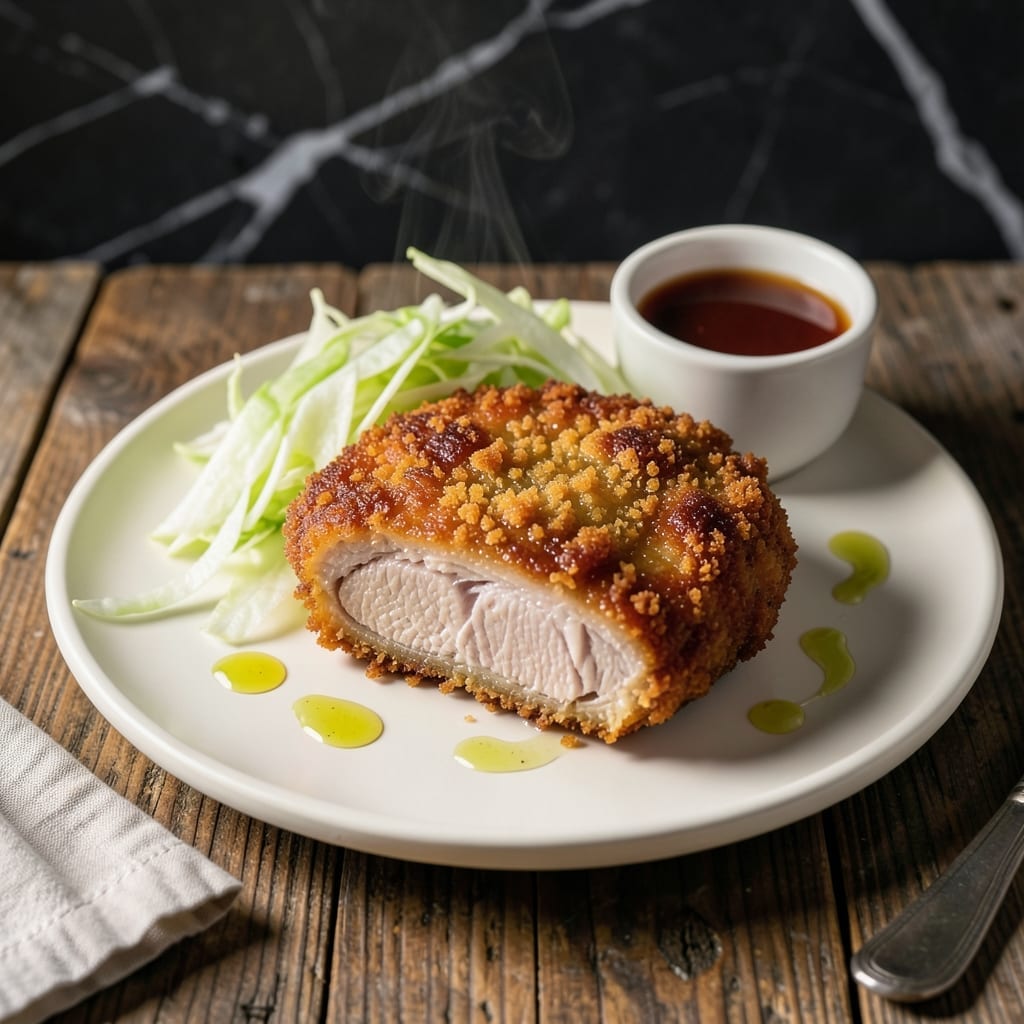
I developed this pan-fried pork katsu method after testing six breading techniques in my tiny Boston kitchen. The secret to achieving crispy perfection lies in the double-dredging process and precise oil temperature control.
This recipe transforms simple pork cutlets into golden-brown masterpieces with a shatteringly crispy exterior. The panko breadcrumbs create layers of texture that stay crunchy even after resting.
Traditional tonkatsu sauce and shredded cabbage complete the dish, balancing the richness with bright, tangy flavors. Each bite delivers that signature Japanese comfort food experience.
Serve immediately for maximum crunch. Here’s how to achieve professional results at home.
Ingredients for Pork Katsu Recipe Pan Fried
Pantry staples meet Japanese specialty items for authentic crispy cutlets at home.
| Ingredient | Amount | Notes |
|---|---|---|
| Pork Cutlets 🥩 | 1 ½ lb | Boneless, pounded to 1/4-inch thickness |
| All-Purpose Flour 🌾 | ½ cup | For initial dredging |
| Large Eggs 🥚 | 2 whole | Beaten for egg wash |
| Panko Breadcrumbs 🍞 | 2 cups | Japanese-style for extra crunch |
| Neutral Oil 🫒 | 2 cups | For frying, like vegetable or canola |
| Kosher Salt 🧂 | 1 ½ tsp | Divided for seasoning |
| Black Pepper 🌶️ | ½ tsp | Freshly ground preferred |
| Garlic Powder 🧄 | 1 tsp | For breading flavor |
| Green Cabbage 🥬 | ½ whole | Thinly shredded for serving |
| Tonkatsu Sauce 🍯 | ½ cup | Store-bought or homemade |
| Mayonnaise 🥛 | ¼ cup | For optional dipping |
| Lemon Wedges 🍋 | 4 pieces | For garnish |
| Dijon Mustard 🟡 | 1 tbsp | For sauce if making homemade |
| Worcestershire Sauce 🍶 | 1 tbsp | For depth in homemade tonkatsu |
| Ketchup 🍅 | ¼ cup | For homemade tonkatsu sauce |
The pork cutlets are non-negotiable for texture—pork loin or tenderloin cut into 1/2-inch thick slices, then pounded thin. Whole Foods or Asian markets often have pre-cut options. Panko breadcrumbs must be the Japanese variety; standard breadcrumbs won’t deliver the signature crunch. Look for Kikkoman or Progresso brands at most supermarkets. The neutral oil should have a high smoke point—vegetable, canola, or peanut oil work best.
No panko? Crush cornflakes or panko-style breadcrumbs in a pinch, but texture will suffer. For tonkatsu sauce, substitute equal parts BBQ sauce and ketchup with a dash of soy sauce. The cabbage can be Napa or savoy if green isn’t available. If avoiding raw cabbage, quick-pickled shredded carrots add a similar crunch and brightness to the dish.
Fry in batches to avoid crowding the pan—this maintains oil temperature for consistent crispiness. Leftovers keep 2-3 days in the fridge but lose their crunch. Reheat in a toaster oven or air fryer at 375°F for 5-7 minutes to revive texture. Panko breadcrumbs freeze well for up to 3 months.
Why You’ll Love This Recipe
- One Pan Wonder: I love that I only need a skillet and a few shallow dishes for the breading—no fancy equipment, just simple pan-frying.
- Crispy Perfection: That panko crust gets incredibly crunchy while keeping the pork juicy inside, and honestly, it’s the texture that makes it irresistible.
- Weeknight Hero: Between us, this dish saves me on busy evenings—quick to cook and even quicker to disappear from plates.
- Budget Friendly: Pork cutlets and panko stretch far, and leftovers (if there are any) reheat surprisingly well in the toaster oven.
Step-by-Step Instructions for Pork Katsu
Master the technique for achieving a shatteringly crisp exterior with juicy pork every time.
Step 1: Season and Dredge the Pork Cutlets
Pat the pork cutlets dry with paper towels to ensure the breading adheres properly. Season both sides with 1 tsp kosher salt, ½ tsp black pepper, and 1 tsp garlic powder, pressing the seasoning into the meat so it sticks.
Dredge each cutlet in the ½ cup all-purpose flour, shaking off any excess. This initial layer creates a base for the egg wash to cling to. Place the floured cutlets on a wire rack set over a baking sheet—this prevents them from sitting in excess moisture.
Step 2: Apply Egg Wash and Panko Breading
In a shallow dish, beat the 2 large eggs until homogeneous. Dip each floured cutlet into the egg wash, ensuring both sides are fully coated. Let any excess drip off for a moment—this prevents a thick, gummy layer of breading.
Press the cutlets into the 2 cups panko breadcrumbs, turning to coat evenly and pressing firmly so the crumbs adhere well. The panko’s coarse texture is what gives pork katsu its signature crispiness. Return the breaded cutlets to the wire rack and let them rest for 10 minutes—this helps the coating set.
Step 3: Pan-Fry to Golden Perfection
Heat the 2 cups neutral oil in a large, heavy skillet over medium-high heat until it reaches 350°F. To test the temperature without a thermometer, drop a pinch of panko into the oil—it should sizzle immediately and rise to the surface within 5 seconds.
Carefully place 1-2 cutlets in the oil at a time to avoid crowding the pan, which would lower the oil temperature and result in greasy breading. Fry for 3-4 minutes per side until the coating is deep golden brown and crisp. Use tongs to turn the cutlets, and regulate the heat as needed to maintain a steady fry.
Step 4: Drain and Rest Before Serving
Transfer the fried cutlets to a wire rack or paper towel-lined plate to drain any excess oil. Sprinkle the remaining ½ tsp kosher salt over the hot cutlets to enhance the flavor of the crispy crust.
Let the pork katsu rest for 2-3 minutes before serving—this brief pause allows the juices to redistribute, ensuring the meat stays moist. Serve immediately with thinly shredded ½ whole green cabbage, ½ cup tonkatsu sauce, ¼ cup mayonnaise, and 4 lemon wedges for squeezing over the top.
Pro Tips For Making Pork Katsu Recipe Pan Fried
- Pound the Cutlets: Use the flat side of a meat mallet to pound the pork to an even 1/2-inch thickness—this guarantees even cooking and prevents chewy bits. I learned this the hard way after pulling undercooked centers from thick spots. —
- Use Fresh Panko: Skip the stale breadcrumbs; fresh panko makes a real difference in that ultra-crispy, airy crust. Sounds obvious, but I used to grab whatever was in the pantry and wondered why my katsu lacked crunch. —
- Rest Before Frying: Let the breaded cutlets rest for 10 minutes before hitting the oil—this keeps the coating from sliding off. After losing half my crust to the pan the first time, I now set a timer. —
- Double Fry for Crisp: Fry once at 350°F until golden, then rest 2 minutes and fry again at 375°F for 30 seconds. My grandmother swore by this, and she was right: it’s the only way to get that shatteringly crisp texture.
Regional Styles of This Dish
Japanese Tonkatsu
The classic version from Japan uses pork loin cutlets pounded to ¼-inch thickness and breaded with panko. It’s traditionally served with shredded cabbage and tonkatsu sauce, a sweet-savory condiment. I love the contrast of crispy pork with the cool crunch of cabbage. 💛
Korean Donkkaseu
Korean-style pork katsu, called donkkaseu, often uses a thicker cut of pork and a slightly sweeter breading. It’s commonly served with a side of pickled radish and a spicy-sweet dipping sauce. The Korean version sometimes includes a light dusting of sugar in the breading for extra caramelization.
Hawaiian Style
In Hawaii, pork katsu is often served as a plate lunch with steamed rice and macaroni salad. The local version sometimes uses a mix of panko and crushed cornflakes for an extra-crispy coating. I tried this during a visit to Oahu and was amazed by the texture. ✨
Western Fusion
Some American restaurants serve pork katsu as a sandwich with coleslaw and special sauce on a brioche bun. This fusion style often skips the traditional tonkatsu sauce in favor of mayonnaise-based spreads. It’s a fun twist that makes the dish more approachable for new eaters.
Thai Adaptation
Thai-style pork katsu incorporates local flavors by adding lemongrass and fish sauce to the marinade before breading. It’s often served with a sweet chili sauce instead of tonkatsu sauce. The result is a beautiful blend of Japanese technique with Thai flavors.
Gluten-Free Version
For gluten-sensitive eaters, replace the all-purpose flour with cornstarch and use gluten-free panko. I’ve tested this with Kikkoman gluten-free panko and achieved excellent results. The texture is nearly identical to the traditional version.
Nutrition Facts
Frequently Asked Questions
What oil works best for frying?
Use a neutral oil with a high smoke point like vegetable, canola, or peanut. Avoid olive oil as it can burn at frying temperatures. Maintain 350°F for perfect crispiness.
How do I keep the breading from falling off?
Pat the pork completely dry first, then let each breading layer set for 10 minutes before frying. Press panko firmly into the cutlets. Don’t move them too soon in the pan.
Can I bake instead of pan-fry?
Yes, bake at 400°F for 20-25 minutes, flipping halfway. Spray with oil first for extra crunch. The texture won’t be quite as crispy, but it’s a healthier option.
How do I make it extra crispy?
Double-dredge by repeating the egg wash and panko steps. Use ice-cold cutlets and very hot oil. Drain on a wire rack, not paper towels.

- Potato Candy Recipe 1933: Vintage Peanut Butter Roll Delight - October 30, 2026
- Potato Chip Cookie Recipe With Pecans: Buttery Crunch Meets Nutty Richness - October 30, 2026
- Potato Patty Recipe No Egg: Crispy Edges Without the Binder - October 30, 2026