
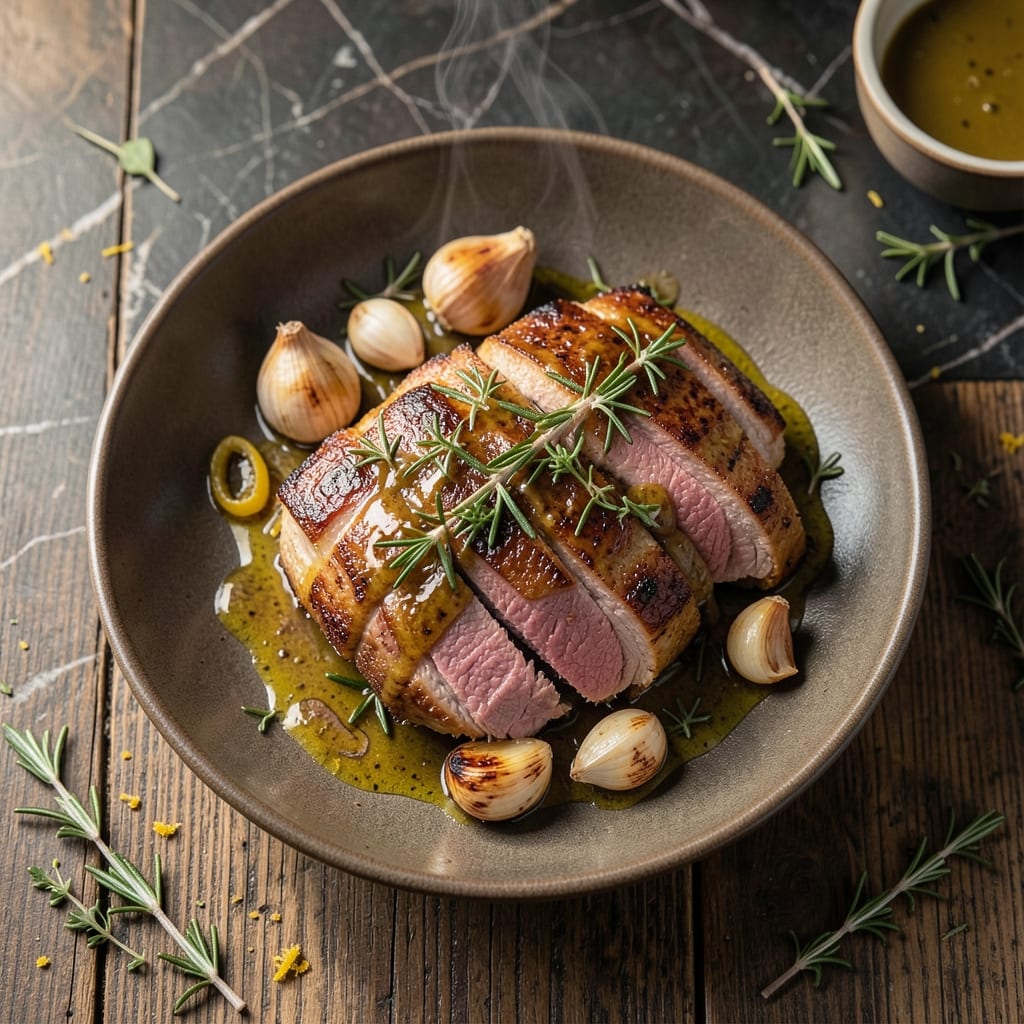
There’s a reason pork backstrap remains a favorite in home kitchens—it offers rich flavor with minimal effort. This oven-roasted version transforms the cut into a succulent centerpiece with a fragrant herb crust.
I developed this method after years of testing, learning that a hot oven and proper seasoning are all it takes. The herb crust forms a flavorful seal, locking in juices while creating a golden exterior.
The result is tender, aromatic pork that slices beautifully and pairs well with simple sides. It proves that impressive meals don’t require complicated techniques.
Perfect for Sunday suppers or special occasions when you want restaurant-quality without the fuss.
Ingredients for Pork Backstrap Recipe Oven
Pantry staples and fresh herbs create this elegant, effortless centerpiece for any occasion.
| Ingredient | Amount | Notes |
|---|---|---|
| Pork Backstrap 🐖 | 2 lb | Trimmed of excess fat |
| Dijon Mustard 🟡 | 3 tbsp | Smooth, not whole grain |
| Fresh Rosemary 🌿 | 2 tbsp | Finely chopped, stems discarded |
| Fresh Thyme 🍃 | 2 tbsp | Leaves stripped from stems |
| Garlic Cloves 🧄 | 4 cloves | Minced finely for even flavor |
| Olive Oil 🫒 | 3 tbsp | Extra-virgin for richness |
| Kosher Salt 🧂 | 1 ½ tsp | Diamond Crystal preferred for texture |
| Black Pepper 🌶️ | 1 tsp | Freshly ground for best aroma |
| Dry White Wine 🍷 | ½ cup | Sauvignon Blanc or Pinot Grigio |
| Unsalted Butter 🧈 | 2 tbsp | Softened for herb crust |
| Breadcrumbs 🍞 | ½ cup | Panko for extra crunch |
| Shallot 🧅 | 1 whole | Finely diced for depth |
The pork backstrap is the star here—look for well-marbled cuts with a bright pink hue at your butcher or Whole Foods. If you can’t find backstrap, pork tenderloin works in a pinch (just reduce cooking time). Fresh herbs are non-negotiable for the crust; Trader Joe’s has great bundles at a fair price (the good stuff, not the pre-dried kind).
No white wine? Chicken broth with a splash of lemon juice mimics the acidity. Short on fresh herbs? Dried at one-third the amount, but fresh really shines here. For the breadcrumbs, homemade from stale bread adds rustic flavor, but store-bought Panko is a solid shortcut. The Dijon mustard can be swapped for whole grain if you prefer texture.
This keeps in the fridge for 3-4 days—reheat gently to avoid drying out. Freezes beautifully for up to 3 months (slice before freezing for easy portions). The herb crust is best fresh, but leftovers still taste great in sandwiches.
Why You’ll Love This Recipe
- One Pan Magic: I toss the pork backstrap with mustard, herbs, and garlic, then let the oven do the work—minimal cleanup, maximum flavor.
- Herb-Crusted Perfection: The rosemary and thyme form this incredible crust with the Dijon, making every bite ridiculusly good.
- Weeknight Hero: It’s my go-to for busy evenings—ready in under 40 minutes and fancy enough for company.
- Leftovers for Days: Here’s what sold me—the sliced pork reheats beautifully for sandwiches or salads the next day.
Step-by-Step Instructions for Pork Backstrap Oven Roast
This method guarantees a juicy roast with a fragrant herb crust every time.
Step 1: Prepare the Herb Crust and Season the Pork
In a small bowl, combine the 2 tbsp fresh rosemary, 2 tbsp fresh thyme, 4 cloves minced garlic, 1.5 tsp kosher salt, and 1 tsp black pepper with the 3 tbsp olive oil. Stir until the herbs are evenly distributed in the oil.
Pat the 2 lb pork backstrap dry with paper towels—this ensures the crust adheres properly. Rub the herb mixture all over the surface of the pork, pressing it in gently. Let it sit at room temperature for 20-30 minutes while the oven preheats.
This step infuses the meat with flavor and creates a base for the crust to cling to during roasting. Don’t skip the drying step; moisture prevents proper browning.
Step 2: Create the Mustard and Breadcrumb Coating
In a separate bowl, mix the 3 tbsp Dijon mustard with the 1 finely diced shallot. The mustard’s tanginess balances the richness of the pork, while the shallot adds subtle depth.
Spread this mixture evenly over the herb-rubbed pork backstrap, coating all sides. Then, press the 0.5 cup breadcrumbs onto the mustard layer, ensuring they stick completely. The breadcrumbs will crisp up beautifully in the oven, forming a golden crust.
If the breadcrumbs aren’t adhering well, lightly press them into the mustard with your hands. This creates an even, textured coating that won’t fall off during cooking.
Step 3: Sear and Roast to Perfection
Preheat your oven to 400°F. Heat an oven-safe skillet or roasting pan over medium-high heat. Add the 2 tbsp unsalted butter and let it melt and foam.
Carefully place the breadcrumb-coated pork backstrap in the pan. Sear for 2-3 minutes per side until the breadcrumbs turn golden brown and the crust begins to crisp. This initial sear sets the crust and locks in juices.
Transfer the pan to the preheated oven and roast for 20-25 minutes, or until the internal temperature reaches 145°F. Use a meat thermometer for accuracy—this ensures perfectly cooked, tender pork every time.
Step 4: Rest and Deglaze for Extra Flavor
Remove the pork backstrap from the oven and transfer it to a cutting board. Tent loosely with foil and let it rest for 10 minutes—this allows the juices to redistribute, keeping the meat moist and flavorful.
While the pork rests, place the skillet back on the stovetop over medium heat. Pour in the 0.5 cup dry white wine and scrape up any browned bits from the bottom of the pan. Let the wine reduce by half, creating a simple pan sauce to drizzle over the sliced pork.
Slice the pork backstrap against the grain into ½-inch thick pieces. Serve immediately with the pan sauce spooned over the top. The combination of crispy crust, tender meat, and tangy sauce is irresistible.
Pro Tips For Making Pork Backstrap Recipe Oven
- Preheat the Oven: Crank it to 400°F and let it stabilize for 15 minutes—I learned this the hard way after pulling out undercooked pork twice.
- Score the Fat: Make shallow cuts in the fat cap before seasoning. Sounds tedious, but it lets the Dijon and herbs penetrate and crisp up that fat.
- Don’t Over-Rub: Press the Dijon, rosemary, thyme, and garlic into the meat, but don’t mash it into paste. Too much pressure turns the crust gummy instead of crisp.
- Use a Meat Thermometer: Pull it at 140°F and tent with foil—it’ll coast to 145°F while resting. I skip this when I’m lazy, but the pork dries out every time I do.
Flavor Customization for This Dish
Spicy Kick
Add 1 tsp cayenne pepper to the herb mixture for a subtle heat that complements without overpowering. I love this variation when serving with sweet sides like roasted butternut squash. The contrast is perfect.
Citrus Brightness
Zest 1 lemon or 1 orange into the breadcrumb coating for a vibrant lift. The citrus oils release during cooking, adding a refreshing note that cuts through the richness.
Cheesy Crust
Mix ¼ cup grated Parmesan into the breadcrumbs before pressing onto the pork. This creates a golden, savory crust with an extra layer of umami. I learned this trick from my grandmother’s handwritten notes.
Sweet and Savory
Stir 1 tbsp honey into the Dijon mustard mixture before coating. The sweetness caramelizes slightly in the oven, balancing the herbs beautifully. It’s a simple twist that feels special. 💛
Herb Variations
Swap the rosemary and thyme for 2 tbsp fresh sage and 1 tbsp fresh oregano for a more earthy profile. This works wonderfully with a red wine pan sauce instead of white.
Nutty Crunch
Replace half the breadcrumbs with ¼ cup finely chopped pecans or walnuts for a rich, textured crust. Toast the nuts first for deeper flavor. This adds a gourmet touch with minimal effort.
Nutrition Facts
Frequently Asked Questions
What temperature should the oven be set to?
Preheat your oven to 400°F for the perfect balance of crispy crust and tender meat. This high heat ensures the breadcrumbs brown beautifully while cooking the pork through evenly.
How do I know when it’s done?
Use a meat thermometer to check for an internal temperature of 145°F. This guarantees juicy, perfectly cooked pork every time. Let it rest for 10 minutes before slicing to retain moisture.
Can I use a different cut of pork?
Pork tenderloin works as a substitute, but reduce cooking time by 5-10 minutes since it’s leaner. Avoid fatty cuts like pork shoulder, as they won’t achieve the same texture.
What if the breadcrumbs won’t stick?
Press the breadcrumbs firmly into the mustard mixture with your hands. If needed, add a little extra mustard or olive oil to help them adhere. This ensures a crispy, even coating.

- Potato Candy Recipe 1933: Vintage Peanut Butter Roll Delight - October 30, 2026
- Potato Chip Cookie Recipe With Pecans: Buttery Crunch Meets Nutty Richness - October 30, 2026
- Potato Patty Recipe No Egg: Crispy Edges Without the Binder - October 30, 2026