
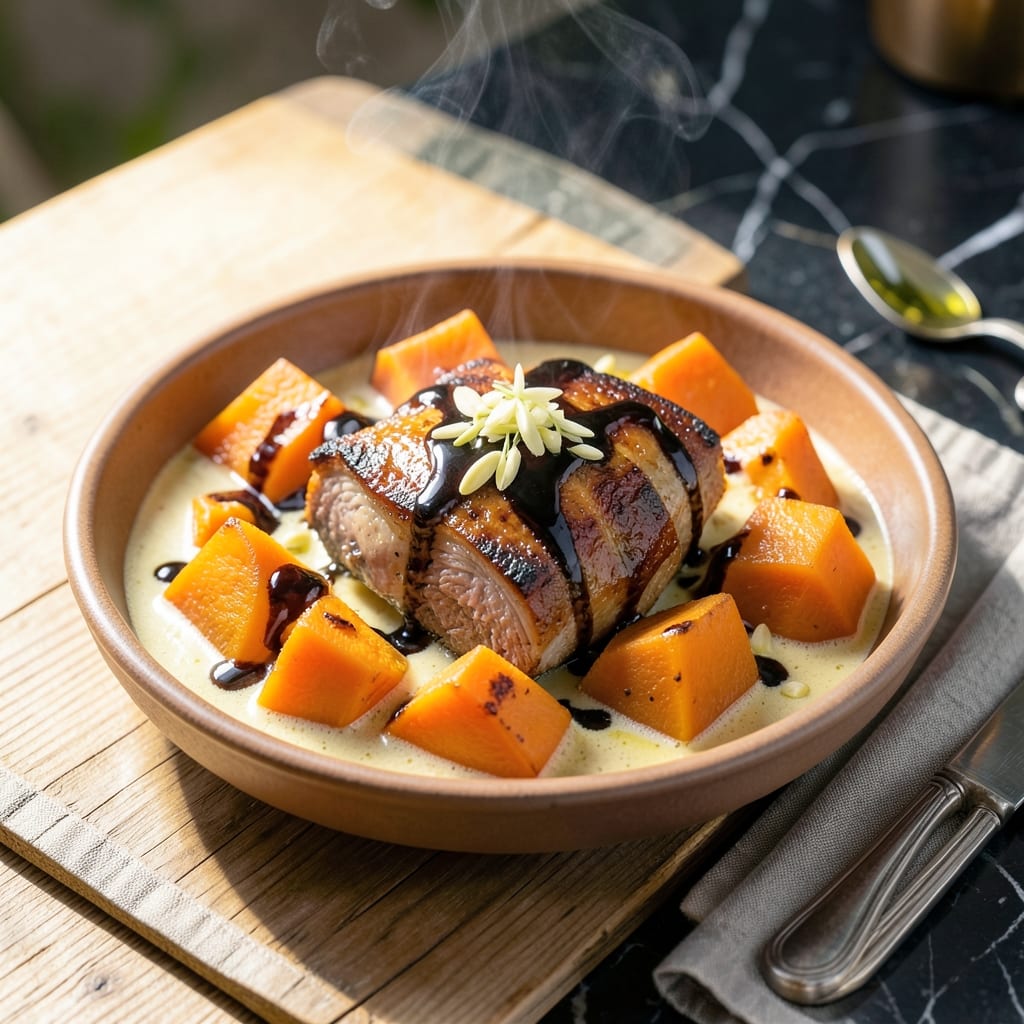
This dish brings together the rich, savory depth of pork with the natural sweetness of pumpkin in a way that feels distinctly Hawaiian. I developed this recipe after a trip to the islands, where the fusion of flavors left a lasting impression.
The pork is slow-cooked until tender, allowing it to absorb the bold, tropical flavors, while the pumpkin softens into a velvety texture. Together, they create a balance of sweet and savory that’s both comforting and exciting.
What makes this recipe stand out is its simplicity—no advanced techniques, just a thoughtful combination of ingredients that let the natural flavors shine. The result is a dish that’s hearty, aromatic, and full of depth.
Perfect for a cozy dinner, this fusion of cultures and flavors is a celebration of how food can bring people together. Here’s how to make it.
Ingredients for Pork and Pumpkin Recipe Hawaii
Hearty pork meets tropical pumpkin with bold Hawaiian flavors in every bite.
| Ingredient | Amount | Notes |
|---|---|---|
| Pork Shoulder 🥩 | 2 lb | Boneless, cut into chunks |
| Kabocha Pumpkin 🎃 | 3 cups | Peeled, cubed (or butternut squash) |
| Coconut Milk 🥥 | 1 can | Full-fat for richness |
| Fresh Ginger 🌿 | 1 tbsp | Minced for zing |
| Garlic Cloves 🧄 | 4 cloves | Minced for depth |
| Soy Sauce 💧 | ¼ cup | Low-sodium preferred |
| Brown Sugar 🍚 | 2 tbsp | Light or dark works |
| Rice Vinegar 🍯 | 2 tbsp | Balances sweetness |
| Green Onions 🧅 | ½ cup | Sliced for garnish |
| Fresh Cilantro 🌿 | ¼ cup | Chopped for brightness |
| Hawaiian Sea Salt 🧂 | 1 tsp | Coarse flakes preferred |
| Black Pepper 🌶️ | ½ tsp | Freshly ground |
| Red Pepper Flakes 🔥 | ½ tsp | Adjust for heat |
| Lime 🍈 | 1 whole | Juiced and zested |
The pork shoulder is key here—look for well-marbled cuts at Whole Foods or Costco. Kabocha pumpkin is traditional (sweeter and denser than butternut), but butternut squash works if that’s what’s available. Coconut milk should be full-fat for that creamy texture; Thai Kitchen or Native Forest are reliable brands. Fresh ginger and garlic are non-negotiable—they’re what give this dish its bright, aromatic backbone.
No kabocha? Sweet potato or acorn squash can stand in. Out of coconut milk? Heavy cream plus a splash of coconut extract (about one-fourth the amount) mimics the flavor. Soy sauce can be swapped for tamari if you need gluten-free. The brown sugar adds balance, but honey or maple syrup work too (just reduce liquids slightly).
Leftovers keep beautifully, actually improving after 24 hours as flavors meld. Store in the fridge for up to 5 days or freeze for 3 months. Reheats like a dream—just add a splash of water to loosen the sauce.
Why You’ll Love This Recipe
- One Pot Wonder: I toss everything in—pork, kabocha, coconut milk—and let it simmer while I do laundry. Honestly, it’s the easiest hands-off meal I make.
- Crave-Worthy Depth: The ginger and garlic soak into the pork, while the pumpkin drinks up the coconut milk. That first bite? Ridiculously good.
- Feeds a Crowd: I serve it at luaus and potlucks, and it’s always the first dish to disappear. Leftovers reheat like a dream.
- Budget Stretcher: Pork shoulder and kabocha are cheap, and this fills us up for two nights. Between us, it’s my wallet’s favorite recipe.
Step-by-Step Instructions for Pork and Pumpkin Hawaii
Master the balance of sweet and savory with this method for consistent, restaurant-quality results.
Step 1: Sear the Pork Shoulder to Develop Flavor
Cut the 2 lb Pork Shoulder into 1½-inch chunks and pat them dry with paper towels. Season generously with 1 tsp Hawaiian Sea Salt and 0.5 tsp Black Pepper, ensuring all sides are evenly coated. This step builds the foundation of flavor.
Heat a large, heavy pot or Dutch oven over medium-high heat without oil. Working in batches, sear the pork chunks for 3-4 minutes per side until deep golden brown. Don’t overcrowd the pot—this ensures proper browning, not steaming. Transfer the seared pork to a plate and set aside.
Step 2: Build the Aromatic Base with Pumpkin
In the same pot, reduce heat to medium and add the 3 cups Kabocha Pumpkin, 1 tbsp Fresh Ginger, and 4 cloves Garlic Cloves. Sauté for 5-6 minutes, stirring occasionally, until the pumpkin starts to soften and the ginger and garlic become fragrant.
This step coaxes out the natural sweetness of the kabocha while mellowing the sharpness of the ginger and garlic. The residue from the pork adds depth, so scrape up any browned bits as you stir. The pumpkin should begin to caramelize slightly at the edges.
Step 3: Simmer in Coconut Milk and Seasonings
Return the seared pork to the pot along with the 1 can Coconut Milk, 0.25 cup Soy Sauce, 2 tbsp Brown Sugar, 2 tbsp Rice Vinegar, and 0.5 tsp Red Pepper Flakes. Stir well to combine, then bring the mixture to a gentle simmer.
Reduce the heat to low, cover, and let it cook for 1 to 1½ hours, stirring occasionally, until the pork is fork-tender and the pumpkin has softened into the sauce. The coconut milk should thicken slightly, and the flavors will meld into a rich, cohesive base.
Step 4: Finish with Fresh Herbs and Lime
Once the pork and pumpkin are fully cooked, stir in the juice and zest of 1 whole Lime. Taste and adjust the seasoning if needed, though the Hawaiian Sea Salt and soy sauce should provide ample saltiness. The lime brightens the dish and balances the sweetness.
Remove from heat and let the stew rest for 10 minutes to allow the flavors to settle. Just before serving, garnish with 0.5 cup Green Onions and 0.25 cup Fresh Cilantro for a fresh, vibrant finish. Serve warm with steamed rice or crusty bread to soak up the sauce.
Pro Tips For Making Pork And Pumpkin Recipe Hawaii
- Brown the Pork First: Sear the pork shoulder in batches over medium-high heat until deeply browned—about 4-5 minutes per side. I learned this the hard way: skipping this step leaves the dish tasting flat, even with all the coconut milk and spices.
- Peel the Kabocha: Yes, it’s a pain, but kabocha skin stays tough even after long cooking. Use a sturdy vegetable peeler or knife to remove it before cubing—your final texture will be silky, not chewy.
- Bloom the Ginger: Cook the fresh ginger and garlic in a little oil for 30-60 seconds until fragrant before adding liquids. Sounds small, but it actually changes the outcome, pulling out way more flavor than tossing them in raw.
- Simmer Low and Slow: Once everything’s in the pot, keep the heat at a gentle simmer—small bubbles, not a rolling boil. After burning one batch from impatience, I now know this guarantees the pork stays tender and the coconut milk doesn’t separate.
Dietary Considerations for pork and pumpkin recipe hawaii
Gluten-Free Adaptation
This dish is naturally gluten-free as written, but always check your soy sauce label. I use San-J Tamari (available at New Seasons Market) for guaranteed gluten-free results. The 2 tbsp rice vinegar and all other ingredients are inherently safe for gluten-sensitive diners. 💪
Dairy-Free Friendly
The recipe contains no dairy, making it perfect for lactose-intolerant friends. The 1 can coconut milk provides all the creaminess you need. Just ensure your garnishes are dairy-free—skip any cheese additions and stick to the green onions and cilantro.
Lower Sodium Option
To reduce sodium, use low-sodium soy sauce (or tamari) and cut the Hawaiian sea salt to ½ tsp. The 2 tbsp brown sugar and natural sweetness of kabocha pumpkin will still deliver plenty of flavor. I often add extra lime to compensate.
Vegetarian Modification
Swap the 2 lb pork shoulder for 2 cups cubed firm tofu or chickpeas. Sear the tofu first for texture, then proceed with the recipe as written. The coconut milk and spices create a rich, satisfying base that works beautifully with plant-based proteins.
For extra heartiness, add 1 cup diced mushrooms when sautéing the pumpkin. ✨
Lower Sugar Version
Reduce the 2 tbsp brown sugar to 1 tbsp or replace with 1 tbsp honey or maple syrup. The kabocha pumpkin provides natural sweetness, so you won’t miss the extra sugar. Balance with an extra splash of rice vinegar to maintain the sweet-tangy harmony.
Nutrition Facts
Frequently Asked Questions
Can I use butternut squash instead of kabocha?
Yes! Butternut squash works perfectly as a substitute. It has a similar sweetness and texture when cooked. Just peel and cube it the same way.
How do I know when the pork is done?
It should be fork-tender after 1 to 1½ hours of simmering. If it shreds easily with a fork, it’s ready.
Can I make this ahead of time?
The flavors deepen after 24 hours in the fridge. Store in an airtight container for up to 5 days.
What should I serve with this dish?
Steamed jasmine rice or crusty bread works beautifully to soak up the rich sauce.

- Potato Chip Cookie Recipe With Pecans: Buttery Crunch Meets Nutty Richness - October 30, 2026
- Potato Patty Recipe No Egg: Crispy Edges Without the Binder - October 30, 2026
- Paula Deen’s Potato Chip Cookies Recipe: Salty-Sweet Crunch in Every Bite - October 30, 2026