
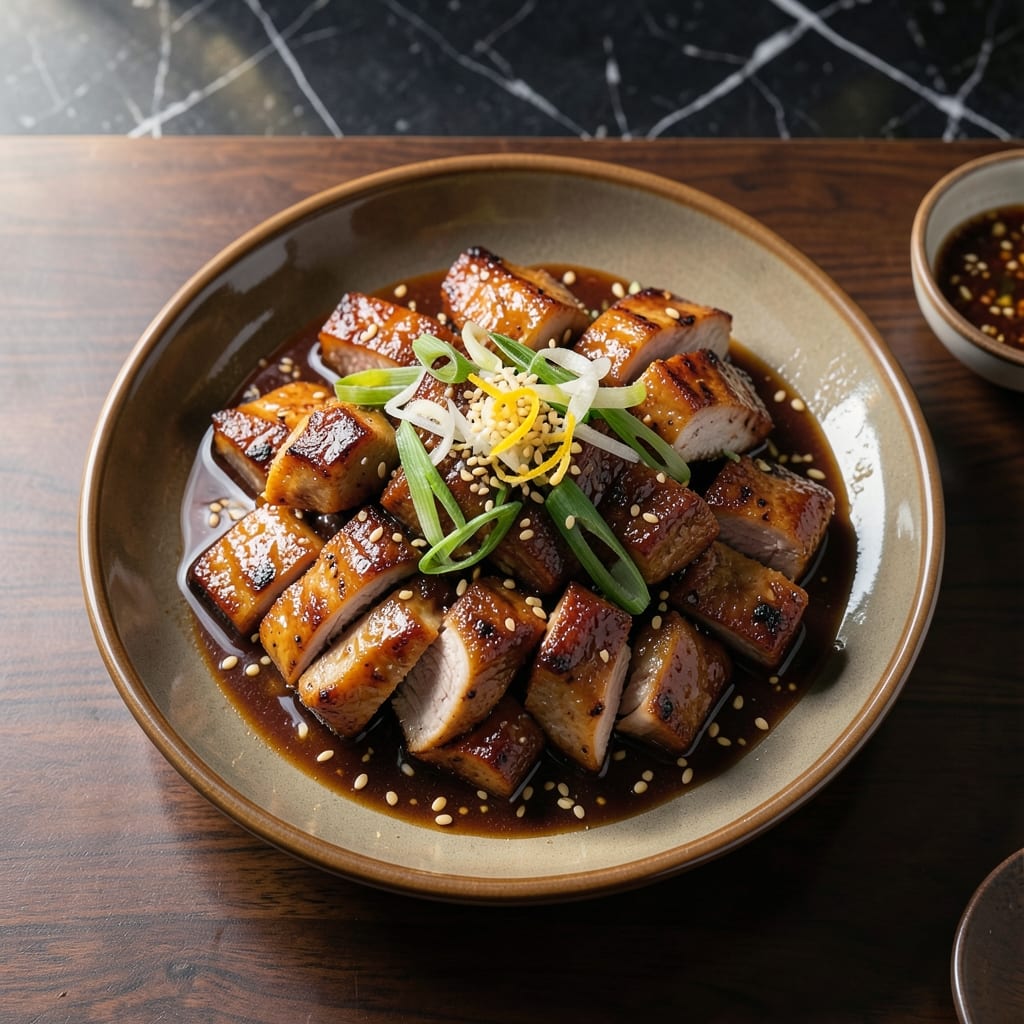
This Chinese-style pork asado delivers a perfect balance of sweet and savory flavors that will elevate your home cooking. The dish combines tender pork with a rich soy-based glaze that caramelizes beautifully during cooking.
I developed this method to capture the authentic taste of traditional Chinese asado while keeping the process straightforward. The pork is marinated in a blend of soy sauce, sugar, and aromatics, then slow-cooked until it reaches melt-in-your-mouth tenderness.
What makes this version special is the careful layering of flavors—each ingredient plays a distinct role in creating that signature taste. The result is a dish that’s both comforting and impressive, with every bite bursting with depth.
The glaze reduces to a glossy finish, coating the pork in a sticky, flavorful sauce that’s irresistible over rice. This recipe stays true to its roots while being simple enough for any home cook.
Ingredients for Pork Asado Recipe Chinese Style
Tender pork shoulder meets a sticky, caramelized soy glaze packed with bold aromatics.
| Ingredient | Amount | Notes |
|---|---|---|
| Pork Shoulder 🐖 | 2 lb | Cut into 2-inch chunks, fat trimmed |
| Light Soy Sauce 🫒 | ½ cup | For marinade base |
| Dark Soy Sauce 🫒 | 2 tbsp | For depth and color |
| Brown Sugar 🍚 | ½ cup | Light or dark variety |
| Garlic Cloves 🧄 | 6 cloves | Minced or crushed |
| Fresh Ginger 🌿 | 2 tbsp | Peeled and grated |
| Star Anise Pods ⭐ | 2 whole | Optional for aromatic depth |
| Bay Leaves 🍃 | 2 whole | Dried, for slow cooking |
| Shaoxing Wine 🍶 | ¼ cup | Or dry sherry as substitute |
| Rice Vinegar 🍯 | 2 tbsp | For acidity balance |
| Sesame Oil 🫒 | 1 tsp | Toasted, for finishing |
| Green Onions 🧅 | 4 whole | Sliced, for garnish |
| Cornstarch 🌾 | 1 tbsp | For thickening glaze |
The pork shoulder is key here—look for well-marbled pieces at your butcher or local Asian market. They often carry pre-cut chunks that save time. For the soy sauces, Pearl River Bridge is a reliable brand (light for salt, dark for color). Fresh ginger and garlic make a huge difference, so don’t skip on quality. Star anise can be found in the spice aisle at Whole Foods or most Asian grocery stores.
No Shaoxing wine? Dry sherry works in a pinch (or skip it entirely). Dark soy sauce can be swapped with regular soy plus a teaspoon of molasses for color. Substitute fresh ginger with ground ginger at one-fourth the amount. If you’re out of rice vinegar, apple cider vinegar is a decent backup. For the cornstarch, arrowroot powder at the same ratio works too.
Marinate the pork for at least 4 hours (overnight is ideal). The glaze thickens as it cools, so thin with a splash of water when reheating. Keeps in the fridge for 5 days or freezes beautifully for 3 months (the sauce separates but re-emulsifies when warmed).
Why You’ll Love This Recipe
- Minimal Chopping Required: I just slice the pork shoulder and mince a few garlic cloves – that’s the hardest part.
- Sweet-Savory Magic: The brown sugar caramelizes with the soy sauces, creating this sticky, crave-worthy glaze.
- Feeds a Crowd: Honestly, it’s my go-to for potlucks or when I need to meal prep for the week.
- Stretches the Budget: Pork shoulder cooks down beautifully, and one batch gives us leftovers for days.
Step-by-Step Instructions for Chinese Style Pork Asado
Here’s the method. Straightforward, tested, works every time.
Step 1: Marinate the Pork Shoulder with Aromatics
Cut the 2 lb Pork Shoulder into 2-inch chunks and trim any excess fat. In a large bowl, combine the pork with 0.5 cup Light Soy Sauce, 2 tbsp Dark Soy Sauce, 0.5 cup Brown Sugar, minced 6 cloves Garlic Cloves, and grated 2 tbsp Fresh Ginger.
Add the 2 whole Star Anise Pods, 2 whole Bay Leaves, and 0.25 cup Shaoxing Wine, then stir in the 2 tbsp Rice Vinegar. Mix everything until the pork is evenly coated. Cover and refrigerate for at least 2 hours, or overnight for deeper flavor penetration.
Step 2: Slow Cook the Pork Until Tender
Transfer the pork and marinade to a slow cooker or a heavy pot. If using a slow cooker, set it to low heat and cook for 6-7 hours, stirring occasionally. If using a pot on the stovetop, bring to a simmer, then reduce heat to low, cover, and cook for 2-2.5 hours.
You’ll know it’s ready when the pork is fork-tender and easily shreds. This slow cooking process allows the pork to absorb all the rich, aromatic flavors from the marinade, creating that signature melt-in-your-mouth texture.
Step 3: Thicken the Glaze to Perfection
Once the pork is tender, remove it from the cooking liquid and set it aside. Skim off any excess fat from the surface of the liquid, then pour it into a saucepan. Bring it to a boil over medium-high heat.
In a small bowl, mix the 1 tbsp Cornstarch with 2 tablespoons of cold water to create a slurry. Slowly whisk the slurry into the boiling liquid and continue to cook for 2-3 minutes, stirring constantly, until the glaze thickens to a syrupy consistency. It should coat the back of a spoon easily.
Step 4: Finish and Serve with Garnish
Return the pork to the saucepan with the thickened glaze and toss to coat evenly. Drizzle with 1 tsp Sesame Oil for a nutty aroma and richness. Give it a final stir to ensure every piece is well glaze-coated.
Transfer the pork to a serving dish and garnish with sliced 4 whole Green Onions for a fresh, vibrant finish. Serve immediately over steamed rice or noodles. The dish should have a glossy, deeply flavored sauce with tender, juicy pork that falls apart with minimal resistance.
Pro Tips For Making Pork Asado Recipe Chinese Style
- Sear the Pork First: I learned this the hard way—browning the pork shoulder in a hot pan for 3-4 minutes per side before braising adds depth the sauce alone can’t deliver.
- Balance the Soy Sauces: Use a 2:1 ratio of light to dark soy sauce—more light for saltiness, just enough dark for color without overpowering the dish.
- Skip the Overcooking: After 1.5 hours of simmering, check for tenderness. Pork shoulder turns to mush if left too long, and nobody wants mushy asado.
- Crush the Garlic: Smash the garlic cloves with the side of your knife before adding—they’ll infuse the sauce better and you won’t get bitter, undercooked bites.
Regional Styles of This Dish
Cantonese Approach
In Guangdong, this dish often includes hoisin sauce for extra sweetness. I add 2 tbsp hoisin to the marinade and include 1 cinnamon stick during slow cooking. The result is a richer, more complex glaze that pairs perfectly with steamed rice. 💫
Sichuan Spicy Version
For heat lovers, incorporate 1 tbsp Sichuan peppercorns and 2 dried chili peppers into the marinade. The numbing spice of the peppercorns balances the sweetness beautifully. I also add 1 tsp chili oil at the end for extra kick.
Shanghai Style
This variation emphasizes sweetness with rock sugar instead of brown sugar. I use ½ cup rock sugar and add 3 slices dried tangerine peel during cooking. The citrus notes add a wonderful aromatic depth to the dish.
Fujian Coastal
Coastal regions often include seafood elements. I add ¼ cup dried shrimp to the marinade for umami depth. The shrimp dissolves during cooking, infusing the pork with a subtle oceanic flavor that’s uniquely Fujian.
Northern Adaptation
In colder climates, this dish is often made heartier. I add 1 cup diced potatoes to the slow cooker with the pork. The potatoes absorb the glaze beautifully and make the dish more substantial for winter meals.
Taiwanese Street Food
For a quick version, I use pork belly instead of shoulder and cook it for just 2 hours. The result is a richer, fattier dish that’s popular in night markets. Serve on sticks for authentic street food presentation.
Nutrition Facts
Frequently Asked Questions
What’s the best cut of pork for this dish?
Use well-marbled pork shoulder for the most tender, flavorful results. The fat content keeps the meat moist during slow cooking, and it breaks down beautifully into the glaze.
Can I make this in an Instant Pot?
Yes! Cook on high pressure for 35 minutes, then natural release. Thicken the sauce afterward as directed. This cuts the time while keeping the pork tender.
How do I fix a glaze that’s too thin?
Simmer it longer after adding the slurry. If it’s still runny, mix another 1 tsp cornstarch with cold water and stir in. Cook until it coats a spoon.
Can I substitute the Shaoxing wine?
Dry sherry works in a pinch, or omit it entirely. For extra depth, add 1 tsp vanilla extract to the marinade—it mimics the wine’s complexity.

- Potato Chip Cookie Recipe With Pecans: Buttery Crunch Meets Nutty Richness - October 30, 2026
- Potato Patty Recipe No Egg: Crispy Edges Without the Binder - October 30, 2026
- Paula Deen’s Potato Chip Cookies Recipe: Salty-Sweet Crunch in Every Bite - October 30, 2026