
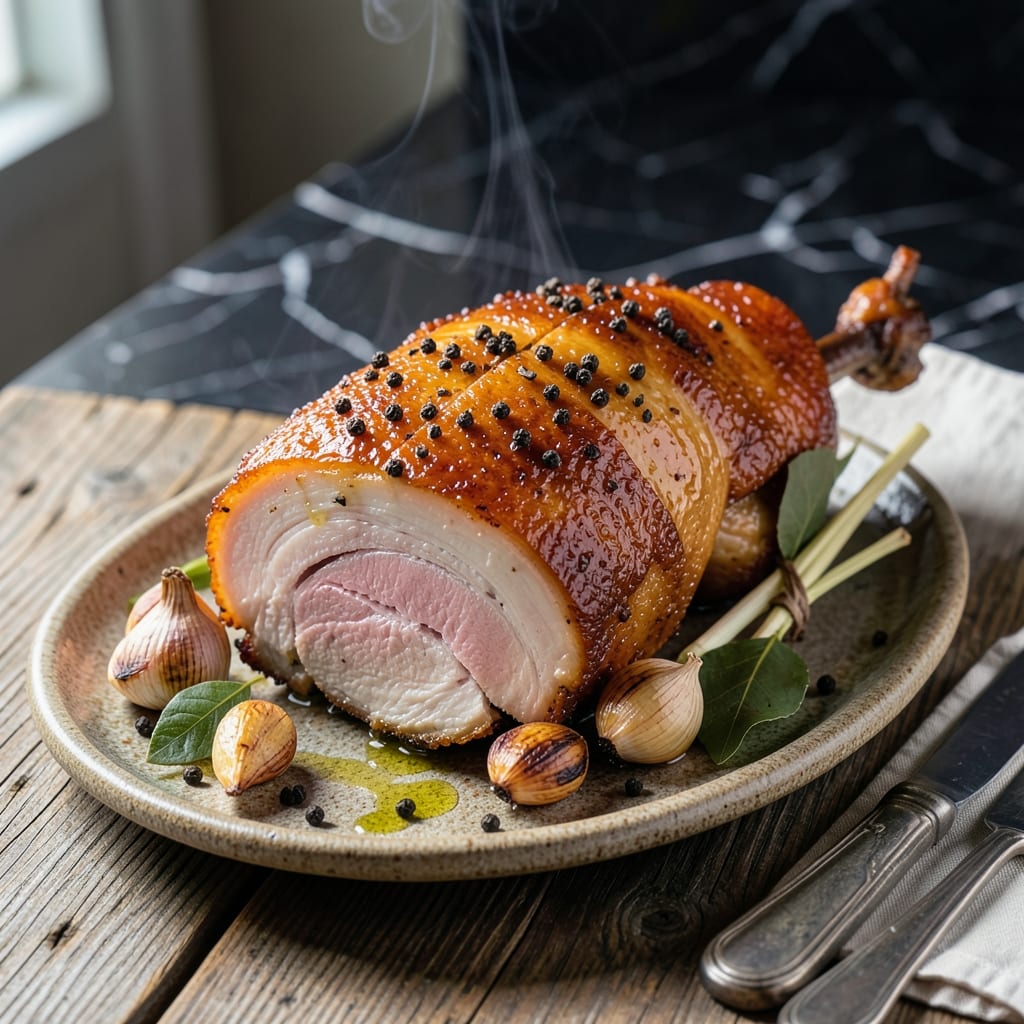
This oven-baked pork belly lechon delivers crispy skin and juicy layers without a rotisserie. I developed this method to replicate traditional Filipino lechon in a home kitchen, using simple techniques and accessible ingredients.
The secret lies in scoring the skin, dry-rubbing with aromatics, and slow-roasting at high heat. This creates that signature crackling exterior while keeping the meat tender and flavorful. The result is a centerpiece dish that’s impressive yet foolproof.
Each bite offers a perfect contrast: shatteringly crispy skin giving way to succulent, juicy pork beneath. The aromas alone will draw a crowd, and the flavor pays tribute to the original while working in modern kitchens.
Serve with steamed rice and your favorite dipping sauce. This is comfort food elevated to celebration status.
Ingredients for Pork Belly Lechon Recipe Oven
Pantry staples and a few special aromatics make this showstopper happen.
| Ingredient | Amount | Notes |
|---|---|---|
| Pork Belly 🥓 | 2 lb | Skin-on, even thickness preferred |
| Kosher Salt 🧂 | 2 tbsp | Diamond Crystal brand recommended |
| Black Peppercorns 🌶️ | 1 tbsp | Freshly cracked for best flavor |
| Garlic Cloves 🧄 | 8 cloves | Peeled and crushed |
| Fresh Bay Leaves 🍃 | 4 whole | Dried can substitute in pinch |
| Dried Lemongrass 🌿 | 1 tbsp | Ground or finely chopped |
| Brown Sugar 🧈 | ¼ cup | Light or dark variety |
| White Vinegar 💧 | ¼ cup | For skin crisping |
| Soy Sauce 🫒 | 2 tbsp | Low-sodium preferred |
| Onion Powder 🧅 | 1 tsp | For aromatic depth |
| Ground Coriander 🌿 | 1 tsp | Toasted for extra fragrance |
| Water 💧 | ½ cup | For braising liquid |
| Vegetable Oil 🫒 | 1 tbsp | Neutral flavor preferred |
The pork belly is non-negotiable—look for skin-on at a good butcher or Asian market. I get mine from H Mart when I can, but most Whole Foods carry it too. Ask them to leave the skin intact if it’s pre-cut. The fat layer should be even, about 1-1.5 inches thick. Avoid pre-sliced or pre-marinated belly; you want full control over the seasoning and texture.
No fresh bay leaves? Dried at half the amount works fine. Can’t find lemongrass? Zest of 1 lime plus 1 tsp ground ginger gets you close to that citrusy aroma. The vinegar is key for crispiness—apple cider vinegar can sub in if you’re out of white. For the soy sauce, Tamari is a great gluten-free swap, and coconut aminos work in a pinch (just watch the sweetness).
The dry rub keeps for 1 week in a cool, dark place. Once scored, the pork belly can sit in the fridge overnight—actually improves the flavor. Leftovers (if you have any) reheat nicely in the oven at 350°F for 10-15 minutes, covered with foil to keep the skin crispy.
Why You’ll Love This Recipe
- I’ll be real: this is my go-to for potlucks. One pork belly serves a table of hungry friends with zero stress.
- One Pan Wonder: I just season, roll, and roast—no fancy techniques, just pork belly, salt, and those aromatic bay leaves doing all the work.
- Crispy Perfection: The garlic and peppercorns create this ridiculous crust that cracks with every bite. Honestly, it’s the reason I make this every other week.
- Feeds a Crowd: I’ll be real: this is my go-to for potlucks. One pork belly serves a table of hungry friends with zero stress.
Step-by-Step Instructions for Pork Belly Lechon in the Oven
Here’s the method I’ve perfected for that ideal contrast of shatteringly crisp skin and meltingly tender meat.
Step 1: Cure the Pork Belly with Aromatics
Rub the 2 lb pork belly all over with the 2 tbsp kosher salt, making sure to work it into every crevice and the skin surface. The salt will penetrate deeply during the curing process. Add the 1 tbsp black peppercorns (freshly cracked), 8 cloves garlic cloves (crushed), 4 whole fresh bay leaves, 1 tbsp dried lemongrass, 1 tsp onion powder, and 1 tsp ground coriander.
These spices create the authentic lechon flavor profile. Massage everything into the meat thoroughly. Place the pork belly skin-side up in a large bowl, then pour the 0.25 cup brown sugar over the top, patting it into the skin. Cover and refrigerate for at least 8 hours or overnight—this drying and curing step is non-negotiable for that signature crispiness.
Step 2: Score the Skin and Begin Roasting
Remove the pork belly from the refrigerator and let it sit at room temperature for 30 minutes while you preheat the oven to 375°F. Pat the skin dry with paper towels, then use a sharp knife to score the skin in a crosshatch pattern, cutting just through the skin but not into the fat.
This scoring allows the fat to render out while creating more surface area for crisping. Place the pork belly skin-side up on a wire rack set over a roasting pan. Brush the skin with the 0.25 cup white vinegar—this helps break down proteins for extra crispiness. Roast for 1 hour until the skin starts to puff and turn golden brown.
Step 3: Baste and Braise for Tenderness
Remove the pork belly from the oven and carefully pour the 0.5 cup water and 2 tbsp soy sauce into the roasting pan beneath the rack. This creates steam that keeps the meat juicy while the skin crisps. Baste the pork belly with the pan juices, then return to the oven.
Reduce the temperature to 325°F and roast for another 1 hour 30 minutes, basting every 30 minutes with the pan juices. The skin should become deep mahogany brown and blisteringly crisp while the meat remains moist. If the pan dries out, add a splash more water to prevent burning.
Step 4: Finish with High Heat for Maximum Crisp
Increase the oven temperature to 425°F. Brush the skin with the 1 tbsp vegetable oil to encourage final crisping. Roast for an additional 15-20 minutes, watching closely to prevent burning. The skin should now be so crisp it audibly cracks when pressed.
Remove from the oven and let rest for 15 minutes before slicing. This rest allows the juices to redistribute throughout the meat. Slice against the score marks into 1-inch thick pieces, revealing the perfect layers of crisp skin and succulent meat beneath.
Pro Tips For Making Pork Belly Lechon Recipe Oven
- Score the Skin: Use a sharp knife to make shallow cuts in the pork belly skin—about 1/4 inch apart. I learned this the hard way: without scoring, the fat won’t render properly, and you’ll end up with a chewy, uneven crust.
- Dry Overnight: After seasoning with salt, garlic, and peppercorns, let the pork belly sit uncovered in the fridge for 12-24 hours. Sounds tedious, but it’s the only way to guarantee that crackling skin everyone raves about.
- Start Hot, Finish Low: Roast at 450°F for 30 minutes to jumpstart the crisping, then drop to 325°F until fully cooked. After burning my first batch by keeping it too high too long, I finally figured out this two-step method actually works.
- Baste with Fat: Every 30 minutes, spoon the rendered fat from the pan back over the pork belly. My grandmother swore by this, and she was right—it keeps the meat juicy while building that glossy, golden finish.
Regional Styles of This Dish
Filipino Classic Style
Traditional Filipino lechon uses a whole pig roasted over charcoal, but this oven version captures the same bold garlic and lemongrass flavors. I boost authenticity by adding 2 tbsp calamansi juice to the vinegar for that signature citrus tang. The skin should crackle like the original street food version. 🗺️
Cebu-Inspired Variation
In Cebu, they stuff the cavity with scallions and ginger. For our oven version, I layer 6 thinly sliced scallions and 1 tbsp grated ginger under the pork belly on the rack. This infuses the meat with extra aroma as it roasts.
Negros Occidental Twist
This region loves sweeter lechon, so I increase the brown sugar to ⅓ cup and add 2 tbsp honey to the basting liquid. The result is a glossier, caramelized skin that balances the savory spices. The sweetness complements the garlic perfectly.
Manila Street Food Style
For that urban Manila taste, I add 1 tsp msg to the dry rub and 1 tbsp banana ketchup to the basting liquid. It’s an umami boost that makes the pork irresistibly savory. This version always disappears fastest at my gatherings.
Visayan Coastal Version
Coastal areas incorporate sea salt and coconut vinegar. I substitute coconut vinegar for white vinegar and use flaky sea salt for the initial rub. The coconut notes add a subtle tropical depth that pairs wonderfully with rice. 💫
Modern Fusion Style
For a contemporary take, I add 1 tsp smoked paprika and ½ tsp cinnamon to the dry rub. The smokiness and warmth create a complex flavor profile that still respects the traditional roots. It’s my favorite way to bridge old and new.
Nutrition Facts
Frequently Asked Questions
Can I use a different cut of pork?
Stick with skin-on pork belly for authentic results. Other cuts won’t deliver the same fat-to-meat ratio or crispy skin. A thick, even slab works best.
Why do I need to score the skin?
Scoring allows fat to render out while creating more surface area for crisping. Without it, the skin may stay chewy instead of shattering. Cut just through the skin, not the fat.
How do I keep the meat juicy while crisping the skin?
Baste every 30 minutes with pan juices and use a wire rack so steam circulates. The 325°F phase ensures tenderness before the final high-heat crisp.
Can I make this ahead?
Yes! Cure the pork belly overnight, then roast the next day. Leftovers reheat well at 350°F for 10-15 minutes.

- Potato Chip Cookie Recipe With Pecans: Buttery Crunch Meets Nutty Richness - October 30, 2026
- Potato Patty Recipe No Egg: Crispy Edges Without the Binder - October 30, 2026
- Paula Deen’s Potato Chip Cookies Recipe: Salty-Sweet Crunch in Every Bite - October 30, 2026