
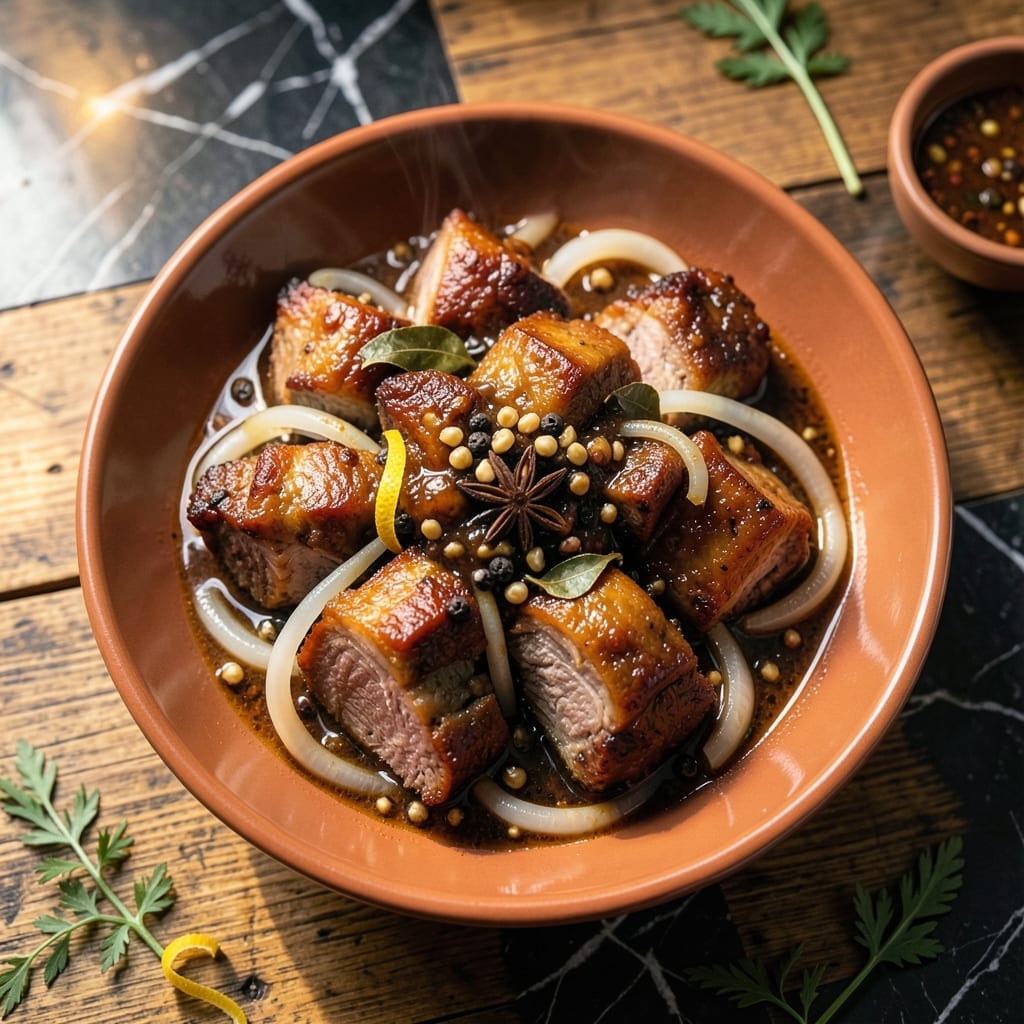
This Filipino-style pork dish brings together sweet and tangy flavors in a way that feels both comforting and exciting. I’ve spent years perfecting the balance of soy sauce, calamansi, and brown sugar that defines authentic asado.
The marinade works its magic overnight, transforming pork into tender, flavorful pieces that caramelize beautifully when cooked. Traditional techniques ensure every bite delivers that signature sweet-savory taste.
What emerges is a dish with glazed edges and juicy centers, carrying the warmth of Filipino home cooking. The aroma alone will have everyone gathering around the table.
Serve with steamed rice to soak up every drop of that rich, sweet-savory sauce. This is the kind of meal that turns a simple dinner into something special.
Ingredients for Pork Asado Recipe Filipino Style
Tender pork shoulder marinated in soy, calamansi, and brown sugar creates this iconic dish.
| Ingredient | Amount | Notes |
|---|---|---|
| Pork Shoulder 🥩 | 2 lb | Cut into 2-inch pieces |
| Soy Sauce 🫒 | ¾ cup | Full-sodium for depth |
| Calamansi Juice 🍊 | ½ cup | Freshly squeezed preferred |
| Brown Sugar 🧈 | ½ cup | Packed, light or dark |
| Garlic Cloves 🧄 | 8 cloves | Peeled and minced |
| White Onion 🧅 | 1 whole | Thinly sliced |
| Bay Leaves 🍃 | 3 pieces | Dried, for marinade |
| Black Peppercorns 🌶️ | 1 tsp | Lightly crushed |
| Star Anise Pods ⭐ | 2 pieces | Whole, for aroma |
| Potatoes 🥔 | 1 lb | Peeled and quartered |
| Carrots 🥕 | 2 whole | Peeled and sliced |
| Pineapple Juice 🍍 | ¼ cup | For natural sweetness |
| Cooking Oil 🫒 | 2 tbsp | Neutral-flavored for searing |
| Water 💧 | ½ cup | For braising liquid |
Pork shoulder offers the ideal fat-to-meat ratio for asado—look for well-marbled cuts at your butcher or Whole Foods. The soy sauce should be a quality Filipino brand like Silver Swan or Datu Puti for authentic flavor. Calamansi can be tricky to find fresh; Filipino grocery stores often stock frozen juice that works perfectly for marinating.
No calamansi? Lime or lemon juice at a 1:1 ratio gets you close. For a shortcut, substitute half the brown sugar with honey (though traditionalists may object). The star anise can be replaced with a pinch of ground anise if that’s all you have. For a richer sauce, swap water for coconut milk—adds a subtle creaminess without overpowering.
The pork marinates best overnight—12 to 24 hours delivers maximum flavor. Cooked asado keeps in the fridge for 4-5 days and reheats beautifully. Freeze portions for up to 3 months (the sauce may thicken slightly, but it’s worth it).
Why You’ll Love This Recipe
- Set and Forget: I just dump everything in the pot and let the pork shoulder soak up that soy-calamansi-garlic magic while it simmers.
- Sweet-Savory Heaven: Honestly, the brown sugar caramelizes with the soy sauce creating this glossy, finger-licking glaze that’s impossible to resist.
- Crowd Pleaser: Between us, I’ve served this at birthday parties and weeknight dinners alike—everyone from kids to grandparents asks for seconds.
- Budget Stretcher: One cheap pork shoulder cut feeds my family of five, with leftovers that taste even better the next day stuffed in pandesal.
Step-by-Step Instructions for Pork Asado Filipino Style
Achieve perfectly tender pork with a glossy, flavorful sauce using this time-tested approach.
Step 1: Marinate the Pork Shoulder
In a large bowl, combine the 2 lb Pork Shoulder with 0.75 cup Soy Sauce, 0.5 cup Calamansi Juice, 0.5 cup Brown Sugar, minced 8 cloves Garlic Cloves, thinly sliced 1 whole White Onion, 3 pieces Bay Leaves, 1 tsp Black Peppercorns, and 2 pieces Star Anise Pods. Mix thoroughly until the pork is fully coated.
Cover the bowl with plastic wrap and refrigerate for at least 4 hours, or preferably overnight. This extended marinating time allows the flavors to penetrate deeply, ensuring every bite is infused with the signature sweet-savory profile. The pork should appear glossy and slightly darkened from the soy sauce by the end of the marinade.
Step 2: Sear the Pork for Depth of Flavor
Heat 2 tbsp Cooking Oil in a large pot or Dutch oven over medium-high heat. Remove the pork from the marinade (reserve the marinade) and sear in batches, ensuring not to crowd the pot. Cook for 3-4 minutes per side until the pork develops a deep golden-brown crust.
This searing step creates a fond at the bottom of the pot, which will later enrich the braising liquid. Transfer the seared pork to a plate and set aside. The pork should release easily from the pot when properly seared—if it sticks, let it cook longer to develop the crust.
Step 3: Braise with Vegetables and Marinade
In the same pot, add the reserved marinade along with 1 lb Potatoes, 2 whole Carrots, 0.25 cup Pineapple Juice, and 0.5 cup Water. Bring the mixture to a boil, then reduce the heat to low. Return the seared pork to the pot, ensuring it is mostly submerged in the liquid.
Cover and simmer for 1 hour to 1 hour 15 minutes, stirring occasionally, until the pork is fork-tender and the potatoes are soft. The sauce should reduce slightly and thicken, coating the back of a spoon. If the liquid reduces too quickly, add a splash of water to maintain the braise.
Step 4: Reduce the Sauce to Perfection
Once the pork is tender, remove the lid and increase the heat to medium. Let the sauce simmer uncovered for 10-15 minutes until it thickens into a glossy, syrupy consistency. The sauce should cling to the pork and vegetables, with a balance of sweetness from the brown sugar and tang from the calamansi.
Taste and adjust the seasoning if needed, though the marinade typically provides the right balance. Discard the bay leaves and star anise pods before serving. The final dish should have a rich, caramelized appearance with tender pork that easily pulls apart.
Pro Tips For Making Pork Asado Recipe Filipino Style
- Marinate Overnight: I learned this the hard way—pork shoulder needs at least 4 hours in the soy-calamansi-garlic mix to soak up flavor, but 8-12 hours actually changes the outcome. Skip the rush, or you’ll taste the difference.
- Brown the Sugar: After burning two batches, I finally figured out that caramelizing the brown sugar in the marinade first prevents a bitter, burnt taste. Low and slow—about 3-4 minutes on medium heat.
- Slice Thinly: My grandmother swore by this, and she was right: cut the pork into 1/4-inch slices before marinating so every bite gets tender and saucy. Thick cuts stay chewy.
- Use Fresh Calamansi: Sounds weird, but it works: bottled calamansi juice lacks the bright, tangy punch fresh gives. Squeeze 4-5 fruits for that authentic Filipino asado zing.
Pro Cooking Tips for Great pork asado recipe filipino style
Marinade Mastery
I always use FoodSaver vacuum bags for marinating—removes air so the marinade penetrates every crevice. If you don’t have one, a ziplock bag works, just press out excess air. Never skip the overnight marinade; 12-24 hours is ideal for maximum flavor infusion. 💡
Searing Secrets
Pat the pork completely dry before searing to achieve that perfect caramelization. Use a cast iron Dutch oven for even heat distribution. Don’t overcrowd the pot—sear in batches if needed to avoid steaming the meat.
Braising Basics
When braising, keep the liquid at a gentle simmer, not a rolling boil. I add extra bay leaves during cooking for deeper aroma. Check the pork at 1 hour—if it’s not tender yet, give it more time. The potatoes soak up the flavor beautifully.
Sauce Perfection
For a glossier sauce, I reduce it in a separate pan after removing the pork. This gives me more control over the thickness. Add a splash of pineapple juice at the end if it’s too salty. The sauce should coat the back of a spoon. 🔥
Texture Tips
If your pork isn’t tender enough after braising, return it to the pot with extra liquid and cook longer. The meat should pull apart easily with a fork. For extra richness, stir in 1 tbsp butter at the very end.
Serving Suggestions
Let the pork rest for 10 minutes before serving to redistribute juices. Skim off excess fat from the sauce if desired. This dish tastes even better the next day—flavors meld overnight. ✨
Nutrition Facts
Frequently Asked Questions
What can I use if I don’t have calamansi?
Substitute with lime or lemon juice at a 1:1 ratio. While the flavor won’t be exactly the same, these citrus alternatives provide the necessary tang. For a closer match, add a touch of orange juice to balance the acidity.
How do I know when the pork is done?
The pork is ready when it’s fork-tender and easily pulls apart after 1-1.25 hours of braising. The internal temperature should reach 160°F. If it’s still tough, continue cooking with the lid on until tender.
Can I make this in a slow cooker?
Yes! Sear the pork first, then add everything to the slow cooker. Cook on low for 6-7 hours or high for 4 hours. The sauce may be thinner, so reduce it on the stovetop afterward.
What’s the best cut for this dish?
Pork shoulder is ideal for its marbling and tenderness. If unavailable, pork butt works well too. Avoid lean cuts like tenderloin—they dry out during braising.

- Potato Chip Cookie Recipe With Pecans: Buttery Crunch Meets Nutty Richness - October 30, 2026
- Potato Patty Recipe No Egg: Crispy Edges Without the Binder - October 30, 2026
- Paula Deen’s Potato Chip Cookies Recipe: Salty-Sweet Crunch in Every Bite - October 30, 2026