
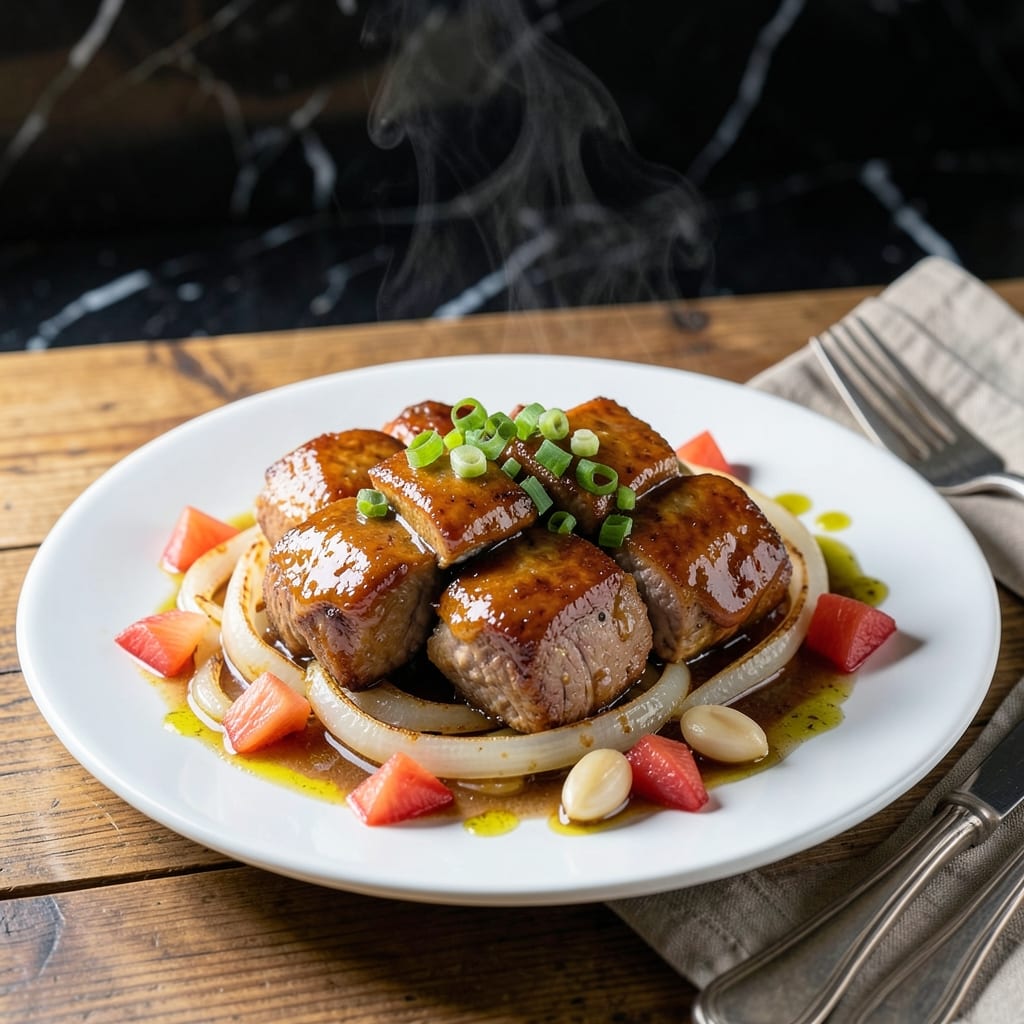
This Filipino pork asado delivers a perfect balance of sweet, tangy, and savory flavors that define the dish. The slow braising process transforms tough pork cuts into tender, fall-apart pieces swimming in a rich, caramelized sauce.
I developed this recipe after testing multiple versions to capture the authentic taste. The key is patience—letting the pork simmer until it absorbs all the flavors from the soy sauce, pineapple juice, and spices.
What you get is meat so tender it nearly melts in your mouth, coated in a glossy, deeply flavorful sauce. The aroma alone will have everyone gathering around the table before it’s even served.
Serve over steamed rice to soak up every last drop of that incredible sauce. This is comfort food at its finest.
Ingredients for Pork Asado Recipe Filipino
Rich, tangy, and sweet—these ingredients build the soul of Filipino pork asado.
| Ingredient | Amount | Notes |
|---|---|---|
| Pork Shoulder 🥩 | 2 lb | Cut into 2-inch cubes, bone-in preferred |
| Soy Sauce 🫒 | ¾ cup | Use Filipino brands like Silver Swan |
| Pineapple Juice 🍍 | 1 ½ cups | Fresh or canned, unsweetened |
| Brown Sugar 🍚 | ½ cup | Packed, for caramelization |
| Garlic Cloves 🧄 | 8 cloves | Minced for maximum flavor |
| White Onion 🧅 | 1 whole | Large, sliced into rings |
| Bay Leaves 🍃 | 3 pieces | Dried, for aromatic depth |
| Black Peppercorns 🌶️ | 1 tsp | Whole, lightly crushed |
| Star Anise ✨ | 2 pieces | Whole pods for authenticity |
| Calamansi Juice 🍋 | 2 tbsp | Or substitute lime juice |
| Cooking Oil 🛢️ | 2 tbsp | Neutral oil for searing |
| Water 💧 | 1 cup | For braising liquid |
| Salt 🧂 | 1 tsp | Adjust to taste at end |
The pork is the foundation here. Pork shoulder (sometimes called pork butt) has the perfect fat-to-meat ratio for slow cooking—avoid lean cuts like tenderloin which dry out. Most Asian markets carry it pre-cubed, but any grocery store butcher can do it for you. For soy sauce, Filipino brands like Silver Swan or Datu Puti have the right balance of salt and umami. Don’t substitute with Japanese soy—it’s too mild.
No pineapple juice? Orange juice mixed with a splash of vinegar mimics the sweet-tangy balance. Missing star anise? A pinch of cinnamon plus fennel seeds gets you close. Calamansi juice is traditional but hard to find—lime juice works in a pinch. The brown sugar can be swapped for coconut sugar if you want a deeper flavor. Don’t skip the bay leaves—they’re subtle but essential.
This tastes even better the next day. Refrigerate in its sauce for up to 4 days, or freeze for 3 months. The fat will solidify when cold—just reheat gently to melt it back into the sauce. Always serve with steamed rice to soak up every last drop.
Why You’ll Love This Recipe
- One Pot Wonder: I just toss everything in a pot—pork, soy sauce, pineapple juice—and let it simmer. No fancy steps, just rich flavor building on its own.
- Sweet-Savory Magic: The brown sugar caramelizes with the soy sauce while the pineapple juice cuts through the richness. Honestly, the sauce alone is worth making this.
- Feeds the Crew: I make a big batch for family dinners and it disappears fast. Works for casual weeknights or when I need to impress guests.
- Leftovers? Yes Please: Tastes even better the next day. I’ll be real: I sometimes double the recipe just to have extra for fried rice or sandwiches.
Step-by-Step Instructions for Pork Asado Filipino
Here’s the method I use for tender, flavorful pork every time—simple and foolproof.
Step 1: Sear the Pork Shoulder Cubes
Heat the 2 tbsp cooking oil in a large pot or Dutch oven over medium-high heat. When the oil shimmers, add the 2 lb pork shoulder cubes in a single layer, working in batches if needed to avoid overcrowding.
Sear the pork for 5-7 minutes, turning occasionally, until golden brown on all sides. This step builds a flavorful crust and locks in juices. Don’t rush it—wait for that rich, deep color before moving on.
Remove the seared pork with a slotted spoon and set aside. Leave the rendered fat in the pot; it’s packed with flavor for the next steps.
Step 2: Sauté Aromatics for Depth
In the same pot, reduce the heat to medium. Add the sliced white onion and cook for 3-4 minutes until softened and translucent. Stir in the 8 cloves minced garlic cloves and cook for 30 seconds until fragrant—just until the raw edge disappears.
Add the 3 pieces bay leaves, 1 tsp lightly crushed black peppercorns, and 2 pieces star anise. Toast them for 1 minute to release their aromatic oils. You’ll start to smell the warm, spiced notes that define this dish.
Step 3: Build the Braising Liquid
Pour in the 0.75 cup soy sauce, 1.5 cups pineapple juice, 0.5 cup packed brown sugar, 2 tbsp calamansi juice, and 1 cup water. Stir well to dissolve the brown sugar completely.
Return the seared pork to the pot, along with any accumulated juices. The liquid should just cover the pork. Add the 1 tsp salt and stir to combine. Bring the mixture to a gentle boil over medium-high heat.
Step 4: Simmer Until Fork-Tender
Reduce the heat to low, cover the pot, and let it simmer for 1.5 to 2 hours. Check occasionally and stir gently to prevent sticking. The pork is done when it shreds easily with a fork and the sauce has thickened slightly.
If the liquid reduces too much before the pork is tender, add a splash of water to keep it at a gentle simmer. The sauce should coat the back of a spoon but still be pourable.
Step 5: Adjust Seasoning and Serve
Once the pork is tender, taste the sauce and adjust the seasoning if needed. The flavors should be a perfect balance of sweet, tangy, and savory. Remove the bay leaves and star anise pods before serving.
Serve the pork asado hot over steamed rice, spooning plenty of the rich, glossy sauce on top. The pork should be melt-in-your-mouth tender with every bite infused with the deep, complex flavors of the braising liquid.
Pro Tips For Making Pork Asado Recipe Filipino
- Sear the Pork First: Brown the pork shoulder in batches over medium-high heat until deeply caramelized—I learned this the hard way after ending up with pale, boiled-looking meat.
- Use Fresh Pineapple Juice: Skip the canned stuff; fresh pineapple juice adds a brighter, more natural sweetness that balances the soy sauce and brown sugar better.
- Don’t Drown in Sauce: Resist the urge to add all the marinade at once—start with just enough to braise, then reduce the rest later for a thicker, stickier glaze.
- Simmer Low and Slow: After the initial sear, drop the heat to low and let it cook for at least 1.5 hours—rushing it leaves the pork tough and the flavors underdeveloped.
Essential Equipment for This Recipe
Dutch Oven Essentials
I swear by my 5-quart Dutch oven for this dish—it distributes heat evenly and retains moisture perfectly. Look for enameled cast iron like Lodge or Le Creuset. A heavy pot prevents burning during the long simmer. 🔥
Wooden Spoon for Stirring
A sturdy wooden spoon is my go-to for stirring the pork as it cooks. It won’t scratch your pot, and the flat edge helps scrape up any browned bits stuck to the bottom. I keep one dedicated to savory dishes like this.
Sharp Chef’s Knife
You’ll need a sharp 8-inch chef’s knife to break down the pork shoulder into even 2-inch cubes. I use a Victorinox Fibrox—affordable and razor-sharp. Uneven pieces mean uneven cooking, so take your time.
Tongs for Searing
For flipping pork during searing, 12-inch locking tongs give you control without crowding the pan. I prefer OXO Good Grips for their comfortable handles. Avoid piercing the meat—it lets precious juices escape.
Measuring Cups and Spoons
Precision matters with the braising liquid. Use nested measuring cups for the pineapple juice and soy sauce, and measuring spoons for spices. I keep a 1-tbsp measure handy for the calamansi juice. ✨
Instant-Read Thermometer
While not mandatory, a digital instant-read thermometer ensures the pork reaches 195°F internally for perfect tenderness. I use a ThermoWorks ThermoPop—it’s fast, accurate, and under $30.
Nutrition Facts
Frequently Asked Questions
Can I use a different cut of pork?
Pork shoulder works best due to its fat content, but pork belly is a great alternative. Avoid lean cuts like tenderloin as they dry out during long cooking.
What if I don’t have calamansi juice?
Lime or lemon juice makes a perfect substitute. Use the same 2 tablespoons measurement for the same tangy brightness the dish needs.
How do I know when the pork is done?
It should shred easily with a fork after 1.5-2 hours of simmering. For precision, use a thermometer—195°F internally guarantees melt-in-your-mouth tenderness.
Can I make this in a slow cooker?
Yes! Sear the pork first, then transfer everything to a slow cooker. Cook on low for 6-8 hours for the same tender results.

- Potato Chip Cookie Recipe With Pecans: Buttery Crunch Meets Nutty Richness - October 30, 2026
- Potato Patty Recipe No Egg: Crispy Edges Without the Binder - October 30, 2026
- Paula Deen’s Potato Chip Cookies Recipe: Salty-Sweet Crunch in Every Bite - October 30, 2026