
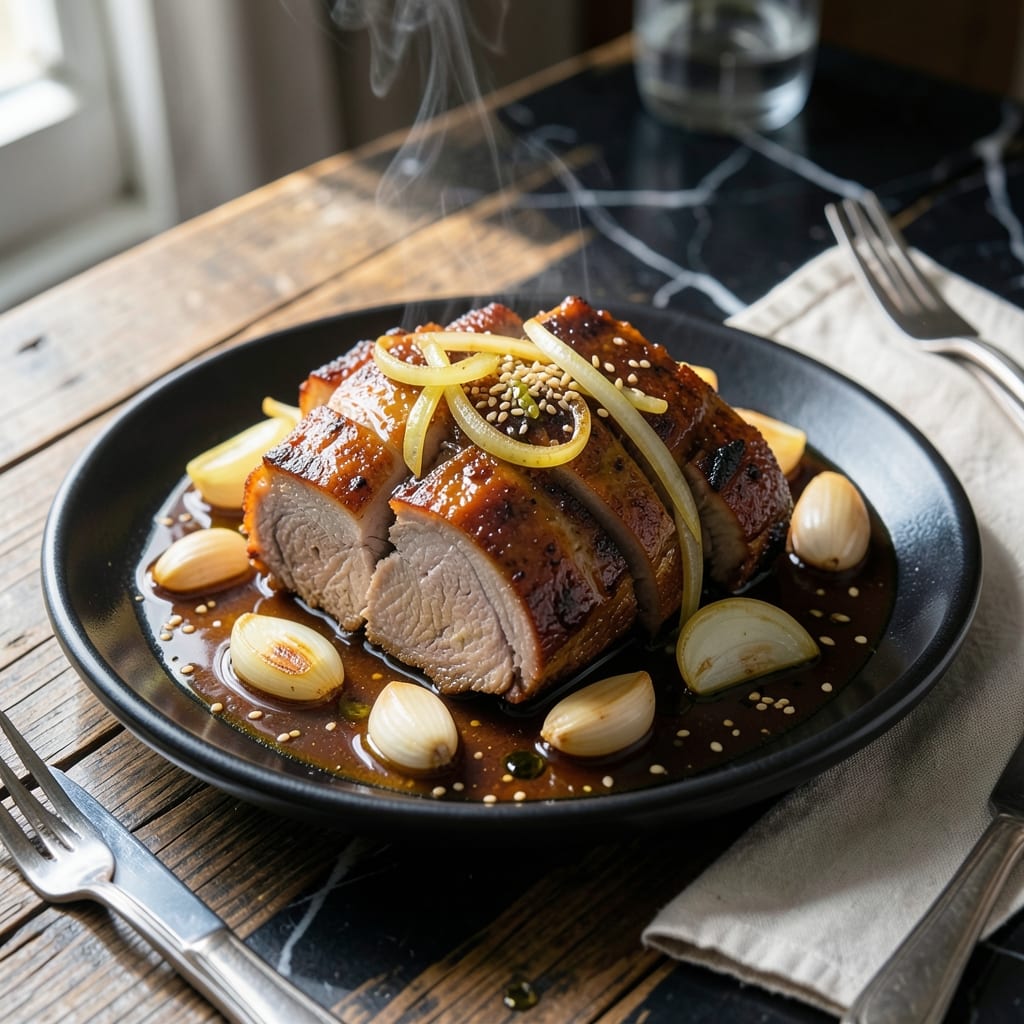
This Filipino-style pork asado brings bold citrus and soy flavors to your table with a foolproof marinade. I learned the technique from my grandmother’s handwritten notes, where measurements were more intuition than precision.
The key is a 24-hour marinade that tenderizes the pork while infusing it with tangy calamansi and rich soy. The slow braise transforms tough cuts into fall-apart tender meat with a caramelized glaze.
What emerges is deeply savory pork with a sticky, slightly sweet sauce that clings to every bite. The aroma alone will draw your family to the kitchen before the dish even hits the table.
Serve over steamed rice to soak up every drop of the sauce. This is the kind of dish that turns a weeknight into something to remember.
Ingredients for Pork Asado Recipe Ingredients
Bold citrus and soy come together for this deeply flavorful Filipino-style dish.
| Ingredient | Amount | Notes |
|---|---|---|
| Pork Shoulder 🥩 | 2 lb | Cut into 2-inch chunks, bone-in preferred |
| Calamansi Juice 🍊 | ½ cup | Freshly squeezed if available |
| Soy Sauce 🫒 | ¾ cup | Filipino silver Swan brand preferred |
| Brown Sugar 🍚 | ½ cup | Light or dark both work |
| Garlic Cloves 🧄 | 8 cloves | Peeled and smashed |
| Yellow Onion 🧅 | 1 whole | Thinly sliced into rings |
| Bay Leaves 🌿 | 3 pieces | Dried or fresh |
| Black Peppercorns 🌶️ | 1 tsp | Lightly crushed |
| Star Anise Pods ✨ | 2 pieces | Optional but traditional |
| Cooking Oil 🫒 | 2 tbsp | Neutral-flavored like vegetable oil |
| Water 💧 | 1 cup | For braising liquid |
| Green Onions 🌱 | 4 pieces | Sliced thin for garnish |
The pork shoulder is non-negotiable here—bone-in, well-marbled cuts from Costco or your local Asian market give you that melt-in-your-mouth texture. Calamansi can be tricky to find; look for it at Filipino grocery stores or use a mix of lime and orange juice (that’s my grandmother’s backup trick). The soy sauce matters too—Silver Swan brand is the gold standard for authenticity.
No calamansi? Equal parts lime and orange juice works in a pinch. Out of pork shoulder? Pork belly or country-style ribs are solid swaps, though cooking times may vary. Brown sugar can be light or dark—coconut sugar adds a deeper caramel note. Don’t have star anise? Skip it, but add a pinch of five-spice powder for complexity.
Marinate the pork for the full 24 hours—it’s worth the wait. The dish keeps well in the fridge for up to 5 days, and the flavors only deepen. Freeze leftovers for up to 3 months (the sauce thickens slightly when reheated).
Why You’ll Love This Recipe
- Minimal Chopping: I just crush the garlic and mix everything—no fancy knife skills needed.
- Sweet-Savory Magic: The calamansi and brown sugar create this sticky, tangy glaze that clings to the pork shoulder.
- Feeds the Gang: Honestly, one batch serves my whole family plus leftovers for lunch the next day.
- Budget Stretcher: Pork shoulder stays cheap, and a little soy sauce and sugar go a long way.
Step-by-Step Instructions for Pork Asado
Here’s the method that transforms simple ingredients into tender, flavorful perfection.
Step 1: Sear the Pork Shoulder
Heat the 2 tbsp cooking oil in a large pot or Dutch oven over medium-high heat. When the oil shimmers, add the 2 lb pork shoulder chunks in a single layer, working in batches if needed. Sear for 3-4 minutes per side until each piece develops a deep brown crust.
Don’t overcrowd the pot—this causes the pork to steam instead of brown. You’re looking for a rich, caramelized exterior that will intensify the flavor of the final dish. The pork will finish cooking later, so don’t worry about it being fully done at this stage.
Step 2: Build the Aromatic Base
After removing the pork, reduce heat to medium and add the 1 whole yellow onion, 8 cloves garlic cloves, 3 pieces bay leaves, 1 tsp black peppercorns, and 2 pieces star anise pods. Sauté for 2-3 minutes until the onions soften and the garlic becomes fragrant.
This step releases the essential oils from the aromatics, creating a complex foundation for your marinade. The star anise adds a subtle licorice note that’s traditional in Filipino asado, while the black peppercorns provide a gentle heat. Stir frequently to prevent burning.
Step 3: Create the Marinade and Braise
Return the pork to the pot. Pour in the 0.5 cup calamansi juice, 0.75 cup soy sauce, 0.5 cup brown sugar, and 1 cup water. Stir to combine, ensuring the brown sugar dissolves completely. The liquid should just cover the pork—add a splash more water if needed.
Bring the mixture to a boil, then reduce heat to low. Cover and let it simmer for 1.5 to 2 hours, stirring occasionally. You’ll know it’s done when the pork is fork-tender and the sauce has thickened slightly, coating the back of a spoon with a glossy sheen.
Step 4: Reduce the Sauce and Finish
Once the pork is tender, remove the lid and increase heat to medium. Simmer uncovered for 10-15 minutes to reduce the sauce. This concentrates the flavors and gives the dish its characteristic sticky, caramelized glaze.
Taste and adjust seasoning if needed—the calamansi should provide a bright, citrusy tang that balances the rich soy and sweet brown sugar. The sauce should cling to the pork, with each piece glistening and deeply flavored.
Step 5: Garnish and Serve
Discard the bay leaves and star anise pods. Transfer the pork asado to a serving dish and spoon the thickened sauce over the top. Garnish with the 4 pieces green onions, slicing them thinly just before serving to preserve their fresh, crisp texture.
Let the dish rest for 5-10 minutes before serving. This allows the flavors to meld and the sauce to set slightly. The pork should be fall-apart tender, with a perfect balance of sweet, tangy, and savory in every bite.
Pro Tips For Making Pork Asado Recipe Ingredients
- Marinate Overnight: I learned this the hard way—pork shoulder needs at least 4-6 hours in the calamansi-soy-brown sugar mix to really absorb the flavors, but overnight is when it actually changes the outcome.
- Score the Fat: Cut shallow slits into the pork’s fat cap before marinating so the garlic and calamansi juice penetrate deeper—sounds fussy, but it works.
- Simmer, Don’t Boil: After searing, keep the heat low to medium when braising or the brown sugar will caramelize too fast and burn before the pork gets tender.
- Use Fresh Calamansi: Bottled calamansi juice lacks the bright, tangy punch that fresh-squeezed gives; if you can’t find fresh, add a splash of vinegar to balance the sweetness.
Storing and Reheating pork asado recipe ingredients
Refrigerator Storage
Let the pork asado cool completely before storing—I usually wait about 1 hour at room temperature. Transfer to an airtight container with its sauce. It keeps in the fridge for up to 5 days, and the flavors actually deepen over time. ❄️
Freezer Storage
For longer storage, freeze in quart-sized freezer bags for up to 3 months. I portion mine into meal-sized servings before freezing. Squeeze out excess air to prevent freezer burn, and label with the date.
Stovetop Reheating
This is my preferred method. Reheat in a pot over medium-low heat with a splash of water or broth for 10-15 minutes. Stir occasionally to prevent sticking. The sauce will thicken slightly as it warms. 🔥
Microwave Reheating
For quick meals, microwave individual portions covered with a damp paper towel. Use 50% power for 2-3 minutes, stir, then continue in 30-second bursts until heated through. Add a splash of water if the sauce seems too thick.
Reviving Leftovers
If the sauce separates or thickens too much, stir in 2-3 tbsp water or calamansi juice while reheating. This brings back that perfect glossy consistency. I often add a sprinkle of green onions after reheating for freshness.
Nutrition Facts
Frequently Asked Questions
Can I substitute lime juice for calamansi?
Yes! Use equal parts lime and orange juice for a similar citrus balance. Calamansi has a unique tartness, but this mix works well in a pinch.
What if I don’t have star anise?
Skip it or add a pinch of five-spice powder for complexity. The dish will still be delicious without it.
How long should I marinate the pork?
For best results, marinate for the full 24 hours. This ensures the flavors penetrate deeply for maximum tenderness.
Can I use a different cut of pork?
Pork belly or country-style ribs work, but adjust cooking time. Bone-in, well-marbled cuts give the best texture.

- Potato Chip Cookie Recipe With Pecans: Buttery Crunch Meets Nutty Richness - October 30, 2026
- Potato Patty Recipe No Egg: Crispy Edges Without the Binder - October 30, 2026
- Paula Deen’s Potato Chip Cookies Recipe: Salty-Sweet Crunch in Every Bite - October 30, 2026