
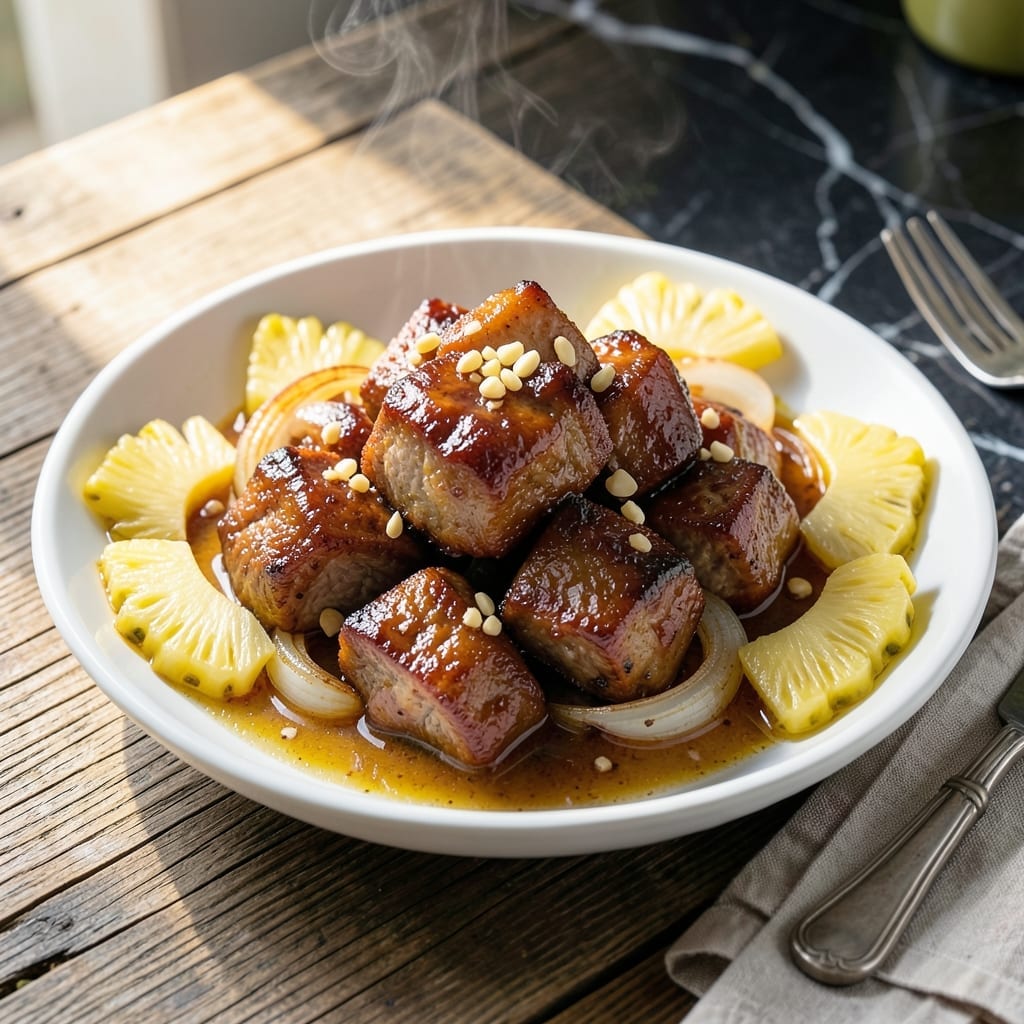
This Filipino braise delivers a perfect balance of savory pork and sweet pineapple that’s impossible to resist. My grandmother’s version used only her intuition, but I’ve decoded it into precise steps anyone can follow.
The secret is letting the pork marinate in pineapple juice and soy sauce, which tenderizes the meat while building layers of flavor. A slow simmer transforms the marinade into a rich, glossy sauce that clings to each piece.
You’ll end up with fall-apart tender pork in a sweet-tangy sauce that pairs perfectly with steamed rice. Every bite carries the warmth of home cooking without requiring heroic effort.
Serve this at your next gathering and watch it disappear.
Ingredients for Pork Asado Recipe with Pineapple Juice
Pantry staples meet bold Filipino flavors in this irresistible braise with pork and pineapple.
| Ingredient | Amount | Notes |
|---|---|---|
| Pork Shoulder 🥩 | 2 lb | Cut into 2-inch cubes, fat trimmed |
| Pineapple Juice 🍍 | 2 cups | 100% pure, no added sugar |
| Soy Sauce 🫒 | ½ cup | Low-sodium preferred for balance |
| Brown Sugar 🍚 | ¼ cup | Light or dark, packed |
| Garlic Cloves 🧄 | 6 cloves | Minced for marinade depth |
| White Onion 🧅 | 1 whole | Sliced into thin rings |
| Bay Leaves 🌿 | 3 whole | Dried, for aromatic base |
| Black Peppercorns 🌶️ | 1 tsp | Lightly crushed for warmth |
| Apple Cider Vinegar 🍏 | 2 tbsp | For tangy brightness |
| Fresh Pineapple Chunks 🍍 | 1 cup | Reserved from juicing process |
| Star Anise Pods ⭐ | 2 whole | Optional for authentic depth |
| Vegetable Oil 🫒 | 2 tbsp | For searing pork cubes |
The pork shoulder is non-negotiable here—Costco or Sam’s Club have the best prices for large cuts. Look for good marbling (those white streaks of fat) which melts into the meat during the long braise. I always buy a whole shoulder and cube it myself—saves money and lets you control the size. If your butcher offers pre-cut pork stew meat, that works too (just ask for shoulder cuts if possible).
No pineapple juice on hand? Crushed pineapple with its juice works in a pinch—just blend and strain it. Brown sugar can be swapped for coconut sugar (one-to-one ratio). If you’re missing star anise, a pinch of ground anise or even fennel seeds gets you close. The vinegar is flexible too—rice vinegar or even lemon juice can stand in.
This tastes even better the next day once the flavors meld. Keeps for 4-5 days in the fridge, freezes beautifully for 3 months. I always make a double batch—the leftovers disappear faster than the first serving (trust me on this one).
Why You’ll Love This Recipe
- One Pot Wonder: I just toss everything—the pork shoulder, pineapple juice, soy sauce and garlic—into a single pot and let it work its magic.
- Sweet-Savory Magic: The brown sugar caramelizes with the pineapple juice, creating this sticky, tangy glaze that clings to every bite of pork.
- Feeds a Crowd: I make a big batch for Sunday dinner, and it’s always the first thing to disappear.
- Leftovers? Even Better: The flavors deepen overnight, so I’ll be real—sometimes I make extra just to have it for lunch the next day.
Step-by-Step Instructions for Pork Asado With Pineapple Juice
This method delivers tender pork with rich, tangy-sweet sauce every time.
Step 1: Sear the Pork Shoulder Cubes
Heat the 2 tbsp vegetable oil in a large, heavy pot over medium-high heat. When it shimmers, add the 2 lb pork shoulder cubes in a single layer, working in batches if needed. Don’t crowd the pot—this ensures proper browning rather than steaming.
Sear undisturbed for 3-4 minutes per side until deeply browned on all sides. You’re building a flavor foundation here; the caramelized bits will dissolve into the sauce later. Transfer the seared pork to a plate and set aside.
Step 2: Build the Aromatic Base
In the same pot, add the sliced white onion and cook for 2-3 minutes until softened and just beginning to brown. Add the minced garlic cloves and cook for 30 seconds until fragrant—don’t let it burn.
Stir in the 2 cups pineapple juice, 0.5 cup soy sauce, 0.25 cup brown sugar, 2 tbsp apple cider vinegar, 3 whole bay leaves, 1 tsp black peppercorns, and 2 whole star anise pods. Bring to a gentle simmer, scraping up any browned bits from the bottom.
Step 3: Braise Until Fork-Tender
Return the seared pork to the pot along with any accumulated juices. The liquid should just cover the meat—if it doesn’t, add a splash of water. Reduce heat to low, cover, and let it simmer gently for 1.5 to 2 hours.
Check occasionally and stir gently to prevent sticking. You’ll know it’s done when the pork is fork-tender and the sauce has reduced slightly. The meat should fall apart easily when pierced, and the sauce will have deepened in color and flavor.
Step 4: Add Pineapple and Finish
Stir in the 1 cup fresh pineapple chunks and cook uncovered for an additional 10-15 minutes. This allows the pineapple to soften slightly and absorb the rich braising liquid while adding a bright, fresh contrast to the deep flavors.
Taste and adjust seasoning if needed, though the balance of sweet, tangy, and savory should already be perfect. The sauce should coat the back of a spoon with a glossy sheen, and the pork should be melt-in-your-mouth tender.
Remove the bay leaves and star anise pods before serving. This dish tastes even better the next day as the flavors continue to meld.
Pro Tips For Making Pork Asado Recipe With Pineapple Juice
- Simmer, Don’t Boil: Keep the heat at a gentle simmer—if it’s boiling hard, the pork tightens up and the pineapple juice loses its sweetness too fast. I learned this the hard way when my asado turned chewy instead of tender.
- Score the Pork: Cut shallow slits into the pork shoulder before marinating so the pineapple juice and soy sauce penetrate deeper. Sounds like extra work, but it makes a real difference in flavor.
- Skip the Salt: Soy sauce already brings plenty of saltiness, so don’t add extra salt to the marinade. Resist the urge to season it like you would plain meat—you’ll end up with an overly salty dish.
- Use Fresh Pineapple Juice: Canned juice works in a pinch, but fresh pineapple juice adds a brighter, more vibrant sweetness that pairs perfectly with the brown sugar glaze. I was skeptical until I tried it.
Regional Styles of pork asado recipe with pineapple juice
Filipino Classic
This is the version I grew up with, where the pineapple juice tenderizes the pork while adding that signature sweetness. My grandmother never measured, but I’ve perfected her method over years of trial and error. The key is patience—letting the pork braise until it’s fall-apart tender. 💛
Visayan Twist
In the Visayas region, they often add coconut milk to the braising liquid for extra creaminess. I’ve tried this with 1 cup coconut milk and it’s incredible. The coconut mellows the tang while adding richness that pairs beautifully with the pineapple.
Luzon Style
Northern Luzon versions sometimes include potatoes or carrots for heartiness. Add 1 diced potato and 1 sliced carrot when you return the pork to the pot. These soak up the sauce and make the dish even more satisfying.
Cebuano Adaptation
Cebuano cooks often use calamansi instead of vinegar for brightness. If you can find it, 2 tbsp calamansi juice adds a uniquely Filipino citrus note. I sometimes combine both for layered acidity.
Modern Fusion
For a contemporary take, I’ve added 1 tbsp grated ginger to the marinade. It bridges the sweet and savory elements beautifully. This small tweak makes the dish feel fresh while staying true to its roots.
Nutrition Facts
Frequently Asked Questions
What cut of pork works best?
Pork shoulder is ideal for its fat marbling and connective tissue. These melt during the 1.5 to 2 hours of braising, creating that fall-apart texture. Avoid lean cuts like tenderloin.
Can I make this in a slow cooker?
Brown the pork first, then transfer everything to your slow cooker. Cook on low for 6-7 hours or high for 3-4 hours. The flavors deepen beautifully with the longer cook time.
How do I store leftovers?
Let it cool completely, then store in an airtight container in the fridge for up to 5 days. It freezes well for 3 months—the flavors actually improve after freezing!
My sauce is too thin. How can I fix it?
Uncover and simmer for an additional 10-15 minutes to reduce. For faster results, mix 1 tbsp cornstarch with 2 tbsp water and stir into the sauce.

- Potato Chip Cookie Recipe With Pecans: Buttery Crunch Meets Nutty Richness - October 30, 2026
- Potato Patty Recipe No Egg: Crispy Edges Without the Binder - October 30, 2026
- Paula Deen’s Potato Chip Cookies Recipe: Salty-Sweet Crunch in Every Bite - October 30, 2026