
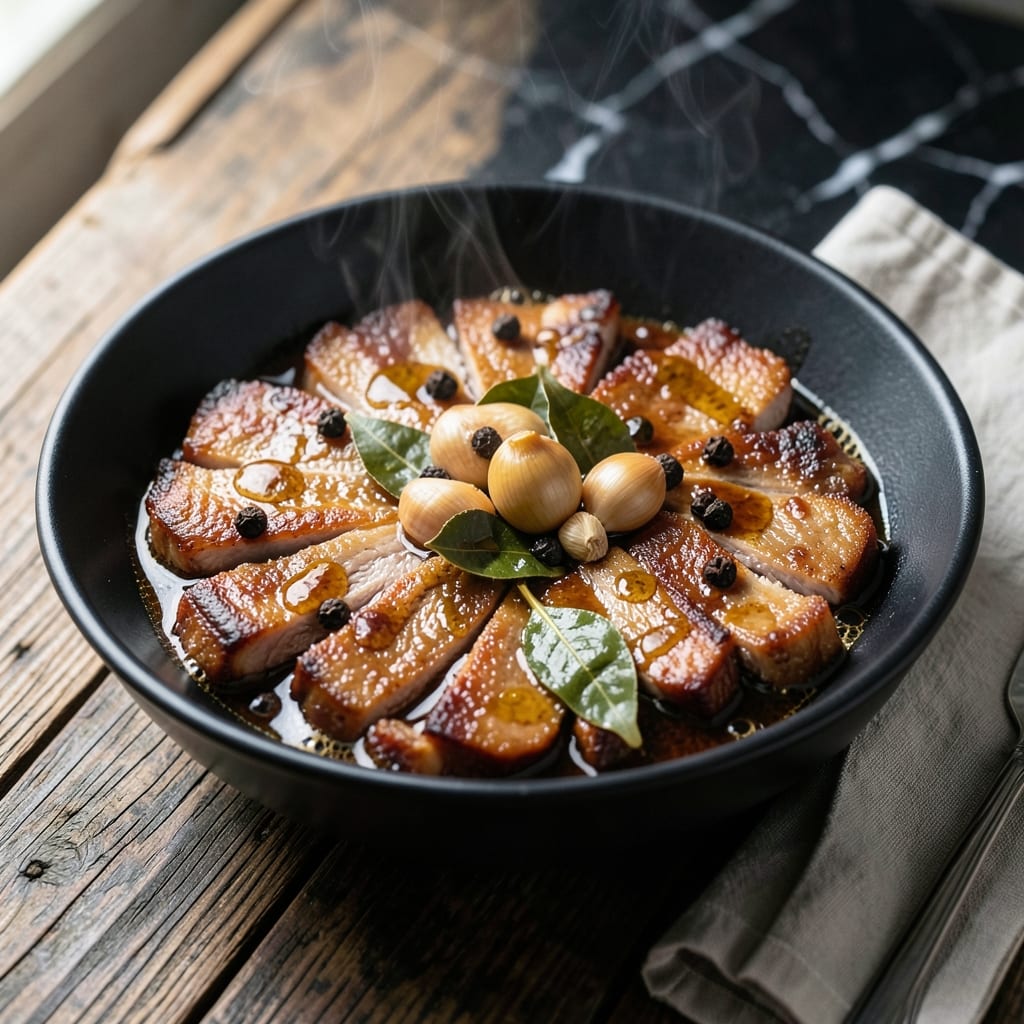
I remember watching my grandmother cook adobo without a recipe, measuring vinegar and soy sauce by instinct alone. This version captures her technique while delivering tender pork belly every time.
The secret is in the slow braise, letting the vinegar and garlic work their magic until the meat practically melts. Traditional Filipino adobo relies on a perfect balance of tangy and savory, with just the right touch of sweetness.
What emerges is pork belly so rich and flavorful it falls apart at the touch of a fork. The sauce reduces to a glossy, deeply aromatic glaze that clings to each piece.
Serve this with steamed rice to soak up every drop of that incredible sauce. The process is simple, but the results taste anything but.
Ingredients for Pork Belly Adobo Recipe Panlasang Pinoy
Rich, tangy, and deeply savory—this dish starts with quality pork and bold Filipino flavors.
| Ingredient | Amount | Notes |
|---|---|---|
| Pork Belly 🥓 | 2 lb | Cut into 2-inch pieces |
| White Vinegar 💧 | 1 cup | Or cane vinegar for authenticity |
| Soy Sauce 🫒 | ¾ cup | Use Filipino brands if available |
| Garlic Cloves 🧄 | 10 cloves | Peeled and smashed |
| Bay Leaves 🍃 | 3 pieces | Dried or fresh |
| Black Peppercorns 🌶️ | 1 tbsp | Lightly crushed |
| Brown Sugar 🍚 | 2 tbsp | For balancing acidity |
| Water 💧 | 1 cup | Or pork stock for richness |
| Vegetable Oil 🫒 | 2 tbsp | For searing pork |
| Salt 🧂 | 1 tsp | Adjust to taste |
The pork belly is non-negotiable here. Look for skin-on cuts at Asian markets or Costco—the fat renders beautifully during the braise. Filipino soy sauce (like Silver Swan or Datu Puti) has a distinct taste, but any good soy sauce works. Vinegar should be white or cane; avoid balsamic or apple cider as they’ll overpower the dish. Fresh garlic is a must—no pre-minced shortcuts.
No pork belly? Pork shoulder or chicken thighs work in a pinch, though the texture won’t be as luxurious. Out of Filipino soy sauce? Regular soy sauce plus a dash of fish sauce (if not strict vegetarian) gets close. Bay leaves can be omitted, but they add depth. For sweetness, coconut sugar or honey can replace brown sugar. The water or stock helps mellow the vinegar’s sharpness.
Adobo tastes even better the next day. Store in an airtight container in the fridge for up to 5 days, or freeze for 3 months. The sauce will thicken as it cools—just reheat gently with a splash of water.
Why You’ll Love This Recipe
- I’ll be real: the leftovers are even richer the next day, and pork belly reheats like a dream.
- One Pot Wonder: I toss everything in a single pan—pork belly, vinegar, soy sauce, garlic—and let it simmer while I do the dishes.
- Garlic Bomb Flavor: The garlic cloves and bay leaves infuse the pork belly with that tangy, savory adobo taste I crave every time.
- Feeds the Crew: Honestly, it’s my go-to for family dinners or when friends drop by unannounced.
Step-by-Step Instructions for Pork Belly Adobo
Master this classic Filipino technique for fall-apart meat with a perfectly balanced tangy-savory sauce.
Step 1: Sear the Pork Belly for Depth of Flavor
Heat the 2 tbsp vegetable oil in a large pot over medium-high heat. Add the 2 lb pork belly pieces and sear until all sides develop a golden brown crust, about 5-7 minutes per side.
This step builds a flavor foundation and renders some fat, which enriches the final sauce. Work in batches if needed to avoid overcrowding the pot—this ensures each piece browns rather than steams.
Remove the pork belly and set aside, leaving the rendered fat in the pot for the next step.
Step 2: Sauté Aromatics Until Fragrant
In the same pot with the rendered fat, add the 10 cloves garlic cloves, 1 tbsp black peppercorns, and 3 pieces bay leaves. Sauté over medium heat for 1-2 minutes until the garlic turns light golden brown.
Be careful not to burn the garlic—it should release its aroma without turning bitter. Add the 0.75 cup soy sauce and 1 cup white vinegar, then stir to deglaze the pot, scraping up any browned bits from the bottom.
This creates the base of your adobo sauce, where all the deep, savory flavors begin to meld.
Step 3: Braise the Pork Belly Until Tender
Return the pork belly to the pot and add the 1 cup water, 2 tbsp brown sugar, and 1 tsp salt. Stir to combine, then bring the mixture to a boil. Once boiling, reduce the heat to low, cover, and let it simmer for 1.5 to 2 hours.
Check occasionally to ensure the liquid doesn’t evaporate completely—add a splash of water if needed. The pork belly is done when it’s fork-tender and the sauce has reduced slightly, coating the back of a spoon.
This slow braise allows the pork to absorb the vinegar and soy sauce, creating that signature adobo flavor.
Step 4: Reduce the Sauce to Perfection
Once the pork belly is tender, remove the lid and increase the heat to medium. Let the sauce simmer uncovered for 10-15 minutes until it thickens into a glossy, syrupy consistency.
This reduction step intensifies the flavors and creates a sauce that clings beautifully to the pork. Stir occasionally to prevent sticking, and taste for seasoning—adjust with a pinch more salt or sugar if needed.
The final sauce should be tangy, savory, and slightly sweet, with a rich, velvety texture.
Serve the pork belly adobo hot over steamed rice, spooning the sauce generously over the top.
Pro Tips For Making Pork Belly Adobo Recipe Panlasang Pinoy
- Simmer Low and Slow: I learned this the hard way—boil the pork belly too hard and the vinegar will evaporate before it tenderizes the meat. Keep it at a gentle simmer for 45-60 minutes to let the flavors sink in.
- Score the Belly: Cut shallow slits across the pork belly before browning. Sounds weird, but it works: the sauce seeps into those cuts, and you get crispy edges with every bite.
- Balance the Vinegar: After burning three batches, I finally figured out that white vinegar can overpower if not balanced. Add it gradually and taste as you go—about 1/2 cup for 1 lb of pork belly usually hits the mark.
- Crisp the Skin: My grandmother swore by this, and she was right: after simmering, transfer the pork belly to a hot pan with a bit of oil to crisp the skin for 3-4 minutes. It adds texture the dish deserves.
Perfect Pairings for This Dish
Rice Pairings
Steamed jasmine rice is my go-to—its subtle floral notes complement the adobo’s tangy depth. For extra richness, try coconut rice by cooking 1 cup rice with 1 cup coconut milk and 1 cup water. The slight sweetness balances the vinegar perfectly. 💛
Vegetable Sides
A simple cucumber and tomato salad with sliced English cucumber and cherry tomatoes dressed in a little rice vinegar and salt cuts through the richness. For warmth, stir-fried bok choy with garlic adds a crisp, earthy contrast.
Beverage Matches
An ice-cold San Miguel beer is the classic pairing—the crisp, light lager refreshes your palate between bites. For a non-alcoholic option, calamansi juice (Filipino limeade) offers a citrusy zing that mirrors the adobo’s acidity. 🍺
Pickled Accompaniments
Serve with atchara (pickled green papaya) for a bright, crunchy counterpoint. The vinegar in the pickles echoes the adobo’s tang while adding texture. I buy mine at the local Asian market or make a quick version with shredded cabbage and carrots in rice vinegar.
Nutrition Facts
Frequently Asked Questions
Can I use pork shoulder instead of pork belly?
Yes, but the texture will differ. Pork shoulder stays tender but lacks pork belly’s luxurious fat. Use 2 lb bone-in shoulder and extend braising time to 2.5 hours for best results.
Why does my adobo taste too sour?
Balance is key. Add 1-2 tbsp brown sugar to mellow the vinegar. Next time, use 1/2 cup less vinegar or add 1/4 cup water to dilute the acidity.
How do I get the sauce thicker?
After braising, uncover and simmer on medium heat for 10-15 minutes. The sauce will reduce and coat the pork beautifully. Avoid adding cornstarch—it’s not traditional.
Can I make this in a slow cooker?
Sear pork first, then cook on low for 6-8 hours. Skip the reduction step—the sauce won’t thicken as much but will still be flavorful.

- Potato Chip Cookie Recipe With Pecans: Buttery Crunch Meets Nutty Richness - October 30, 2026
- Potato Patty Recipe No Egg: Crispy Edges Without the Binder - October 30, 2026
- Paula Deen’s Potato Chip Cookies Recipe: Salty-Sweet Crunch in Every Bite - October 30, 2026